
94 MIN READ
The Linux Foundation | 12 August 2026
Welcome to the August 2026 edition of the Linux Foundation Newsletter
The Linux Foundation is celebrating 35 years of Linux, and training is discounted through August 18. Use code TUX35 for 35% off certifications, courses, and bundles across cloud, AI, cybersecurity, and more.
Beyond the discount, five things stand out this month. The Linux Foundation launched the Tokenomics Foundation, backed by more than 30 organizations, to build vendor-neutral standards for tracking the cost and ROI of AI. FINOS released Fluxnova 3.0 and FDC3 3.0, both adding MCP integration so AI agents can execute financial workflows directly. AAIF shipped MCP 728, a stateless version of the protocol that no longer needs a session handshake, and celebrated the launch with 475 people across 7 events in 6 cities. The Dronecode Foundation ran a hackathon in Manassas, Virginia, where 14 companies, including direct competitors, completed 7 working integrations of MAVLink-Military, a new open interoperability standard for military drones and payloads. And a wave of AI-and-infrastructure research landed at once: a CNCF and SlashData report puts Japan's cloud native developer community at nearly a million, LF Edge published its State of the Edge 2026 report on edge computing in the AI era, and a new tech talent report shows AI is a net job creator in Japan even as companies struggle to find full-stack-ready hires.
You'll also find open calls for two LF Research surveys, a new LF Research report, registration open for Open Source Summit Europe in Prague (October 7-9), and project news spanning agentic AI, telecom, mainframe, geospatial, and safety-critical software.
>> Read on for even more news, research, and opportunities from across the Linux Foundation.
Contents
- Education Opportunities
- LF Event Highlight
- LF Research: Survey + report
- LF Europe: Community Updates
- Linux Foundation Projects: Featured news
- LF Events: Mark your calendar!
- Follow us!
Education Opportunities

🐧Celebrate 35 Years of Linux
For 35 years, Linux has powered the technologies shaping our world through a community that never stops learning. From cloud and AI to cybersecurity and beyond, Linux continues to drive innovation across every industry. Celebrate the milestone with 35% off certifications, training courses, and bundles. Use code TUX35 through August 18.
LF Event Highlight
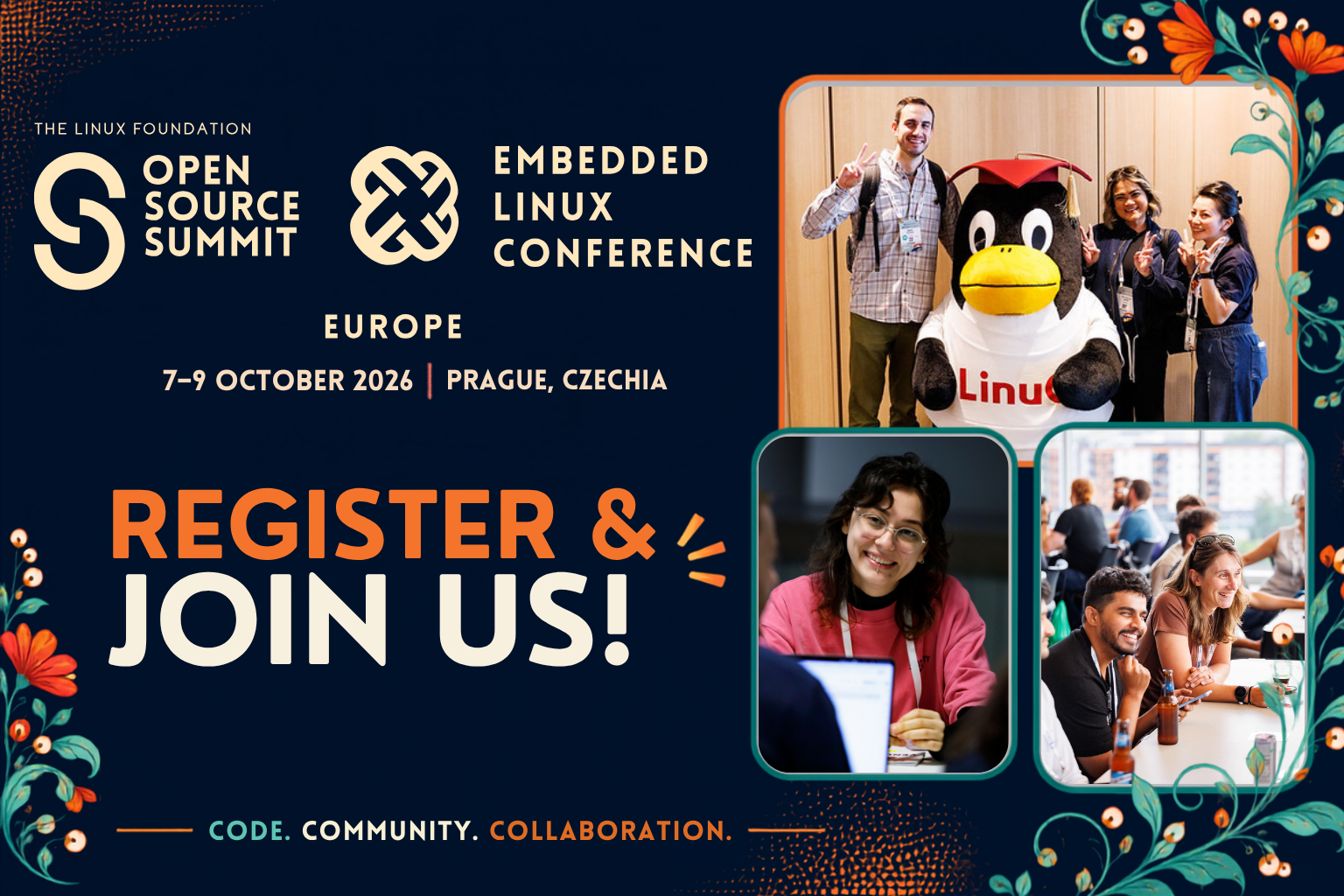
Open Source Summit + Embedded Linux Conference Europe goes LIVE October 7-9 in Prague! Don’t miss the premier event for open source developers, technologists, and community leaders to collaborate, share information, solve problems, and gain knowledge - furthering open source innovation and ensuring a sustainable ecosystem for all.
Register by September 21 + SAVE!
Explore the Schedule
View the Keynote Speakers
LF Research: Participate in this month’s surveys and read about the tech talent market in Japan!
2026 Cloud Native Annual Survey
The annual cloud native survey is here! What’s happening in the cloud native world? From new tool adoption to the biggest challenges teams are facing today, we want to know what your experience looks like. If you’re just starting your journey or you're a seasoned cloud developer, your input helps shape the research that guides the industry.
Do you work in financial services?
 FINOS and LF Research, in partnership with GitHub, Scott Logic, and BrightQuery, are fielding the 2026 State of Open Source in Financial Services survey. We want to know: How is your organization using open source and navigating AI tools while ensuring regulatory and cybersecurity compliance? This survey takes just 10 minutes!
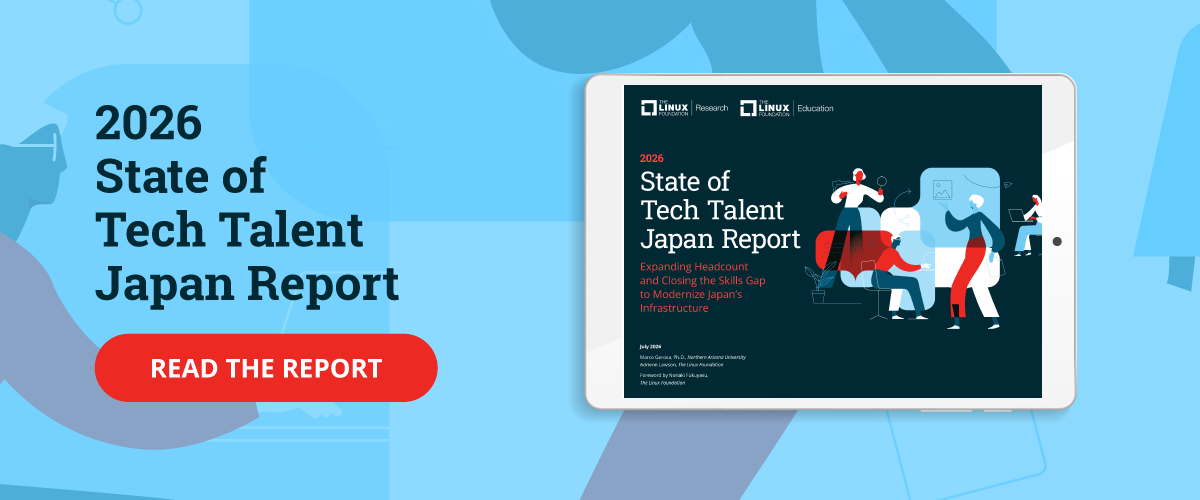
The 2026 State of Tech Talent Japan Report is now published in English and Japanese, marking the third installment of the 2026 Tech Talent series! The report offers some compelling insights into how the Japanese IT market is evolving, particularly in the face of AI. Key takeaways show that AI is a major net driver of job creation in Japan, but full-stack readiness is a challenge. To address this, Japanese organizations are prioritizing internal upskilling over external hiring.
LF Europe: Community Updates
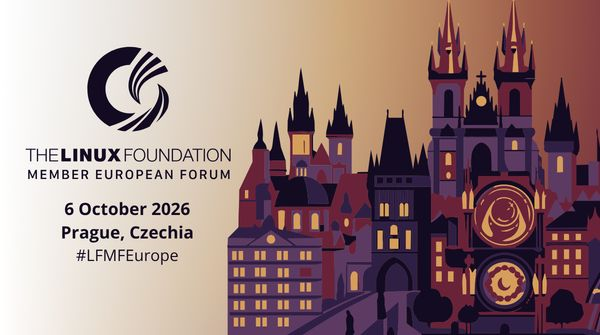 The Linux Foundation Member European Forum is an annual regional gathering for Linux Foundation European members, along with invited speakers, sponsors and media. This year’s event takes place on 6 October in Prague, immediately before Open Source Summit Europe.
This event cultivates collaboration, open innovation, and partnerships among those in the private and public sectors working to drive digital transformation through open collaboration. It is a must-attend for business and technical leaders looking to advance a Europe-wide open source strategy and shape how European organisations participate in the global technology commons.
While the LF Member European Forum is invitation only, you can request an invitation here.
Linux Foundation Projects: Featured news
.png?width=1600&height=900&name=Blog%20(63).png)
Formations
-
Linux Foundation Launches the Tokenomics Foundation to Define the Economics and ROI of AI Value | The Linux Foundation officially announced the launch of the Tokenomics Foundation. Backed by more than 30 founding initial organizations, this new initiative will establish open, vendor neutral standards, benchmarks, and best practices to help enterprises track the true cost of ownership, ROI, and variable spend of AI. [Learn more about the Tokenomics Foundation >>]
-
Xen Project Releases Xen 4.22, Strengthening Open Source Virtualization for Cloud, Embedded and Automotive Systems | The Xen Project announced the general availability of Xen 4.22, the latest release of its open source type-1 hypervisor. This major update introduces AMD Zen 5 hardware support, guest suspend/resume power management for Arm, SSTC timing extensions for RISC-V, and enhanced functional safety testing to support modern data center, cloud, embedded, and automotive deployments. [Read the announcement >>]
Academy Software Foundation (ASWF)
- Join us virtually for Dev Days on September 17: Our 24-hour virtual hackathon is designed to encourage individuals of all levels, ranging from first-time contributors to seasoned veterans, to interact with the community and make their first (or twenty-first!) contribution to a project. Maintainers and regular contributors for each project will be available to support and mentor all contributors throughout the process and will have a curated list of suggested day-sized tasks to choose from. Learn more and sign up to participate.
- Watch the ASWF 2026 sizzle reel: check out the latest reel featuring some of the movies and films from the past year that used ASWF projects. Watch the reel.
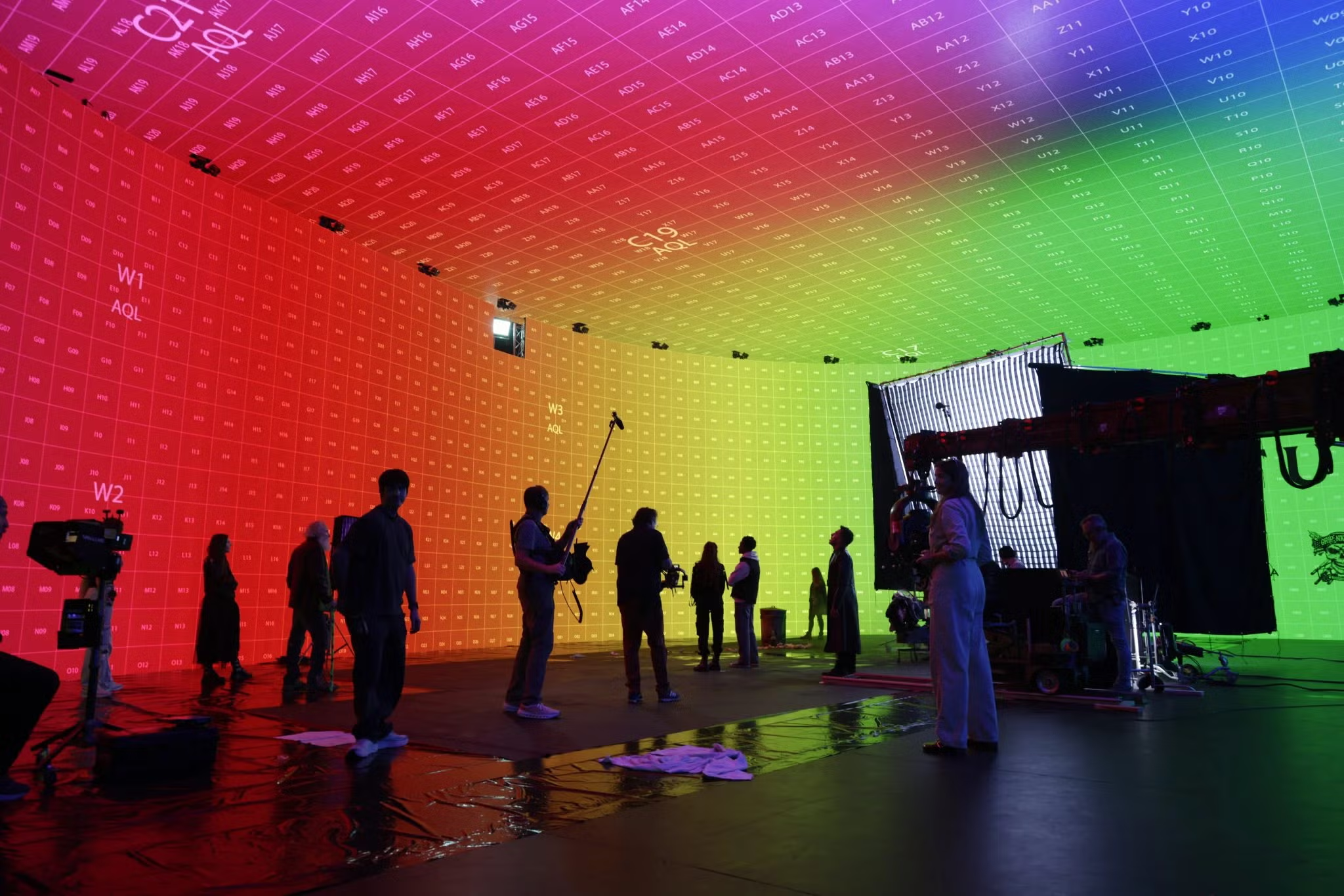
- ASC StEM3-VP now available through DPEL for testing virtual production screens: The American Society of Cinematographers has contributed its third-generation Standard Evaluation Material for virtual production (StEM3-VP) to the ASWF's Digital Production Example Library. StEM3-VP was designed specifically for in-camera visual effects workflows, and enables cinematographers to evaluate and validate an LED volume prior to filming. The free asset set includes pre-built Unreal Engine environments, 2D driving plates/test elements, and the "Warped: CyberCity" reference scene, all aimed at helping cinematographers calibrate and stress-test LED volumes before shooting. Read the blog and download StEM3-VP
- Three new ASWF members: ASWF welcomed CIQ as a Premier Member, Evercast as a General Member, and Rochester Institute of Technology as an Associate Member, bringing added expertise in render-farm infrastructure, real-time creative review tools, and academic training in open source tools like OpenColorIO and ACES. Read more here.
- New Snap installer for MoonRay: ASWF members DreamWorks Animation and Canonical have released a Snap installer for MoonRay, a high-performance, open source production path-tracing renderer developed by DreamWorks Animation and contributed to the Academy Software Foundation earlier this year. The new Snap installer provides a fast and easy way to get MoonRay up and running on Linux systems. Read more here.
Agentic AI Foundation (AAIF)
-
MCP Dev Summit Seoul: MCP Dev Summit Seoul is taking place on August 12-14. Keynote speakers include Ana Jimenez Santamaria from The Linux Foundation and Den Delimarsky from Anthropic. Late attendee and academic tickets are still available, but limited so purchase yours today. Register here >>
-
AGNTCon + MCPCons: AGNTCon + MCPCon season is upon us, with China, Japan, Europe, Canada, and North America coming up on September 6-7, 10-11, and 17-18, and October 5-6 and 22-23 respectively. These conventions are geared towards developers, researchers, and platform builders who want to learn about and contribute to the Agentic AI community, with each event including technical sessions, real-world case studies, and keynote speakers.
- MCP 728 Launch: AAIF launched MCP 728 on July 28th. The new protocol is now stateless, no longer requiring the previous session handshake, so a load balancer can send any request to any server instance without a shared session store. AAIF held 7 events in 6 cities including San Francisco, New York, and London, where more than 475 people celebrated the launch. There was cake and guest speaker demonstrations highlighting the new changes taking place. Take a look at Craig McLuckie’s article outlining the major changes that were enacted and check out the photos from the festivities. More MCP 728 blogs here >>
- AAIF Ambassadors: AAIF's ambassador program is growing. Ambassadors published more than 161 contributions in July. Contributing through blog posts, tutorials, meetups, code and much more. This group continues to help grow and diversify the Agentic AI ecosystem in partnership with AAIF.
Alliance for OpenUSD (AOUSD)
-
- AOUSD welcomed four new General Members — ByteDance (via PICO), Huawei, Physicl, and Unity — joining founding members Adobe, Apple, Autodesk, NVIDIA, and Pixar.
- The Core Specification Working Group began the ISO certification process for Core Specification 1.1 (the first step toward international standardization, aimed at reducing procurement friction in regulated industries like manufacturing, automotive, and government) and launched a public GitHub repository for direct developer input. The Geometry, Physics, and Materials Working Groups are targeting 1.0 releases later this year.
- The announcement also frames OpenUSD as an emerging 3D data layer for agentic AI workflows, citing early implementations from Cesium (AI-integrations for geospatial data), PTC (multi-agent CAD-to-robotics workflows), and NVIDIA (nanoUSD-labs, an experimental agent-guided USD implementation). AOUSD and members including Pixar, NVIDIA, Autodesk, and Epic Games presented sessions at SIGGRAPH 2026 (July 19–23, Los Angeles).
- Announcing OpenUSD v26.08: Key Features and Improvements

- A schema-focused release centered on interoperability and authoring precision, introducing three new foundational schemas:
- Profiles — a formal vocabulary (ProfileAPI, reverse-domain capability IDs like usd.geom.skel) for declaring and querying whether a given tool can faithfully open, edit, and round-trip an asset.
- Multiple Level-of-Detail (UsdLod) — a standard framework for authoring and selecting between multiple detail representations of an asset (by distance, screen size, or explicit override), replacing ad hoc per-application conventions.
- Backplates (UsdGeomBackPlateAPI) — a schema for describing camera-tied background images used in VFX match-moves, object replacement, and scene extension, with an included Hydra/Storm implementation. Available now on GitHub and via pip install usd-core (PyPI).
- A schema-focused release centered on interoperability and authoring precision, introducing three new foundational schemas:
Alpha-Omega
- Alpha-Omega introduced a seasonal grant framework, expanded Security Engineers in Residence, completed audits for Rust and PyTorch ExecuTorch, and rolled out Scrutineer, an AI-powered vulnerability scanner.
App Defense Alliance
-
The App Defense Alliance has a new homepage with a refreshed design and streamlined guidance for developers, policymakers, and testing labs.
Explore the site → -
Alliance Chair Alex Duff outlines how common standards are a critical antidote to regulatory fragmentation in a thought leadership piece. Check out the article →
-
DASA provides developers with a baseline of security requirements for desktop applications, based on established open standards and paired with assessment criteria. Learn more about DASA →
Automotive Grade Linux (AGL)
- Agenda Released for AGL All Member Meeting Europe 2026:
Full schedule details are now live for the upcoming All Member Meeting Europe, taking place September 30 to October 1 in Berlin. The event features key technical presentations, including Honda’s keynote on JASPAR API standardization for SDVs and Elektrobit’s session on dynamic workload orchestration using Eclipse Ankaios. Developers, platform engineers, and automotive stakeholders can explore the complete lineup of sessions, working groups, and live demonstrations to prepare for the event.
View the agenda → - Submit a talk for Automotive Linux Summit Tokyo, Dec. 7-9, 2026:
Speaking applications are being accepted for the upcoming industry gathering in Japan. Maintainers, developers, and platform engineers can present their latest technical developments and architectural insights directly to automotive ecosystem stakeholders. Participants are encouraged to contribute to the evolving software-defined vehicle landscape before abstract submissions close on August 24.
Submit a proposal → - AGL and JASPAR (Japan Automotive Software Platform and Architecture) have kicked off collaboration discussions on Yoriito, an open source project promoted by JASPAR, with the goal of integrating the code into AGL SoDeV. Yoriito has participation from leading automakers, suppliers, and software companies worldwide. Watch this presentation by Kazuo Tsubouchi from Honda to learn more.
- Adapting AGL for the Yocto Project 6.0 LTS Release: In this presentation, Konsulko Group outlines how Automotive Grade Linux is integrating the Yocto Project 6.0 "Wrynose" Long Term Support release into AGL 22.0 "Vibrant Vimbra." The session highlights critical updates across core system packages, including systemd and QEMU. Embedded developers and maintainers can learn how these updates enhance platform capability and simplify downstream distribution builds. Watch the recording →
- Exploring Flatcar Container Linux for Software-Defined Vehicle Architecture: Fujitsu Corporation details how Flatcar Container Linux provides a container-optimized OS foundation for continuous automotive software deployment across vehicle lifecycles. The session covers Flatcar's rolling-release update model, long-term support capabilities, and practical strategies for integrating the OS with the AGL SoDeV reference platform. System architects can review this approach to improve edge-to-cloud infrastructure integration. Watch the recording →
CAMARA
- Powering the Spatial Web with CAMARA APIs: A TM Forum Catalyst shows how CAMARA APIs, GSMA Open Gateway, TM Forum Open APIs, and DSSP can expose trusted network capabilities for Industry 4.0 use cases. Read more.
- A new era for authentication: GSMA explores how operators and enterprises are using CAMARA APIs and GSMA Open Gateway to scale Phone Number Verification and strengthen digital trust. Read on.
- Session Insights API reaches alpha: Contributed by CableLabs, the API enables applications to share real-time KPIs, receive quality scores, and get network-based recommendations. Read the blog from Ben Hepworth, Principal Architect at CableLabs and CAMARA TSC.
- Network APIs as building blocks for enterprise AI: Deutsche Telekom highlights how CAMARA simplifies telecom capabilities for authentication, fraud prevention, and trusted customer interactions. Read more from RCR Wireless News.
- More secure digital identity with CAMARA: Vodafone’s Number Verify 2.0 uses the CAMARA standard to support phone number verification without SMS one-time passwords. Learn more.
- Connecting AI agents and telecom APIs: Rakuten Symphony and Colt Technology Services explored how MCP, CAMARA, and GSMA Open Gateway can work together to simplify network access for developers. Watch now.
CHIPS Alliance
- A new CHIPS Alliance Developer Spotlight features Mehdi Saligane, discussing his work across AI-assisted design, open source EDA, analog and mixed-signal automation, hardware-software co-design for AI, and secure and trusted hardware. Read the spotlight >>
- CHIPS Alliance member Antmicro reached an initial milestone in implementing four-state logic in Verilator, adding experimental support for 0, 1, x, and z values as work continues toward full four-state logic support. Read the update >>
- Qualcomm Technologies joined CHIPS Alliance as a Platinum Member, bringing its experience in SoC design across mobile, automotive, and data center applications. Lu Dai, Vice President of Technical Standards at Qualcomm, also joined the CHIPS Alliance Governing Board. Read the announcement >>
- At DAC 2026, Michael Gielda and Krzysztof Bieganski of Antmicro presented during the “Open-Source EDA, Data and Collaboration” Birds-of-a-Feather session, covering developments across CHIPS Alliance projects and four-state logic and verification support in Verilator. Read the event overview >>
Cloud Native Computing Foundation (CNCF)
- K8gb becomes a CNCF incubating project | The CNCF Technical Oversight Committee (TOC) has voted to accept Kubernetes Global Balancer (K8gb) as a CNCF incubating project.
- Subaru Wins CNCF End User Case Study Contest for Accelerating AI Development with Cloud Native Infrastructure | Subaru received the award for transforming the AI infrastructure behind its next-generation EyeSight development platform. By combining Kubernetes with multiple CNCF technologies such as Envoy Gateway, Gateway API and MetalLB, the company dramatically improved developer productivity, infrastructure efficiency and machine learning (ML) reproducibility. By optimizing the delivery of large AI container images, adopting GitOps practices and automating end-to-end ML workflows, Subaru created a scalable cloud native platform that enables faster iteration on AI models while improving operational consistency.
- CNCF and SlashData Report Finds Japan’s Cloud Native Community Reaches Nearly 1 Million Developers | The research highlights the continued growth of Japan’s cloud native ecosystem driven by the demand for AI, the country’s distinct infrastructure strategy and the increasing maturity of platform engineering across software development.
- CNCF Announces Schedule for Debut Observability Summit Europe | The summit features more than 25 technical sessions, bringing together developers, site reliability engineers and platform teams to address the operational demands of scaling cloud native systems.
- CNCF Strengthens Partnership with Broadcom as a Platinum Member to Advance AI-Ready Cloud Native Infrastructure | As enterprises increasingly move AI and data-intensive workloads into production, cloud native technologies are vital in delivering the scalability, reliability and operational efficiency required to support these environments. Broadcom’s expanded investment in CNCF reflects its ongoing commitment to open source collaboration and the technologies enabling organizations to build and operate modern application platforms.
- LitmusChaos Q1-Q2 2026 update: community, contributions, and project progress | The first half of 2026 was one of the busiest stretches the project has had. Six releases shipped, the community kept growing across every channel we track, and we closed the half with a keynote slot at KubeCon + CloudNativeCon India. Here is what happened between January and June.
- OpenCost 1.121.0: First-of-a-kind Kubernetes inference cost tracking | OpenCost 1.121.0 introduces new Kubernetes inference cost tracking by integrating with llm-d to measure both the total allocation costs and active usage costs for AI models. This provides platform teams with visibility into the actual per-token cost of their GPU workloads, helping them optimize hardware utilization and make better data-driven build-versus-buy decisions.
- Kubeflow SDK evolution - One million downloads and counting | The Kubeflow SDK has officially reached one million downloads on PyPI, marking the rapid adoption of its unified, Python-first interface. This streamlined tool simplifies machine learning workflows and distributed training by allowing data scientists to configure and launch workloads entirely in Python, without needing to write complex Kubernetes YAML manifests.
- Cortex completes OSTIF security audit | The Open Source Technology Improvement Fund is proud to share the results of our security audit of Cortex. Cortex functions as a long-term, multi-tenant scalable open source storage for Prometheus and OpenTelemetry. Thanks to Quarkslab and the Cloud Native Computing Foundation (CNCF), Cortex received custom review and documentation for current and future security development.
- Lima v2.2: Windows guests and TPM 2.0 emulation | Following macOS and FreeBSD guests in v2.1, Lima v2.2 takes the next big step: Windows guest support. With this release, a single `limactl` workflow can now boot Linux, macOS, FreeBSD and Windows virtual machines. Lima v2.2 also introduces emulated TPM (Trusted Platform Module) 2.0, a foundational building block for modern guest operating systems and for disk-encryption workflows.
- Welcome CoHDI to the CNCF: Evolving Kubernetes into composable disaggregated infrastructures | CoHDI has officially joined the CNCF Sandbox to advance Kubernetes orchestration for composable disaggregated infrastructures. By integrating with Kubernetes' Dynamic Resource Allocation (DRA), the project allows hardware resources like GPUs to be dynamically attached and detached from cluster nodes, optimizing resource utilization and energy efficiency for demanding AI workloads.
- How Japan’s 250% Training Surge is Shaping Global AI Talent | A recent 250% surge in Kubernetes certifications in Japan, sparked by the 2025 KubeCon Tokyo, has led to a rapid increase in highly certified cloud-native professionals. This growing talent pool of "Kubestronauts" is equipping the region with the rigorous, production-ready expertise needed to reliably run and scale demanding AI inference workloads.
Confidential Computing Consortium (CCC)
- In Remembrance: The CCC community is mourning the loss of Dan Williams, longtime Linux Kernel SIG lead, remembered for his technical depth and warmth. A family support fund is active for anyone in a position to contribute. If this news is difficult, support is available via findahelpline.com or the International Association for Suicide Prevention's crisis center directory.
- $91,000 in Grants: How New University Research Is Pushing the Boundaries of Confidential Computing: Durham University and Indiana University were selected from 35 proposals across 32 organizations to advance hardware-backed secure AI and data governance research.
- Stay in the loop: Subscribe to CCC newsletter and get monthly updates and messages from CCC’s Executive Director, TAC, Outreach Committee, and more!
Continuous Delivery Foundation (CDF)
- 📣 New | When the Factory Matters More than the Code: Securing CI/CD Together
- 🎉 2026 CD Foundation Ambassador Cohort Announced | Welcome to all our new and returning ambassadors; we can’t wait to collaborate with you!
DPDK
-
DPDK Dispatch Newsletter Q3 2026 is live on LinkedIn, the project's quarterly roundup for a DPDK-fluent audience. The Q3 issue collects the latest interviews and user stories, the 26.07 release, Stockholm Summit session rollouts, and highlights from the developer mailing lists. The single fastest way to see where the project sits at the mid-year mark.
-
The final installment in DPDK's fifteen-year retrospective traces the path from Intel-only initiative to Linux Foundation multi-vendor collaboration. Part 3 covers milestones from the cryptodev API (2015) and Arm support (2016) through Windows upstream (2019), the annual November LTS cadence starting with 20.11, and contributions from Red Hat, Arm, NVIDIA, Broadcom, Cisco, Marvell, NXP, and others. It closes on open technical questions the community is still framing, including DPDK's role in AI infrastructure and its potential place in an Ultra Ethernet Consortium software stack.
-
Governing Board Chair Tim O'Driscoll (Intel) explains why Intel opened DPDK up in 2011 and how the multi-vendor governance has held together for fifteen years. Tim credits Lead Maintainer Thomas Monjalon (NVIDIA) for setting the tone across contentious governance decisions, and singles out Morten Brørup at SmartShare Systems as a rare Technical Board member from a company that uses DPDK rather than ships the silicon it runs on. The piece also captures Tim's memories of DPDK's original architect, Venky Venkatesan, who died in 2024.
-
Suchit Lepcha (NXP) explains how NXP became the only microprocessor partner on NVIDIA's Holoscan Sensor Bridge, alongside FPGA and microcontroller vendors. The team ran a real-time 4K camera pipeline on NXP's i.MX 95 applications processor under Linux, delivering sensor data end-to-end in 16.5 milliseconds against a 20-millisecond requirement. DPDK's user-space packet path added 200 to 300 microseconds on top of sensor capture, the margin that made a general-purpose Arm-based applications processor viable in an ecosystem otherwise built on dedicated silicon.
-
The June 16 Governing Board minutes cover the DPDK 26.07 release, an AI code-review helper in the review cycle, and 2027 event planning. Jerin Jacob (Marvell) has taken over as Technical Board representative to the Governing Board from Hemant Agrawal (NXP); the 26.07 release candidate on June 11 introduced 432 patches focused on performance, virtualization, memory, and RISC-V, with the release shipping in July; and a non-blocking AI code-review helper has been running against the 26.07 cycle, with a broader adoption recommendation expected after release. The board confirmed two regional summits for 2027, a European spring event with Geneva (potentially with CERN), Madrid, Barcelona, and Lisbon under consideration, followed by a second event in Asia.
-
Twenty-nine session recordings from DPDK Summit 2026 in Stockholm are publishing week by week through the summer on the YouTube playlist. Sessions cover production routing with Grout and FRR, rte_flow offload limits, eBPF observability, AI-assisted formal verification, CI integration, and deployment stories from CERN, Ericsson, and ByteDance. Recent uploads include Technical Board member Stephen Hemminger on kernel network paths and packet capture, and Bruce Richardson (Intel) on the 2026 outlook.
eBPF Foundation
-
Community & Advocacy Fellowship Program
Applications are now being accepted for the 2026 eBPF Foundation Community & Advocacy Fellowship Program. The program supports active members of the eBPF community who are growing and strengthening the ecosystem through education, documentation, translation, and community advocacy. The program is designed to expand global access to eBPF by empowering individuals who are already making meaningful contributions, but are not paid to work on eBPF full time. Applications are due September 11. Learn more → - Google Deploys eBPF for Fleet-Wide Real-Time Lock Contention Analysis
A new case study details how Google uses lightweight eBPF tracing programs across production clusters to diagnose transient performance anomalies and I/O latency spikes. By filtering telemetry directly in-kernel, site reliability engineers safely isolate tail-latency issues within hours instead of weeks. Platform engineers can learn how dynamic kernel tracing eliminates the need for high-overhead profiling tools and custom debug kernels.
Read the case study → - Cloudflare Powers Global Security and Networking Infrastructure with eBPF Operating one of the world's largest edge networks, Cloudflare leverages eBPF as a foundational platform for DDoS mitigation, load balancing, programmable socket dispatch, and zero-downtime service upgrades. Extending kernel capabilities dynamically allows Cloudflare to defend against sophisticated attacks while reducing infrastructure complexity. Infrastructure teams can examine how in-kernel programmability supports massive traffic scale and high-performance observability.
Read the case study
Enabling Linux in Safety Applications (ELISA) Project
-
Ritsumeikan University Joins the ELISA Project!
Ritsumeikan University has joined the ELISA Project as an Associate Member. Its expertise in embedded computing, dependable systems, real-time data, mobility, cybersecurity, and safety research will support ELISA’s work on Linux-based safety-critical systems. Read the blog to learn more about Ritsumeikan University and the knowledge it brings to the ELISA community..png?width=1200&height=628&name=ELISA%20Project%20-%20New%20member%20-%20Welcome%2c%20Ritsumeikan%20University!%20(2).png)
- From Pull Request to Patient Safety
Requirements traceability, risk management, verification and validation, change control, and automated regulatory documentation are central to Tidepool’s open source Quality Management System. Tapani Otala explains how Tidepool links requirements to design, code, tests, risks, and mitigations, and uses structured development data to generate regulatory records. Read the blog to learn how these processes support FDA-cleared medical software, regulatory compliance, and patient safety while keeping development open and collaborative. - Building Vendor-Neutral and Deterministic Medical Robotics
In the session “Standardizing Deterministic Interoperability and Resource-Intelligent Design in Medical Robotics,” Lilinoe Harbottle of San Jose State University introduced Prism, a framework for open, auditable, and vendor-neutral medical robotics. Prism combines independent kinematic verification, isolated processing resources, safety-operated envelopes, and auditable telemetry to improve interoperability, reduce vendor lock-in, and support more accessible and sustainable medical robotics. Learn more. - ELISA Project at the Zephyr Project Meetup (August 13, 2026) – Braunschweig, Germany
Philipp Ahmann of ETAS GmbH (Bosch), ELISA Project TSC Chair and Systems Working Group Chair, will speak at the Zephyr Project Meetup in Braunschweig, Germany, on August 13, 2026. His session, “Zephyr in Safety-Critical Linux Architectures: Insights from ELISA,” will explore how Zephyr can complement Linux and hypervisors such as Xen in larger safety-critical system architectures. The talk will also cover emerging architectural patterns, the role of RTOS technologies in safety-oriented systems, and collaboration between open source communities. Read more. - ELISA Project at Linux Plumbers Conference 2026
The ELISA Project will participate in the Safe Systems with Linux Microconference at Linux Plumbers Conference 2026, taking place October 5-7 in Prague. The session will discuss requirements, testing, traceability, tooling, and documentation for building dependable and safety-relevant systems with Linux. Learn more. - ELISA Project at Open Source Summit Europe 2026
The ELISA Project will be part of the Safety-Critical Software track at Open Source Summit Europe, taking place October 7–9 in Prague. The track will explore open source safety standards, regulatory compliance, security updates, requirements traceability, quality assessments, safety analysis, and technical developments for safety-critical systems. It will also include a Safety Critical Software BoF. Check the schedule.
FINOS
-
Fluxnova 3.0 Advances Open Source Workflow Capabilities
FINOS has released Fluxnova 3.0, the latest version of its open source workflow orchestration platform. The release delivers major advancements in modernization, process transparency, and AI extensibility. Key features include a new Control Center UI for end-to-end process visibility, Restricted Variables for protecting sensitive data, a plugin ecosystem, and MCP integration that enables AI agents to dynamically execute workflows.
Read the full release notes
Learn more -
FDC3 3.0 Brings Secure, AI-Ready Application Interoperability
FINOS has released FDC3 3.0, the latest version of its open standard for financial application interoperability. The new version focuses on security by design, observability, cross-firm interoperability, and support for modern application architectures, including AI-driven workflows, enabling financial institutions to build more connected and trusted digital experiences.
Read the blog
Learn more - Exploring the ROI of AI Governance and Adoption in Financial Services
As financial institutions continue to scale AI initiatives, understanding and measuring business impact is becoming increasingly important. The FINOS AI Governance Framework (AIGF) helps organizations move from AI governance principles to practical implementation by providing a shared framework for developing AI controls, reducing duplicated effort, accelerating delivery, and supporting responsible AI adoption in highly regulated environments.
Read about the value the AIGF can bring to your organization
High Performance Software Foundation (HPSF)
-
The High Performance Software Foundation (HPSF) is a neutral hub for open source high performance software. View our growing list of projects and we invite you to get involved.
We’re excited to host the 3rd annual HPSF Conference again in 2027. Save the date for next year’s HPSFCon - April 12-16, 2027 in Montreal, Canada.
Jupyter
- JupyterLab 4.6 and Notebook 7.6 are out! Michał Krassowski rounds up the new release: interface customization options, an improved file browser and debugger, and a quick way to jump between recently edited cells, alongside a broader push on keyboard shortcuts, navigation, and accessibility. Under the hood, the switch from webpack to Rspack makes building extensions (and JupyterLab/Notebook themselves) about five times faster. Notebook 7.6 adds its own Scratchpad console, letting you run quick experiments or inspect variables next to a notebook without touching it. In total: 68 new features and enhancements, 97 bug fixes, and 38 documentation improvements. Read the full release notes.
- The Jupyter Executive Council and Jupyter Foundation have opened this year's funding round, open through Wednesday, September 9, 2026. Proposals should align with growing contributor capacity and improving the reliability, security, and consistency of Jupyter's software. Any active community member or contributor can submit. Collaborative proposals from multiple contributors are especially encouraged, and there's a new template section for seeking endorsements from affected Jupyter councils or committees. See the full call and submit a proposal.
- "Navigating the Post-Workshop Fog: a Path to MyST". Chiara Marmo and Serena Bonaretti recap "Demystifying MyST Markdown in Education," a Jupyter Foundation- and SaclAI-School-funded workshop held at Paris-Saclay University from June 15–17, 2026. Mornings of presentations paired with afternoon collaborative sprints walked participants through a complete Jupyter Book workflow, from building their first Jupyter Book to publishing it. Read the full recap.
- JupyterLite 0.8 is released! 🎉 This release brings JupyterLite up to date with JupyterLab 4.6 and Notebook 7.6, refreshes the loading screen (now matching JupyterLab's splash screen with the Jupyter planet logo and orbiting moons), improves the reliability of the in-browser file system, and moves to a faster build system. The post also covers updates across related projects, including the JupyterLite Terminal and the Xeus, Pyodide, and JavaScript kernels. Read the full release notes.
- Jupyter Mini Summit at Open Source Summit Europe 2026
Heading to Prague this fall? Join the Jupyter community on 6 October for the Jupyter Mini Summit, co-located with Open Source Summit Europe at the Prague Congress Centre. Running from 09:00 to 12:30, the summit brings together contributors, users, and community members to talk about where Project Jupyter is headed next, highlight ongoing initiatives, and swap ideas on strengthening the ecosystem. Whether you've been contributing for years or are just getting started, there's a seat for you at the table. Prague Congress Centre, Prague, Czech Republic 6 October 2026 · 09:00–12:30. Learn more and add it to your calendar
LF AI & Data
- Milvus 3.0 Advances AI-Native Data Infrastructure: Milvus 3.0 introduces major architectural enhancements designed to support increasingly complex AI workloads, including improved performance, scalability, and support for multimodal and agentic applications. Read the blog >>
- A new technical deep dive explores how Milvus Snapshots create point-in-time collection views without copying data, enabling faster recovery, testing, and batch processing.
- Preparing Enterprise Documents for AI with Docling: A new technical blog explores how Docling for IBM watsonx on AWS transforms unstructured documents into structured, AI-ready data, improving retrieval quality for enterprise search, RAG, and AI agent applications. Read the blog >>
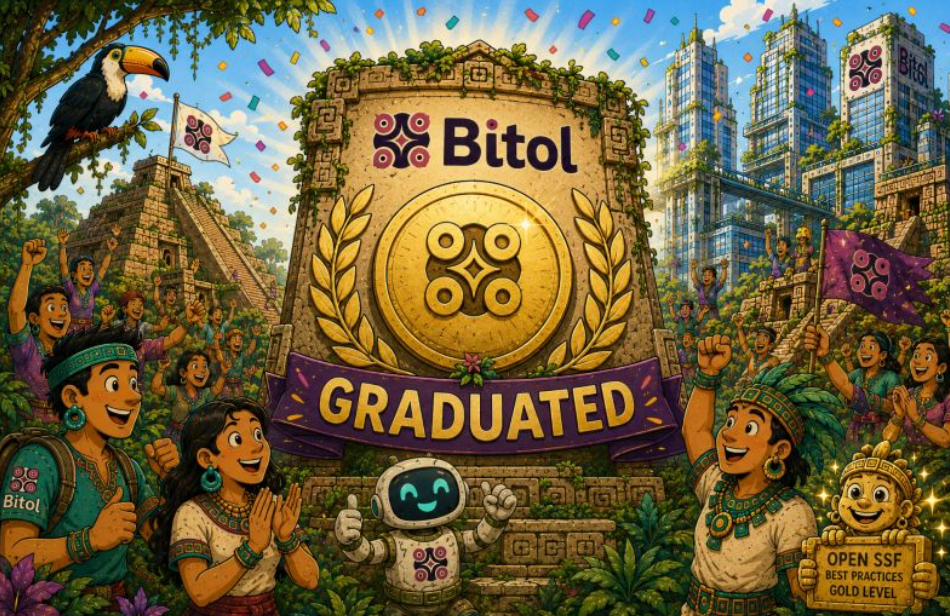
- Bitol Achieves Graduated Project Status: Bitol, the project behind the Open Data Contract Standard (ODCS) and Open Data Product Standard (ODPS), has become the 13th LF AI & Data project to achieve Graduated status. This milestone recognizes its growing adoption, active contributor community, and sustained technical maturity. Learn more >>
LF Decentralized Trust
- The questions institutional finance keeps asking, answered on camera in the LF Decentralized Trust Member Voices series. Recent conversations feature Nitin Gaur of Nethermind, and Johnna Powell of DTCC on how their organizations are using LFDT technologies. The series was recorded at LFDT's Member Summit at DTCC's Jersey City HQ in January 2026 and is publishing weekly through Sibos.
- Web3j 6.0 ships with full Ethereum Fusaka support, closes remaining Pectra gaps, and adds hooks for AI-agent integrations in Java-based dApps. Web3j maintainer and Web3 Labs lead engineer Nischal Sharma details the release. Web3j provides Java bindings for Ethereum node interaction under LF Decentralized Trust.
- LF Decentralized Trust Webinar with Advanced AI Society: Who’s Watching the Machines? – September 9. Advanced AI Society will launch Open Verification: Proof-of-Control, a newly approved LFDT community lab developing an open standard for verifying that AI agents stay within their assigned controls. Learn about the verifiability gap, the standard, and how to contribute.
- LF Decentralized Trust hosts a member webinar with Zeeve on tokenized deposits and production-ready infrastructure for regulated digital money on August 19. The session covers production considerations for regulated digital money rails. LF Decentralized Trust will also be at Sibos 2026, September 28 through October 1.
LF Edge
- EdgeLake 2.0 Builds Momentum at the Edge: EdgeLake has released version 2.0.2606 with new capabilities for data ingestion, connectivity, diagnostics, and modular deployments. The release arrives alongside growing community participation and real-world adoption across smart cities, buildings, energy, and industrial environments. Read the blog >>>
- SuperAI SuperBlueprint Advances Agentic AI at the Edge: A new blog explores how LF Edge and the Agentic AI Foundation are collaborating on an open reference architecture that connects AI agents, tools, data, edge infrastructure, and cloud resources. Read the blog >>>
- Building the Foundation for Edge Computing at Scale: The first blog in the State of the Edge 2026 series explores the architectural principles and operational practices needed to scale reliable edge infrastructure, from zero-trust security and GitOps to lightweight orchestration and observability. Read the blog >>>
- Download the State of the Edge 2026 Report: The latest report explores how edge computing is evolving in the age of AI, with insights into architecture, cybersecurity, large-scale operations, and deployments across industrial, retail, tactical, and space environments. Download the report >>
LF Energy
- First CDS Registration Specification Drafts Published | LF Energy published the first drafts of CDS-WG1-01 (Server Metadata) and CDS-WG1-02 (Client Registration), defining an open framework for machine-readable service discovery and automated onboarding, credential management, secure messaging, configuration, and access controls.
- EnerGNN Newly Accepted as an LF Energy Project | EnerGNN applies graph neural networks to full-scale energy network optimization and analysis. RTE uses the open source Python library in R&D on transmission data covering more than 7,000 buses for contingency screening, tertiary voltage control, and substation topology optimization.
- Power Grid Model Surpasses 10 Million Downloads | Power Grid Model has surpassed 10 million downloads worldwide, including more than 5 million through PyPI and nearly 5 million through conda-forge. The project also merged 333 pull requests from 35 contributors in 2026.
- LF Energy Summit Europe 2026 | LF Energy Summit Europe returns to Berlin September 15–16 with sessions on Iberian blackout analysis using Dynawo, TenneT’s grid security work with PowSyBl, OpenSTEF 4.0, digital substations, software-defined charging, bidirectional DC charging, and a Hitachi prototype connecting five LF Energy projects. Standard registration pricing ends August 31.
- Welcome Stephan Gross, LF Energy’s New Community Director for Europe | Stephan Gross joins LF Energy from EU DSO Entity, bringing more than a decade of experience in network planning and digitalization, coordinating European energy research, development, and innovation initiatives, and building expert communities across the sector.
- PowSyBl Completes Its Latest Release Train | PowSyBl’s latest release train spans nine repositories, adding multi-island AC and DC load flow support, DC load flow network caching, new network modeling capabilities, and performance and multithreading improvements for OpenRAO’s MARMOT module.
LF Networking
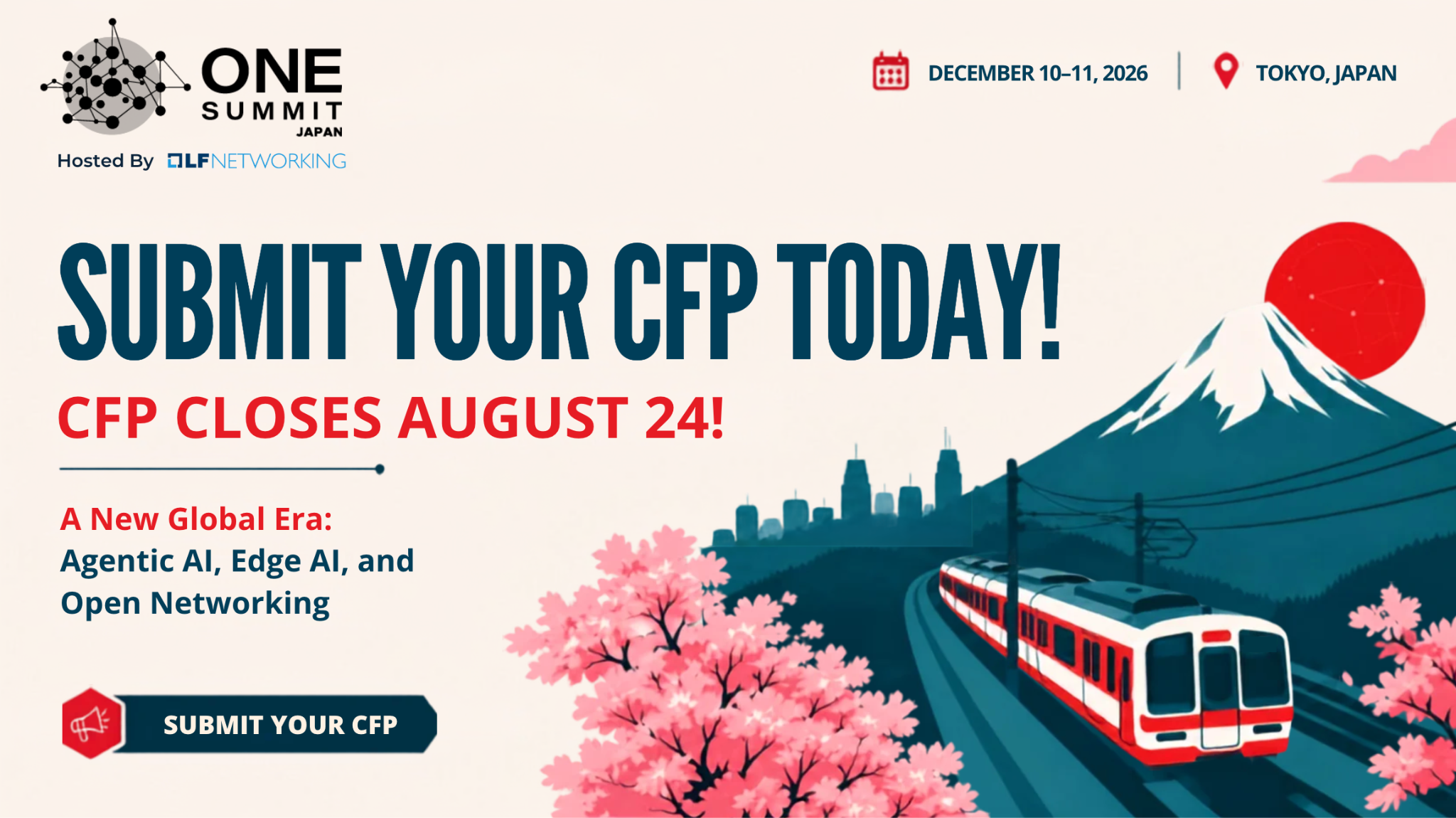
- Final Call for ONE Summit Japan 2026 Proposals: The Call for Proposals for Open Networking & Edge Summit (ONE Summit) Japan closes on August 24! Taking place December 10–11 in Tokyo alongside Open Source Summit Japan, ONE Summit will bring together leaders across networking, edge, cloud, and AI. Submit a session on AI-native networking, autonomous networks, edge AI, cloud native infrastructure, or the future of open networking. Submit a proposal >>>
- Registration and Sponsorships Are Open: Register to attend ONE Summit Japan or explore sponsorship opportunities to showcase your organization to the global open networking and edge community.
- Essedum Accelerates AI-Native Network Automation: A new blog highlights how Essedum brings together data pipelines, model lifecycle management, AI agent development, governance, and orchestration to help telecom teams move AI applications into production faster. It also highlights practical use cases such as AI-assisted 5G network slice qualification. Read the blog >>>
- Exploring the Shift to Autonomous, AI-Native Networks:
In a recent blog series, LF Networking CTO Ranny Haiby explores agentic AI, autonomous network operations, and the open source ecosystem needed to turn emerging technologies into production-ready solutions. Read the series >>>
- Cloud Native Telecom Meet-Up Japan: Nearly 100 members of Japan’s telecom and cloud native communities gathered on July 28 for a meetup co-located with KubeCon Japan. Sponsored by LF Networking, the event featured discussions on AI-native infrastructure, CNF management, autonomous operations, and zero-downtime upgrades. Read the recap >>>
Margo
- Margo Plugfest Advances Multi-Vendor Interoperability Testing
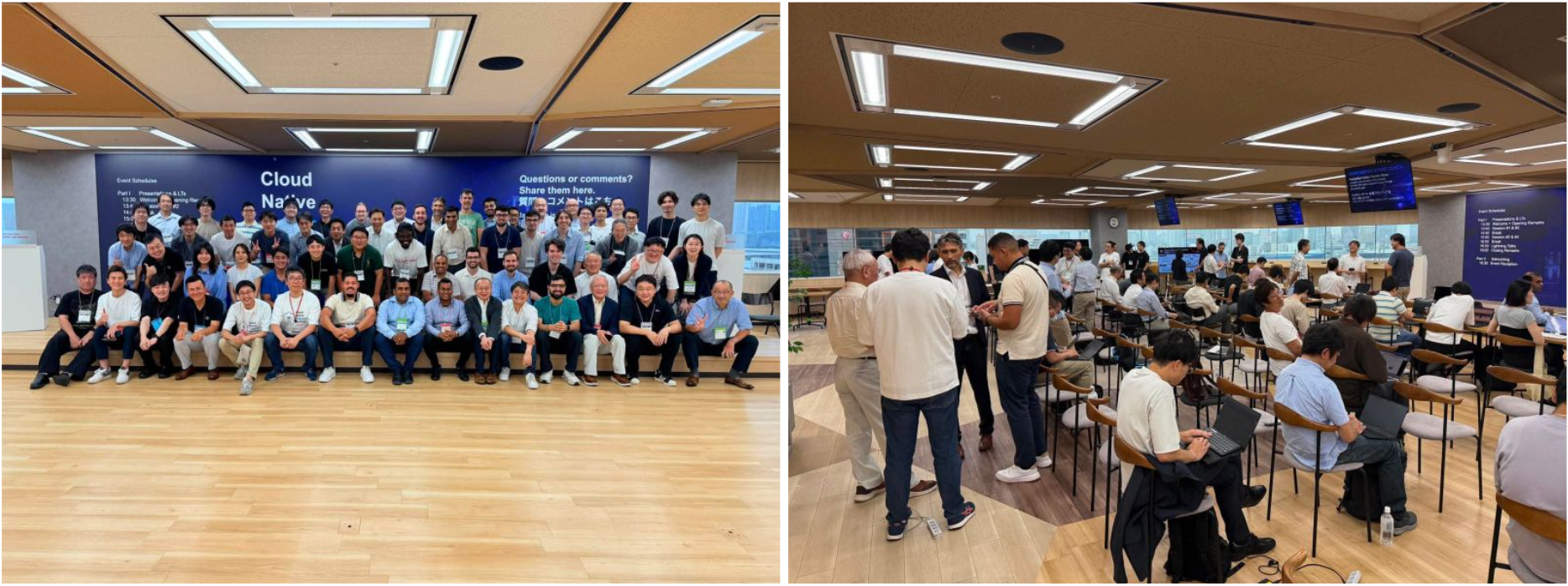
Members and implementers gathered in Nuremberg for Margo’s second Plugfest to test Preview Release 2 (PR2) on physical devices across multi-vendor environments. Moving beyond sandboxes, hands-on integration testing addressed identity frameworks, cybersecurity, packaging, and workload management. These collaborative insights directly shape roadmap planning and App-Kit standardization as the specification moves closer to General Availability.
Get started with PR2 → - ABB Discusses Open Edge Architectures and Future Automation Platforms
In a recent interview, ABB’s Luis Duran explores how user demand for interoperability is accelerating the adoption of open edge ecosystems like Margo. Traditional distributed control systems are evolving through a separation of concerns principle, allowing specialized edge applications to run on platforms like Edgenius. Industrial automation leaders can review how open frameworks provide application flexibility without compromising performance.
Read the blog →
OCUDU Ecosystem Foundation
- Intel Joins OCUDU Ecosystem Foundation as a Premier Member: Intel has joined the OCUDU Ecosystem Foundation as a Premier Member, bringing expertise in cloud-native infrastructure, silicon, and telecommunications to help advance a vendor-neutral ecosystem for Open Source RAN. Intel will support work across reference architectures, validation, and deployment best practices. Read more.
- Coverage from The Fast Mode, Light Reading, Mobile World Live, Simply Wall St, and more.
- OCUDU Ecosystem Developer Summit 2026
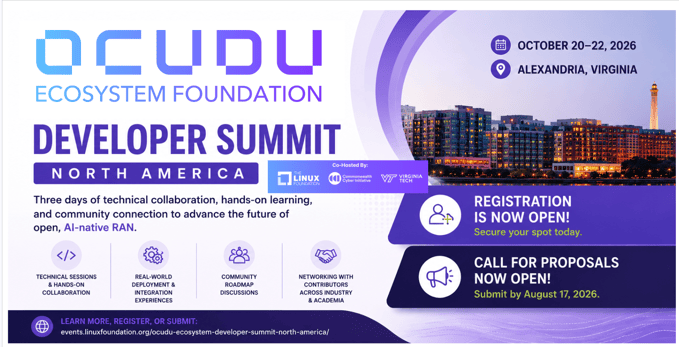
Join the OCUDU community for three days of technical collaboration focused on advancing Open Source AI-native RAN infrastructure. The Call for Proposals is open for technical talks, case studies, tutorials, demos, and community sessions covering Open Source RAN, cloud-native networking, interoperability, automation, testing, 6G, and more. Submit by August 17.
- What we’ve learned from the first three OCUDU Developer webinars: Catch up on the first three OCUDU Developer Webinars, covering the OCUDU overview and roadmap, architecture, and how to work with the codebase. Read the recap blog or watch the sessions on YouTube. The webinar series returns in September.
- Member Spotlight: DeepSig Advances AI-Native RAN with OCUDU: OCUDU member DeepSig is contributing to the Hardware Acceleration and AI-RAN Working Groups, including GPU-accelerated L1 capabilities and development of the dApp/E3 framework for portable AI applications across the RAN. Read more
- OCUDU Expands Support for 5G Non-Terrestrial Networks: OCUDU now supports 3GPP Release 17 Non-Terrestrial Networks (NTN), including automatic satellite ephemeris generation for SIB19. A new hands-on tutorial, developed with support from the SRS team, shows developers how to configure and test standalone 5G NR satellite connectivity using OCUDU. Explore the tutorial.

- OCUDU: Moving Open RAN Toward Commercial Deployment: In a new RCR Wireless interview, Arpit Joshipura of the Linux Foundation discusses how OCUDU is bringing operators, vendors, researchers, and developers together to advance open source RAN, AI-native networks, and the path to 6G. Watch the interview.
- Member Collaboration: Testing OCUDU RAN Security in Real-World Conditions: OCUDU Associate Member POWDER Wireless and Rimedo Labs are collaborating to test jamming detection and mitigation with OCUDU Open Source RAN software in POWDER’s city-scale, over-the-air testbed. The work will help validate how open source RAN can support more secure and resilient networks under real-world conditions. Learn more.
Open Mainframe Project
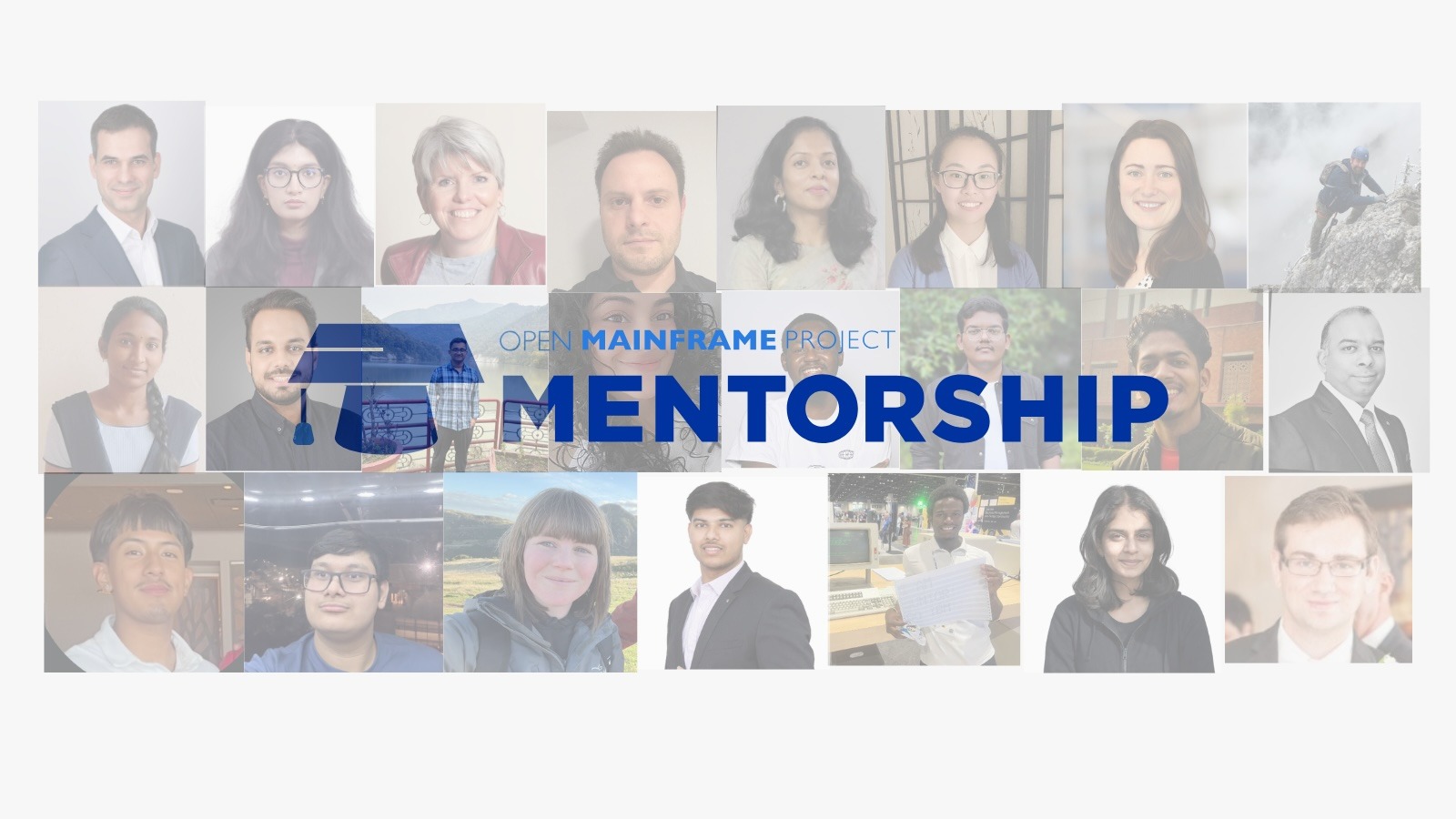 The Open Mainframe Project Mentorship Program is helping the next generation of contributors build hands-on experience with open source mainframe technologies. As the Summer program reaches its midpoint, mentees are sharing their experiences through a series of mid-term blog posts, highlighting projects, lessons learned, and the impact of participating in the program. Read about their experiences:
- "Summer Mentorships 2026: The Recommendation I Never Saw". In this post, Jorge Samaniego, an Open Mainframe Project Summer Mentorship 2026 mentee researcher guided by mentor Francesco Giordano, shares how a thank-you note passed hand to hand through his professor led to a mentorship with Frank Giordano on the Zowe Client Java SDK. Jorge talks about what the interview actually tested (how he thinks through unfamiliar problems, not what he already knew), the two z/OSMF REST API issues he shipped, and how Frank's feedback taught him the difference between code that merely works and code that's good. Read the full post.
- "Summer Mentorships 2026: Bridging the Gap – My Mid-Term Reflection as an Open Mainframe Project MOE Mentee". In this post, Idris Zubair, an Open Mainframe Project Summer Mentorship 2026 mentee researcher guided by mentors Kelsey Colberg, Nanxi Meng, and John Lovett, recaps the first half of his Mainframe Open Education mentorship. He's published six "Mainframe 101" articles with companion LinkedIn posts and built jclcheck.xyz, a tool to help learners work with Job Control Language. Next up: turning those articles into interactive content, centralizing everything on GitBook, and finishing a collaborative learning platform with co-mentee Tushar. Read the full post.
- "Summer Mentorships 2026: Halfway Through My LFX Mentorship – A Platform and a Blog Series for Mainframe Open Education". Six weeks into his twelve-week LFX Mentorship, Tushar Biswas, guided by mentors Kelsey Colberg, Nanxi Meng, and John Lovett, shares a midpoint check-in on the Mainframe Open Education initiative he's building alongside co-mentee Idris. He walks through what got built, what got written, what went wrong along the way, and what's still left to finish before the mentorship wraps. Read the full post.
- "Summer Mentorship 2026: When We Say 'Modernize the Mainframe,' What Are We Actually Promising?" Linisha Bansal, guided by mentor Sarah Julia Kriesch, digs into a question older than AI itself: when COBOL that's run correctly for forty years gets moved to a new compiler, platform, or language, what actually proves it still behaves the same? Drawing on a conversation with GnuCOBOL maintainer Simon Sobisch and a look at CMS's real-world COBOL-to-Java Medicare conversion, Linisha argues AI-assisted conversion is being trusted with far less evidence than compilers have earned over decades and she's asking practitioners to help close that gap through a short survey. Read the full post.
- "Summer Mentorship 2026: Discovery Is Not Migration Where AI Actually Stands for Mainframe Modernization". Ramana Sree K V, guided by mentor Misty Decker, kicks off a summer-long research project on where generative AI actually earns its place in mainframe modernization, and where the hype outruns reality. The post lays out competing narratives (an IBM stock drop over an AI modernization claim versus a Gartner report predicting most 2026 mainframe exit projects will fall short) and previews a research plan built on practitioner interviews rather than vendor decks alone. A white paper is targeted for later this year. Read the full post.
Recent blog posts:
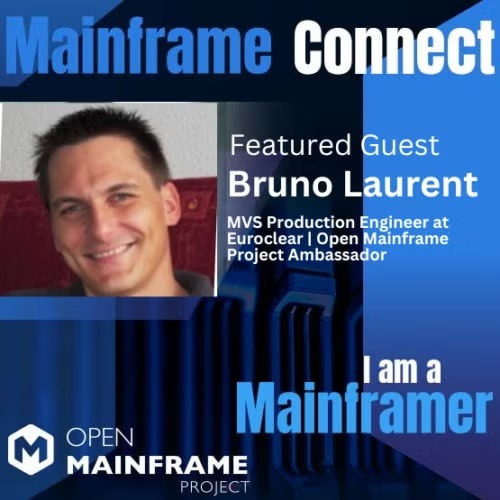
- "I am a Mainframer: Bruno Laurent on Mainframe Modernization, Cloud Development, and AI". In this episode, Bruno Laurent, who works on mainframe modernization at Euroclear in France, talks with host Steven Dickens about entering the mainframe world in 1998 and staying with it for nearly three decades. Bruno shares how his team uses cloud development environments, VS Code, Zowe (Explorer, CLI, and the API Mediation Layer), and AI code assistants to make mainframe work more approachable for developers who've never touched a 3270 screen, and why easier onboarding has become critical as COBOL veterans retire. Watch the full episode.
- “The Open Mainframe Project at the 2026 VM Workshop". The 2026 VM Workshop wrapped up at Virginia Commonwealth University, with Len Santalucia, Chair of the Open Mainframe Project Governing Board, presenting "Mainframe Evolution: Securing, Monitoring, and Scaling with Next-Gen Open Source." The session covered the launch of the new Mainframe Infrastructure and how projects like Zowe, Mainframe Open Education, Feilong, and the Mainframe Software Hub for Linux are bridging modern development practices with traditional mainframe environments. Feedback from the z/VM, Linux on Z, and VSEn crowd was strong, and Len teased an infrastructure announcement coming at SHARE Pittsburgh and IBM TechXchange. Read the full post.
- "Step Into the Spotlight: Be Recognized for Your IBM Z Advocacy". Iskrenna Panayotova, IBM Z Advocacy Program Manager, makes the case for joining the IBM Z Advocacy Hub if you're already speaking at events, contributing code, mentoring, or leading working groups in the ecosystem. The program turns that existing work into visible recognition: digital badges, curated blogging and speaking opportunities, and a stronger presence within the global advocate network. Read the full post and join the Advocacy Hub.
- Open Mainframe Project Returns to GSE UK for a Third Year Open Mainframe Project is heading back to GSE UK, running 2–5 November 2026 at Whittlebury Hall, for the third year in a row, once again with a dedicated open source mainframe track. Expect deep dives into the projects and topics shaping the ecosystem: Zowe, COBOL, Galasa, zopen, AI, modernization, and workforce development. If you're working on any corner of open source mainframe, this is where that community gathers in person. Whittlebury Hall, UK 🗓️ 2–5 November 2026.
See the full conference details
Open Programmable Infrastructure
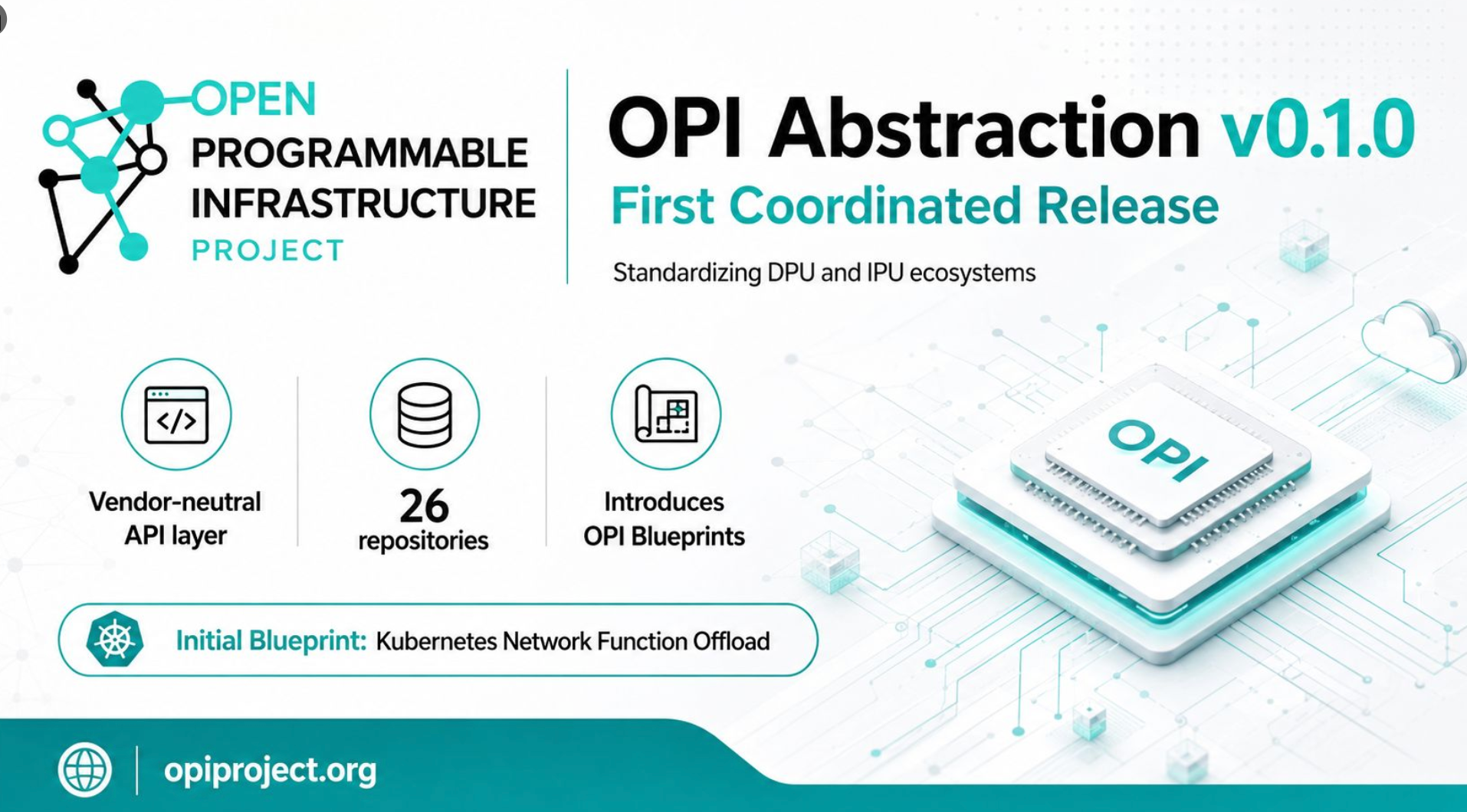
OPI Abstraction v0.1.0 introduces a vendor-neutral API layer across 26 repositories, plus OPI Blueprints for repeatable, real-world deployments. The release includes a Kubernetes Network Function Offload Blueprint developed with F5/NGINX, Intel, and Red Hat.
- Upcoming Event: OPI Summit on DPUs/IPUs 2026
The second OPI Summit on DPUs/IPUs will take place alongside OCP Global Summit in October 2026, bringing together the DPU/IPU hardware, software, and services ecosystem. Interested in presenting? Submit your proposal by August 23 here.
- White Paper: Accelerating the AI Era: The Critical Role of Open Programmable Infrastructure (OPI) in Scaling DPU and IPU Ecosystems
As AI workloads strain CPU-centric architectures, DPUs and IPUs can offload networking, storage, security, and virtualization tasks. This white paper explores how OPI’s vendor-neutral APIs, lifecycle management, and deployment blueprints can reduce fragmentation and help organizations reclaim valuable CPU resources.
OpenSearch
- OpenSearch 3.8 is here, bringing faster vector performance, deeper AI agent integrations, and streamlined analytics workflows. This release focuses on real-world speed and simplicity for search and observability.
Highlights include:
-
- Expanded Model Context Protocol (MCP) for AI agents
- Low-latency ML predictions via gRPC streaming
- Up to 4x faster vector ingestions and 2x faster radial search
- Broader LLM provider support for relevance evaluation
- Visual PPL builder and SQL tools for faster log analysis
- OpenSearch Agent Skills Hackathon still underway: Help build the future of OpenSearch and compete for your share of the $5,000 prize pool. We're looking for community-driven skills that simplify operations and solve real-world use cases. Open to US residents this time around, you could also earn a spot to present your skill at OpenSearchCon North America. Submit your skill by August 17 >>
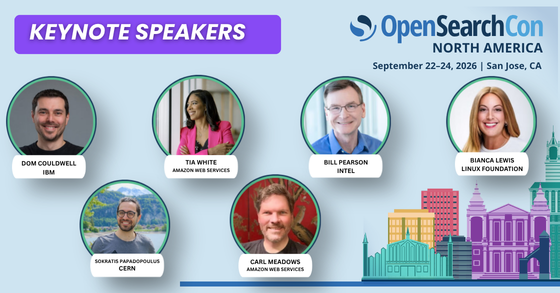
- OpenSearchCon NA | San Jose | September 22-24: The open source search and observability community is heading to San Jose, CA this fall! Register now >>
- Beyond the sessions, highlights include:
- Keynotes from AWS, IBM, Intel, CERN, OpenTelemetry, SAP, and others will cover running OpenSearch at scale
- Research findings from the largest research study the OpenSearch project has undertaken to date will be revealed
- Two hands-on workshops will enable you to build an observability stack with OpenTelemetry or a search app with AI and agentic search experts
- A maintainer ask-me-anything (AMA) panel
- Beyond the sessions, highlights include:
OpenSSF
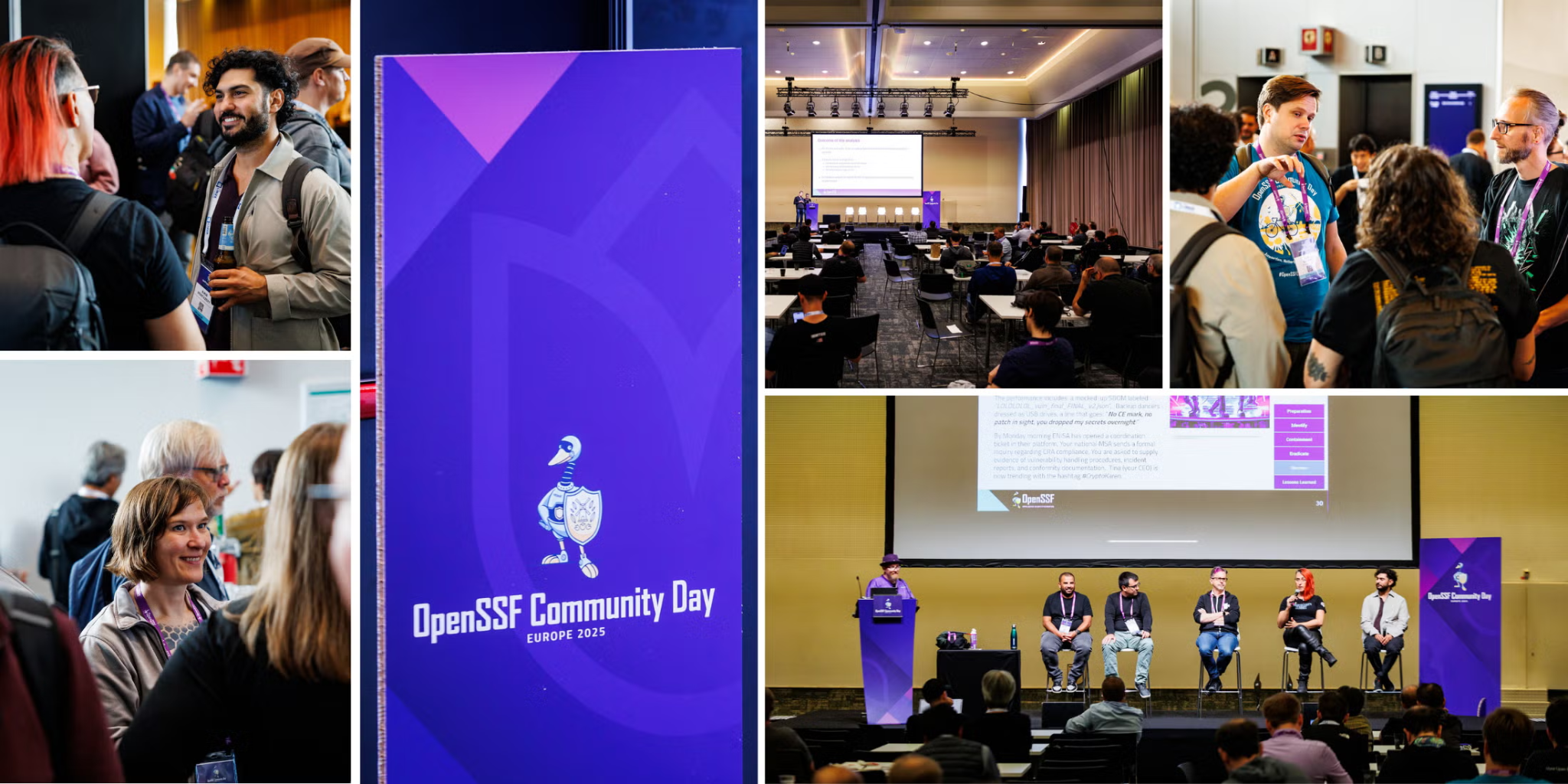
- OpenSSF Community Day Europe 2026 Schedule Is Live: The full session lineup for October 6 in Prague (co-located with Open Source Summit Europe) is now published. See also Schedule Highlights & What to Expect and OpenSSF Community Day North America: First-Time Experience. Register | Full schedule | Sponsor
- New eBook: Built to Last: Understanding the European Cyber Resilience Act (CRA): Written by Sal Kimmich (OpenUK), this walks through what the CRA requires, who it applies to, and how manufacturers and open source stewards can start building toward compliance.
- From the Blog:
- What Is a Dependency Firewall?: Aikido Security's Nicholas Thomson breaks down how these tools evaluate packages before install, catching typosquatting, dependency confusion, and AI-driven "slopsquatting" risk.
- Navigating The OpenSSF Is as Easy as Floating Down a Lazy River: A new role-based "User Journeys" framework curates resources for OSPO leads, security engineers, developers, and executives.
- Representing OpenSSF at AfricaCyberFest: The BEAR Working Group introduced the new OpenSSF Africa SIG in Lagos; a follow-up with the University of Lagos Cybersecurity Group brought in 7+ new contributors.
- Announcing OpenBao v2.6!: Adds per-namespace sealing and a new workflow engine for cross-plugin communication. Ships as v2.6.0 (namespace sealing, external Auto Unseal KMS plugins, new API workflows) and v2.6.1 (policy persistence and container image compliance fixes).
- Recent Podcasts:
- #65 – S3E17: Signing the Future with Mihai Maruseac: The OpenSSF Model Signing (OMS) spec and bringing transparency to AI/ML supply chains.
- #66 – S3E18: Turning AI into the Ultimate Maintainer Power Tool with Michael Winser: Celebrating Alpha-Omega surpassing $20M in security grants and how AI can support maintainers.
- #67 – S3E19 Funding the Future: Community Collaboration and the Spirit of Open Source with Mila Zhou: Exploring the fascinating intersection of finance, strategy, and security in the open source ecosystem.
- Meet OpenSSF at Events:
- OpenSSF Community Day Europe 2026 – October 6, Prague, Czechia
- Open Source Summit Europe 2026 – October 7–9, Prague, Czechia
- All Things Open 2026 – October 19–20, Raleigh, NC
- ETSI Security Conference 2026 – October 19-22, Sophia Antipolis, France
- AGNTCon + MCPCon North America – October 20–23, San Jose, CA
- Open Source SecurityCon North America 2026 – November 9, Salt Lake City, UT
- KubeCon + CloudNativeCon North America 2026 – November 9–12, Salt Lake City, UT
- Sign up for the OpenSSF Newsletter to receive more in depth news on community meetings, technical project updates, and cybersecurity policy & regulatory updates.
Overture Maps Foundation
- Overture 2026-07-22.0 Data Release & Schema v1.18.0: New top-level Places categories (arts & entertainment, lodging, cultural & historic), matcher improvements that increased matched places and reduced duplicates, and continued deprecation runway for the categories property ahead of its September removal.
- Overture Hits 50: Building the Open Foundation for a Connected World: The Foundation's ecosystem has grown to 50 members. Government agencies (Fresno County), research foundations (Global Earthquake Model Foundation), and companies (Intellias, Krick.com, Smarty, Zephr) share why open geospatial data matters. Press release.
- From Concept to Prototype: Grounding AI & LLMs with Overture's Cross-Theme Knowledge Graph: Member Wherobots built ORATOR, a prototype spatial knowledge graph (700,000+ nodes, 1.2M+ edges over the SF Bay Area) to give AI agents a verifiable grounding layer instead of raw coordinates.
- On the Ground at the 2026 Esri User Conference: Recap from San Diego (July 13–17), including Esri live-rendering 43 million Overture Places points in ArcGIS Online on the plenary stage.
Member Spotlight:
- Finding the Front Door — How Zephr Is Collaborating with Overture: Zephr co-founder Sean Gorman describes how joining Overture's Places Imagery Task Force (pairing Zephr's relocalization work with member street-level imagery) cut median place-location error from ~4.5m to ~1.5m, and argues open foundations beat proprietary silos for resource-constrained startups.
Upcoming Events:
- Overture Maps Argentina Community Meetup 2026
- Join our first-ever meetup in Latin America! Overture member Jose Macchi is organizing this gathering in Argentina. Come connect with the growing geospatial community there. Note: This is a Spanish speaking meetup.
📅 September 11, Tandil, AR - CNG Japan
- We will be sharing Overture's collaboration efforts at this half-day Cloud-Native Geospatial community meetup. If you're attending, come say hi and connect!
📅 August 24, Tokyo, Japan
- STAC Japan
- Overture will have a representative presenting on the use of STAC at Japan's first STAC community gathering. Connect with us if you're there!
📅 August 25-27, Ibaraki, Japan
- FOSS4G Hiroshima
- We'll be there running a community meetup at the event. More details coming soon, stay tuned if you're planning to attend.
📅 August 30-September 5, Hiroshima, Japan
- GeoGov Summit 2026
- Overture’s Executive Director Will Mortensen is speaking at a panel in this year’s GeoGov Summit. Details coming soon. If you’ll be there, be sure to connect with Will.
📅 September 9-10, Herndon, VA.
Stay in the Loop! Be sure to stay in the loop for all upcoming updates! Subscribe to Overture's community newsletter here to ensure you don't miss the next issue.
P4
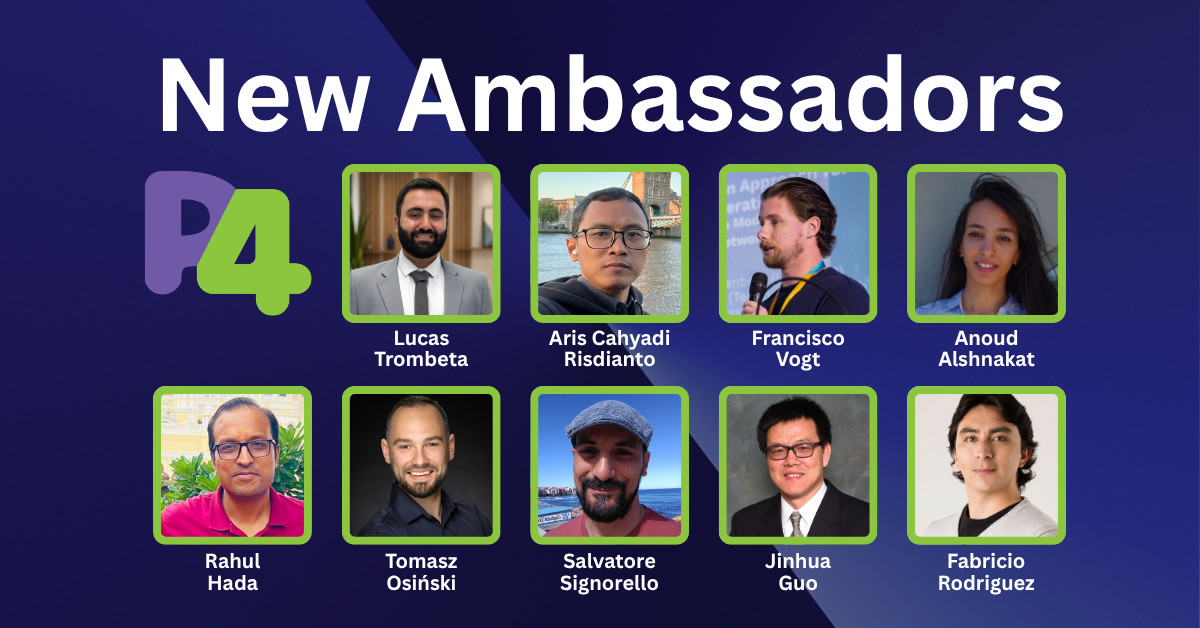
- New P4 Ambassadors: We are happy to announce the first members of the inaugural P4 Ambassador cohort! Read more
- Upcoming P4 Events:
- Aug. 12 | P4 Developer Day: High-Performance Traffic Management: Building a Multi-Layer HCoS Router with P4 | Virtual
- Aug. 12 | P4 Developer Day: High-Performance Traffic Management: Building a Multi-Layer HCoS Router with P4 | Virtual
-
- Aug. 17 | SIGCOMM 2026: Programming SmartNICs Tutorial | Denver, CO
-
- Aug. 18 | P4 GSoC 2026: Wrap-up Meeting | Virtual
-
- Sept. 24 | P4 Developer Day: Securing P4 Programs by Information Flow Control | Virtual
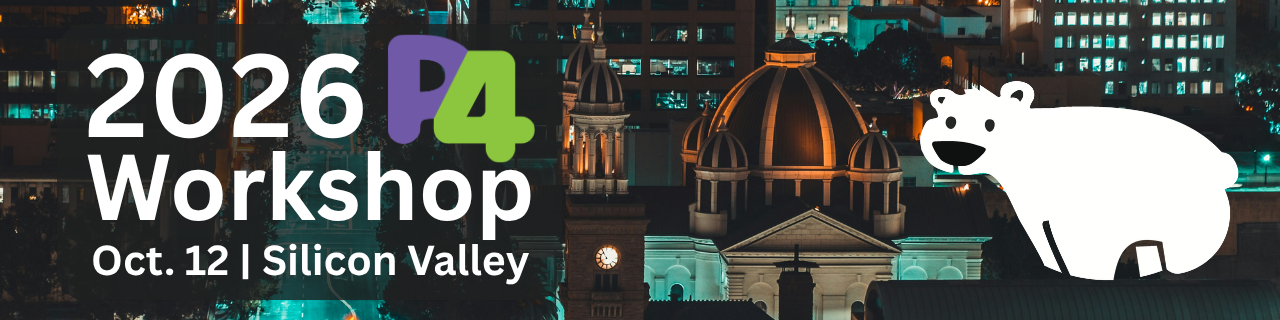
- Oct. 12 | 2026 P4 Workshop | Silicon Valley
- Dec. 7 | EuroP4’26 (8th European P4 Workshop) | Utrecht, The Netherlands
PyTorch Foundation
- PyTorch Foundation Flare Pin Community Design Contest
The PyTorch Foundation is inviting the community to design the 2026 flare pin for PyTorch Conference North America 2026! The winning designer will receive a complimentary conference ticket to PyTorch Conference North America in San Jose, and the design will be produced as a one-inch enamel pin.
- PyTorch Conference North America Schedule Is Live
The full schedule, including keynotes, for PyTorch Conference North America (San Jose, October 20 - 21) is now live, with sessions spanning training and inference, compiler innovations, responsible AI, and the wider PyTorch ecosystem.
- Driving the Future of Open Source AI: An Update from PyTorch Foundation Projects
A progress report on the PyTorch Foundation's evolution into a multi-project foundation, with updates from all of the hosted projects: PyTorch, vLLM, DeepSpeed, Ray, Helion and Safetensors.
- FBTriton Infra: Upstream Ingestion, Hierarchical Validation, Ideals vs Realities
Meta's Triton team explains how their FBTriton infrastructure ingests upstream changes and validates them hierarchically, and where the practical realities diverge from the ideal - enabling custom GPU compiler work like TLX and autoWS.
- Helion on TPU: Towards Hardware Heterogeneous Kernel Authoring
Helion, PyTorch's high-level DSL for performance-portable ML kernels, now targets Google TPUs through a partnership with Google - a step toward authoring kernels that run across heterogeneous hardware.
- Triton Plugin Extensions: Enabling TLX and Custom Compiler Passes Out of the Box
The PyTorch-Triton 3.7 release introduces a Triton Plugin Extensions system, a framework for dynamically loading TLX and custom compiler passes without patching Triton itself.
- PyTorch by the Sea: The inaugural Santa Cruz PyTorch Meetup
The Santa Cruz PyTorch Meetup brought together 45 local engineers, students, and leaders for GPU/CUDA talks on chemistry, plant health, and autonomous driving – demonstrating how easy and impactful it is to launch a low-key, welcoming PyTorch community in your own area.
Join us at upcoming events:
- KubeCon + CloudNativeCon + OpenInfra Summit + PyTorch Conference China 2026, Shanghai, September 7-9
The schedule is now live, with sessions covering everything from how AI Agents are rewriting the OpenStack/K8s playbook to The State of the PyTorch Ecosystem in 2026: Global Trends and China’s Rising Role.
- Community Meetup for PyTorch: Nanshan, Shenzhen, August 15
Meet other PyTorch developers in Nanshan to discuss all things PyTorch. To sign up, send the message “Nanshan” to WeChat subscription account “PyTorch人工智能” to get the registration method.
- PyTorch Conference North America, San Jose, CA, October 20-21
Explore the future of open source AI and the impact of PyTorch Foundation projects like PyTorch, vLLM, DeepSpeed, Ray, Helion, and Safetensors at the flagship PyTorch Conference this fall.
RISC-V
- RISC-V Summit China 2026 Call for Presentations is Open: Share your insights, technical breakthroughs, research, or real-world deployments with the global RISC-V community. The summit takes place October 18-20, 2026 at the Shenzhen Convention & Exhibition Center. Submit your proposal today.
- Save the Date for RISC-V Summit North America 2027: Join us February 16-18, 2027 at the Hyatt Regency Embarcadero in San Francisco for three days of technical innovation, ecosystem collaboration, and discussions shaping the future of open computing. More details coming soon.
- Summit Europe 2026 Presentation Videos Now Available: Catch up on keynote presentations, technical sessions, and the latest innovations from across the RISC-V ecosystem with the full library of presentation recordings now available on demand.
SONiC
- SONiC Foundation Welcomes Four New Members: Supranett has joined the SONiC Foundation as a Premier Member, while Exaware, TeraHop, and Infrawaves have joined as General Members. Their expertise in AI infrastructure, cloud networking, telecommunications, and production deployments strengthens the growing global SONiC ecosystem. Read the announcement >>
- How Broadcom Unified 10,000+ Switches with SONiC: A new deployment story explores how Broadcom replaced fragmented, vendor-locked infrastructure with more than 10,000 SONiC switches across seven data centers and 93 sites, enabling zero-downtime upgrades, greater automation, and millions in annual savings. Read the user story >>
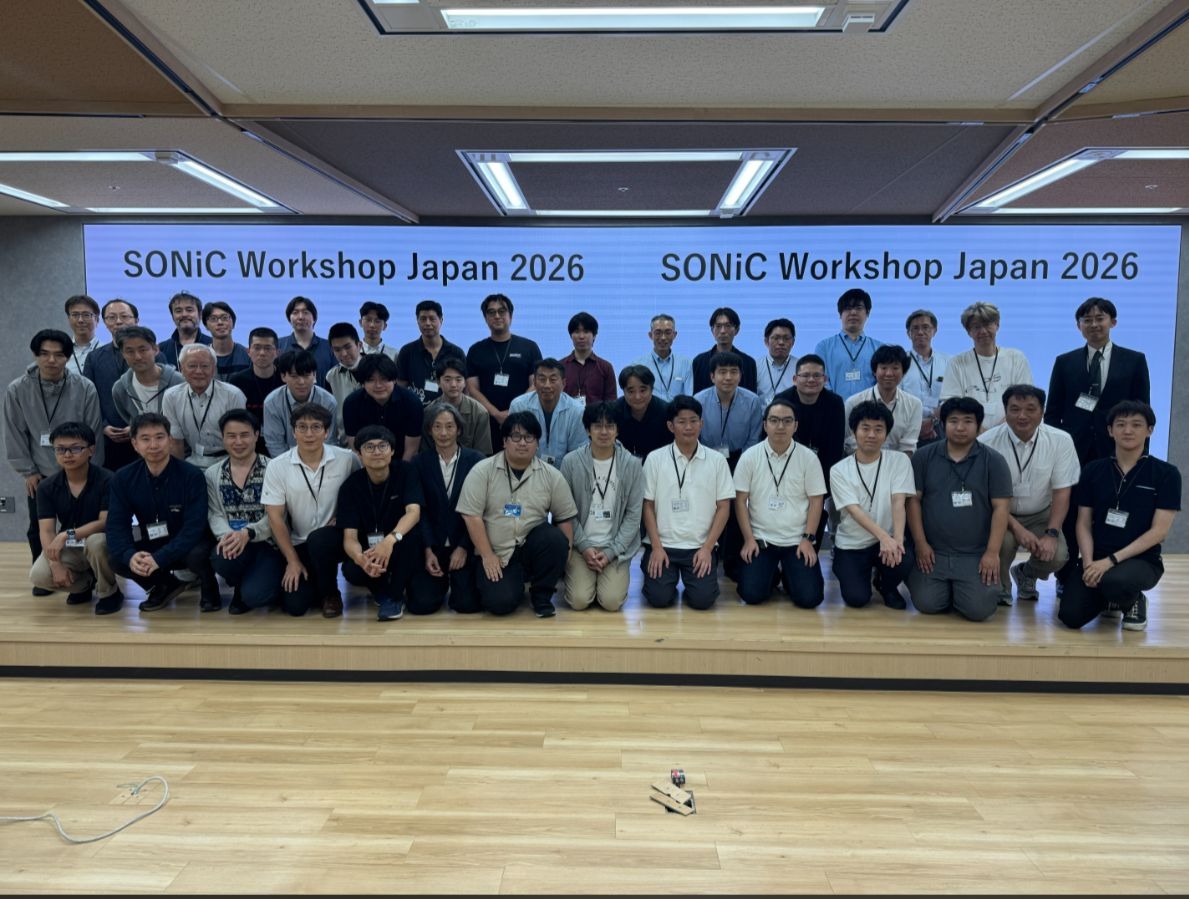
- SONiC Workshop Japan Brings the Community Together: More than 50 attendees joined in person and another 50 participated online for technical discussions on generative AI infrastructure, Scale-Up and Ultra Ethernet, testing, monitoring, automation, and real-world SONiC deployments. View upcoming SONiC events >>
- SONiC Workshop India Heads to Hyderabad: The SONiC community will gather September 7–8 for two days of technical sessions, deployment stories, and collaboration around open source networking. Registration has reached capacity, but interested attendees can still join the waitlist. Learn more >>
- SONiC at OCP Global Summit 2026: Join the SONiC community in San Jose and Sunnyvale, October 13–16, for a dedicated workshop, live booth demos, and a full-day extended offsite workshop hosted at Nokia’s Sunnyvale office. Separate registration is required for the offsite workshop. Explore the event details >>
Sylva Project
- Will you be joining the Sylva community at Open Source Summit Europe in Prague?
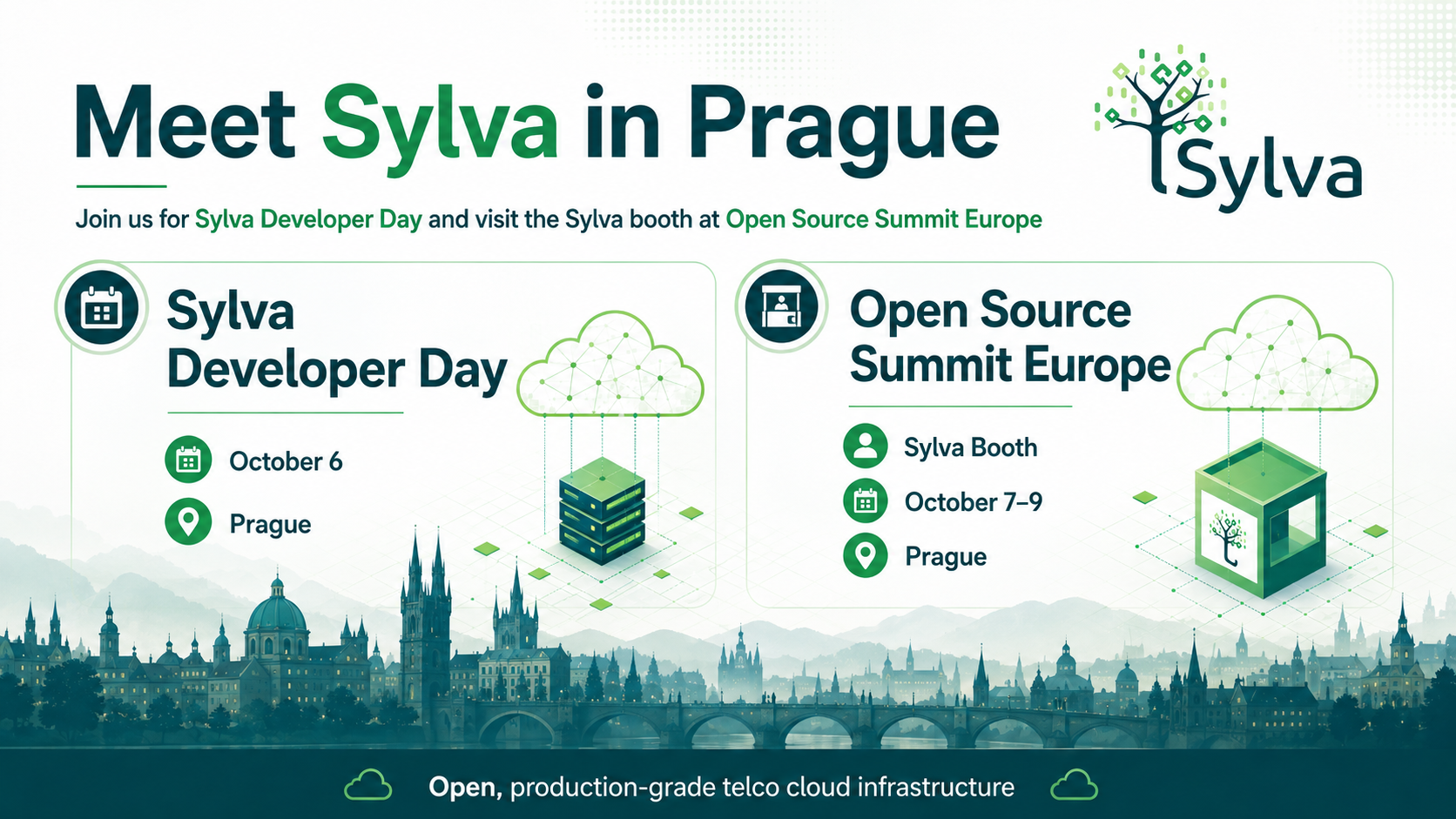
From 6-9 October 2026, connect with operators, developers, vendors, and ecosystem partners working to advance open, production-grade telco cloud infrastructure. Join the Sylva Developer Day on 6 October for discussions on GitOps automation, resilience, cloud-to-edge deployments, validation, interoperability, and Sylva’s evolving roadmap. You can also visit the Sylva booth on the Open Source Summit Europe Expo Floor to meet community members, explore demos, pick up swag, and learn more about the project.
Learn more. - Ready to collaborate, contribute, and help advance open source telco cloud infrastructure? Save the date for the Sylva Hackathon, taking place 23–24 November 2026 in Bern, Switzerland. Over two days, developers, operators, vendors, architects, and other contributors will work in small teams on Telco GitOps, automation, deployment workflows, testing, documentation, and other community-identified priorities.
Whether you are an established contributor or new to Sylva, the hackathon is an opportunity to exchange expertise, deepen your technical knowledge, and turn ideas into practical project contributions. Learn more. - Sylva 1.7 expands deployment flexibility and infrastructure support
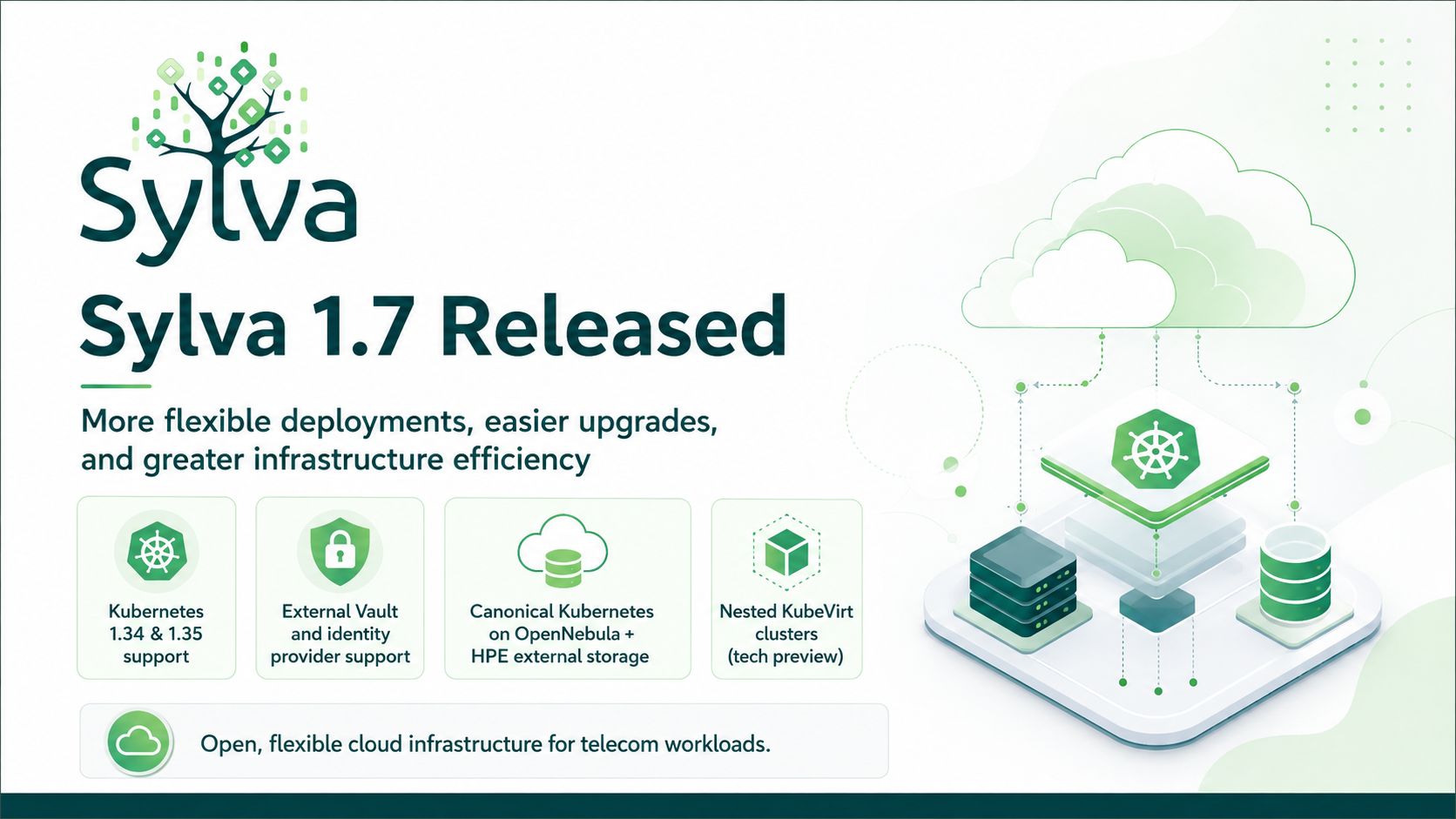
Sylva 1.7 makes the cloud stack easier to deploy, update, and operate across different infrastructure environments.
The release adds support for external HashiCorp Vault deployments, external identity providers, Canonical Kubernetes on OpenNebula, HPE external storage, and Kubernetes 1.34 and 1.35. It also improves networking and upgrade workflows and introduces nested KubeVirt clusters as a technology preview. Read the complete release notes to learn more.
Supporters of Chromium-Based Browsers
The "Supporters of Chromium-Based Browsers" (SoCBB) initiative addresses the critical need for shared maintenance in the "Chromium commons" by financing essential infrastructure work like bug fixes, code health, test suites, and interoperability issues. Read the blog to learn more about why this initiative plays such a crucial role in maintaining a healthy Chromium ecosystem.
The Supporters of Chromium-Based Browsers (SoCBB) initiative funds community-driven improvements to the Chromium ecosystem through a structured Bug Bounty Program and a Request for Proposal (RFP) Program. Read the complete blog to learn more about how the initiative works.
Alex Weijian Ho’s path into open source is anything but typical. A commercial pilot turned self-taught C++ developer, he began contributing to Chromium after studying programming during downtime between flights. His work on dark mode support and flaky test investigations reflects the curiosity and persistence driving his open source journey. Read the blog to learn more.
Valkey
- Register Now for ValkeyConf: Join the Valkey community in Prague on October 5, 2026, for a day focused on running Valkey in production, sharing real-world experiences, and connecting with the developers and engineers shaping the future of the project. Register now >>
- Become a ValkeyConf Sponsor: Position your company at the center of the Valkey community and connect with developers, SREs, DBAs, DevOps professionals, and decision makers shaping the future of open source data infrastructure. Sponsor today >>
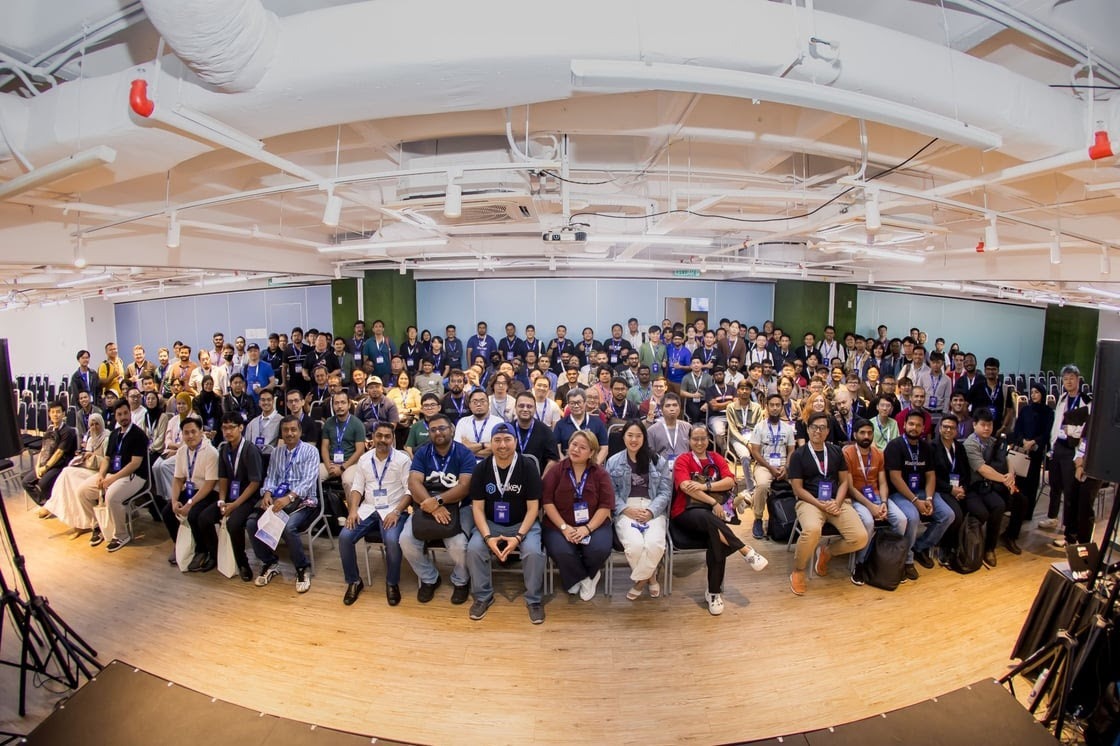
- KCD Kuala Lumpur | June 26–27, 2026: The Valkey community connected with the cloud native community at KCD Kuala Lumpur, sharing insights on open source databases, high-performance caching, and the role of Valkey in modern application architectures — an opportunity to engage with local members and highlight Valkey's growing global community.
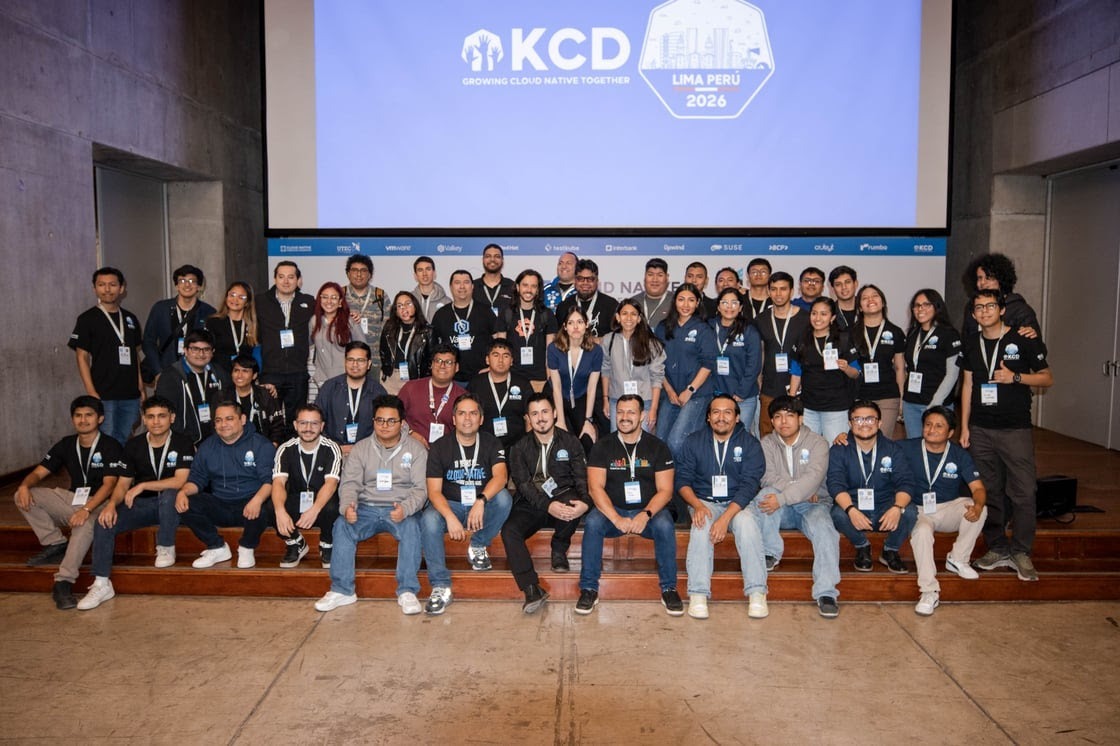
- KCD Lima | July 18, 2026: Valkey hosted a hands-on workshop exploring practical caching with Valkey on self-managed Kubernetes. Participants deployed Valkey Cluster and explored real-world use cases including database optimization, session management, and GenAI prompt and semantic caching, while learning strategies for cache management, observability, and production deployments.
- Harbor Chooses Valkey: Harbor, a CNCF graduated container registry, has adopted Valkey as its internal cache backend starting with Harbor v2.15.2. The migration highlights how open source projects are choosing community-governed dependencies that align with their long-term sustainability goals; wire compatibility and strong performance made the transition straightforward while preserving Harbor's existing functionality. Read on >>
- The Secret Life of Data in Valkey: What happens beneath the surface when data is stored in Valkey? This technical deep dive from Kyle Davis explores how Valkey's hidden encoding layer impacts memory usage, performance, and infrastructure costs — and how tuning configuration thresholds can help maximize your deployments. Read on >>
- Upcoming events:
Zephyr Project
- Meet the Zephyr Community at Open Source Summit Europe 2026
The Zephyr community is heading to Prague for Open Source Summit Europe and Embedded Linux Conference Europe 2026, taking place October 7-9. The week will include the Zephyr Maintainers Forum on October 6, the Zephyr Developer Summit from October 7-9, the announcement of the Zephyr Community Award winners, and opportunities to meet maintainers and explore Zephyr-powered products and demos at the Zephyr Project booth.
Join developers, contributors, and ecosystem members to discuss the project’s latest advancements, share knowledge, and help shape Zephyr’s future. Learn more.
- Introducing the Zephyr Community Awards: Celebrating 10 Years of Contribution
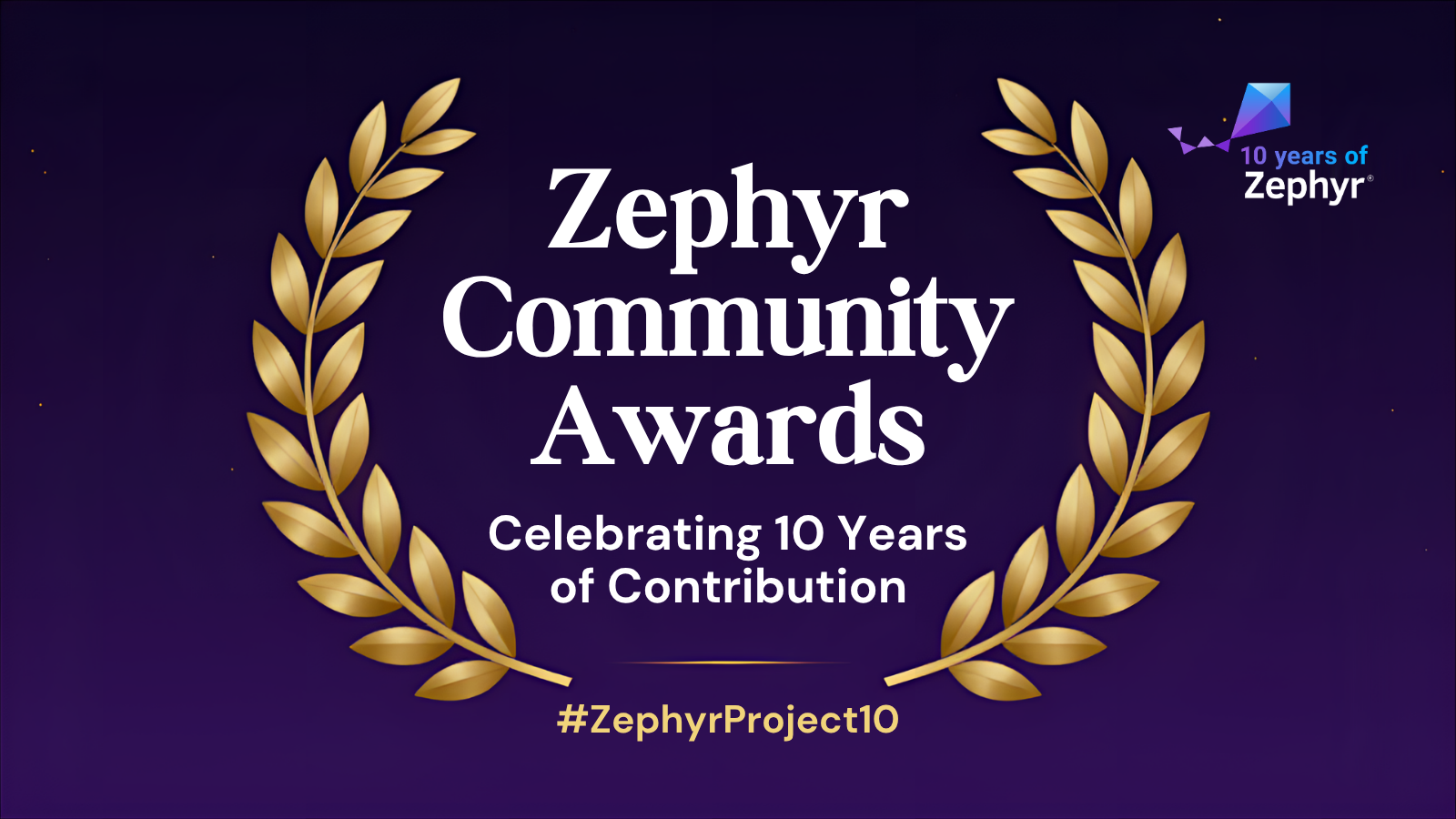 Who has helped shape the Zephyr Project over the past decade? Celebrate their contributions by nominating them for the new Zephyr Community Awards. Six award categories recognize contributors, documentarians, advocates, technical leaders, and behind-the-scenes community members. Nominations close on September 1, 2026, and the winners will be announced live at the Zephyr Developer Summit in Prague, October 7–9. Learn more.
 - How ChromeOS Uses Zephyr for Dynamic Hardware Selection
The ChromeOS Embedded Controller team uses Zephyr to support different hardware components with a single firmware binary. In a session at Open Source Summit, Wai-Hong Tam and Jason Yuan from Google explain how Devicetree, UFSC, deferred initialization, and a Component Manifest enable the correct hardware and drivers to be selected at boot. This approach simplifies testing, firmware updates, and release management while preserving Zephyr’s build-time efficiency. Learn more. - How Zephyr Simplified Pre-Silicon and Production Firmware Development
Qualcomm’s PMIC software team adopted Zephyr to use the same application code across pre-silicon and production platforms. In a session at Open Source Summit, Dev Bhaveshbhai Joshi explains how Zephyr, Devicetree, Kconfig, Twister, and Pytest helped the team unify its firmware stacks and automate hardware-in-the-loop testing. This approach reduced synchronization work, improved early testing, and helped the team reach production readiness on schedule. Learn more. - Exploring Fuzzing for Zephyr Applications with libFuzzer and AFL++
Fuzzing embedded applications can be challenging because they depend closely on hardware, peripherals, and system state. Jayashree Srinivasan from Analog Devices explains Zephyr’s current libFuzzer support and early work to integrate AFL++ with Zephyr’s native simulator. The session from Open Source Summit explores how these tools can help detect crashes and support broader application-level testing. Learn more. - From FreeRTOS To Zephyr: A Practical Migration Guide for Embedded Developers
Migrating from FreeRTOS to Zephyr requires more than replacing APIs. Jacob Beningo shares a practical roadmap covering application analysis, build-system changes, Devicetree configuration, and the careful migration of tasks, priorities, stacks, queues, timers, and interrupts. This session from Open Source Summit, helps embedded developers understand the differences between the two RTOSes and plan a well-tested migration. Learn more.
Meet the Zephyr Project community at these events:
- Opportunity Open Source Conference 4.0: Aug 28-30, 2026
- Zephyr Project Meetup - Amsterdam, Netherlands: September 15, 2026
- Zephyr Project Meetup - Zurich, Switzerland: September 17, 2026
- embedded world - Anaheim, California: Sep 22-24, 2026
- Zephyr Project Workshop & Meetup - Stuttgart, Germany: Sep 24, 2026
- Zephyr Maintainers Forum - Prague, Czechia: October 6, 2026
- Zephyr Developer Summit - Prague, Czechia: October 7-9, 2026
- Zephyr Project Meetup - Munich, Germany: October 12, 2026
- Zephyr Project Meetup - Bucharest, Romania: October 16, 2026
LF Events: Mark your calendar!
- seL4 Summit
Sept 1–3 / Vancouver, Canada - gRPConf North America
Sept 3 / Mountain View, United States - AGNTCon + MCPCon China
Sept 6–7 / Shanghai, China - KubeCon + CloudNativeCon + OpenInfra Summit + PyTorch Conference China
Sept 7–9 / Shanghai, China - OSPOlogy + OSPO Summit China
Sept 7 / Shanghai, China - AGL at Automotive World
Sept 9–11 / Tokyo, Japan - AGNTCon + MCPCon Japan
Sept 10–11 / Tokyo, Japan
To register for in-person attendance or virtual LF events, please view our full calendar of events here, and be sure to subscribe to our events newsletter. Check out our Flickr stream for photos of past events!