
81 MIN READ
The Linux Foundation | 13 May 2026
Welcome to the May 2026 edition of the Linux Foundation Newsletter.
May is a big month for learning, certification, and career growth across the Linux Foundation community. The first-ever Mega May Cyber Boost is here, bringing a little extra arcade energy to professional development with savings of up to 65% on vendor-neutral training, certifications, bundles, subscriptions, and instructor-led courses across Linux, cloud native, cybersecurity, AI, embedded systems, and more. Offer ends May 20.
Beyond education, this month’s newsletter highlights how open source is moving deeper into production systems across AI infrastructure, cloud native, energy, finance, cloud cost management, networking, digital trust, media, and safety-critical software. You’ll find updates on model inference, agent gateways, Kubernetes and observability, production energy systems, financial services infrastructure, responsible AI governance, and a busy global events calendar.
Here are this month’s highlights:
- Training gets a May power-up: The first-ever Mega May Cyber Boost brings savings of up to 65% on Linux Foundation training, certifications, bundles, subscriptions, and instructor-led courses through May 20. Start with the full promotion or browse current training options — Mega May Cyber Boost, Linux Foundation Training
- LF projects keep powering AI infrastructure: PyTorch Foundation project vLLM delivered Day 0 support for DeepSeek V4, while LF AI & Data’s Agentgateway crossed 5 million downloads since the start of the year, showing how LF-hosted projects are becoming part of the operating layer for open models, inference, gateways, and agentic workloads — vLLM + DeepSeek V4, Agentgateway 5M Downloads
- Open source is showing up in industry infrastructure: Across energy, finance, and cloud cost management, LF communities are turning shared code into production systems, from TenneT’s 10× faster grid security analysis with PowSyBl to FINOS’s open source fabric for high-performance computing and FinOps X’s focus on AI, SaaS, data center, and token economics — TenneT and PowSyBl, This Week at FINOS, FinOps Foundation
- Open infrastructure keeps expanding: Core projects continue to ship across cloud native, AI, networking, and observability, including Kubernetes v1.36, ONNX v1.21.0, eBPF security work, and practical migration guidance for modern platform teams. Read the latest releases and updates — Kubernetes v1.36, ONNX v1.21.0, eBPF Security Update
-
Events season is heating up: LF communities are gathering across North America, Europe, and Asia, with Open Source Summit North America, the LF AI & Data Mini Summit, FinOps X, the Open Source Policy & Ecosystem Forum, DPDK Summit, and AAIF’s AGNTCon + MCPCon events in Tokyo, Amsterdam, and San Jose. Mark your calendar — Open Source Summit North America, LF AI & Data Mini Summit, AGNTCon + MCPCon Fall Events
>> Read on for even more news, research, and opportunities from across the Linux Foundation.
Contents
- Education Opportunities
- LF Europe: Community Updates
- LF Research: Survey + report
- Linux Foundation Projects: Featured news
- LF Events: Mark your calendar!
- Follow us!
Education Opportunities

🚀 Mega May Cyber Boost Has Arrived
The wait is over. The first-ever Mega May Cyber Boost event is here with huge savings across Linux, cloud native, cybersecurity, AI, embedded systems, and more.
Save up to 65% on vendor-neutral training, certifications, bundles, subscriptions, and instructor-led courses designed to help you level up your career.
🎮 Unlock bonus-level savings
⚡ Power up your professional growth
🚀 Build skills for the technologies shaping the future
Don’t miss your chance to save big and boost your skills during this limited-time event. Offer ends May 20.

LF Europe: Community Updates
- On 8 June, LF Europe will bring together the key voices in open source and digital sovereignty for the Open Source Policy & Ecosystem Forum in Brussels. This high-level event follows the publication of the landmark set of digital policies, the EU Tech Sovereignty Package. It will gather policymakers, industry leaders, and open source communities in key sectors. Space is limited - request your invitation today. The day after you can join OpenSSF’s event, the European Open Source Security Forum.
LF Research: Two surveys
Last chance to take our Commercial Open Source Survey!
Last year, the Linux Foundation’s Commercial Open Source (COSS) report broke new ground. This year, we’re going deeper into the mechanics of the open source economy to figure out how companies actually capture value at scale. Are you involved with the commercialization of open source? We would greatly benefit from your insights!
Our Generative AI survey is still in the field!
More and more, generative AI is transforming open source software development with new tools, capabilities, and performance benchmarks. How are you using these tools, and how are your job duties shifting? What is the general sentiment around this transformation? What are the unique challenges and opportunities that are emerging? Please share your experience with us!
Linux Foundation Projects: Featured news
Agentic AI Foundation (AAIF)
- The AAIF launched the Daily Agentic | a 5x-per-week brief covering what's moving in agentic AI. Subscribe on LinkedIn and send your ideas and feedback.
- goose now ships built-in local inference powered by llama.cpp | Code never leaves the device. No Docker, no Ollama, no API key required. Models run fully offline, a meaningful step forward for teams working in sensitive environments or on air-gapped systems.
- goose v1.26 ships the Computer Controller extension | rebuilt around Peekaboo, a macOS CLI tool that gives goose a see-then-click-then-type loop for desktop automation. It handles annotated screenshots, UI element identification, typing, scrolling, dragging, menus, and dialogs. goose can now automate workflows across desktop and web apps that don't expose clean APIs. Read more on the goose blog >> and check out Peekaboo on GitHub >>
- A new community tool is tackling one of MCP's trickiest real-world problems | MCP Debugger was built by a developer who spent months working through authorization flows, security edge cases, and client behavior in production. Local tests passed. Smoke tests passed. But real agents connecting over HTTP exposed problems that were hard to find and harder to fix. MCP Debugger was built to close that gap. Read the full blog post >>
- Solo.io Open Sources AgentEvals For Production Agent Reliability | The project scores agent behavior from OpenTelemetry traces, giving teams a way to benchmark tool calls, trajectories, response quality, and regressions without re-running expensive LLM sessions. It supports offline and live evaluations, golden eval sets, built-in evaluators, CLI and web workflows, CI/CD use, and an MCP server for inspecting agent sessions from a conversation. AgentEvals, Solo.io, GitHub >>
- MCP Apps Go Mobile On Claude | Anthropic shipped MCP Apps support on Claude for iOS and Android, extending the interactive iFrame component pattern from desktop and web to the phone, allowing third-party tools to deliver branded, clickable UIs inside an agent conversation on mobile.
- Cloudflare Launches Agent Readiness Score For Websites | The new isitagentready.com scanner audits whether sites expose the standards agents need to discover content, respect bot permissions, consume Markdown, call APIs, find MCP server cards, and support emerging commerce flows. Cloudflare also added the checks to URL Scanner and Radar, and made the scanner itself callable as a stateless MCP server, giving teams a concrete production path for making docs and services usable by agents. Cloudflare >>
- Three flagship AGNTCon + MCPCon gatherings are coming up this fall | Tokyo (September 10–11), Amsterdam (September 17–18), and San Jose (October 22–23). These events bring together the organizations building production agentic systems to go beyond the proof of concept. See the full 2026 events lineup >>
Alliance for Open Media (AOMedia)
-
Alliance for Open Media Releases Reference Software for Polygonal Mesh Coding Standard | The Alliance for Open Media (AOMedia) recently announced that the reference software for its upcoming Polygonal Mesh Coding (PMC) standard is now publicly available. The software can be accessed on GitLab and is ready for developers to use, evaluate, and contribute feedback. Learn more about PMC technology and AOMedia’s work via the full announcement.
-
Join AOMedia | Where Innovators Shape the Future of Media, Together
-
How much do you know about the Alliance for Open Media (AOMedia)?
-
Our members span a diverse cross-section of the media ecosystem, including industry leaders, startups and academic institutions. AOMedia is built to be open:
-
Yearly membership dues start at just $500 per year per organization
-
Specifications developed under a royalty-free patent policy and available publicly free-of-charge
-
Source code available under a permissive copyright license
-
Opportunities to contribute to working groups covering video, audio, imaging, and immersive media
-
Direct access to the conversations shaping next-generation standards
-
-
-
Our mission is ongoing. Our membership is open. If you want a voice in the technologies defining the future of media, this is where it happens. Learn more and join >>
Alliance for OpenUSD (AOUSD)
- Vincent Caux-Brisebois from NVIDIA and Christian Lopez Barron from Netflix Animation Studios present how AOUSD’s Emerging Geometry Interest Group is integrating Gaussian Splats into OpenUSD. They showcase early implementations and share the IG’s roadmap for Gaussian Splatting support in OpenUSD, enabling studios to incorporate this rapidly adopted capture and rendering technique into their production pipelines while maintaining the flexibility and interoperability that OpenUSD provides. Learn more in this article or watch the video >>
- The ASWF Open Source Forum videos are now available on-demand. Watch the AOUSD-related videos >>
- Aras Joins the Alliance for OpenUSD to Advance Interoperable, Lifecycle-Connected Digital Twins with NVIDIA Omniverse. By joining the Alliance for OpenUSD, Aras is helping ensure that immersive digital twin environments and real-time simulation remain connected to the product and process truth managed across the lifecycle. Read more >>
App Defense Alliance
- New Portal Details Certified Applications | The Alliance’s new public directory lists applications that have earned certification against its security standards.
- Follow the Alliance on LinkedIn | Get updates and perspectives on advancing security across the app ecosystem.
CAMARA
- The Panel: "From Footprint To Value: Commercial Adoption of CAMARA" video from Cloud Native Telco Day in Amsterdam is now live! Join Andreas Boruga (Aduna Global), Nathan Rader (Deutsche Telekom & CAMARA Chair), Jill Lovato (the Linux Foundation) and Huub Appelboom (KPN) as they move beyond technical footprints to explore the commercial reality of CAMARA APIs.
- Check out CAMARA's updated one-pager overview doc that reflects CAMARA’s incredible growth. What started in 2022 with 22 partners is now a thriving open source community — 60+ stable APIs, 1,300+ contributors, and nearly 500 organizations working together to make telco network capabilities accessible to every developer. The shift toward outcome-driven network control was front and center at #MWC26.
- By combining CAMARA QoD APIs with Google’s agentic AI, Colt demonstrated a closed-loop system for automotive use cases that identifies degradation and self-corrects in real-time. This marks a major milestone in making network performance as programmable as the cloud. Read GSMA’s blog to learn more >>
- Catch CAMARA at these upcoming events:
CHIPS Alliance
-
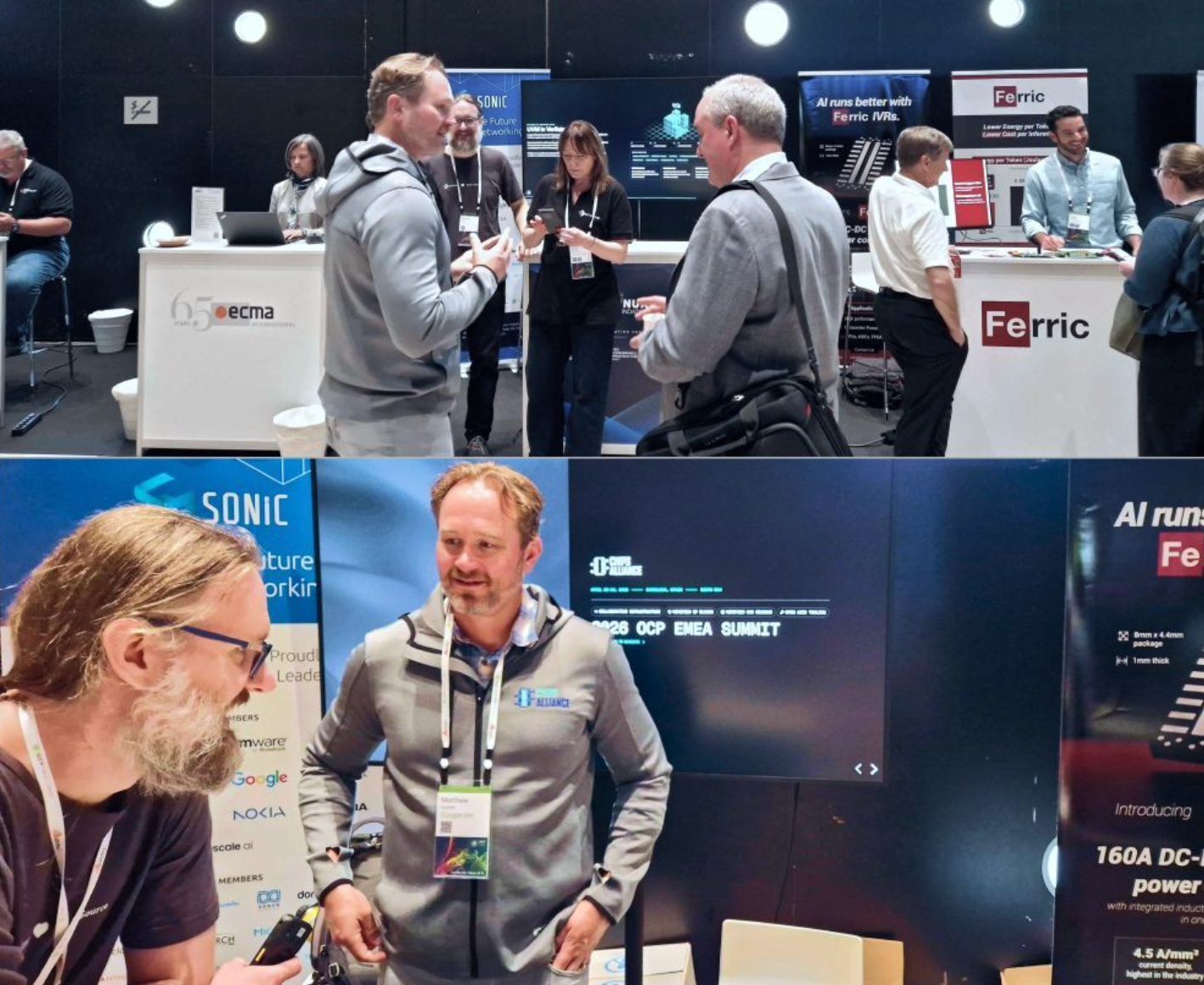
CHIPS Alliance at 2026 OCP EMEA Summit (April 29–30, Barcelona) | Exhibited alongside SONiC and the Open Programmable Infrastructure (OPI) Project, where representatives from Google and Antmicro engaged with participants on open source silicon development. Antmicro demonstrated Guineveer, a RISC-V reference design based on the VeeR EL2 core. The program included sessions from ecosystem contributors on OpenPRoT and Caliptra.
- FOSSi Foundation Latch-Up 2026 (May 1–3, Waterloo, Ontario) |CHIPS Alliance sponsored Latch-Up 2026, supporting collaboration across the open source silicon community. Watch the sessions >>
- Verilator Four-State Logic Proposal | CHIPS Alliance member Antmicro proposed initial support for four-state logic in Verilator.
Cloud Native Computing Foundation (CNCF)
- State of Dapr 2026 | Learn how developers are using Dapr for microservices, workflow orchestration, and AI agent development in 2026.
- Kubernetes v1.36: ハル (Haru) | Similar to previous releases, the release of Kubernetes v1.36 introduces new stable, beta, and alpha features. The consistent delivery of high-quality releases underscores the strength of our development cycle and the vibrant support from our community.
- CNCF and PyTorch communities come together at KubeCon + CloudNativeCon China 2026: CFP now open | KubeCon + CloudNativeCon + OpenInfra Summit Asia + PyTorch Conference China 2026 will take place from September 8–9, 2026 in Shanghai, bringing multiple open source ecosystems onto a single stage. The event brings together communities including the Cloud Native Computing Foundation (CNCF), OpenInfra, and the PyTorch Foundation.
- Observability and Governance at Scale in Financial Services with Prometheus | A leading U.S. financial services company offering life, disability, and long-term care insurance, annuities, and wealth management operates under stringent security and compliance mandates. Its engineering ecosystem spans over 1,000 GitLab projects leveraging Terraform, AWS CDK, Kubernetes, Cron jobs, and Control-M workloads. Infosys was engaged to build a unified observability and governance platform using Prometheus and Grafana, consolidating fragmented tooling into a single pane of glass for metrics, compliance, and automated incident response.
- Establishing unified observability and governance across hybrid platforms with OpenTelemetry | A globally renowned financial institution modernized a large application estate from mainframes and vendor platforms to cloud‑native services (including Java and Python) running on Kubernetes across private and public clouds. Applications are deployed across two geographically separated data centers for high availability, while batch processing relies on AutoSys with Job Information Language (JIL) files stored in GitHub/Bitbucket and metadata in PostgreSQL. The end-to-end customer journey depends heavily on multiple third-party systems, each operating its own monitoring or observability platform. Applications span Kubernetes and non-Kubernetes environments and expose interfaces through REST, SOAP, and command-line access, further complicating unified observability, increasing operational overhead and elongating incident timelines.
- From Ingress NGINX to Higress: migrating 60+ resources in 30 minutes with AI | With the official retirement of Ingress NGINX that took place in March 2026, enterprise platform teams are facing an urgent security and compliance mandate. Remaining on a retired controller leaves critical infrastructure vulnerable to unpatched security risks. For one infrastructure engineer managing a cluster with over 60 complex Ingress resources, the challenge was clear: find a modern, enterprise-ready replacement that could be implemented without months of manual refactoring. This blog post explains how full migration validation was achieved in just 30 minutes by leveraging an AI agent and Higress, a cloud-native and AI-native API gateway founded by Alibaba that recently joined the CNCF Sandbox.
- Auto-diagnosing Kubernetes alerts with HolmesGPT and CNCF tools | This blog details a two-person SRE team at STCLab learned while building an AI investigation pipeline. The article features HolmesGPT, Prometheus and Kubernetes.
- From public static void main to Golden Kubestronaut: The Art of unlearning | Pavan Madduri, a CNCF Kubestronaut, discusses his path to becoming a Golden Kubestronaut.
- K3s on On-Prem Infrastructures the GitOps Way: Writing a Custom k0rdent Template from Scratch | This community-driven article focuses on Kubernetes, and one specific intersection: lightweight Kubernetes with K3s on an on-premise infrastructure (in this case Proxmox) and declarative multi-cluster management with k0rdent.
- The AI-driven shift in vulnerability discovery: What maintainers and bug finders need to know | This post explores how AI is reshaping vulnerability discovery, increasing both the volume of findings and the pressure on open source maintainers to triage, patch, and release fixes effectively. It offers practical guidance for maintainers and bug finders on strengthening the vulnerability response pipeline as AI-driven discovery accelerates.
- How To Measure the ROI of Developer Tools | This post considers some of the common ways teams measure the ROI of developer tools, and covers how those approaches apply differently depending on team size, and which ones tend to be useful at each stage of growth.
- ingress-nginx to Envoy Gateway migration on CNCF internal services cluster | This article shares how Envoy Gateway and the Kubernetes Gateway API were adopted on CNCF’s internal services cluster, highlighting architectural decisions, migration considerations, and operational lessons learned. It offers a practical example of evolving ingress infrastructure while improving consistency, efficiency, and long-term maintainability.
- What I Learned at My First KubeCon + CloudNativeCon as a High School Speaker | This post reflects on a first-time experience speaking at KubeCon + CloudNativeCon, sharing lessons about community, open source collaboration, and personal growth. It offers a fresh perspective on how the cloud native community can inspire and support new contributors.
- Rethinking platform engineering through diverse perspectives at KubeCon + CloudNativeCon EU Amsterdam | Drawing on insights from KubeCon + CloudNativeCon Europe, this post examines how different perspectives are reshaping platform engineering approaches and priorities. It offers reflections on creating more resilient, inclusive, and developer-friendly platform strategies.
- Peer-to-Peer acceleration for AI model distribution with Dragonfly | This article explores how Dragonfly enables peer-to-peer acceleration for AI model distribution, improving efficiency and scalability for large model delivery. It highlights how cloud native distribution approaches can help address growing infrastructure demands in AI workloads.
- GitOps policy-as-code: Securing Kubernetes with Argo CD and Kyverno | This post examines how GitOps workflows with Argo CD and policy controls from Kyverno can help secure Kubernetes environments at scale. It offers hands-on insights into integrating security and compliance into day-to-day platform operations.
Confidential Computing Consortium (CCC)
- CCC Academic Research Grant Program 2026 Now Open | The CCC is accepting applications through June 1 for up to two research grants focused on scalability, privacy-preserving applications, and security hardening in confidential computing. Recipients will be announced July 1.
- OC3 Session Live: Creating Global Standards for Confidential Computing | The CCC's outreach session from OC3 is now on YouTube, featuring member companies showcasing real-world confidential computing use cases: TikTok's ManaTEE open-source data clean room for AI, Bosch's Hermetik multi-party data sharing platform built on Intel TDX, Google's Confidential Matching for privacy-preserving ad targeting, and Symphony's secure financial collaboration on Google Cloud Confidential Space.
- CCC at Open Source Summit North America
- May 19, 2026 · 2:10 PM · Minneapolis, MN
- Mike Bursell and Christopher Robinson (OpenSSF) will present a session on the "taxonomy of personae" impacting security. Session details | Register now (use code SPRING to save $699).
- Confidential Computing Summit 2026
- September 23–24, 2026 · San Francisco, CA
- CCC is a Diamond Sponsor of this year's Confidential Computing Summit, hosted by Opaque and the Linux Foundation at the Mint in San Francisco. The schedule will be announced shortly — register now.
- Google Cloud Expands Confidential VM Support with NVIDIA Blackwell GPUs and Intel 6th Gen Xeon | Announced at Google Cloud Next, Google is previewing Confidential G4 VMs featuring NVIDIA RTX PRO 6000 Blackwell Server Edition GPUs, and C4 Confidential VMs bringing Intel TDX to 6th Gen Xeon processors, expanding hardware options for securing sensitive AI and analytics workloads.
Continuous Delivery Foundation (CDF)
- Who Let the AI Dogs Out? If you care about how AI behaves inside real software delivery systems—not just theory, but implementation—help us shape the guidance the community will rely on.
- cdCon is next week, May 18–20, at Open Source Summit NA in Minneapolis, Minnesota. See you there. Register today >>
- Announcement: Jenkins X is now called JayeX
- Jenkins was accepted to GSoC for the 10th year with 5 projects:
- AI Chatbot to Guide User Workflow with Daniele Caldarigi – Helping users navigate Jenkins with smart, automated assistance.
- Continue AI-Powered Chatbot for Quick Access to Jenkins Resources with Mallikarjun G D – Ongoing modernization of the Jenkins documentation retrieval experience.
- Jenkins email notifications using Outlook SMTP with OAuth with Mohammed Faheem – Enhancing Jenkins email notifications with secure Outlook SMTP integration.
- Plugin Modernizer Stats Visualization with Pratik Mane – Visualizing plugin modernization efforts with insightful statistics and trends.
- Retool jenkins.io website Success Stories with Vatsal Verma – Showcasing inspiring success stories on the jenkins.io website to motivate and guide users in their Jenkins journey.
DAOS Foundation
-
2026 Virtual DUG | The 2026 virtual DAOS User Group (DUG) will take place on May 21, 2026. This event is targeted towards storage customers and partners who are a part of the DAOS community or follow DAOS development. Register to attend here and check out the preliminary agenda!
Decentralized Identity Foundation (DIF)
-
The Agentic Identity Framework donated to DIF by Vouched, will advance under a new name | Know Your Agent Operating System (KYA-OS). The new name reflects The new name reflects the framework's scope as an identity and delegation standard for the full range of agentic protocols, extending well beyond MCP. The framework is being developed under open, community-driven governance through the KYA-OS Task Force within DIF's Trusted AI Agents Working Group. Full story here >>
-
DIF has been hosting APAC-friendly meeting times for Trusted AI Agents Working Group with members from Japan, South Korea, and China having joined DIF over the past few months.
-
At the European Identity and Cloud Conference (EIC) 2026, DIF ED Grace Rachmany will be contributing to the conversation on how we verify what’s real—and who’s behind it—in an era of AI-generated content and deepfakes. Find out more and join us at EIC >>
DPDK
- DPDK Summit 2026: Register Now (May 12–13, Stockholm) | DPDK Summit 2026 takes place May 12–13 in Stockholm, Sweden, with a virtual option for remote attendees. In-person registration is $20 and includes all sessions, the all-attendee reception, lunch, breaks, and an event T-shirt. Virtual attendance is free. The program covers production routing, hardware offload, verification, observability, and developer tooling, with speakers from across the DPDK ecosystem.
- What to Watch at DPDK Summit 2026: Routers, Offloads, Verification, and Real-World DPDK | A preview of the Summit schedule organized around four themes: production routing (Grout, FRR integration, Kubernetes-based routing), hardware offload and datapath evolution (802.11, RISC-V NIC cores, virtio-crypto), correctness and observability (eBPF verification, packet capture, CI tooling), and the breadth of the speaker roster across vendors, operators, and research environments.
- DPDK at 15: From Intel's Internal Experiment to Open Source Foundation | A conversation with Jim St. Leger on how DPDK moved from Intel's internal user-space packet processing experiments to a vendor-neutral open source project under the Linux Foundation. The piece traces the technical origins, polling model, dedicated cores, user-space drivers, and the governance transition that opened contributions, elected leadership through merit, and brought in members including NXP, Marvell, Mellanox (now NVIDIA), and others.
- How CHIME's Correlator Team Uses DPDK to Turn Raw Sky into Science | The CHIME radio telescope collaboration ingests over 6.4 Tb/s of UDP from FPGAs into GPU correlator nodes. Using DPDK poll-mode drivers and DDIO, the team parses packet headers in L3 cache and performs non-temporal scatter-writes directly into GPU-ready memory layouts, eliminating reorder passes and halving host memory operations per byte. Legacy nodes sustained roughly 25.6 Gb/s per CPU; current upgrades target 100 Gb/s per NUMA.
eBPF Foundation
- Thanks to support from the Alpha-Omega project, the eBPF Foundation has been taking steps to strengthen eBPF security. This blog post provides an update on progress on the security audit and runtime hardening.
- Yusheng Zheng provides an update on the eBPF Community & Advocacy Fellowship | Tutorials, Research, and Expanding eBPF into GPU and AI >>
Enabling Linux in Safety Applications (ELISA) Project
- The ELISA Project will be at the Open Source Summit North America 2026 and the co-located Embedded Linux Conference, joining the Safety Critical Software Track to share expertise on safety-critical systems and the use of Linux in safety applications. Read “What to expect from the ELISA Project at Open Source Summit 2026 – North America” to learn more about the sessions.
- ELISA Workshop London 2026 | The ELISA Project will host a workshop on June 9–11, co-hosted with Canonical at Canonical’s London office. The workshop brings together project members, contributors, and industry partners to collaborate on safety-critical Linux development, share technical progress, and discuss future goals. The agenda includes sessions on AI in safety-critical systems, Linux certification, kernel testing, cybersecurity compliance, avionics, automotive, and open source best practices. Learn more about the workshop >>
- The ELISA Project continues its 2026 Working Group & SIG Annual Update recap series with sessions covering key technical and collaboration topics across the community. Recent highlights include updates on Safety Critical Linux Features, ELISA Lighthouse SIG, BASIL & Tools Working Group Evolution, and the ELISA Aerospace Working Group. These sessions explore Linux behavior in safety-critical systems, open source best practices and standards, traceability tooling and BASIL development, and aerospace-focused reference systems and certification challenges. Read the recaps to learn about 2025 progress, 2026 priorities, and opportunities to get involved across the ELISA ecosystem.
FINOS
- OSFF London Schedule is Live, 25 June | Check out the great line up for the Open Source in Finance Forum (OSFF) London. With tracks focused on AI, Fluxnova, Cloud, Interoperability, Culture, and more, this is the premier event that connects the leaders in financial services, technology, and open source to drive efficiency, resilience and innovation. Register today >>
- Open Source AI in Finance Leadership Summit—London, 24 June | FINOS, with support from FinOps, is hosting an executive summit to explore critical strategic topics at the crossroads of financial services and AI, including impacts on cybersecurity, governance, and increasing agentic use. Seats are extremely limited and available only for Heads of AI, CTOs, or Technology Executives working in financial services organizations. Email us if you are interested in participating.
- OSFF New York Registration is Open, Nov 4 - 5 | Over 1,000 registered to attend OSFF New York last year, to learn just how fundamental open source is for the financial services industry. Two days of talks and plenty of time for networking make this a must attend event for anyone who wants to know what’s happening at the intersection of open source and finance.
- We are thrilled to announce a significant collaboration between FINOS, Morgan Stanley, RBC Capital Markets, Citi, Amazon Web Services (AWS), and Oracle building A Unified Open Source Fabric for Next-generation High-performance Computing (HPC). With contributions including ORB, 5 Spot Machine Scheduler, OpenGRIS, and HTC-Grid, we are providing the open source tools that abstract away complexity.
- RBC Capital Markets recently contributed 5-Spot, a cloud-native machine scheduler that helps firms reclaim idle infrastructure. 5-Spot is a cloud-native Kubernetes controller designed to bring the economics of cloud "spot" or preemptible instances to on-premises physical infrastructure. It allows platform teams to reclaim idle hardware by adding and removing machines from clusters on a strictly defined schedule.
- Morgan Stanley and Amazon Web Services (AWS) recently contributed the Open Resource Broker (ORB), modernizing grid computing. ORB has officially joined the FINOS ecosystem, it represents a significant step forward in making compute capacity management more portable, automated, and sustainable for the financial services industry.
FinOps Foundation
-
FinOps X 2026 is one month away. 2500+ attendees. 150+ talks bringing real-world case studies from Capital One, JPMorgan Chase, Meta, Canva, Intuit, SAP, and more, covering challenges practitioners are asked to solve today: token economics, agentic FinOps, executive alignment, and expanding FinOps across SaaS, data center, and AI. See you in San Diego, June 8-11.
High Performance Software Foundation (HPSF)
-
The High Performance Software Foundation hosted HPSFCon 2026 in Chicago earlier this year, where the community gathered to bridge the gap between traditional HPC and the future of high performance computing. If you missed the sessions or want to dive deeper into the technical discussions, we’ve recently curated three must-read recaps from our blog including:
- Scientific Computing in Your Browser: How stdlib Is Making It Real
- By Gunj Joshi, stdlib
- Explore how stdlib is bringing complex computations directly to the browser, removing the need for local Python installations or supercomputers for serious scientific work.
- The HPC Center of the Future: Agentic Orchestration and Converged Computing
- By Vanessa Sochat, Lawrence Livermore National Laboratory
- A look at the shift from traditional batch scheduling to AI/ML-driven workflows and the "agentic orchestration" required for the next generation of discovery.
- What Is HPSF and Why Does It Matter?
- By Todd Gamblin, Lawrence Livermore National Laboratory
- HPSF Governing Board Chair and Spack creator Todd Gamblin provides a clear vision for the foundation's mission to support portable, performant, and productive open source software.
- Scientific Computing in Your Browser: How stdlib Is Making It Real
Jupyter
- Demystifying MyST Markdown in Education runs June 15–17 in Orsay, France, hosted by LISN at Université Paris-Saclay. The three-day workshop is designed for science educators who want to publish accessible, reproducible teaching materials using Jupyter Book and MyST. Each day covers a different angle, from what educators need from these tools, to how to contribute to Jupyter Book, to using MyST Markdown as a text representation for computational narratives. Attendees work alongside maintainers. Travel funding is available. Register and apply >>
- The George Washington University has joined the Jupyter Foundation, marking nearly a decade of Jupyter at the center of GW's computational teaching. GW first deployed JupyterHub in 2017 and today runs Jupyter across courses in data science, machine learning, numerical methods, and engineering computing. Read the full announcement>>
- The Jupyter Book project serves content across multiple repositories (user docs, a blog, a team compass, community pages) each with its own update cadence. Getting them all to live under jupyterbook.org without merging the repos required Netlify proxy rules and new MyST features, including shared configuration via extends: and a new internal_domains option for same-tab navigation. Chris Holdgraf from Project Jupyter walks through exactly how it works so you can apply the same approach to your own multi-repo project. Read the full breakdown >>
- MyST Markdown authors can now embed interactive JavaScript widgets directly in content using the new {anywidget} directive. The directive uses the same render({ model, el }) interface as Jupyter notebooks, with no kernel required. mystmd bundles ESM and CSS modules at build time so widgets are packaged with the published book or article. The work grew out of a sprint at SciPy 2024 and has been upstreamed into mystmd and Jupyter Book 2. Read more on the Jupyter Book blog >>
- Robert Nikutta and Stéphanie Juneau from NSF NOIRLab published a guest post on the Jupyter blog showing how Jupyter powers large-scale astronomical data work on the Astro Data Lab Science Platform. Thousands of astronomers use it to work with petabyte-scale datasets without moving data locally. Read the post >>
LF AI & Data
- The LF AI & Data Mini Summit will take place on May 21 from 9:00 AM to 12:30 PM at the Minneapolis Convention Center, co-located with Open Source Summit North America. This half-day event brings together developers, maintainers, and industry leaders for technical talks and discussions on open source AI and data innovation. The agenda includes sessions on document intelligence with open source AI, a panel on the state of open source AI models, responsible AI in multi-agent systems, and moving AI agents from prototype to production, along with project lightning talks.
- Pre-register (required) by adding the Mini Summit to your Open Source Summit North America registration. Use complimentary code OSSNACO26AID to add the Mini Summit to your registration at no cost.
- LF AI & Data will participate in the United Nations’ OSPOs for Good AI Day on June 23 in New York as part of UN Open Source Week, leading a featured session titled “Responsible GenAI at Scale: Open Source Commons and Governance.” Hosted by Anni Lai (Futurewei) and featuring Susan Malaika (IBM) and Nithya Ruff (Chair, Linux Foundation Board), the discussion will explore how open source collaboration and governance can help scale responsible generative AI globally, including initiatives such as the Responsible Generative AI Framework (RGAF) and Model Openness Framework (MOF). Learn more and register your interest >>
- The ONNX community has released ONNX v1.21.0, introducing Opset 26, support for efficient 2-bit data types, new CumProd and BitCast operators, enhanced model migration tooling, and improved security features. The release continues ONNX’s mission of advancing open standards for AI interoperability across frameworks and runtimes. Read the full release notes and learn more.
- LF AI & Data Japan RUG recently hosted its third meetup in Kawasaki, Japan, featuring speakers from Fujitsu, Hitachi, Mitsubishi Electric, and LY Corporation discussing Agentic AI, AI interoperability, Edge AI, model compression, and open source collaboration. The event highlighted growing momentum around open source AI innovation in Japan. Read the post-event report >> and watch session recordings >> from the event.
- LF AI & Data recently highlighted how organizations can operationalize responsible AI using the Responsible Generative AI Framework (RGAF), featuring open source tools for AI safety, fairness, explainability, privacy, and compliance. Read more about RGAF and the tools enabling trustworthy AI >>
- LF AI & Data project Docling will be featured at Red Hat Summit 2026 in Atlanta (May 11–14) with talks, demos, and hands-on sessions focused on document AI, RAG pipelines, and agentic AI workflows. Attendees can also connect with the team at the IBM booth and Community Central throughout the event.
- LF AI & Data community members will participate in a featured panel on May 19 at IMD Business School in Lausanne, Switzerland, discussing how AI is transforming next-generation product development through knowledge discovery, scientific discovery, invention, and simulation.
- Docling was recently featured in a walkthrough by Tejas Kumar demonstrating how to transform unstructured content from video, audio, and documents into structured Markdown and JSON for RAG and agentic AI workflows. The session highlights how developers can quickly build usable pipelines for document AI and knowledge extraction with Docling using just a few lines of code. Watch the video and explore the code sample >>
- A new IBM Developer tutorial showcases how Docling can be used with watsonx Orchestrate to build scalable document AI pipelines for extracting structured content from PDFs and unstructured documents. The walkthrough highlights practical, production-ready workflows powered by Docling Serve and AI orchestration tools.
LF Broadband
- VOLTHA in Production, Now Aligned to Standards for AI | Deutsche Telekom and Türk Telekom are running VOLTHA in live production. A new Broadband Forum spec, WT-525, maps VOLTHA to the CloudCO framework, laying the standardized foundation for AI-driven network automation at carrier scale.
- How VOLTHA Cuts New Vendor Onboarding from Six Months to Days | Deutsche Telekom and Türk Telekom run live disaggregated access networks on VOLTHA. A Broadband Forum session walked through how open source hardware abstraction, multi-vendor testbeds, and standards alignment are making that possible at carrier scale.
LF Decentralized Trust
- Linea Consortium Becomes Premier Member of Linux Foundation Decentralized Trust; Contributes Linea Stack as Newest Code Project | Linea Consortium has contributed its EVM-equivalent ZK rollup stack, as the newest LFDT code project Lineth, and joined as a premier member. Lineth is the first major Layer 2 technology stack hosted under a neutral foundation, with an L2 execution layer built on Besu, a coordinator, prover, and L1/L2 smart contracts maintained by 30 proposed maintainers.
- Announcing Lineth: a production-grade ZK rollup stack joins Linux Foundation Decentralized Trust | Lineth places a complete, production-grade ZK rollup implementation under open governance for the first time. The stack includes a prover, coordinator, and L1/L2 smart contracts, and unites with Besu under the same neutral home, giving enterprises and institutions a single foundation for both execution layer and Layer 2 infrastructure.
- Ligue 180: Hyperledger Fabric's Role in Answering Women's Calls for Help in Brazil | Brazil's national violence hotline for women now runs on Hyperledger Fabric, adding an immutable layer to a system that handles over 2,000 interactions per day across phone, WhatsApp, and email. Following implementation, annual complaints rose from roughly 90,000 to 148,000 in a single year, with 16 states integrated and eight more in negotiation.
- Scaling up the digital asset ecosystem through Hyperledger Fabric-X new features | Fabric-X V1.0 shipped in April with an ordering protocol benchmarked at over 100,000 TPS on commodity hardware. The 2026 roadmap adds EVM compatibility in Q2, HSM support, and a V1.3 LTS release in Q4. Architects evaluating permissioned DLT for regulated digital asset workloads should track the quarterly delivery cadence.
- Applications Are Open: Web3j Libraries Full Lifecycle Development Mentorship Project | The Web3j mentorship under LFDT accepts applications through May 8, with a working period from June through November 2026. Java and JVM developers get hands-on contribution to one of the primary Ethereum integration libraries, covering smart contract wrappers, Gradle 9 compatibility, and release pipeline work.
- A Day in your Life with KERI | Nicholas Racz walks through a single Tuesday where KERI, ACDC, and CESR specifications connect four industries: a verified caller ID from a dentist's office, a healthcare credential scan at a new physician, and more. Trust over IP formally ratified these specifications in January 2026, and Utah's SB 275 takes effect May 6.
- Optimizing Besu Performance: Parallelizing State Root Computation | Besu maintainers at Consensys have parallelized state root computation within the Bonsai Trie storage layer, achieving up to 40% faster block processing times. The optimization exploits the Merkle Patricia Trie's branch structure to distribute independent update paths across multiple cores rather than processing them sequentially.
- Hiero Adds Heka Identity Platform as Subproject to Advance Open Source Decentralized Identity. | DSR Corporation has open sourced its enterprise SSI toolkit as Hiero Heka, now a subproject within the Hiero GitHub organization. Heka consolidates credential issuance, wallet, and verification components into a single modular platform designed for interoperability across both public and permissioned environments.
- Clarity, Credibility, and Collaboration: New Outreach Committee Leaders Share Their Vision | Ashley O'Brien of Chainlink Labs and Marcello Gracietti of Cheesecake Labs lay out their priorities as the new Outreach Committee Chairs: layered messaging for developer, institutional, and business audiences, scaled member storytelling programs, and stronger visibility for regional adoption in Brazil and India.
LF Edge
- LF Edge members Anylog and IBM will be onsite at IoT Tech Expo North America (May 18–19 in San Jose, CA), showcasing open source innovation at the edge. Anylog will highlight open source technologies and EdgeLake at their booth, while IBM will feature Open Horizon and its approach to scalable edge management. Be sure to stop by and connect with the teams to learn more about how LF Edge projects are enabling real-world edge deployments.
- LF Edge will be at Open Networking & Edge Summit 2026 (December 10–11), bringing together global leaders across open networking, edge, cloud, and IoT for vendor-neutral collaboration and innovation. Co-located with Open Source Summit Japan, the event will explore how technologies like Kubernetes, AI, and APIs are driving scalable, automated network architectures and enabling real-world digital transformation across telecom, enterprise, and edge environments. Registration is now open, and sponsorship opportunities are available for organizations looking to showcase their brand and engage with industry leaders.
LF Energy
- Five months to 10× faster grid security. Here's how TenneT did it | Five months from project start to production. That’s how long it took TenneT Netherlands to deploy a grid security analysis platform using PowSyBl, running calculations at least 10× faster than its predecessor. The build used PowSyBl as the core calculation engine, enabling use in a highly automated, mission-critical context.
- The Grid Doesn’t Wait for a Requirements Document | Hugo Pfister (TenneT Netherlands) shares a follow-up technical blog outlining the architectural reasoning behind ReFlow, including why PowSyBl was selected as the calculation engine and how the modular design supports deployment in mission-critical contexts.
- Call for Proposals Open for LF Energy Summit Europe 2026 | The call for proposals is open through May 25 for LF Energy Summit Europe, taking place September 15–16 in Berlin. The community seeks sessions covering project developments, emerging innovations, and deployment experience.
- Power Grid Model Community Meetup Announced | On May 21, 2026, the Power Grid Model community will meet online and in ’s-Hertogenbosch, the Netherlands, to share real world applications, roadmap updates, and new feature ideas.
- PowSyBl Bootcamp 2026 | On June 16, the PowSyBl Bootcamp will bring together practitioners from TSOs, RCCs, DSOs, and digital services companies working with grid modeling and simulation.
- The LF Energy Story: Building the Digital Foundations of the Power Sector | A retrospective traces LF Energy’s growth from its founding to a global community of nearly 75 organizations and more than three dozen projects supporting shared digital infrastructure.
- Challenges in Using IEC Standards in Open Source | Nico Rikken (Alliander) examined challenges open source projects face when working with IEC standards, including access barriers, licensing uncertainty, and inconsistencies across code components and versions.
- Designing an Agentic AI-Ready Secure Authentication and Authorization Platform | Yuichi Nakamura (Hitachi) explored how identity systems must evolve as AI agents interact with enterprise tools and data, highlighting the role of MCP, OAuth 2.1, FAPI, and Keycloak.
- RTC-Tools Integration & Energy Trading Use Cases: Overview | Jorn Baayen (PortfolioEnergy) demonstrated how RTC-Tools enables algorithmic power trading and optimization across use cases including battery storage, hybrid energy systems, and large-scale microgrid management.
- OneNet Framework: Open Data Space Solution for Energy Digitalisation | Ferdinando Bosco (Engineering Ingegneria Informatica) and Vassilis Sakas (European Dynamics) presented an open data space solution for secure, interoperable data exchange across energy stakeholders.
- Community Energy Management with FlexMeasures, Fully Scriptable | At FOSDEM 2026, Nicolas Höning presented how FlexMeasures is expanding into Community Energy Management Systems, enabling distributed assets to optimize locally while coordinating shared grid capacity.
LF Networking
- Registration is now open for Open Networking & Edge Summit 2026, taking place December 10–11 in Tokyo, Japan, co-located with Open Source Summit Japan. The event will bring together technical and business leaders across telecom, cloud, enterprise, and edge computing to explore AI-native networking, edge AI, open source infrastructure, and the future of scalable network architectures. Check out the sponsorship opportunities >>
- LF Networking recently welcomed the O-RAN Software Community (O-RAN SC) as a formal project under the LF Networking umbrella, marking a major milestone for open source Radio Access Network development. The migration strengthens collaboration across the open networking ecosystem and expands LF Networking’s portfolio to support the full end-to-end network stack, including open RAN, orchestration, transport, and infrastructure automation. Read more about the O-RAN SC migration and continued collaboration with the O-RAN ALLIANCE >>
- LF Networking recently published a new blog highlighting its white paper, Architecting Autonomy: The Convergence of Agentic AI and Open Source Networking, exploring how agentic AI is driving the shift toward intelligent, autonomous networks. The paper highlights why open standards and projects like Nephio, ONAP, CAMARA, Sylva, and SONiC will play a critical role in building scalable, AI-native infrastructure.
- LFN’s FD.io project announced the VPP 26.02 and CSIT 2602 releases,, delivering new capabilities across high-performance networking, transport protocols, security, and service chaining alongside expanded performance validation and benchmarking coverage. The release highlights continued momentum in building production-ready, high-speed dataplane technologies for cloud, telecom, and modern network infrastructure.
- Nephio recently announced the Nephio R6 release, delivering platform stability improvements, security updates, enhanced documentation, and new O-RAN O2 IMS integration capabilities. The release continues Nephio’s focus on cloud native, intent-driven network automation for telecom and enterprise environments. The community also continues its webinar series covering topics such as observability, O-RAN integration, transport user stories, and open source collaboration.
Margo
-
Back in 2024, Margo was less a program and more a question: what if we built this together? Six of us said yes. Not because we had all the answers, but because we were willing to chase better ones. Two years later, we’re 45 strong. Still asking questions. Just faster, sharper, and with significantly more coffee. Read the update on Two Years of Margo. And thank you to everyone who has contributed from core teams, extended ecosystem, early adopters, and persistent challengers.
OCUDU Ecosystem Foundation
- The OCUDU Ecosystem Foundation announced that Qualcomm Technologies, Inc. has joined as a Premier Member, with Doug Knisely, Senior Director, Engineering at Qualcomm Technologies, joining the OCUDU Governing Board. The announcement underscores growing industry momentum behind open, secure, and interoperable Open RAN CU/DU implementations for 5G and future 6G infrastructure.
- Since launching at MWC Barcelona, OCUDU has continued to expand its ecosystem, bringing together premier members including AMD, AT&T, DeepSig, Ericsson, Nokia, NVIDIA, Samsung, SoftBank, Software Radio Systems, Verizon, and now Qualcomm Technologies, along with a growing base of General and Associate members that will be formally announced soon.
- In partnership with the project Sylva community, OCUDU launched a new technical blog series, “OCUDU on Telco Clouds,” beginning with an introduction to Sylva and exploring how open source RAN software can be deployed and operated on cloud native telco infrastructure.
- The project is planning a developer training webinar series, kicking off in late May/early June - stay tuned for more details and registration information.
- Follow OCUDU EF on social media: LinkedIn, X, YouTube.
OpenAPI
- The Interledger Foundation is looking for collaborators to develop aspects of the OpenAPI and Arazzo Specifications in tandem with the development of the Kiota framework. You can find out more and apply for funding.
- Discussions are happening on creating a revised approach to introducing profile-based security to the OpenAPI Specification. Check out some of the initial conversation here: https://github.com/OAI/OpenAPI-Specification/discussions/5304
- We are at apidays New York for the OAI Track - happening today (May 14, 2026)! The event is May 13 - 14, and puts the intersection between APIs and AI front and center. In this context OpenAPI has never been more important. You can find the details on our events page: https://www.openapis.org/events/apidays-new-york-2026
- Our next apidays appearance will be in Amsterdam, June 9 - 10 if you are not at New York. Apidays Amsterdam focuses on how APIs act as the accountability layer enabling transparent, sovereign, and auditable AI-powered government services as the EU AI Act moves into enforcement. Keep an eye on our schedule for the OAI Track, which is currently being finalized.
- A reminder that you can find details of all our upcoming events on our Events page.
- Erik WIlde and Mark Boyd are undertaking a survey about how people are using APIs for business agents and developer agents. The report will be open and free. Stay tuned to this newsletter for future updates and the link to the survey report!
OpenIDL
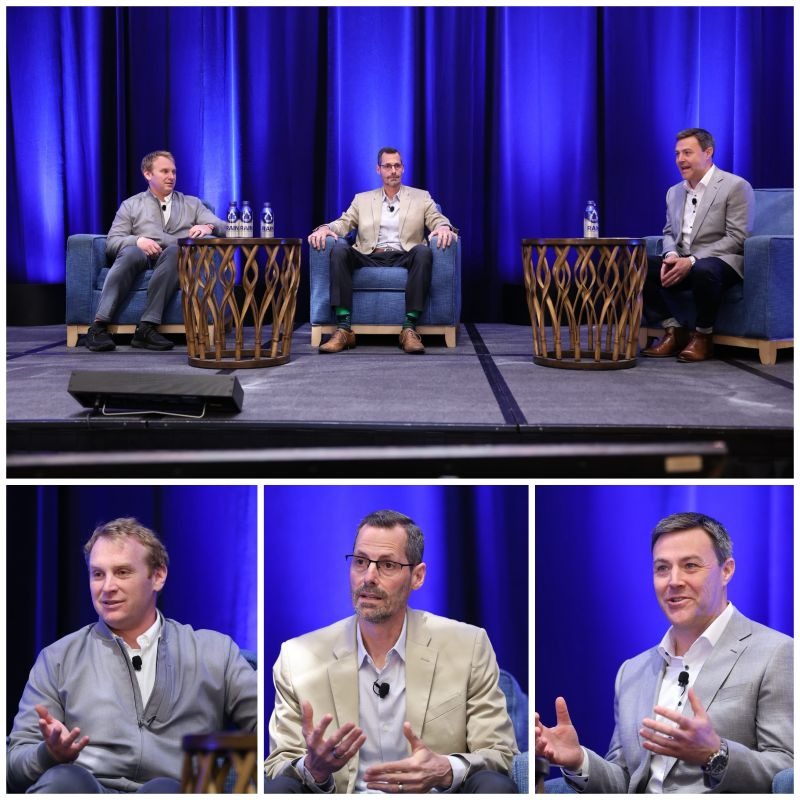
- openIDL was highlighted in the AAIS Main Event earlier this month with a panel discussion “Advancing the Industry Through Data Contribution and openIDS.”
- Thank you to Josh Hershman (Connecticut Insurance Department) and openIDL project members Robert Clark (Cloverleaf Analytics) and Keith Wolfe (AAIS (American Association of Insurance Services) for exploring the critical role of data contribution across the P&C industry and how openIDS is setting the standard for secure, consistent data sharing—driving greater transparency, efficiency, and more informed decision-making.
- What if insurance data could move seamlessly across systems—without vendor lock-in? That’s the promise of openIDS. This video explains how openIDS creates a shared foundation for insurance data exchange through standardized schemas, codes, and definitions—while staying flexible across formats like JSON, CSV, and XML. Watch here >>
OpenInfra Foundation
- The StarlingX community has just reached another major milestone, publishing the 12.0 release of the platform. Enhancements in 12.0 include improved authentication through a single OIDC IdP proxy, Partial Timing Support (PTS) for PTP, OpenStack Epoxy and Kubernetes support up to v1.34, and NetApp support as standalone storage backend or combined with Ceph.
- SNCF, SAP, and LY have recently published or presented the latest advancements in their OpenInfra Blueprint, architectures combining Linux, OpenStack, and Kubernetes.
- The new Kata Containers 3.30.0 release is now available! The community is working hard on the Kata Containers 4.0.0 release. If you’re curious about what the new major version of the runtime is going to bring you, check out the release preview blog post >>
- Zuul releases 14.1.0 and 14.2.0 bring exciting new features and important security fixes. The Zuul maintainers encourage everyone to upgrade at their earliest opportunity.
- On September 8-9, OpenInfra Summit Asia | KubeCon | CloudNativeCon | PyTorch Conference China will take place in Shanghai. Register now and become a sponsor by July 17.
Open Mainframe Project
- Applications are open for the 2026 Open Mainframe Project Summer Mentorship Program. Five mentorships are available this year, focused on digital sovereignty and AI-driven modernization. The program runs June 1–August 31, with an application deadline of May 15. Students ready to work on real problems alongside experienced practitioners from Broadcom, KPMG, Kyndryl, Red Hat and University of Cumberlands can apply now. Apply here >>
-
Zowe Explorer just got more accessible. If you've been blocked by a lack of z/OSMF REST API or FTP access, there's now a way in via SSH. You can access your z/OS jobs, z/OS UNIX files, and z/OS data sets with just an SSH connection. Dan Kelosky at Broadcom walks through the technical preview in detail. Read the article>>
- The zopen community had a strong first quarter. Q1 highlights include seven new tools added to the library, 100% test coverage achieved for yq and rsync, and upstream contribution of libassuan. Coming up, a new zopen installer beta is available for testing now, with RPM package generation and OpenSSL with liboqs integration on the way. Contributors at every level can earn a verifiable Credly badge through the zopen badge program. Learn more at zopen.community >>
- In this episode of Mainframe Connect’s "I Am a Mainframer" podcast, Marcus Davage, at BMC Software and Open Mainframe Project Ambassador, traces a 30-year career from a 3270 terminal at British Steel in 1988 to AI and quantum-safe computing on zSystems today. Marcus describes how deep expertise in Db2 followed him across platforms and organizations, how he found himself "paid to tinker" with AI agents for mainframe customers, and why he still visits universities in Wales to show students that the mainframe is a modern enterprise platform. His advice to younger professionals is simple: stay curious, keep tinkering, and build a long-term career around a technology you love. Listen to the full episode >>
- Congratulations to Richelle Anne Craw from Beta Systems Sofwaer on being named a 2026 Planet Mainframe Influential Mainframer. Richelle is a software engineer at Beta Systems Software, an Open Mainframe Project Ambassador, IBM Champion, and one of the most active voices in the mainframe community. She teaches modern DevOps with Zowe, co-hosts the Mainframe Coven podcast, and mentors newcomers finding their footing in the ecosystem.
Open Programmable Infrastructure
- OPI showcased open, composable infrastructure at the 2026 OCP EMEA Summit in Barcelona. The project joined the Linux Foundation booth alongside SONiC Foundation and CHIPS Alliance, highlighting how open collaboration across hardware, networking, and programmable infrastructure is helping advance next-generation data center architectures.
- The demo showcased at the event demonstrated multi-vendor DPU/IPU interoperability. The community’s presence underscored growing momentum around programmable, disaggregated infrastructure built for scale, flexibility, and real-world deployment.
OpenSearch
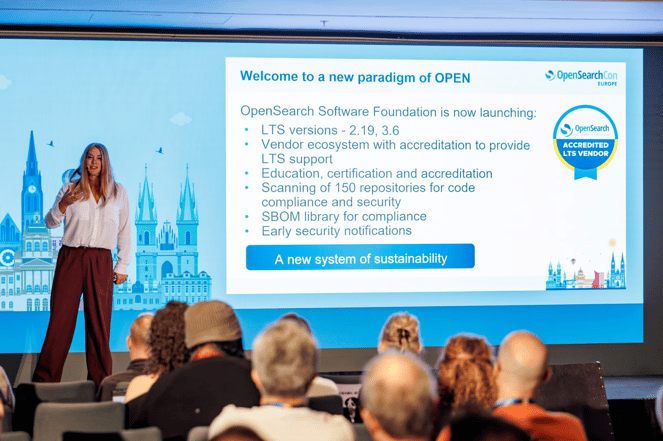
- Long-Term Support (LTS) Program |The OpenSearch Software Foundation officially launched its LTS program, offering 18-month supported releases, structured security SLAs, and SBOM coverage to provide a stable, vendor-neutral path for production deployments.
- CERN joins the Foundation | As a long-time user managing 130 clusters and 1.3+ petabytes of data, CERN has joined as an Associate Member to contribute expertise in observability and explore AI-driven high-energy physics use cases.
- OpenSearchCon Europe 2026 Recap: This OpenSearchCon started and concluded with a focus on search as core infrastructure for analytics and AI. All session videos, featuring insights from AWS, IBM, and S&P Global, are now available online >>
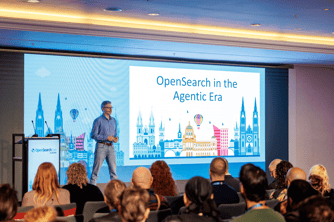
- IBM watsonx.data Integration: IBM, OpenSearch member company, is leveraging OpenSearch for "Agentic RAG," utilizing hybrid retrieval and the OpenRAG framework to transform unstructured data into actionable AI context.
- Multimodal Search Benchmarking | New research released by the project compares three distinct approaches to searching text, tables, and diagrams within complex report documents to help users balance quality and latency.
- Noventiq case study | With 7 million users, Noventiq set out to change that with self-healing infrastructure powered by agentic AI and #OpenSearch vector search. Instead of just raising alerts, the system now investigates incidents, retrieves past fixes, and supports safe remediation through AI-driven workflows with human oversight where it matters. The shift is simple but powerful: from alerting humans to helping resolve issues.
-
Upcoming events
-
News media coverage
OpenJS
- OpenJS is proud to join fellow registry leaders in the new Sustaining Package Registries Working Group. Our goal—shared approaches to funding, governance, and long-term resilience.
- OpenJS is supporting GitHub’s Maintainer Month by offering 15% off our summit at RenderATL for open source maintainers! Check it out at maintainermonth.github.com >>
- Join the OpenJS Foundation and the vis.gl community at the Open Visualization Collaboration Summit at ETH Zürich on September 9-10, 2026. This summit brings together an international audience of developers and contributors to shape the future of open source visualization.
- The 2026 Node.js London Collaboration Summit trip report is officially live! We gathered 50+ contributors to discuss the biggest technical shifts coming to the runtime. Read more Read more >>
- The Node.js project's security bug bounty program is being paused. Reporting remains unchanged, and so does our commitment to security.
OpenSSF
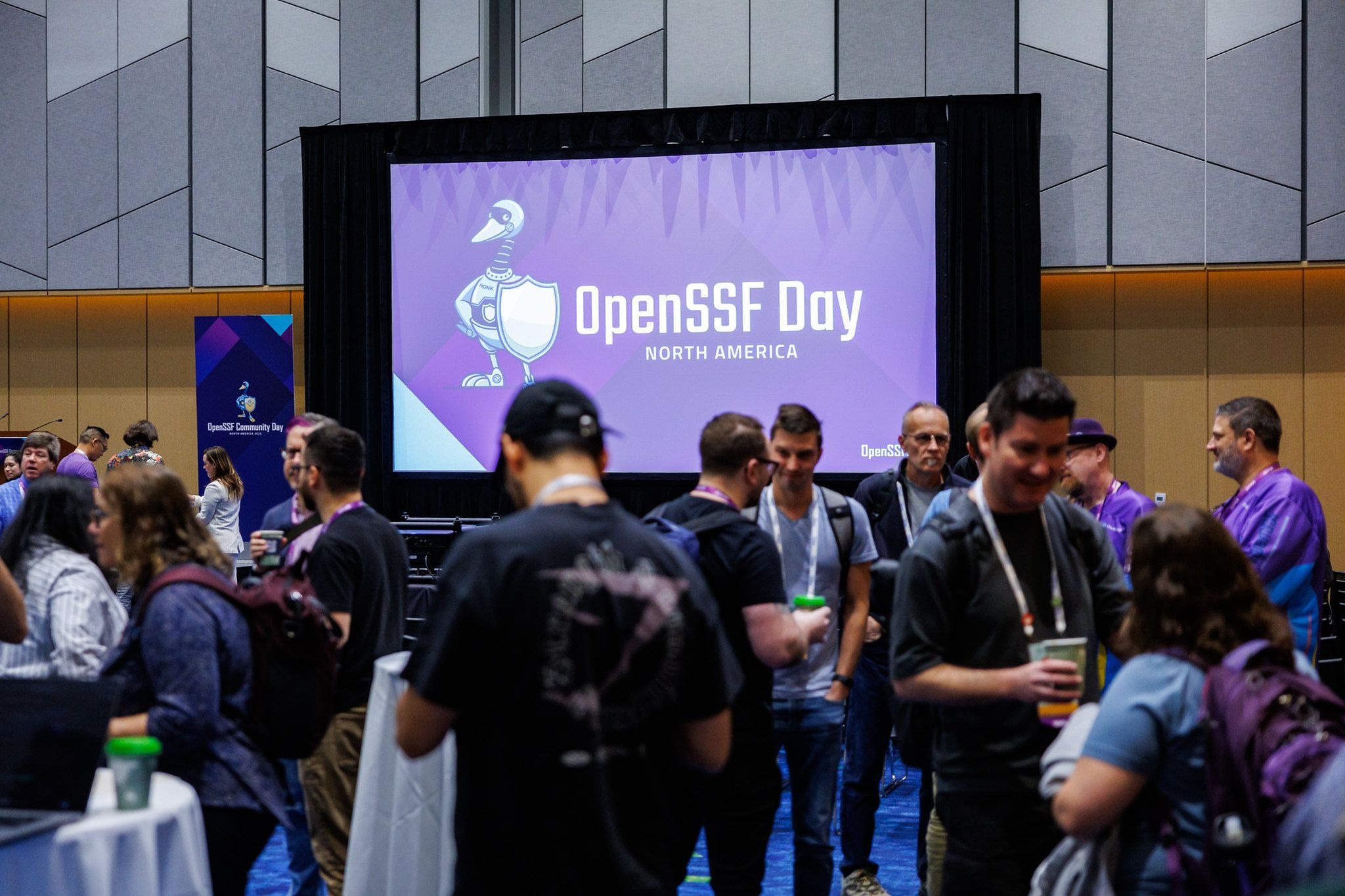
- OpenSSF Community Day North America is around the corner! This is a full day of collaboration covering supply chain security, AI-driven remediation, quantum-safe signatures, and more. Join maintainers, security researchers, and industry leaders for this community gathering! View Agenda >> + Register >>
- The Road to Gold: How CPS Set a New Standard for Security and Quality in Open Source | A guest blog exploring how the ONAP CPS project achieved OpenSSF Best Practices Gold badge status, setting a new bar for security and code quality across the open source ecosystem.
- Open Infrastructure Is Not Free, Part II: The Hidden Cost of Running Package Registries | Building on the 2025 open letter on sustainable open source, this blog examines the growing financial pressures facing package registries as AI adoption and innovation continue to accelerate.
- What's in the SOSS? Podcast Episodes 58-60 are now available! Listen to the experts, including Brian Fox on AI security rigor, Brandt Keller on air-gapped software deployment with Zarf, and Prince Asiedu on the origin story of OSSAfrica.
Overture Maps Foundation
- April 2026 Data Release (v1.16.0) Now Live | The latest Overture data release brings refined confidence scores for 10M+ places, a global road network now exceeding 93M kilometers (including 8.7M TomTom segments), new schema properties ahead of June's category updates, and refreshed address data with improved de-duplication. Get the open data and full release notes here.
- P3 Conference (Dallas) | Overture took the stage at the Public-Private Partnership Conference, making the case for open, standardized map data as a solution to costly "data wrangling" in infrastructure projects. Highlights included a Fresno County emergency response case study, a deep dive into GERS (Global Entity Reference System) as a stable anchor for agency data, and TomTom's rationale for investing in open data so it can focus on high-value layers like autonomous driving.
- STL Tech Week (St. Louis) | Executive Director Will Mortenson delivered sessions on how fragmented spatial data leads to AI hallucinations, and how Overture's interoperable foundation layer strengthens the reliability of AI built on location intelligence. A keynote at GeoNEXT explored how the fusion of geospatial tech and AI is transforming agriculture, logistics, and spatial finance.
- Open Source in Finance Forum (Toronto) | Overture joined financial services leaders at OSFF Toronto to tackle fragmented business entity data for KYC and AML workflows. Nora Anwar (Overture Maps) participated in a panel exploring an Open Data Consortium under the Linux Foundation, aimed at building a structured, open global entity graph from verified public records to support risk management and AI in financial services.
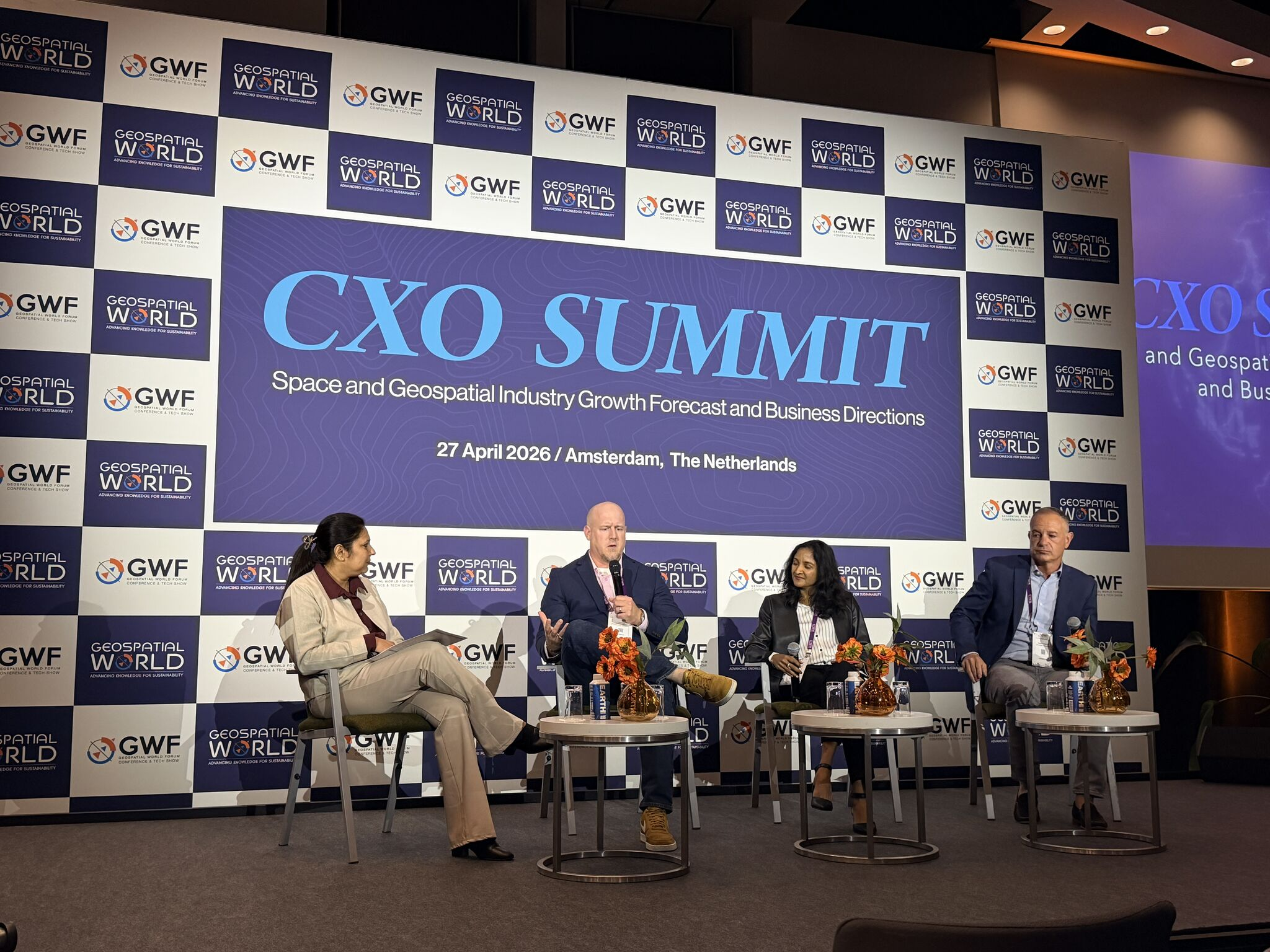
- Geospatial World Forum 2026 (Amsterdam) | Overture debuted a dedicated booth at GWF 2026 in Amsterdam, drawing a line right up until the event wrapped – a sign of the project's growing momentum. Community members stopped by to share how they're using Overture data for everything from reducing costs and powering research to supporting humanitarian response and grounding AI models with high-quality open spatial data.
-
2026 Member Summit | Overture just wrapped its annual Member Summit, bringing partners together for high-energy discussions around GERS implementation and schema evolution. A full recap and roadmap updates are coming soon. In the meantime, check out the photo gallery from Florence >>
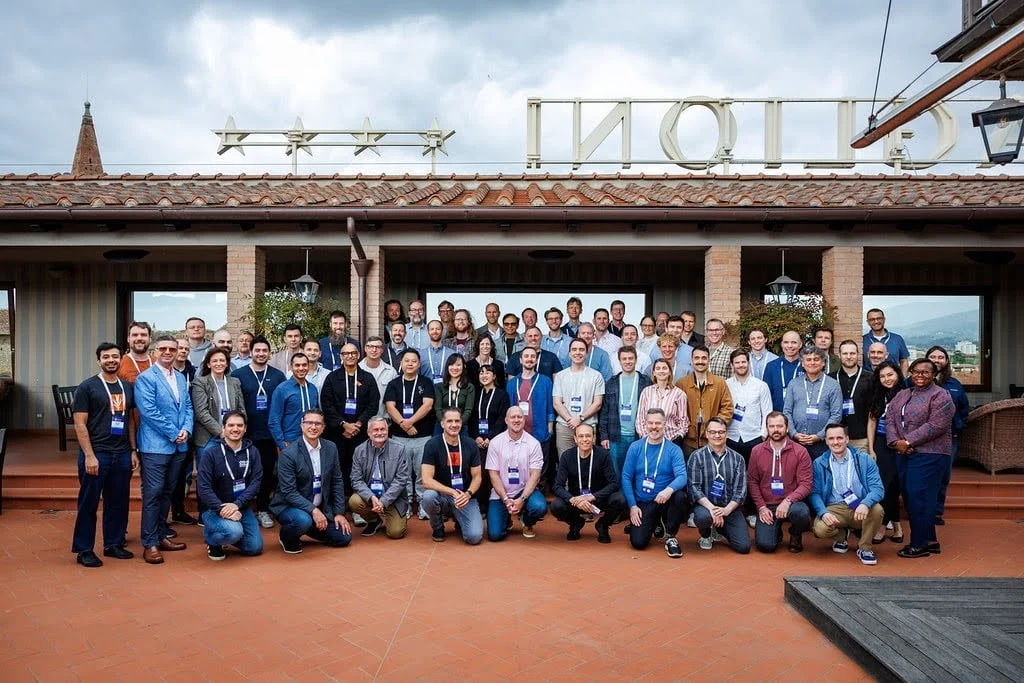
- Upcoming Events
- State of the Map US |,June 11–13, 2026—Madison, Wisconsin
- Overture will be present at the leading OpenStreetMap community event in the United States.
- Esri User Conference | July 13–17, 2026—San Diego, California
- Overture will join thousands of GIS professionals at the world's largest geospatial conference.
- State of the Map US |,June 11–13, 2026—Madison, Wisconsin
P4
- P4 Accepted to GSoC for the third consecutive year with 5 projects:
- Upcoming P4 Developer Days
- May 13 || P4TC Provisioning And Runtime Control API
- May 20 || EdgeP4: In-Network Edge Intelligence for a Tactile Cyber-Physical System Testbed Across Cities
- June 10 || A Multi-Site Testbed for Heterogeneous P4 Data Plane Experimentation on Research Cyberinfrastructure
- June 25 || P4Check: a P4 Verification Tool
PyTorch Foundation
- 2026 PyTorch Docathon is live now: May 5–19 community event focused on improving tutorials, guides, and documentation. Kickoff Video >> and Discord >>
- PyTorch Conference Europe 2026 was a big hit: Our first-ever PyTorch Conference Europe in Paris (April 7–8, 2026) brought together more than 600 researchers, developers, and practitioners across the AI stack. Helion and Safetensors joined as foundation-hosted projects, and ExecuTorch became part of PyTorch Core. Read recap >>
- In-Kernel Broadcast Optimization: Introduces a kernel-model-system co-design approach that integrates broadcast operations into the kernel layer for large-scale recommendation inference. Read blog >>
- Shepherd Model Gateway: LightSeek Foundation introduces a Rust-based gateway that moves non-GPU work out of the inference path, with up to 3.5× throughput in long-context scenarios. Read blog >>
- Introducing AutoSP: AutoSP applies compiler passes to enable sequence parallelism and activation checkpointing for long-context LLM training and is integrated with DeepSpeed. Read blog >>
- Rapid Bucket for PyTorch via gcsfs: Google introduces a gRPC-based streaming approach for Colossus storage with zonal co-location while preserving the fsspec interface, with reported reductions in total training time and improvements in I/O performance. Read more >>
- Case Study: IBM Research Uses vLLM in RITS | IBM Research’s RITS platform provides shared access to model inference and tuning across its research community, with vLLM serving as the core model serving runtime. Read case study >>
- Join us at our upcoming conferences
-
- KubeCon + CloudNativeCon + OpenInfra Summit + PyTorch Conference China 2026 | CNCF, OpenInfra, and PyTorch communities come together in Shanghai (September 8–9, 2026) across cloud native infrastructure, AI, and open source technologies. Registration is open.
- PyTorch Conference North America 2026 | October 20–21 in San Jose. Call for Proposals (CFP) is open across topics including Kernel Engineering, Training, Inference, Responsible AI and more. Submit to speak by June 7.
RISC-V

- Looking to network and connect with other women in the RISC-V community? Join us at Bond & Build during RISC-V Summit Europe 2026. This event is dedicated to empowering women across the global tech community, driving innovation forward, and building meaningful connections.
- Register for RISC-V Summit Europe—Bologna, Italy, June 8–12, 2026 | Join the global RISC-V community for a week of keynotes, technical sessions, tutorials, demos, and networking, shaping the future of open computing. The Summit brings together leaders from automotive, AI, HPC, aerospace, embedded systems, and many other industries, alongside developers, engineers, researchers, and students, to drive innovation across the RISC-V ecosystem.
- Calling all developers | Get hands-on with RISC-V at expert-led hardware and software workshops for just €30. Whether you're just getting started or already deep in RISC-V, this is your chance to build and learn.
- June 8, 2026 | Bologna. Save your spot—space is limited.
SONiC
- SONiC community is actively preparing for upcoming global engagements. At the OCP APAC Summit in Taipei (August 11–12), SONiC will host a half-day workshop alongside a dedicated booth featuring live demos and real-world use cases from across the ecosystem. The Call for Proposals is open through May 17 for both workshop sessions and booth demos. Submit your proposal and be part of the program.
- Join the SONiC community on June 1 in Bellevue, WA for an interactive hands-on workshop at NANOG 97 focused on designing and configuring a data center leaf-spine fabric using community SONiC. Participants will gain practical experience with SONiC architecture, Containerlab-based labs, and real-world configuration using SONiC and FRR CLI, including BGP and EVPN. Additional registration required >>
- The SONiC Foundation continues to grow its global ecosystem with the addition of new members across all tiers, including Premier Members Supranett and Upscale AI, General Members Terahop and Exaware, and Associate Members University of Surrey, CMKL University, and BDBOS. This expanding membership reflects strong industry momentum and cross-sector collaboration driving innovation in open, vendor-neutral networking. Explore the full list of members and learn how to get involved.
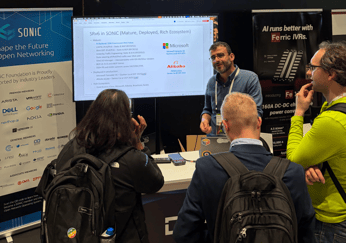
- SONiC had a strong presence at OCP EMEA Summit in Barcelona with a packed workshop on April 29 featuring technical sessions on architecture and real-world deployments, alongside live demos at the Linux Foundation booth that brought together developers, operators, and ecosystem partners.
Sylva Project
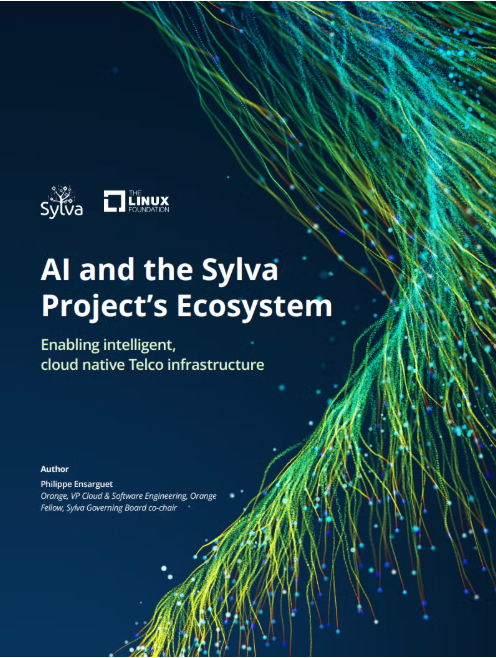
- New Sylva white paper explores AI and the future of telco cloud | The Sylva project recently published AI and the Sylva Project’s Ecosystem, outlining how open, Kubernetes-native telco cloud infrastructure can provide the foundation for scalable AI, distributed inference, and autonomous network operations.
- Sylva highlights digital sovereignty for telco cloud | A recent Sylva blog, Sovereignty Is More Than Trusted Hosting: How Sylva Helps Build a Truly Sovereign Telco Cloud, explores why sovereignty requires more than regional hosting—and how open source, shared validation, and transparent infrastructure can support trusted telco cloud deployments.
- ICYMI: Sylva Developer Day and KubeCon Europe momentum | Recent Sylva blog and social posts recap a strong week in Amsterdam in late March, including Sylva Developer Day, Cloud Native Telco Day, and KubeCon + CloudNativeCon Europe, highlighting growing community engagement around production-grade, cloud-native telecom infrastructure.
- Watch the Cloud Native Telco Day sessions | Videos from Cloud Native Telco Day 2026 are now available, featuring community sessions on cloud-native telecom innovation, automation, Kubernetes, network functions, and the continued evolution of telco cloud.
- Sylva 1.6 continues to advance production-ready telco cloud | The latest Sylva release adds Kubernetes 1.33 support, GitOps management for workload clusters, expanded storage and security capabilities, and experimental options for Cilium CNI and GPU configurations.
UXL Foundation
-
The UXL Foundation held a AI & Scientific Computing SIG with a special session on April 22, 2026 by Prof. Makoto Tsubokura (Kobe University and RIKEN, Japan) on “When AI Meets Engineering Design: Constraining Its Creativity for Smarter Vehicle Aerodynamics Design”. We had approximately 80 attendees at this SIG. Please watch the replay >>
-
The UXL Foundation Language SIG was held on May 5 with a presentation entitled SYCL Offloading toolchain upstreaming by Yury Plyakhin fron Intel. This talk presents the progress made on upstreaming the SYCL offloading toolchain into the LLVM/Clang project. The focus is the device-side pipeline—everything that happens after the Clang frontend has produced device IR—and how SYCL is being aligned with the new Clang offload model that is already the default for all offloading compilations in the main branch of LLVM. Listen to the recording >>
-
The UXL Foundation Math SIG is scheduled to meet on May 13, 2026 to discuss plans for the oneMath specification. View meeting details >>
-
The UXL Foundation launched the The UXL Foundation has a new website coming live in mid-May so please follow us on our social links:
-
Join the mailing lists to receive invitations and stay informed about upcoming UXL Foundation SIG meetings. Please check the calendar for details of upcoming meetings. We welcome proposed topics for any of our meetings, so get in touch if you want to present.
Valkey
-
Milestone Achievements
- 100M+ Docker Downloads: Valkey has surpassed 100 million downloads on Docker, driven by global community adoption.
-
Product Updates and Releases
- Valkey GLIDE C# 1.0.0 GA: The General Availability release features improved command support, enhanced security, GLIDE-native APIs, StackExchange.Redis compatibility, and performance observability. Explore the release.
- Spring Data Valkey: A drop-in replacement for Spring Data Redis that integrates with the cluster-aware Valkey GLIDE client to maintain low-latency performance within existing Spring templates. Read the blog.
-
Event Recaps
- Laracon India 2026 | Shirish Kulkarni demonstrated zero-code scaling for Laravel applications to over 900 attendees in Ahmedabad. Read the blog.
- HackNC State 2026 | Team Catphish won "Best Use of the Valkey API" for an AI-powered voice fraud prevention system using voice embeddings and dynamic prompts. Read their full story.
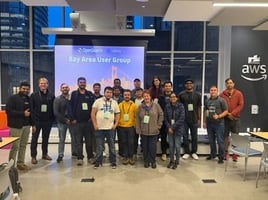
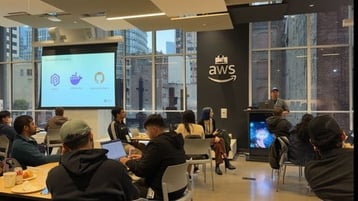
- Valkey <> OpenSearch Meetup | A collaborative deep dive into open-source search and observability stacks involving OpenSearch, OpenTelemetry, and PostgreSQL.
-
- KCD Guadalajara 2026 | Roberto Luna Rojas presented on deploying Valkey on Kubernetes for high-throughput and horizontal scalability.
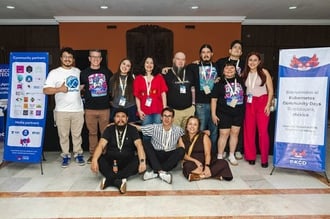
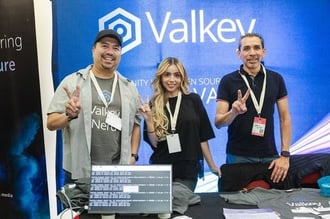
- KCD Guadalajara 2026 | Roberto Luna Rojas presented on deploying Valkey on Kubernetes for high-throughput and horizontal scalability.
-
Upcoming Events
- Open Source Summit NA | May 18-20 | Minneapolis, MN
- Rethinking Caching for AI Session | May 20 | Featuring Madelyn Olson and Jacob Murphy
- Percona Live |May 27-29 | Mountain View, CA
- Open Source Summit NA | May 18-20 | Minneapolis, MN
-
In the News
Zephyr Project
- Zephyr RTOS 4.4 Now Available: WireGuard, Wi‑Fi Direct, OpenRISC, and More
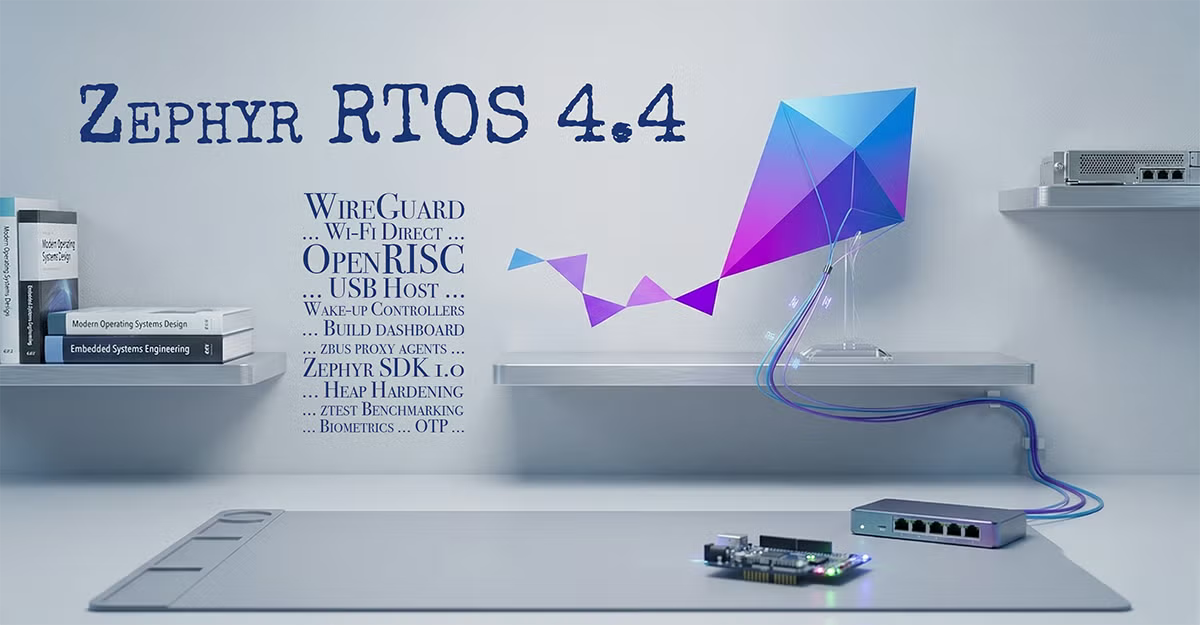
- Zephyr Project has announced the release of Zephyr RTOS 4.4, introducing major networking, architecture, and developer experience enhancements. The major highlights include native WireGuard VPN support, Wi-Fi Direct connectivity, experimental USB host expansion with camera support, OpenRISC architecture support, pressure-based CPU frequency scaling, and improved ARM Cortex-M context switching performance. The release also debuts Zephyr SDK 1.0, new driver APIs, zbus proxy agents for multi-core messaging, heap hardening improvements, and enhanced developer tooling such as the new build dashboard and benchmarking framework. Read this blog to learn more >>
- Recap – Embedded World Exhibition & Conference, Germany 2026
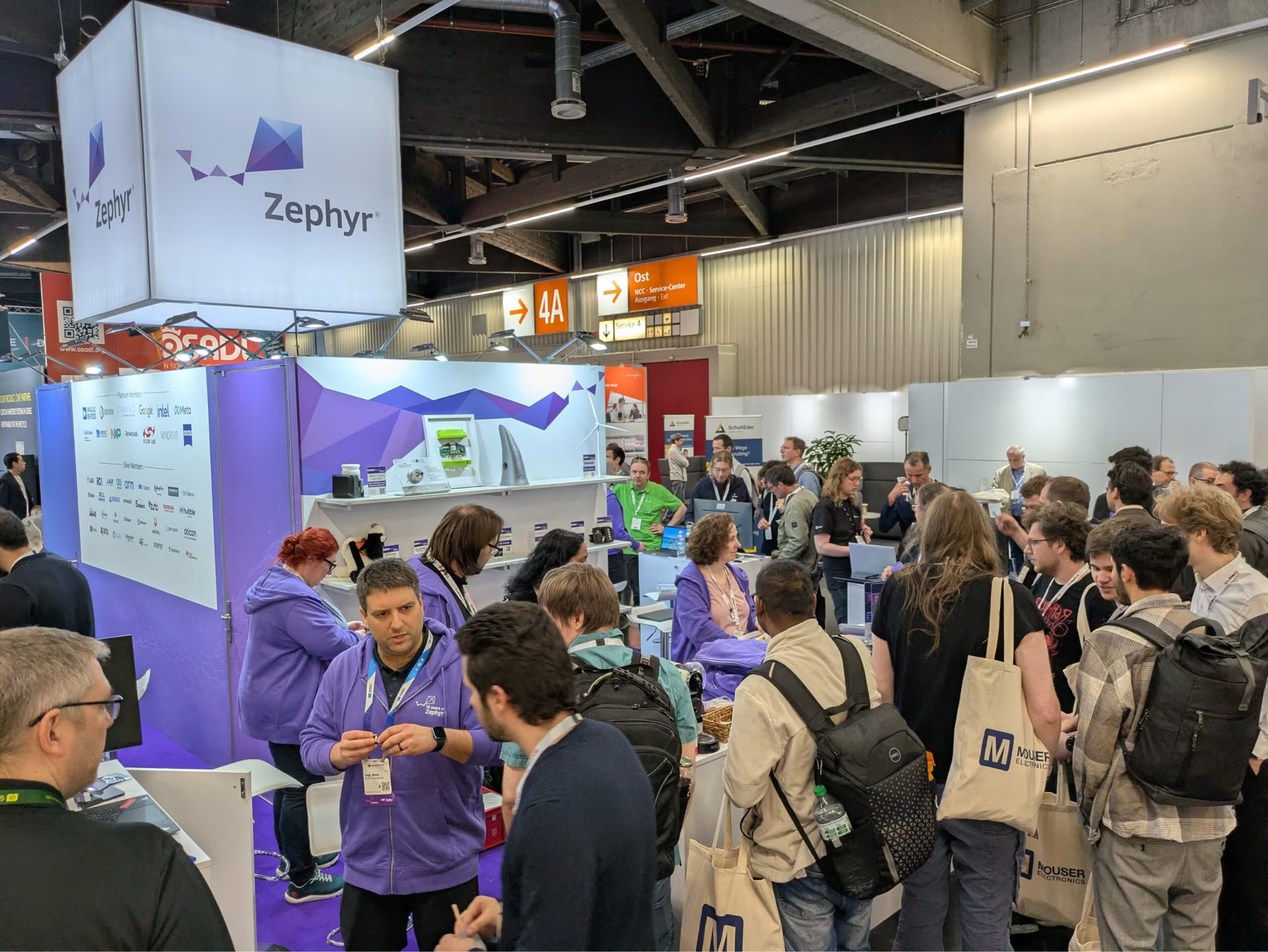
- Were you at the embedded world Exhibition & Conference 2026 in Nuremberg?This year’s event brought together around 36,000 visitors from nearly 90 countries and marked a major milestone for the Zephyr Project, its 10-year anniversary since launching at embedded world in 2016. The major highlights included live Zephyr RTOS demos from ecosystem members, technical discussions, anniversary celebrations at the Zephyr booth, hands-on workshops, and conference sessions covering topics such as safety certification, power optimization, vulnerability management, and running Linux alongside Zephyr. The event showcased the continued growth of the open source ecosystem. Read the recap blog >>
- Catch up on the latest episodes of the Zephyr Podcast | “Cabin Crew, Prepare for native_sim!” and “More Architectures Than IPs” featuring discussions on Zephyr 4.4, WireGuard, robotics, LoRaWAN, HTTP/3, new processor architectures, developer tools, and creative community projects. Whether you are following embedded development trends or looking for insights from the open source ecosystem, these episodes are full of practical updates, technical discussions, and community conversations.
- Meet the Zephyr community at these events:
-
- Embedded Online Conference May 11-15, 2026
- Zephyr Project Meetup (May 16, 2026): Kochi, Japan
- Open Source Summit (May 18-20): North America 2026
- Zephyr Project Meetup (June 11, 2026) – London, UK
- Open Source Summit (June 16-17): India 2026
- Zephyr Project Meetup (June 17, 2026) – Vienna, Austria
- Zephyr Project Meetup (June 26, 2026): Sapporo, Japan
LF Events: Mark your calendar!
-
Open Source Summit North America
May 18–20 / Minneapolis -
Linux Security Summit North America
May 21–22 / Minneapolis -
Observability Summit North America
May 21–22 / Minneapolis -
OpenSSF Community Day North America
May 21 / Minneapolis -
CozySummit Virtual
May 26 / Virtual
To register for in-person attendance or virtual LF events, please view our full calendar of events here, and be sure to subscribe to our events newsletter. Check out our Flickr stream for photos of past events!