
The Linux Foundation | 18 November 2026
Welcome to the November 2026 edition of the Linux Foundation Newsletter!
LF Education’s Black Friday sale runs November 27 through December 4, with savings of up to 65% on training and certifications. Also new is the Certified Kubernetes Network Engineer (CKNE) certification and its Certification Pathway, and you can sign up to be notified when registration opens for the Secure AI Associate (SAIA) exam.
This month’s biggest announcements include a new open source project for AI agent identity and a milestone for the Agentic AI Foundation. The Linux Foundation welcomed Agent Name Service (ANS), which builds on DNS to verify and discover AI agents. AAIF added four projects (Agent Skills, Open Responses, OpenEnv, and OpenSandbox), bringing it to 10 hosted projects, and passed 300 members in its first year. The CNCF now hosts 231 projects, with KubeVirt and NATS graduating this month.
LF Research published four reports. The 2026 State of Open Source in Financial Services found a 63% year-over-year increase in GitHub commits from financial institutions. The AI impact on cybersecurity report found that 3 in 5 teams ship code faster than security reviews can keep up. A third finds that the future depends on VMs and containers running together, and the fourth, State of Commercial Open Source 2026, draws on 225 founders and leaders. LF Research and CNCF are also fielding a 3-minute survey on neocloud adoption.
You’ll also find a recap of the industry challenge LF Europe co-led at the World Open Innovation Conference in Kaunas, Lithuania, plus project news that ranges from agentic AI to telecom and embedded systems.
>> Read on for even more news, research, and opportunities from across the Linux Foundation.
Contents
- Education Opportunities
- LF Event Highlight
- LF Research: Survey + report
- LF Europe: Community Updates
- Linux Foundation Projects: Featured news
- LF Events: Mark your calendar!
- Follow us!
Education Opportunities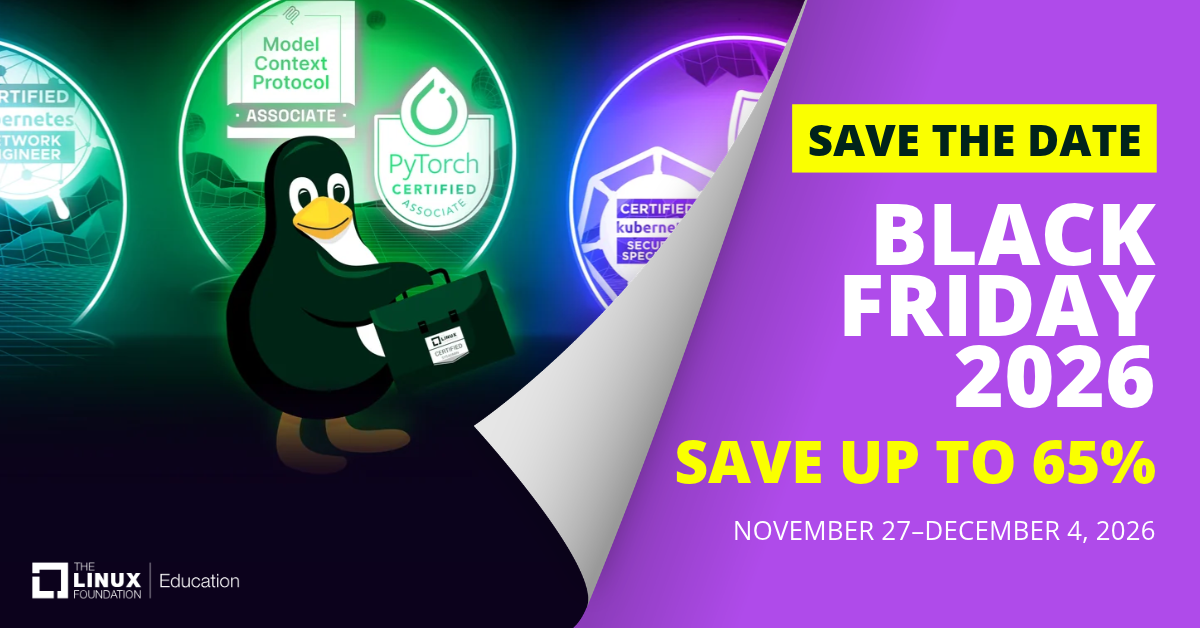
Black Friday Deals Are Coming: Save Up to 65%!
Mark your calendars! From November 27 through December 4, save up to 65% on Linux Foundation Education training, certifications, and more. Whether you're building new skills or taking the next step in your career, you won't want to miss these deals!
New Certifications. More Ways to Grow. Take your skills further with the new Certified Kubernetes Network Engineer (CKNE) certification and Certification Pathway. Explore how the CARE Program makes it easier to keep your credentials current as you advance your skills. Plus, get ready for the upcoming Secure AI Associate (SAIA) certification exam. Sign up to be notified when registration opens!

LF Event Highlight
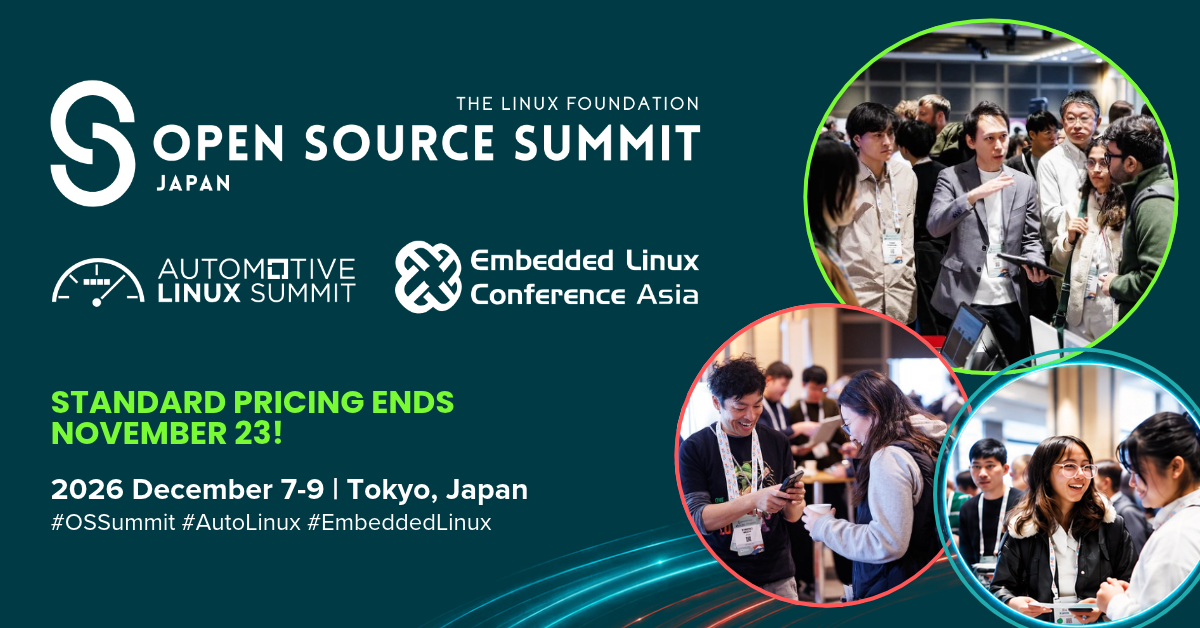
The full schedule is LIVE for Open Source Summit Japan, Automotive Linux Summit, and Embedded Linux Conference, happening December 7–9 in Tokyo!
One registration gives you access to all three events, featuring the latest in open source, automotive innovation, and embedded systems.
🎉 For the first time, Embedded Linux Conference is coming to Japan! Explore sessions on embedded Linux, real-time systems, kernel development, and more.
👉 Register by November 23 + SAVE!
LF Research: 4 new reports, and a new survey on Neoclouds!
Are you involved in your organization’s cloud infrastructure decisions?
As AI workloads drive demand for GPU capacity and specialized AI-native providers enter the market, LF Research and CNCF are fielding a 3-minute survey to capture how organizations actually run production workloads today and the extent to which neoclouds are being adopted.
We would love to hear from you! Your feedback will inform open source cloud tooling priorities and community benchmarks that help the ecosystem navigate modern infrastructure strategies more effectively.
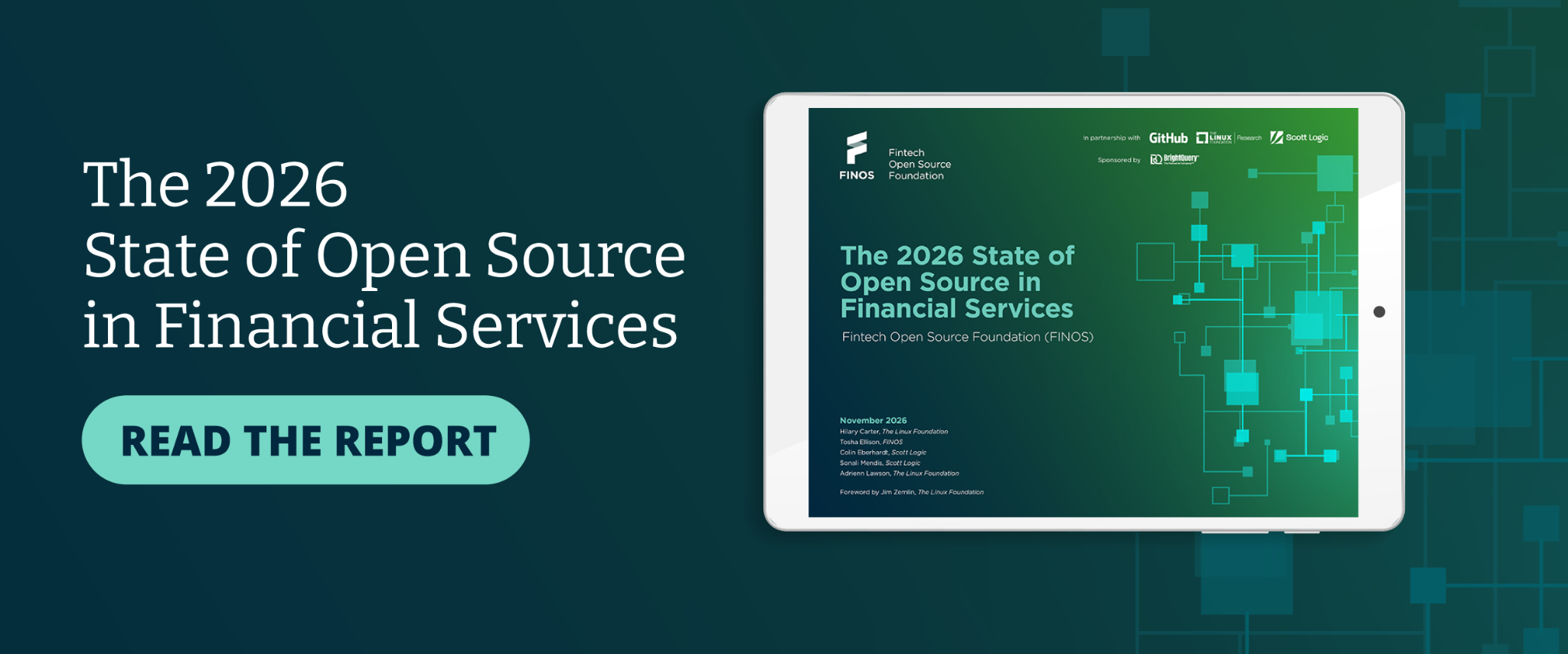
How is finance balancing rapid AI adoption with enterprise risk? Produced by FINOS and LF Research in partnership with GitHub, Scott Logic, and sponsor BrightQuery, the annual survey-based 2026 State of Open Source in Financial Services Report delivers definitive data on industry adoption and risk management in the era of modern AI.
While AI coding tools boost security development speed by 17%, false positives from scanning tools increase workloads by 30%. Critically, 3 in 5 teams now ship code faster than security reviews can keep up, and 82% of practitioners warn that overreliance on AI tools is weakening developers’ security skills.
Yet, preparedness is possible! Download the report, produced in partnership with OpenSSF, ActiveState, and LF AI & Data for actionable recommendations on building dedicated governance, strengthening supply chain safeguards, and balancing AI speed with human oversight.
Virtual machines are anchoring modern enterprise infrastructure and the rise of agentic AI. The latest research from the Linux Foundation, in partnership with Broadcom and CNCF, reveals how practitioners are experiencing the evolution of VMs and production workloads. The future is shaping up to depend on both VMs and containers, secured and managed together. Download the report for strategic guidance on balancing isolation, utilization, and modern cloud native architectures.
Commercial open source companies are proving that community trust and developer adoption can successfully translate into durable enterprise revenue. The State of Commercial Open Source 2026, produced by LF Research and Serena Capital with sponsors AWS, CNCF, Futurewei, LF AI & Data, and Red Hat, delivers ground-up operational benchmarks and strategies from 225 founders and leaders. Download the report for strategic guidance on feature gating, enterprise sales, and sustainable scaling.
LF Europe: Community Updates
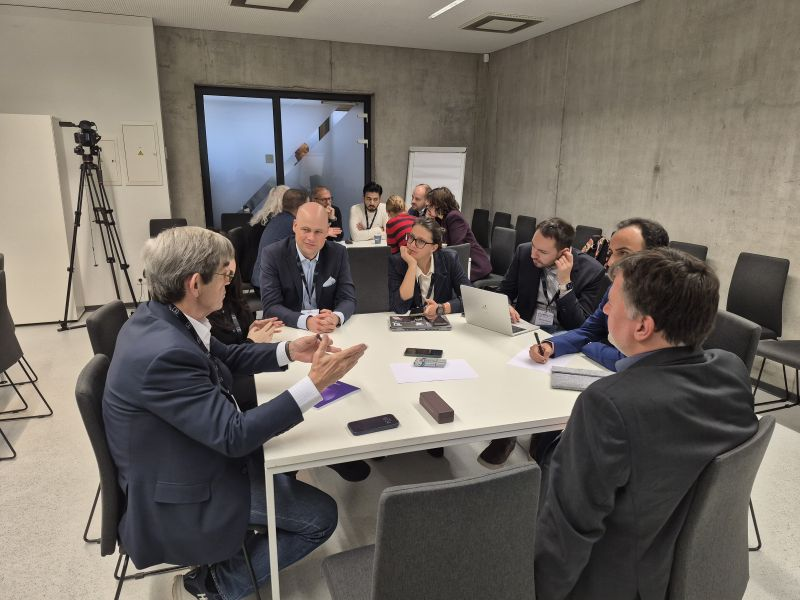
At the World Open Innovation Conference in Kaunas, Lithuania, LF Europe’s Mirko Boehm joined LF Research’s Anna Hermansen to lead an industry challenge on how open source must evolve as we work to create and sustain open ecosystems for hardware, data, and AI models, and how we can apply open innovation principles to support these more complex systems.
Linux Foundation Projects: Featured news

Formations
- The Linux Foundation welcomed Agent Name Service (ANS) as a new open source project, advancing trusted identity, verification, and discovery for AI agents across the internet. Built on existing DNS infrastructure, ANS provides an open standard for securely identifying and authenticating AI agents, enabling greater interoperability across platforms and services. Read the announcement >>
Academy Software Foundation (ASWF)
- 2026 Virtual Town Halls: Watch On Demand – Recordings from all 11 project town halls are live, including ACES, OpenColorIO, OpenEXR, MaterialX, OpenTimelineIO, and the USD Working Group. Each covers the year’s releases, production use cases, roadmap and what’s next. Watch the recordings
- Call for Papers: Open Source Forum 2027 – Our annual Open Source Forum returns to Los Angeles on February 18, 2027, for 100+ business and technical leaders, with the theme “New Technologies Impacting Studios.” The call for talks closes December 6 at 11:59 PM PT. We welcome talks on AI and machine learning, virtual production, pipeline tools, computer graphics, and immersive films. Submit your talk
- USD Collective Projects Initiative Launches – The USD Working Group, with over 1,000 contributors, has launched an open source test bed for standardizing how assets are defined in production pipelines. Its first project, built by volunteers across different DCCs, already exposed differences in how tools handle USD, including two renderers lighting the same scene differently. Read the blog
- Open Source Days 2026: 500+ attendees in Los Angeles, plus new members CIQ, Evercast, and RIT. Watch the recap and recordings
Agentic AI Foundation (AAIF)
- Four new projects join AAIF: Agent Skills, Open Responses, OpenEnv, and OpenSandbox bring AAIF to 10 hosted projects, expanding open collaboration on agent capabilities, model interoperability, training, and execution. Read the announcement.
- AAIF surpasses 300 members in its first year: New Gold Members include Ant Group, Gates Foundation, MongoDB, Nutanix, Royal Bank of Canada, Vercel, and Vultr, broadening participation in open standards for agentic AI. Meet the new members.
- Speak at AGNTCon + MCPCon North America 2027: Share practical lessons on building, evaluating, and securing AI agents in San Francisco on April 28 and 29. The call for proposals closes January 18, 2027. Submit a proposal.
- How can agents find the right tools at scale? AAIF Ambassador Gnanaguru Sattanathan explains dynamic tool retrieval, including how to evaluate accuracy, costs, and performance when agents need access to thousands of tools. Read the blog.
- Young builders put open source AI to work: At the free AGNTCon Kids Day in San Jose, participants ages 9 to 18 used goose to create games and program robots to sing, dance, and move obstacles. Read the recap.
Alliance for OpenUSD (AOUSD)
- The annual AOUSD Member Summit took place on October 28th in San Francisco at the Autodesk Gallery. Industry leaders and experts held strategic discussions, updates, and sessions focused on expanding open 3D standards made possible by Universal Scene Description (OpenUSD). This was a hybrid, free event open to AOUSD Steering and General Members and Contributors.
- AOUSD Core Specification 1.1.1 has been submitted for approval and publication as an ISO standard, the first step to international standardization.
- OpenUSD v26.11 is taking shape around clearer asset authorship, more compact mesh delivery, and faster work with complex scenes. The release adds Polygonal Mesh Coding, a schema for recording how content was created, and more expressive handling of time intervals and variable defaults.
Alpha-Omega
- Dedicated security expertise in action: Alpha-Omega funding supported PHP Foundation Security Engineer in Residence (SEiR) Volker Dusch in coordinating researchers, maintainers, and distributors during the PHP2Shell response, helping PHP’s engineers focus on developing fixes. Read the case study.
- Strengthening PHP package security: Alpha-Omega funding is enabling the team at Packagist Conductors to develop immutable artifacts, cryptographic signatures, build provenance attestations, and Trusted Publishing for Packagist and Composer. Explore the planned improvements.
- Are your dependencies coming back to life? “Weekend at Bernie’s II” finds 421 previously inactive critical repositories active again, with AI-assisted development playing a role in many revivals. But activity alone does not resolve security backlogs. Explore the findings.
- Your first security advisory, explained: Node.js Security Engineer in Residence Ulises Gascon shares a practical guide to handling GitHub Security Advisories, helping maintainers navigate triage, fixes, and publication. Read the guide’s introduction.
App Defense Alliance
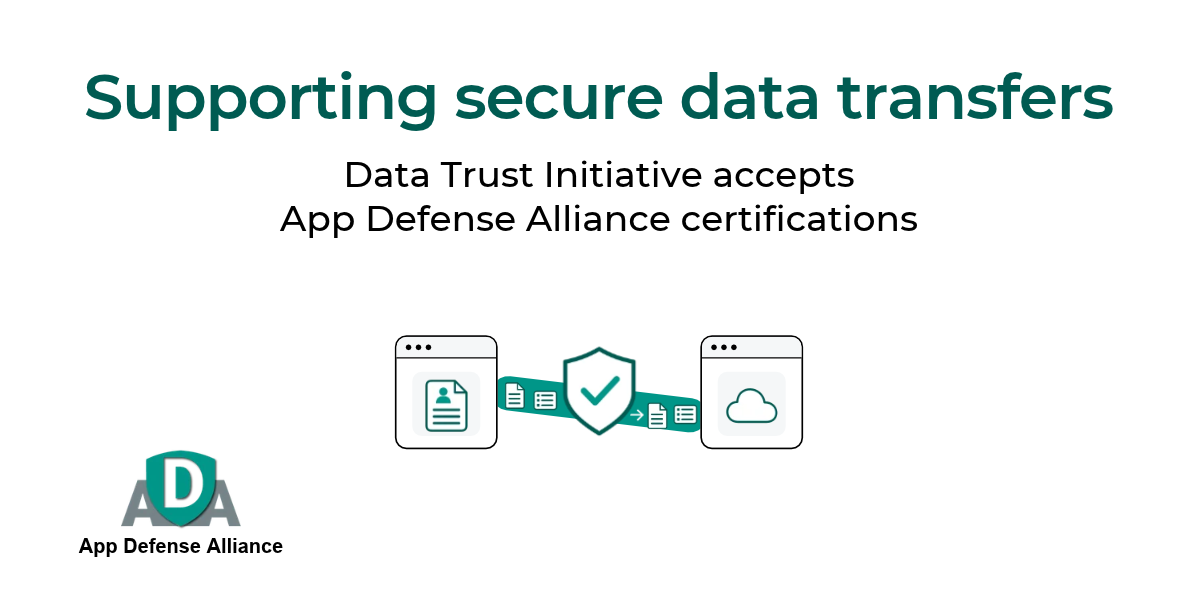
- Data Trust Registry accepts App Defense Alliance certifications
The Data Transfer Initiative’s Data Trust Registry now accepts App Defense Alliance certifications covering both CASA and Cloud App and Config as evidence of an independent security assessment for Trust Level 2 applications.
See the requirements → - Updated Certification Scheme Documents take effect December 1
Version 1.3 of the Alliance’s Certification Scheme Documents is now available. The documents set out how applications are assessed and certified. Version 1.2 remains in effect through November 30. Starting December 1, version 1.3 applies to all new assessments and any still underway.
Review the updated documents →
Automotive Grade Linux (AGL)
- Automotive Grade Linux Releases Vibrant Vimba v22.0.0
The project has released its latest stable distribution, updating the foundation to Yocto Project Wrynose 6.0.2 alongside Flutter 3.38.3 and Qt 6.12.0-beta3. This version introduces a dedicated Xen virtualization layer, container support, and downloadable SPDX Software Bills of Materials. Automotive software developers and embedded platform engineers can leverage these pre-built images and updated graphical frameworks to build secure, modular software-defined vehicle architectures.
Read the announcement →
CAMARA
-
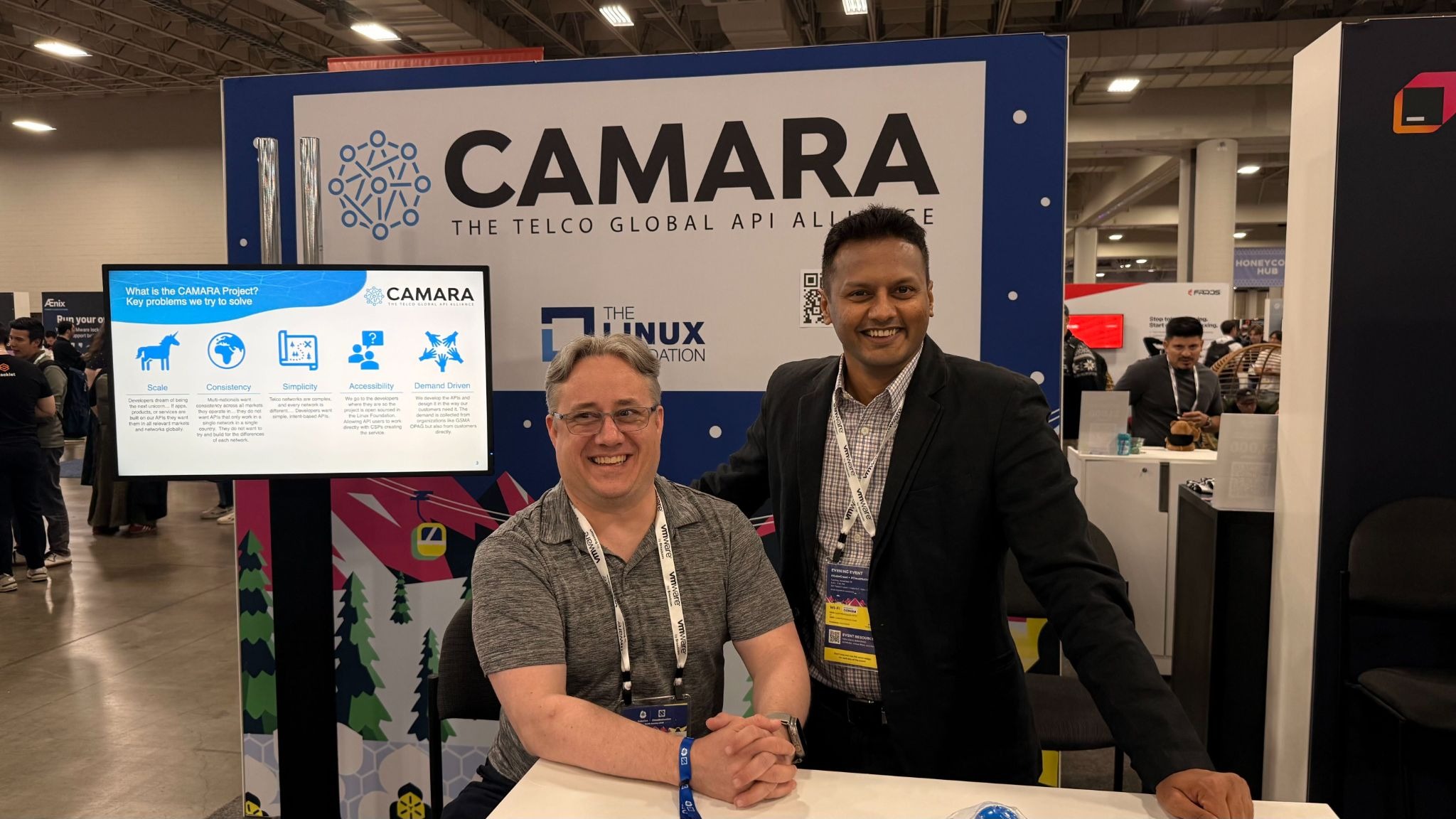
CAMARA at KubeCon + CloudNativeCon North America: CAMARA joined the cloud native community in Salt Lake City, November 9–12, connecting with developers and industry partners at Booth 321. Conversations focused on making telecom network capabilities easier to access through standardized, interoperable APIs, and bringing network intelligence into modern applications.
Explore the event >>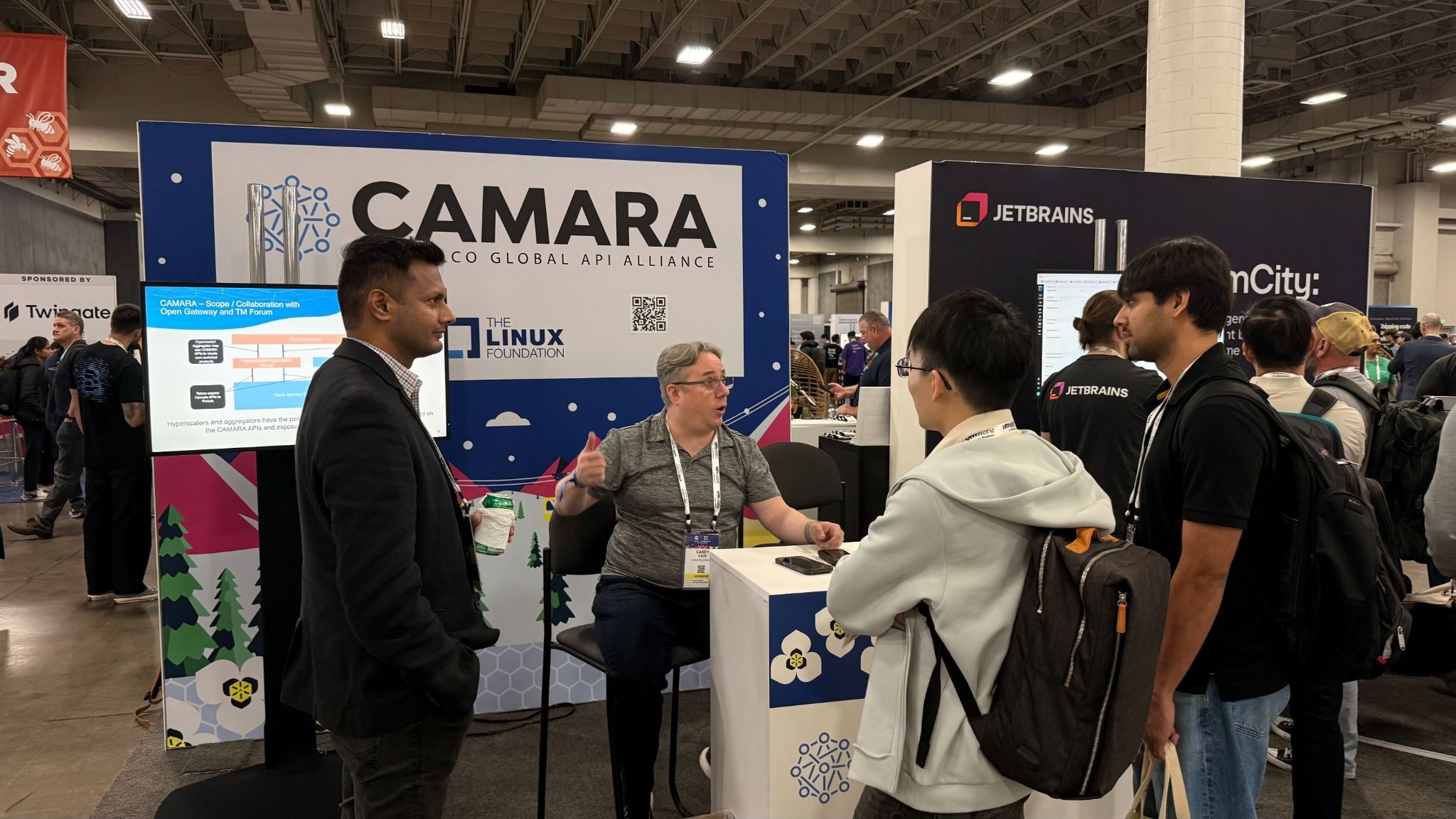
- Open Gateway and CAMARA Launch in Portugal: Portugal's MEO, NOS, and Vodafone announced their participation in GSMA Open Gateway on October 20, supported by Nokia. The initiative brings CAMARA-standardized APIs to the Portuguese market, initially focusing on SIM Swap and Number Verification to help businesses strengthen authentication and fraud prevention without separate integrations for each operator. Read the coverage >>
- CAMARA APIs Take Part in the Live Media Conversation at MWC Doha: At MWC Doha on November 8, GSMA Fusion brought together broadcasters, operators, and technology partners to explore how CAMARA Quality on Demand (QoD) APIs can support reliable connectivity for live production, remote broadcasting, and streaming. The discussion highlighted the role of programmable networks in handling demanding media workflows. Explore the session >>
- CAMARA-Based APIs Deliver Measurable Results: Orange Developer highlighted production use cases demonstrating the impact of CAMARA-aligned network APIs. A European digital lender reported a 70% reduction in false-broker fraud using KYC Match and SIM Swap, while Indonesia's BRI Bank reported a 20% improvement in successful authentications compared with SMS OTP. The results demonstrate how standardized network capabilities are being applied to real customer challenges. Read the case studies >>
- Exploring Network APIs for Connected Media Production: The 5G Media and Entertainment Association (5G-MAG) shared development progress on network API integrations on November 4. Work includes Dedicated Networks API tooling and initial testing of a Quality on Demand API consumer using Telefónica's sandbox, exploring how standardized interfaces can support connectivity-sensitive media applications. Explore the development work >>
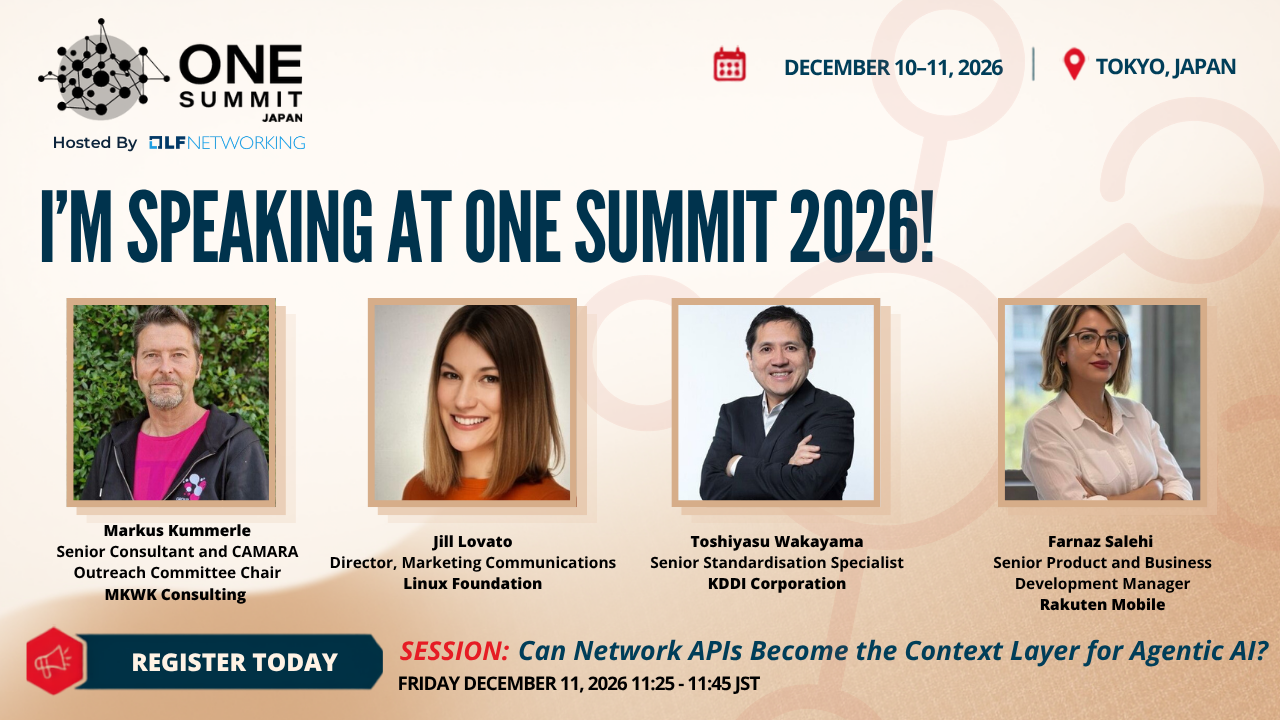
- CAMARA at ONE Summit Japan 2026: Can network APIs become the context layer for agentic AI? Join Jill Lovato (Linux Foundation), Farnaz Salehi (Rakuten Mobile), Markus Kümmerle (CAMARA), and Toshiyasu Wakayama (KDDI Corporation) at ONE Summit Japan for a panel exploring how standardized network APIs can provide trusted, real-time context for AI agents. Register now: Explore the sessions and register >>
CHIPS Alliance
- CHIPS Alliance projects Caliptra and VeeR were featured in sessions at the 2026 OCP Global Summit, held October 12–15 in San Jose, California. Topics included silicon roots of trust, device identity, secure key distribution, design verification, streaming boot, manageability, certificate refresh, and package-granular attestation. Speakers included representatives from CHIPS Alliance members AMD, Google, Intel, Marvell, Microsoft, and NVIDIA. Watch the session recordings.
Cloud Native Computing Foundation (CNCF)
- New co-located for KubeCon EU 2027: NeoCloudCon (CFP Open)
- CNCF Hits Major Milestones with Global Community Growth, Record Industry Investment and a New Generation of Projects to Build AI Systems in Production | New Sandbox projects, including Agent Substrate and OpenShell, expand CNCF’s portfolio to 231 projects as the community adds over 5.5 million cloud native developers in 12 months, welcomes eight Platinum members and brings together 82,000 attendees at events worldwide.
- Welcoming OpenShell to the CNCF: Open Governance to Secure Agentic AI | NVIDIA has contributed OpenShell, an open source runtime for securing and governing autonomous AI agents, to the foundation’s community-led home.
- Cloud Native Computing Foundation Announces KubeVirt Graduation | KubeVirt has graduated from CNCF while celebrating 10 years of development, growing to more than 2,000 contributors across 520 organizations, with production adopters including ByteDance, Cloudflare, CoreWeave and NVIDIA.
- CNCF Announces NATS Graduation, Solidifying a Production-Ready Foundation for Messaging Across Cloud and Edge | NATS has graduated from CNCF with more than 2,000 companies across industries including retail, financial services, and telecommunications using the project to simplify distributed infrastructure and support scalable applications.
- CloudNativePG becomes a CNCF Incubating Project | The CNCF Technical Oversight Committee (TOC) voted to accept CloudNativePG as a CNCF incubating project.
- Open Cluster Management (OCM) becomes a CNCF Incubating Project | The CNCF Technical Oversight Committee (TOC) voted to accept Open Cluster Management as a CNCF incubating project.
- Donating KubeRay to CNCF | KubeRay is joining the CNCF, bringing the entire PARK stack under Linux Foundation governance and giving teams full confidence in its neutrality and openness.
- CNCF Launches Certified Kubernetes Network Engineer Certification (CKNE) to Advance Production-Ready Networking Skills for AI Era | The Certified Kubernetes Network Engineer (CKNE) joins CNCF’s certification portfolio, validating hands-on expertise in designing, securing, and troubleshooting networking across production Kubernetes environments.
- CNCF Recognizes Cloud Native Champions in 2026 Community Awards | CNCF recognized 11 contributors across four Community Awards at KubeCon + CloudNativeCon North America in Salt Lake City, with winners honored at the November 12 ceremony.
- Meta Wins CNCF End User Case Study Contest for Accelerating AI Infrastructure Deployments From Hours to Minutes | Meta’s Cloud Foundation team won the CNCF End User Case Study Contest for its GitOps platform, built with Argo CD and Kargo to streamline Kubernetes application delivery; the new platform cuts routine application deployment times from more than four hours to minutes.
- CNCF Welcomes Adyen as Platinum End User Member to Advance Open Source Financial Infrastructure | Operating over 100 Kubernetes clusters with Cilium, Prometheus, and OpenTelemetry, Adyen joins the CNCF as a Platinum End User Member, bringing production-scale operational expertise to the open source community.
- CNCF Welcomes CoreWeave as a Platinum Member to Further Open Source AI Infrastructure | CoreWeave, a participant in the Certified Kubernetes AI Conformance Program and a contributor to Kubernetes, Kueue, and llm-d, has upgraded its CNCF membership to Platinum, deepening its ongoing engagement in the open source cloud native ecosystem.
- CNCF Welcomes HAProxy Technologies as a Platinum Member to Advance Open Source Kubernetes Networking | HAProxy Technologies has upgraded to a CNCF Platinum membership, deepening almost a decade of involvement with the foundation.
- CNCF Welcomes Vultr as a Platinum Member to Advance Open and Sovereign Cloud Infrastructure for AI | Vultr has upgraded to a CNCF Platinum membership, expanding its role in shaping open interoperability for AI infrastructure.
- CNCF Welcomes Qualcomm Upgrade to Gold Membership to Advance AI Infrastructure Across the Edge-to-Cloud Continuum | Qualcomm has upgraded to a CNCF Gold membership, expanding its role in shaping open source infrastructure for AI inference from the edge to the cloud.
- CNCF and SlashData Report Finds Cloud Native Developers Are More AI-Ready, Global Population Surpasses 21 Million | CNCF and SlashData released the State of Cloud Native Development Q3 2026 report, noting that the global cloud native developer population reached an estimated 21.2 million, representing approximately 41% of developers worldwide.
- CNCF and SlashData Report Finds Platform Engineering Strategies Are Shaping AI Infrastructure Adoption | CNCF and SlashData released the Q3 2026 CNCF Technology Radar report finding 54% of developers with independently managed tooling use hybrid approaches for AI workflows, compared to just 5% at organizations building custom internal platforms.
- CNCF Welcomes Twelve New Members as Organizations Look to Run AI Agents on Open, Sovereign Infrastructure | CNCF welcomes 12 new Silver members, expanding its community across sovereign cloud, AI agent infrastructure, security and financial services.
Confidential Computing Consortium (CCC)
- Agentic AI White Paper: CCC’s Technical Advisory Council has finalized a white paper on confidential computing for AI agents. It makes the case that attested execution gives agents a verifiable identity and lets them generate and protect their own keys, keeping their knowledge isolated from the cloud provider and control plane. A follow-on reference architecture paper is planned. Read more in CCC’s latest newsletter.
- CCC Japan Chapter Launches: With growing CC interest in Japan, CCC is launching a regional chapter open to everyone, especially those based in Japan. The first meetup is December 10 in Tokyo, right after Open Source Summit Japan. Read the announcement blog by CCC’s Executive Director Mike Bursell.
- Welcome, New Members: Alpha Compute joins as a Premier member, alongside KubeTEE and Supera System.
- New Weekly News Round-up: Explore the latest developments across our ecosystem by visiting the CCC weekly news round-up section on our website.
- Stay in the loop: Subscribe to the CCC newsletter and get monthly updates and messages from CCC’s Executive Director, TAC, Outreach Committee, and more.
Continuous Delivery Foundation (CDF)
- CD Foundation on Open Community Groups: We are moving from Meetup to Open Community Groups. Join one now
- Testing and CD Devroom at FOSDEM: Submit your talk proposal for our community Devroom at FOSDEM on January 30, 2027. Propose a talk
DPDK
- DPDK 26.11 freezes driver features ahead of its November 25 release: The release updates drivers from nine vendors, adds DMA drivers from AMD and NXP, and supports the Linux IOMMUFD interface. It also removes long-deprecated APIs.
- Mattias Rönnblom (Ericsson) explains why and how to run coroutines on DPDK’s eventdev scheduler: libcoro, an Ericsson-internal prototype, lets a core pause a long job and resume it later. On its own, a context switch costs about 0.6% at 10-microsecond time slices.
eBPF Foundation
- eBPF Foundation Names 2026 Community and Advocacy Fellows
The foundation selected Dr. Constanze Roedig and Rishi Mondal for its six-month advocacy program supporting independent contributors. Fellows will deliver automated Software Bill of Behavior (SBoB) runtime security baselines across CNCF projects and practical production debugging guides for Cilium and Hubble. Site reliability engineers, cloud platform teams, and security practitioners can use these forthcoming open source tools and guides to troubleshoot and safeguard kernel-level infrastructure.
Read the announcement →
Enabling Linux in Safety Applications (ELISA) Project
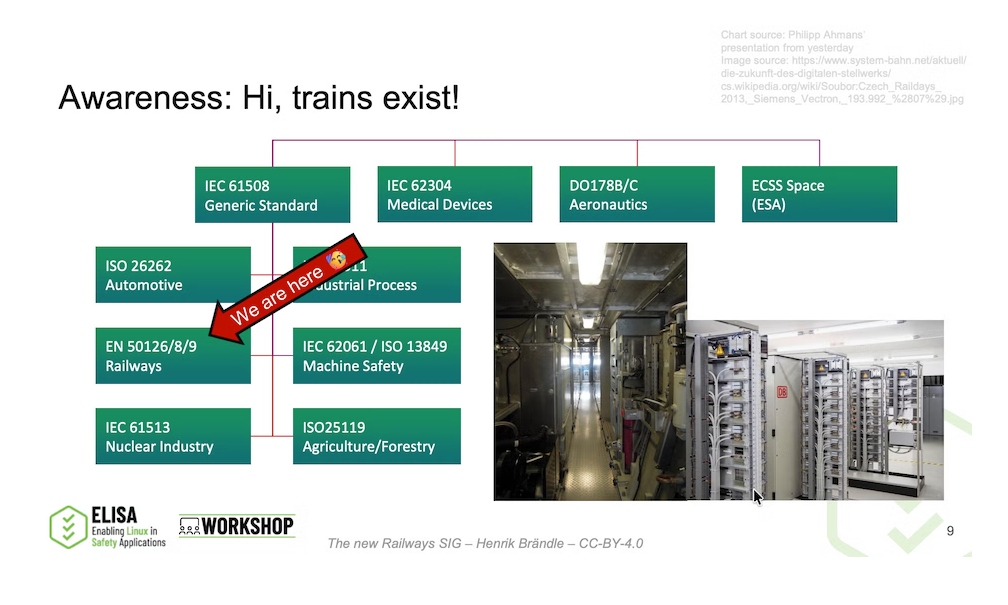
- ELISA workshop recap: BASIL, railways, and Linux safety: Explore BASIL’s latest features and roadmap for requirements mapping and test traceability, the Railways SIG’s plans to address railway-specific safety requirements, and discussions on managing interference with safety functions and developing reusable resources to support Linux safety cases. Read the recap
- AI tooling, open source evidence, and Linux testing: Explore discussions on regulatory approaches to AI-based tooling across industries, how Software Heritage and Software Hash Identifiers (SWHIDs) support software traceability and long-term access to assessment evidence, and efforts to improve Linux kernel test coverage using stress-ng, including fault injection and identifying untested code paths. Learn more
- AI for safety-critical development: Explore how AI-based tools can support requirements analysis, test development, and the classification and prioritization of Linux kernel static code analysis violations. The recap also covers NVIDIA’s reviewer-first approach to AI adoption and the challenges of tool qualification, explainability, trust, and maintaining human oversight in safety-critical development. Read it here
- From watchdog software to mixed-criticality architectures: Explore SafetyGuard’s approach to Linux application monitoring and recovery, AGL SoDeV’s software-defined vehicle architecture, and the use of Xen, Zephyr, and Linux for functional safety, including system partitioning, safety requirements, and testing. Read the recap
- ELISA at Open Source Summit Japan: ELISA will participate in the Safety-Critical Software track and host a booth at the December 7–9 summit in Tokyo. Sessions will cover topics including functional safety, testing, and requirements for safety-critical open source. Explore the track.
FINOS
- Open Source in Finance Forum, New York:
More than 750 financial leaders, maintainers, and technologists gathered in New York for the Open Source in Finance Forum (OSFF) to address shared infrastructure, regulatory compliance, and AI risk. The event featured discussions on AI governance, open source supply chain security, and regulatory digitization, alongside the first-ever Fluxnova Con.
The full library of session recordings, including main-stage keynotes, technical deep dives, and panels on software supply chain security and open standards, is now available on demand. Watch the sessions here
- FINOS and LF Research Publish the 2026 State of Open Source in Financial Services Report
FINOS and Linux Foundation Research, in partnership with GitHub, Scott Logic, and BrightQuery, have released the sixth annual State of Open Source in Financial Services report. New data reveals a 63% year-over-year increase in GitHub commits from financial institutions and shows that 58% now operate an Open Source Program Office (OSPO). The findings highlight how regulated enterprises are pooling code to reduce technical debt, secure supply chains, and establish shared governance for production AI. Download the report here - FINOS Launches FINOS Workspace to Advance Open, Agentic Desktops
FINOS has announced FINOS Workspace (formerly OpenBB Workspace), an open source, self-hosted desktop platform contributed to FINOS Labs under the Apache 2.0 license. Guided by a steering committee with maintainers from Citi, Bank of America, and AlphaFMC, the project integrates analytical applications, market data widgets, and AI-assisted workflows. Its roadmap focuses on connecting FDC3 desktop interoperability with the Model Context Protocol (MCP) so organizations can deploy model-agnostic AI assistants within their own governance controls.
Read the blog - FDC3 3.0 Reaches New Interoperability Milestone with Three Conforming Desktop Agents
The Financial Desktop Connectivity and Collaboration Consortium (FDC3) standard has reached a major adoption milestone with three desktop agents achieving conformance with the FDC3 3.0 specification: FINOS FDC3 Sail, interop.io's io.connect Browser 5.0, and Morgan Stanley's fdc3-web. FDC3 provides open APIs and context-sharing standards that allow disparate desktop applications to synchronize workflows without custom point-to-point integrations. Having multiple conforming implementations validates the 3.0 specification and supports vendor-neutral interoperability for developers building connected enterprise desktop tools.
Read the blog
GraphQL
- GraphQL celebrated one year of its Ambassadors program with a blog highlighting some of the work. Ambassadors have organized GraphQL Days in Amsterdam, Bengaluru and New York and GraphQL Locals in Amsterdam, Hyderabad & London, and created new Locals in Philadelphia, Toronto & online. Fifty-two GraphQL stars are being celebrated in 2026.
- Events and activities include prime booth placement at Apollo Summit, generating organic discussions about GraphQ. Gra Hyderabad met September 27. GraphQL Day London held a half-day track on October 1st. The first GraphQL Toronto met on October 7. GraphQL Delhi, now an officially recognized Local, met on October 10 at Microsoft.
- GraphQL-over-HTTP Spec v1 is being finalized. GraphQLSpec 2026 cut is likely to coincide.
High Performance Software Foundation (HPSF)
- Join HPSF at SC’26 in Chicago — Connect with the High Performance Software Foundation at SC’26 in Chicago at the HPSF booth and explore the more than 40 sessions showcasing HPSF projects and community leaders including tutorials, workshops, papers, panels, BoFs, and posters.
- HPX 2.0.0 Released — The latest major release of HPX, the C++ Standard Library for Parallelism and Concurrency, is now available, extending C++ standard parallelism and concurrency facilities to distributed applications from single nodes to large clusters.
- Kokkos Graduates to Become a Core Project of the HPSF — Following a unanimous vote by the HPSF Technical Advisory Council (TAC), Kokkos has officially advanced from the Established Stage to the Core Stage, reaching the highest technical maturity level within the foundation.
- HPSF Project Lifecycle — Explore our new roadmap for open source software maturity across the Emerging, Established, and Core stages at the HPSF, along with step-by-step instructions on how to apply to join HPSF as a project.
Jupyter
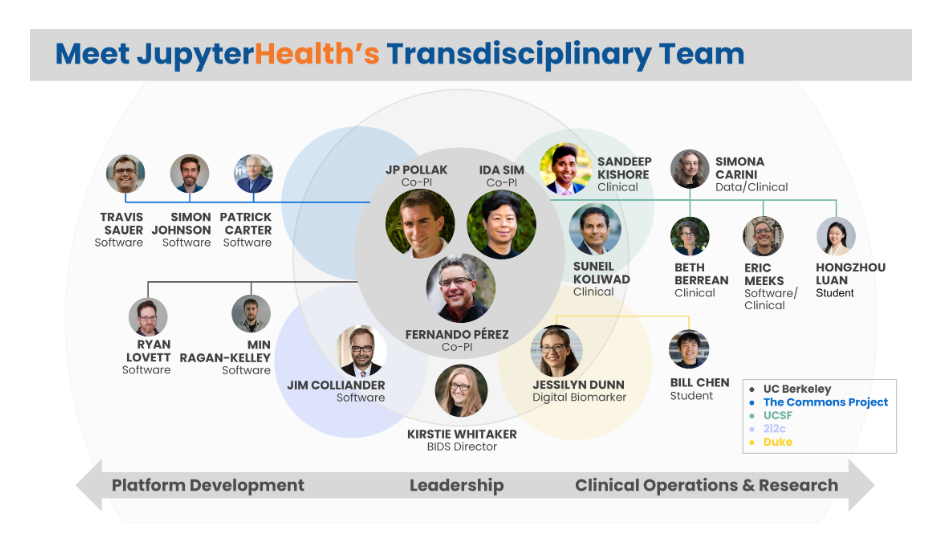
- JupyterHealth Anchors a New $10M Moonshot Lab - JupyterHealth, open source infrastructure built on Project Jupyter, is the foundation of the new Center for Edge Medicine, one of four Laude Institute Moonshot Labs. The team was one of eight seed awardees chosen from 125 proposals. JupyterHealth securely brings together data from wearables and medical records for patients, researchers and care teams. The Center will use it to unite computer science and clinical care, starting at UCSF and expanding to other conditions and health systems. All the work will be developed openly. Read the Laude Institute Announcement | Explore JupyterHealth
- Jupyter Heads to Compute! Paris, November 25-26 - Compute! Paris is a new annual conference for open source computation and data. Fernando Pérez, co-creator of Project Jupyter and creator of IPython, gives the opening keynote, and Planet Jupyter runs as a full track on the Jupyter ecosystem. A sprint and dev all-hands follow for anyone who wants to build with the community. Thanks to the organizing team for bringing it together. Join Us in Paris
- Jupyter Security Council Faces a Surge in Reports - The council received a record 40 security reports in September, up from fewer than 10 a month before March 2026. AI-generated reports drive most of that growth and often overstate severity. Through mid-October, Jupyter had received 181 GitHub security advisories in 2026 and closed 49% as invalid or duplicate. Yann Pellegrini, cybersecurity maintainer at Project Jupyter wrote up how the council is responding. His triage work is funded by a Jupyter Foundation grant, and a second grant raises it to two days a week through March 2027, with added time from Carreau to onboard new contributors. Read the Full Update
- How Are You Using JupyterHub? Take the Survey - JupyterHub supports interactive computing in education, research and large organizational deployments, and every deployment looks a little different. The project wants to hear from people who run JupyterHub so it can build real-world use cases and identify technical developments that benefit the community. The survey closes November 24. Take the Survey
- JupyterHub Roadmapping, From Event to Plan - Funded by the Jupyter Foundation, the JupyterHub team held a roadmapping event in February 2026 to build a clearer vision for the next few years. Arielle Bennett from the Alan Turing institute shares what the effort looked like and why roadmaps matter for open source projects. Read the Blog
- Call for Proposals Open for Jupyter Community Workshops 2027 - The Jupyter Community Building Working Group is accepting proposals through Monday, November 30. Workshops typically run 2 to 5 days with 10 or more people, and the Jupyter Foundation usually funds $5,000 to $15,000 per workshop for direct costs like travel and event space. Strong proposals focus on the contributor community and either advance strategic work like roadmapping or welcome a diverse group of contributors. Read the Blog | Submit a Proposal
LF AI & Data
- Mini Summit recordings are now live: Catch up on the LF AI & Data Mini Summit at PyTorch Conference North America. The playlist includes sessions on AI safety and standards, lightning talks from IREE, Feast, ONNX, and Docling, a university panel, and the hands-on Docling workshop. Watch the recordings >>>
- First European ONNX Meetup focuses on critical systems: Join the ONNX community on December 10 in Toulouse, France, or online for a workshop on deploying machine learning models where reliability and certification matter. The program covers model verification, testing, numerical accuracy, and timing. Registration is free and required. Explore the program and register >>>
- New research examines how generative AI is changing open source development: In a study from LF Research, LF AI & Data, and partners, developers reported saving 19%–52% of their time depending on the task, while only one in three projects had a formal policy for AI-assisted contributions. The report offers recommendations for capturing those productivity gains while supporting maintainers and improving contribution quality. Read the report >>>
- From demo to deployable: Building reliable AI at San José State University. In a new community blog, student Julia Husainzada shares lessons from an October 19 event on testing AI systems for safety, building reliable LLM workflows, and preparing documents for AI. The recap also points students to practical ways to start contributing to open source. Read the recap >>>
- Docling brings hands-on document AI to IBM TechXchange: At the October conference in Atlanta, Docling contributors led labs and talks on turning complex documents into structured data for AI workflows. Try the project yourself with the community’s open source workshop materials. Explore the Docling workshops >>>
- World Models + Physical AI: The Generative AI Commons explores how world models use inputs such as vision, sound, and touch to predict how physical environments change. The post looks at applications in robotics, manufacturing, and scientific research, as well as the challenges of collecting the data these models need. Read the blog >>>
- Why AI agents can behave differently on repeat runs: A new Generative AI Commons blog explains how model inference, tool updates, and the order in which agents respond can change results even when the request stays the same. It also explores when that flexibility is useful and when workflows need to produce reproducible results. Read the blog >>>
LF Broadband
-
UNISINOS Joins LF Broadband as an Ecosystem Member to Advance Fixed and Mobile Network Convergence in Latin America
LF Decentralized Trust
- Cosmos and the Interchain Foundation contributed IBC, the Inter-Blockchain Communication protocol, to LFDT: More than 200 public ledgers already use IBC to exchange messages and assets without a third-party verifier. Maintainers from Cosmos Labs, OpenZeppelin and Datachain will develop it under LFDT’s open governance.
- Trust Over IP approved TSP 1.0, a protocol for verifiable, encrypted messaging between people, organizations and AI agents: It lets a counterparty check whom an agent represents before acting. Post-quantum encryption is built in from 1.0.
- ThunderID, WSO2’s open source identity and access management stack, joins LFDT as an incubating project: It gives AI agents their own identities and delegated authority instead of shared service accounts. MOSIP’s eSignet already builds on it.
- OpenVTC demonstrated the first verifiable trust community for open source projects in Prague: Maintainers and AI agents carry credentials that prove who they are and who they act for. The aim is to defend projects against supply chain attacks like the XZ backdoor.
- Daniela Barbosa traces DTCC’s decade in open source, from founding Hyperledger member to the Besu-based network behind its Tokenization Service: Her argument is that neutral governance lets competing institutions build shared market infrastructure.
- LFDT mentee Saurav added native ARM64 support and new build controls to web3j’s Solidity Gradle Plugin: With the change, Java and Kotlin teams on ARM64 builds no longer run Solidity compilers under x86 emulation.
- Developer Showcase: Carly Huitema of the University of Guelph on trust infrastructure for research data: She argues that AI in research workflows makes provenance and reproducibility harder to guarantee.
LF Edge
- State of the Edge webinar replay: Brian Chambers of Chick-fil-A and Joe Pearson of IBM joined moderator Jeffrey Osier-Mixon of Red Hat on November 3 to discuss real-world edge deployments, the open source software behind them, and the growing role of Edge AI. Watch the webinar >>>
- New EdgeLake user story: Detecting utility outages in real time. UC Santa Cruz students built a system that uses distributed sensors to detect voltage anomalies locally and capture evidence that can help utilities investigate outages. EdgeLake makes measurements from all the sensors available through a single API without relying on a cloud service. Read the user story >>>
- New Open Horizon user story: One control plane for remote edge sites. Mainsail Industries is building on Open Horizon to manage containers, virtual machines, and AI models under one set of policies. The team tested its management hub with real edge agents in the lab, demonstrating device onboarding, fleet monitoring, and automated recovery. Read the user story >>>
- State of the Edge blog series: EdgeOps and tactical computing. Two installments explore how teams manage hardware and software across remote sites and how tactical edge systems process data securely and keep operating when connectivity drops. Read about EdgeOps >>> · Read about tactical edge computing >>>
- Session spotlight: Edge AI & Data at the Edge sessions at ONE Summit Japan. Join the global edge and networking community December 10–11 in Tokyo. The track features Akraino’s Autonomous Agents Networks blueprint, privacy-preserving digital twins, and anomaly detection at industrial sites that operate without internet access. Explore the agenda and register >>>
LF Energy
- LF Energy Receives $2.5 Million in Funding from Google.org via INCO to Advance Open Source Tools for Europe’s Power Grids | Awarded to Linux Foundation Europe and deployed with LF Energy over two years, the funding will support development across OpenSynth, PowSyBl, Power Grid Model, and OpenSTEF to improve access to AI-ready grid data, accelerate power system modeling, and strengthen energy forecasting. Funding will also support training, implementation resources, and adoption programs.
- Building Europe’s Digital Grid Together: A New LF Energy Position Paper | The paper makes the case for Europe’s system operators to build the common, non-differentiating layer of software together, in the open, under neutral governance. It highlights production examples from PowSyBl, Power Grid Model, OpenSTEF, and SEAPATH.
- How RTE international Built a Pan-European Energy Data Platform on Open Source | RTE international built PEMMDB on OperatorFabric for ENTSO-E. It serves 40 transmission system operators across 36 countries, and ENTSO-E can see in real time which operators have and have not submitted updated data.
- LF Energy at Enlit Europe | RTE, Alliander, and the European Commission’s DG Energy explored the role of open source in Europe’s electricity system. LF Energy’s Stephan Gross moderated the panel in Vienna.
- Women in Energy Open Source Mentorship webinar | On November 19, LF Energy Executive Director Alex Thornton will present in the opening webinar, organized by Open Energy Transition.
- Building a Neural Solver for the Grid with OpenGridFM | On December 15, Alban Puech (IBM Research) will introduce OpenGridFM, an open source framework for developing and deploying neural solvers for power-flow and optimal-power-flow applications, in a hands-on tutorial.
- From Research to Market: The Challenge Ahead for Research and Open Source | LF Energy Summit Europe 2026 recap featuring Antonello Monti (RWTH Aachen University), José Ricardo Andrade (INESC TEC), Elissaios Sarmas (EPU-NTUA), Ferdinando Bosco (Engineering Ingegneria Informatica), and Geethu Joseph (CRESYM).
- PowSyBl: How Building Blocks Support TSO Cooperation | Summit recap featuring Nicolas Omont (Artelys), Alice Caron (RTE), and Sophie Frasnedo (RTE).
- From Energy Sovereignty to Digital Sovereignty: What Control Requires | Summit recap featuring Andreas Prins (SUSE).
- Pooling Code, Keeping Control: Why European TSOs Are Building Software Together | Summit recap featuring Nathalie Lemaître (RTE) and Sébastien Scarmure (Elia Group).
- What a Sovereign Industrial Software Stack for Energy Requires | Summit recap featuring Rolf Riemenschneider (European Commission).
- Forecasting district heating demand with OpenSTEF | Summit interview with Jan Maarten van Doorn (Sigholm).
- Testing SEAPATH on general-purpose hardware | Summit interview with Eloi Bail (Savoir-faire Linux).
- Why Peter Salemink’s team made Power Grid Model open source | Summit interview with Peter Salemink (Alliander).
- Quantifying the value of open source for grid operators | Summit interview with Sam Boysel (The Linux Foundation).
LF Networking
- Global ONE Summit Japan keynotes announced: Speakers from SoftBank, NTT, NGMN Alliance, AI-RAN Alliance, the U.S. Department of Defense, and the Linux Foundation, among others, will take the stage December 10–11 in Tokyo to discuss AI-native networking, 6G, and Edge AI. The program also features dedicated SONiC, RAN, and OpenAN sessions on December 11. Meet the keynote speakers, explore the agenda and register >>>
- StratoWeave webinar goes from YANG models to network orchestration: In the November 4 developer webinar, Ian Farrer and Kris Lambrechts explored how to use YANG models to build declarative network automation with StratoWeave. View the webinar on YouTube >>>
- FD.io releases VPP 26.10 and shares a new storage integration tutorial: The latest Vector Packet Processing release is available. Separately, a hands-on tutorial shows how to try the optional SPDK plugin on VPP’s development branch and run an NVMe/TCP storage exchange without a physical disk. See the release notes >>> · Try the tutorial >>>
- New white paper: “Trust You Can See.” Project Sylva and LF Networking’s Cloud Native Telecom Initiative (CNTi) make the business case for continuous, vendor-neutral testing of cloud native network functions. The paper shows how teams can use the CNTi Test Suite v2 to automate testing, catch issues earlier, and share repeatable results with operators. Read the white paper >>>
- LFN Collaboration at the OCUDU Developer Summit:
- Arpit Joshipura highlighted the importance of global collaboration in advancing Open Source RAN. By aligning open source communities, standards bodies, operators, and vendors, the industry can accelerate innovation, reduce duplication, and turn standards into real-world solutions for 5G, 6G, and beyond.
- LFN projects Duranta and Nephio were spotlighted as examples of how open source communities can work together on 5G and 6G experimentation, cloud native automation, and open RAN interoperability. Check out the session recordings >>>
Margo
- Margo Validates Preview Release 3 at Plugfest 3
The Margo community gathered at Intel’s facilities in Arizona for Plugfest 3 to test implementations of Preview Release 3. The collaborative sessions enabled members to validate interoperability and resolve integration challenges across industrial edge environments. Developers and technical decision-makers can follow the testing progress to evaluate how emerging open standards translate into practical, vendor-neutral automation architectures.
OCUDU Ecosystem Foundation
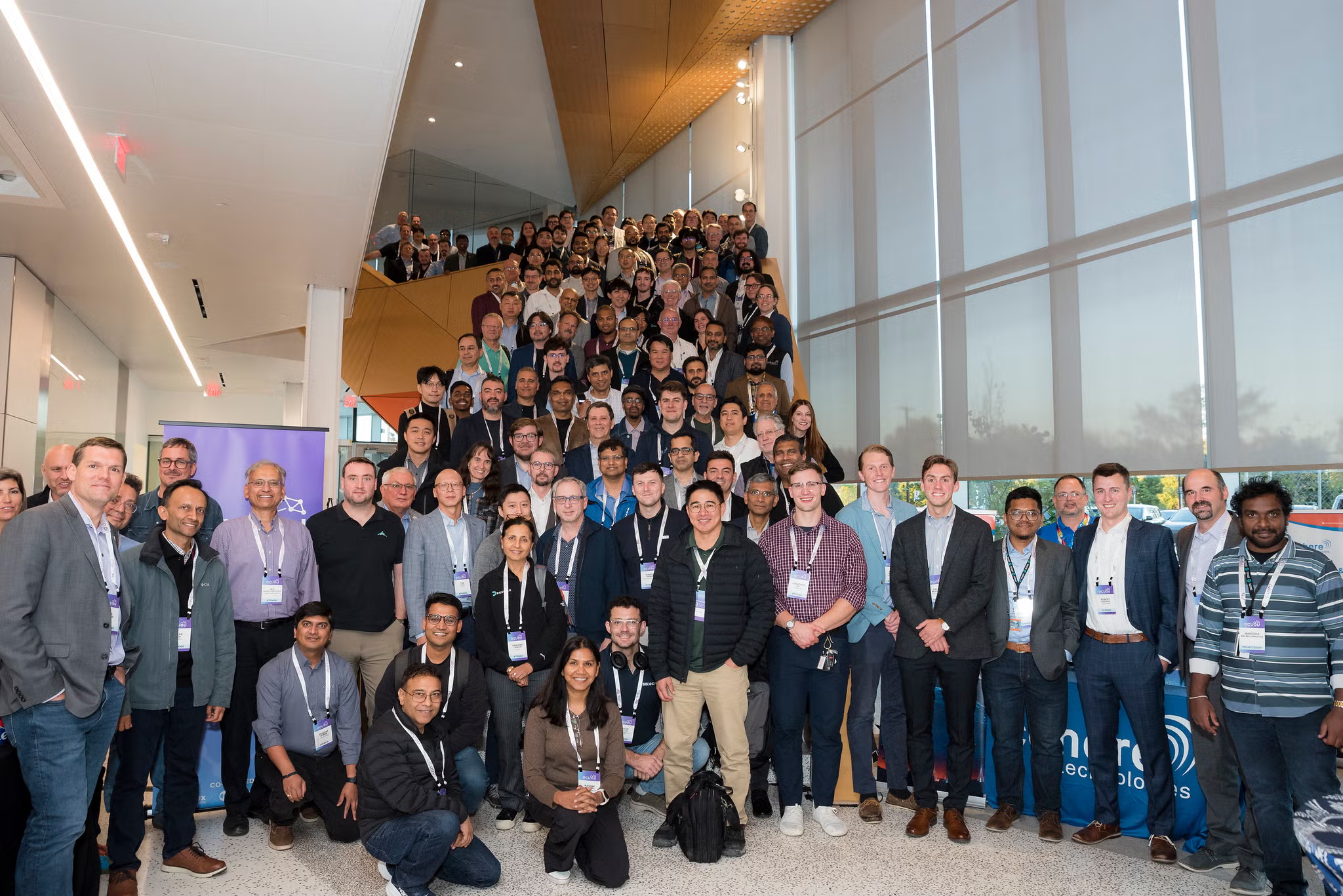
- OCUDU Developer Summit 2026: A Growing Community, Real-World Use Cases and the Road Ahead - The OCUDU Developer Summit 2026 brought together developers, researchers, and industry leaders in Alexandria, Virginia, to showcase real-world open source RAN deployments in 5G, AI-RAN, and 6G while outlining community priorities around testing, interoperability, and ecosystem growth. For those who were unable to attend, all session recordings can now be viewed on the OCUDU YouTube Channel: OCUDU Ecosystem Developer Summit 2026 Playlist
- RAN Mini-Summit (co-located with ONE Summit Japan 2026) - The Open Source RAN community is coming together for a full day of talks covering everything from RAN fundamentals to AI at the physical layer, compact NPU-powered base stations and satellites working as coordinated transmission points. Learn more about the nine sessions featured here and register here.
- OCUDU Developer Webinar Series - The next webinar planned in our Developer Series is Episode 9: Inside the DU on November 19, 4pm CET. Make sure to register and come prepared with questions! All eight previous webinars can be viewed (and presentation slides downloaded) on our Webinars page.
- How OCUDU Enables Open Source ISAC Experimentation for 6G: In our latest case study, Allbesmart developed an open source, NVIDIA GPU-powered 5G Integrated Sensing and Communications (ISAC) testbed using OCUDU and OpenAirInterface that enables real-time object detection and tracking while accelerating 6G algorithm validation and future commercial "Sensing-as-a-Service" deployments.
- New SBIR Funding Opportunity: Resilient Tactical Edge Networks - This Phase II funding opportunity (open December 2, 2026–January 6, 2027) seeks proposals to design, validate, and demonstrate a fully open source private 5G platform, integrating OCUDU, SD-Core, SD-RAN, and OSC to deliver reliable wide-area connectivity for at least two precision agriculture and dual-use defense mission-support use cases.
- Taiwan press coverage: Recent coverage of Taiwan's 2026 5G Summit highlights growing global momentum for open source RAN as Taiwan's telecom and hardware ecosystem engages with OCUDU through new lab initiatives and outdoor equipment demonstrations to advance interoperability and future 6G innovation. Check out some of the latest coverage here:
- Brian Daly of AT&T becomes OCUDU Ecosystem Foundation’s new Governing Board Chair: In his LinkedIn article, he explores the opportunities and challenges of bringing open source into carrier-grade networks and shares his vision for OCUDU becoming the "Linux of RAN" to drive AI-native RAN and 6G innovation.
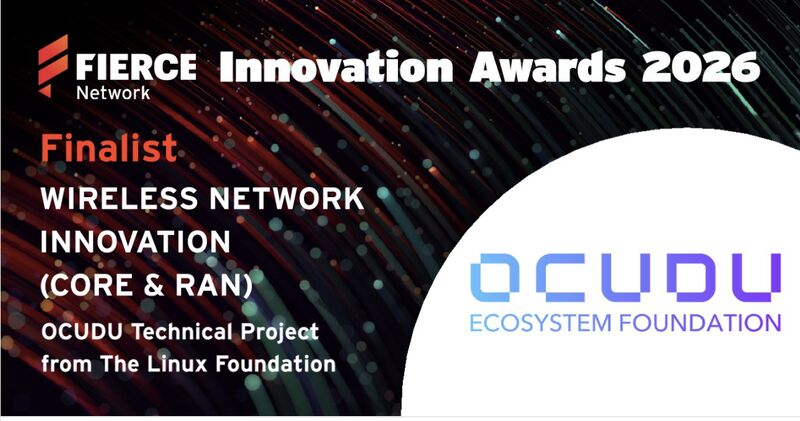
- Fierce Innovation Awards 2026: The OCUDU Technical Project has been named a finalist in the Wireless Network Innovation (Core & RAN) category for the 2026 Fierce Network Innovation Awards for its community's work in advancing carrier-grade open source RAN software for 5G, AI-RAN, and 6G! Winners will be announced on November 19.
- IEEE MILCOM 2026: OCUDU was showcased as a foundational open source RAN platform through two joint research papers - demonstrating resilient 5G/6G jamming detection and dynamic spectrum management with Rimedo Labs, Keysight Technologies, and POWDER Wireless - alongside a high-level panel of government, operator, and industry leaders discussing OCUDU's role in accelerating the race to 6G.
OPENIDS
-
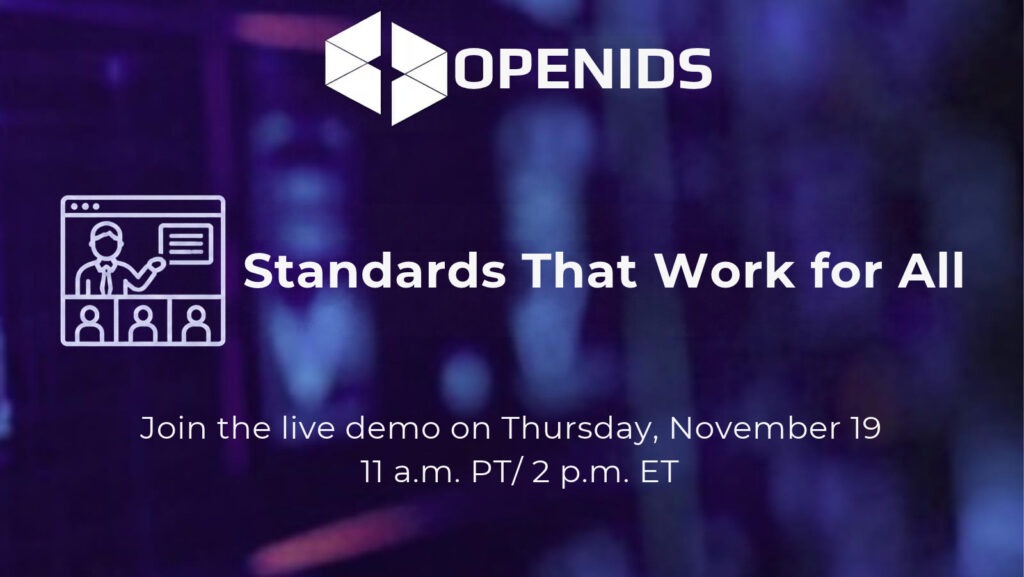
OPENIDS demo explores how standards can work for everyone: On November 19, the OPENIDS webinar will bring together perspectives on developing standards that support broad participation and work across different needs and contexts. Join the live demo discussion from 11:00 a.m. to 12:00 p.m. PT. Register today
Open Mainframe Project
-
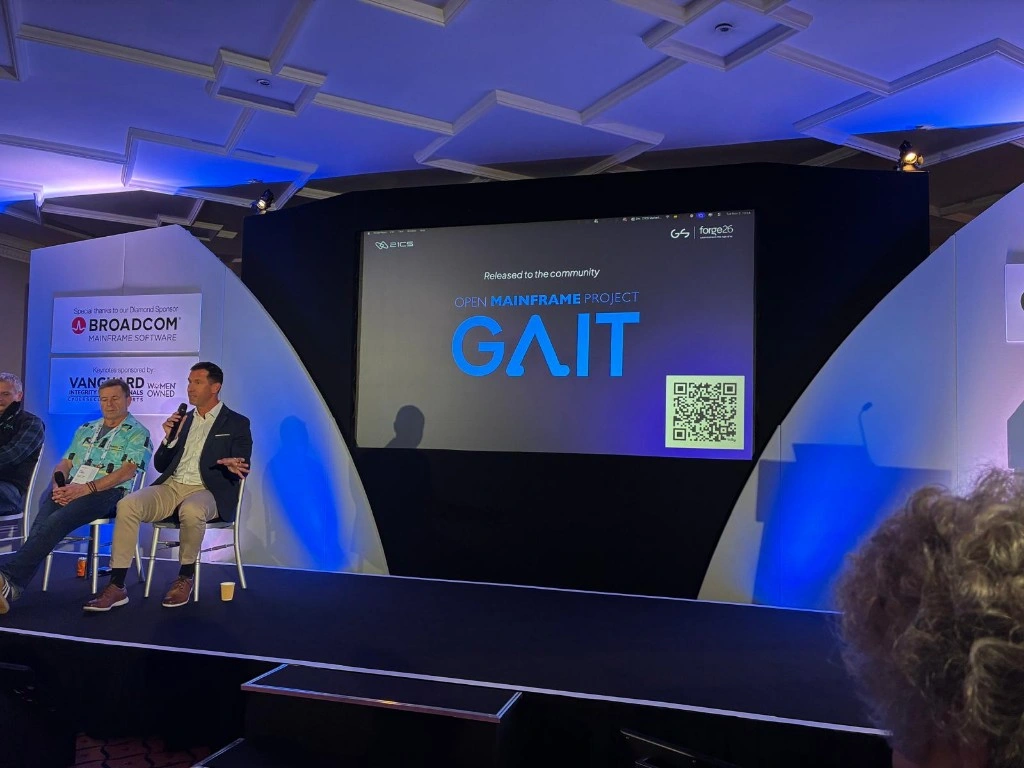
Welcome Gait to the Open Mainframe Project – The Open Mainframe Project community welcomed Gait, a new open source Visual Studio Code extension developed with 21CS. Gait lets developers write and debug z/Architecture assembler code locally in VS Code, with no mainframe access required. They can set breakpoints and step forward or backward through instructions to see exactly what the code does. Gait also works alongside HLASM Language Support and Zowe, so learners can move from local practice to real z/OS work. 21CS announced the new project in a keynote at GS UK Forge. Read the blog.
- Connect to z/OS from VS Code over SSH – Zowe Remote SSH (ZRS) is an open source alternative for connecting to the mainframe. It gives direct command-line and API access to mainframe resources from within VS Code. Jace Roell and Trae Yelovich from Broadcom explain how ZRS works, how to deploy it and what comes next, including MCP support for AI agents. A simple setup helps mainframers and teams starting modernization get connected faster. Read the blog
- Connect to z/OS from VS Code over SSH – Zowe Remote SSH (ZRS) is an open source alternative for connecting to the mainframe. It gives direct command-line and API access to mainframe resources from within VS Code. Jace Roell and Trae Yelovich from Broadcom explain how ZRS works, how to deploy it and what comes next, including MCP support for AI agents. A simple setup helps mainframers and teams starting modernization get connected faster. Read the blog
- New White Paper: “Sovereign Mainframe” - As regulations like DORA tighten, where critical workloads run matters more than ever. Summer 2026 Mentorship participants Junior Tadiffo and Swathi Rao examine how on-premises mainframes support digital sovereignty and operational resilience. The paper also compares three strategic options for a sovereign hybrid architecture. Read the Paper
- I Am a Mainframer: Niall Ashley on Mainframe Security, Learning by Doing, and the Future of z/OS – Host Steven Dickens talks with Nial, a mainframe security consultant at Vitality who works across RACF administration, security engineering and ESM migrations. Niall entered the industry through BMC Software’s Mainframe in Training program. He shares why hands-on learning matters in mission-critical environments and why mainframe professionals should keep growing beyond a single specialty. His advice to early-career professionals is to stay curious, volunteer and learn by doing. Watch the Full Episode
Open Programmable Infrastructure
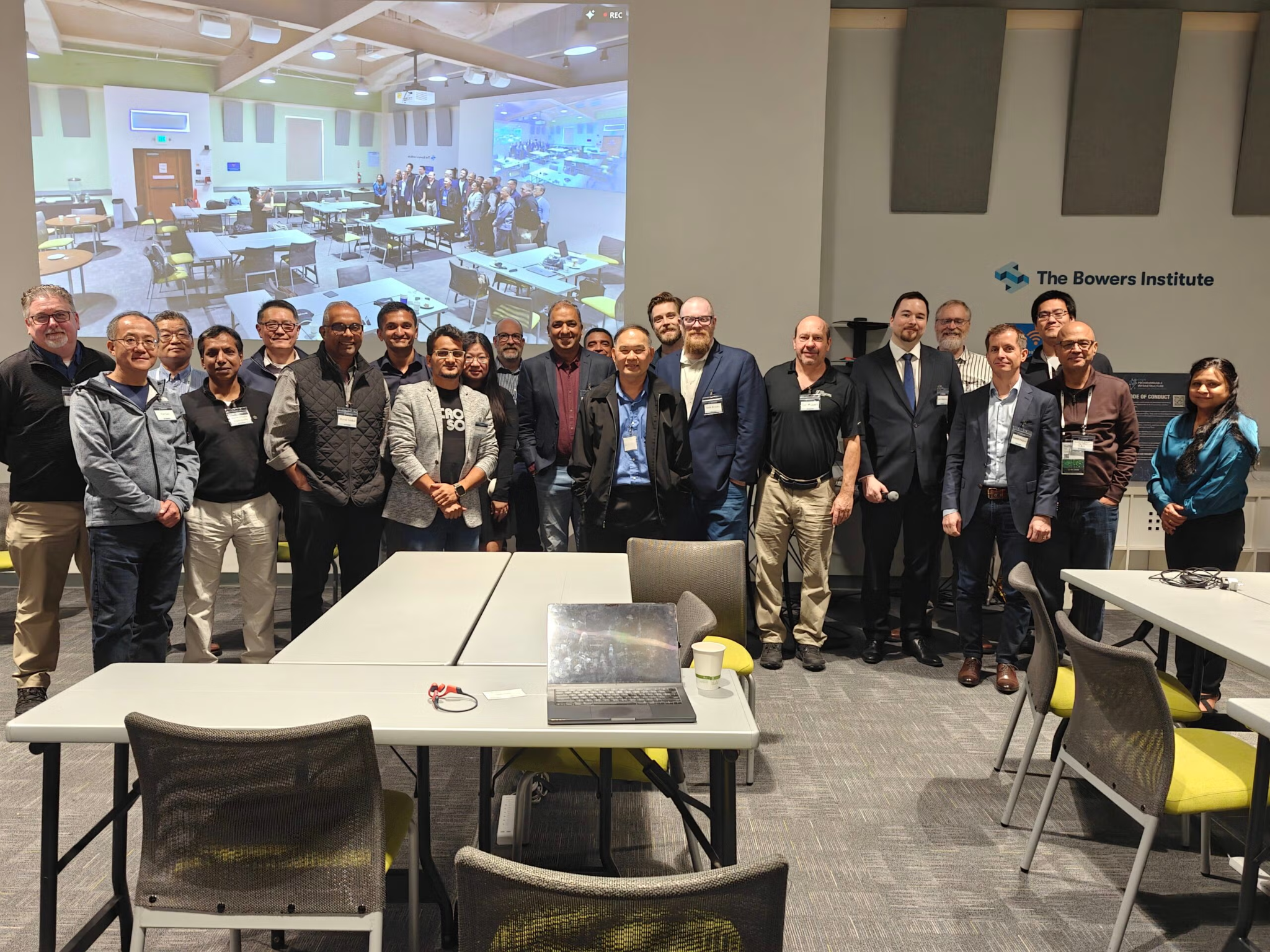
- OPI Summit 2026: Where DPUs and IPUs Meet the AI Era: At the OPI Summit on DPUs/IPUs 2026, industry leaders and engineers demonstrated how open, vendor-neutral software, automation, and shared control planes are essential to unlocking the full potential of DPUs and IPUs at the center of modern AI and data center infrastructure.
- Read the complete event recap
- Check out the session recordings
OpenSearch
-
OpenSearch 3.10 brings new capabilities for search, observability, and AI agents: OpenSearch 3.10 introduces hybrid search without requiring search pipelines, experimental agentic search templates, improved AI agent tracing, and pull-based ingestion from object storage. The release also delivers improvements to query performance, vector search, security, and cluster management.
- Data Prepper 2.17 expands ingestion capabilities: The latest release introduces Splunk HTTP Event Collector (HEC) compatibility, allowing existing Splunk forwarders and clients to send data to OpenSearch without client changes. Additional improvements include multi-feed RSS ingestion, JDBC-backed coordination for scaling across nodes, and better OpenTelemetry load balancing. Read the release blog >>
- NVIDIA Nemotron improves agentic search relevance: OpenSearch evaluated NVIDIA Nemotron 3.5 Embed 1B against bge-m3 across six BRIGHT benchmark datasets. In agentic search experiments, Nemotron improved average retrieval relevance by 65% for neural search and 31% for hybrid search, while requiring fewer search requests with similar end-to-end latency. Read the benchmark results >>
- Case Study: Booking.com migrates autocomplete search to OpenSearch without downtime: Booking.com replaced its decade-old custom search engine with Amazon OpenSearch Service, successfully migrating autocomplete workloads across 42+ languages. The new infrastructure handles peak traffic of 4,000 requests per second while meeting an 85 ms p95 latency target. The migration reduced operational overhead and laid the groundwork for hybrid search and AI-driven travel experiences. Read the case study >>
- OpenSearch introduces a clearer path to maintainership: The project's new Contribution Ladder policy defines three community roles: Public, Member, and Maintainer. The framework establishes clearer expectations for contributions, repository privileges, and maintainer responsibilities, giving developers a transparent path toward greater involvement and project leadership. Read the blog >>
- OpenSearch connects with developers at KubeCon + CloudNativeCon North America: OpenSearch joined the cloud native community in Salt Lake City, November 9–12, for conversations around search, observability, and Kubernetes. OpenSearch Ambassador Brian Graf delivered a 10-minute Tip Talk, Your Cluster Is a Dataset: Indexing Kubernetes Objects in OpenSearch, exploring how developers can make Kubernetes resources searchable and gain better visibility into their clusters. Explore the event >>
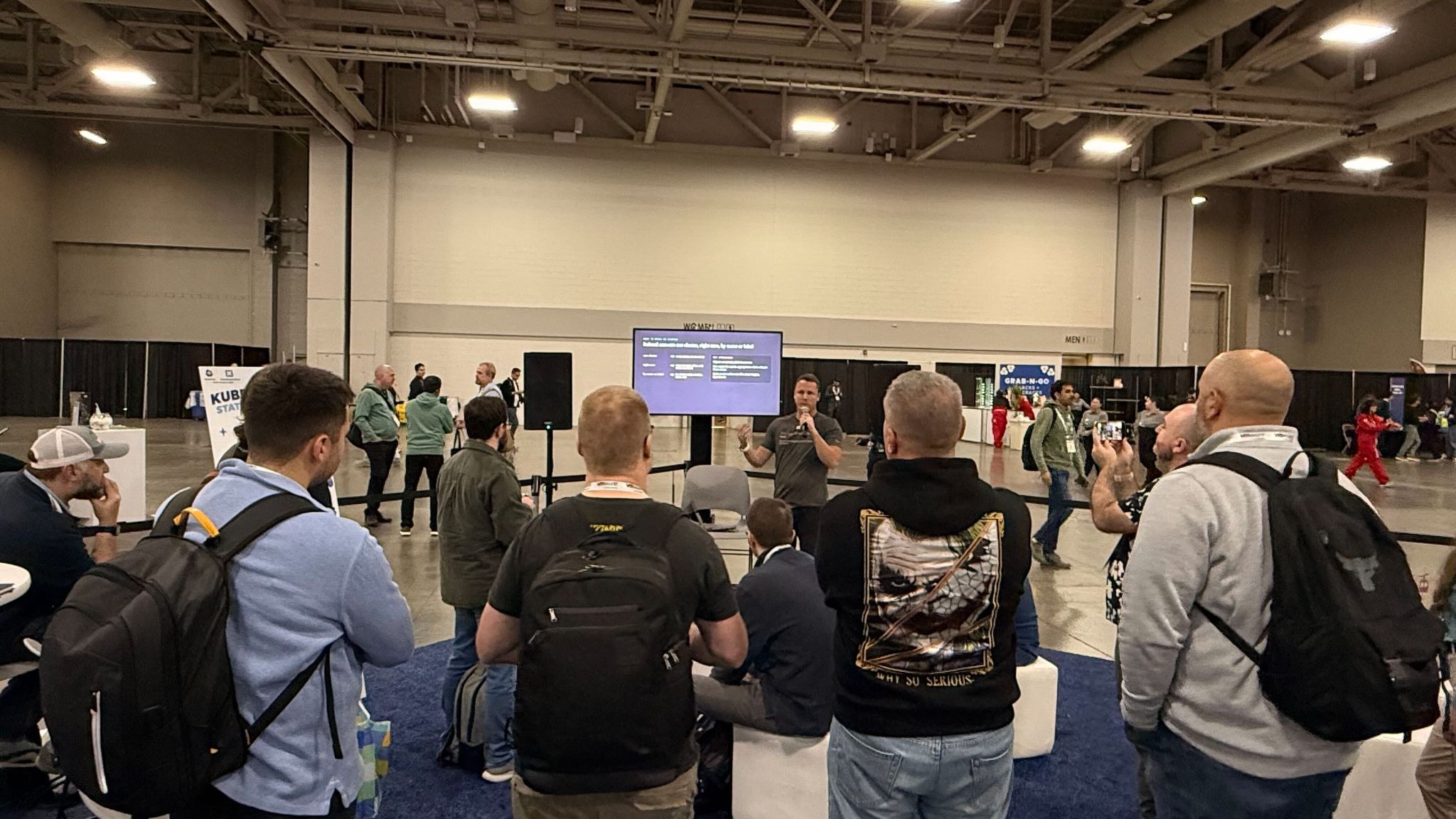
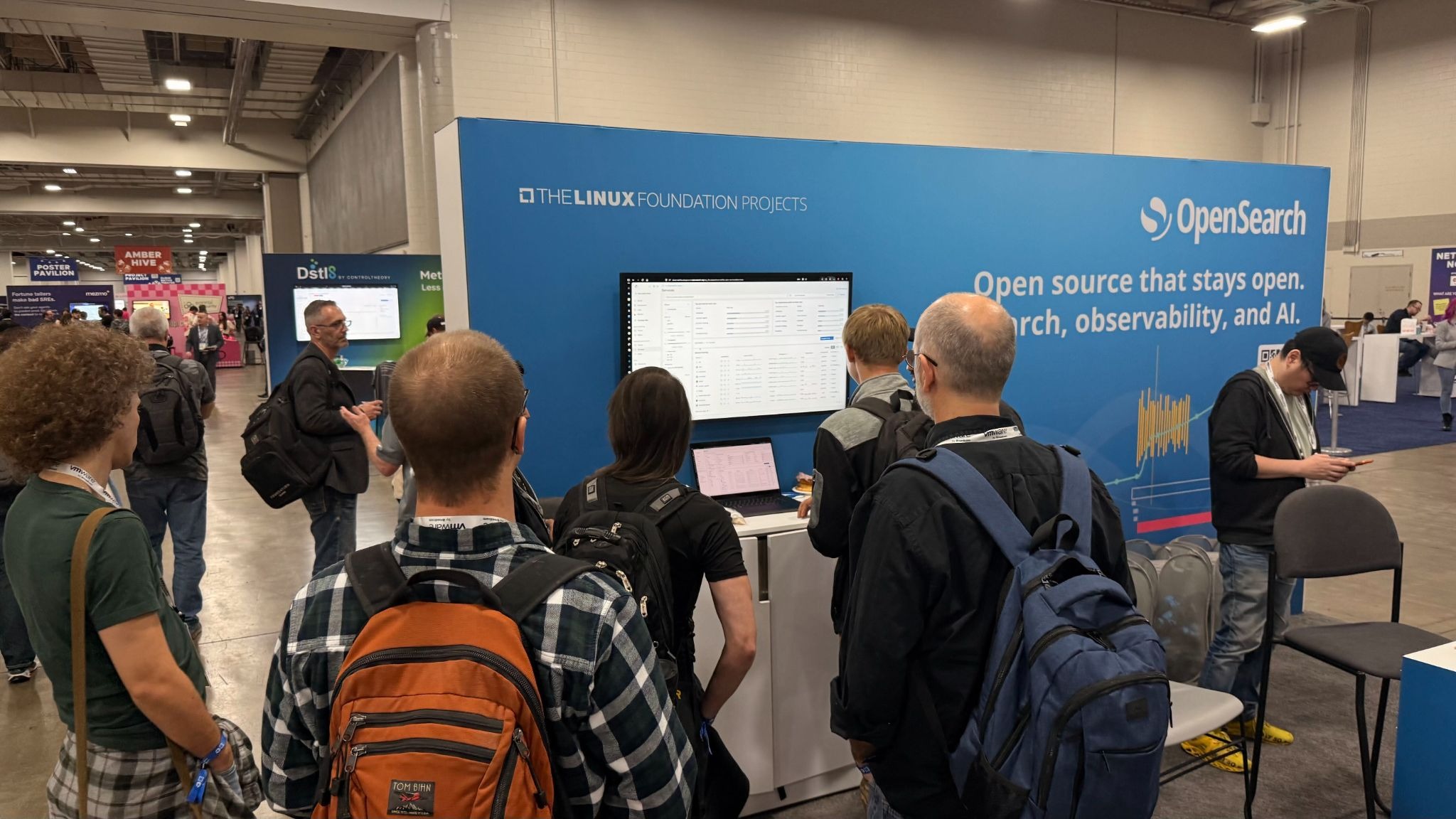
- OpenSearch in the news: The New Stack interviewed Executive Director Bianca Lewis about OpenSearch's evolution under vendor-neutral governance, highlighting how AWS's share of project contributions has declined as the community diversifies. ITBrief also examined CERN's expanding OpenSearch deployment, which now spans 139 clusters storing 1.4 petabytes of data for observability, security monitoring, and scientific computing.
- The New Stack: Five Years After the Fork, OpenSearch Is Slowly Stepping Out of AWS's Shadow >>
- ITBrief: CERN Expands OpenSearch Across 139 Clusters for Data >>
OpenJS Foundation
- AI is finding vulnerabilities faster than humans can fix them. The New York Times reported on what open source maintainers have felt for months, with comments from Node.js TSC Chair Matteo Collina and the OpenJS team. Node.js has confirmed and fixed 50 vulnerabilities so far this year, more than in any other year in its history. Read the coverage.
- Node.js now reserves and publishes all of its CVEs through the OpenJS Foundation CNA. Starting with its latest security release, which patches 16 CVEs across the 22.x, 24.x and 26.x lines, the CVE lifecycle lives in the Foundation that hosts the project. The CNA has issued 177 CVEs in 2026, against three in all of 2025. Read the full post.
- Node.js 26 is now Long Term Support. 🎉 Node.js 26.13.0 “Lithium” moves the 26.x line into LTS, with updates through the end of April 2029. If you’re upgrading from an earlier LTS release, note that since Node.js 25 the official Linux binaries are linked against libatomic, so depending on your distro you may need to install it separately. Download Node.js 26.13.0.
- New research on vulnerability handling. With support from the Sovereign Tech Agency, OpenJS is launching research using Node.js to examine when vulnerabilities truly need to stay private and when fixing them through normal, open development could lead to faster remediation. The project will test a risk-based classification framework, AI-assisted triage, and a controlled Node.js pilot, with maintainers keeping the final decision. Read more.
OpenSSF
- The AI security gap hiding in everyday maintenance: Abby Kearns explores research showing that 58% of surveyed teams ship code faster than security reviews can keep up, and why dependency management deserves more attention. Read the blog and explore the State of AI Impact on Software Security and Cybersecurity 2026 report.
- Growing the community and advancing AI security: OpenSSF welcomes Beautiful Majestic Dolphin, DevGuard, and UElement Technologies, alongside expanded AI security guidance, research, and education. Read the announcement.
- Zarf 1.0 strengthens software delivery in disconnected environments: Stronger package signing, improved verification, and a redesigned package format help teams deploy software securely and reliably without internet access. Explore the release.
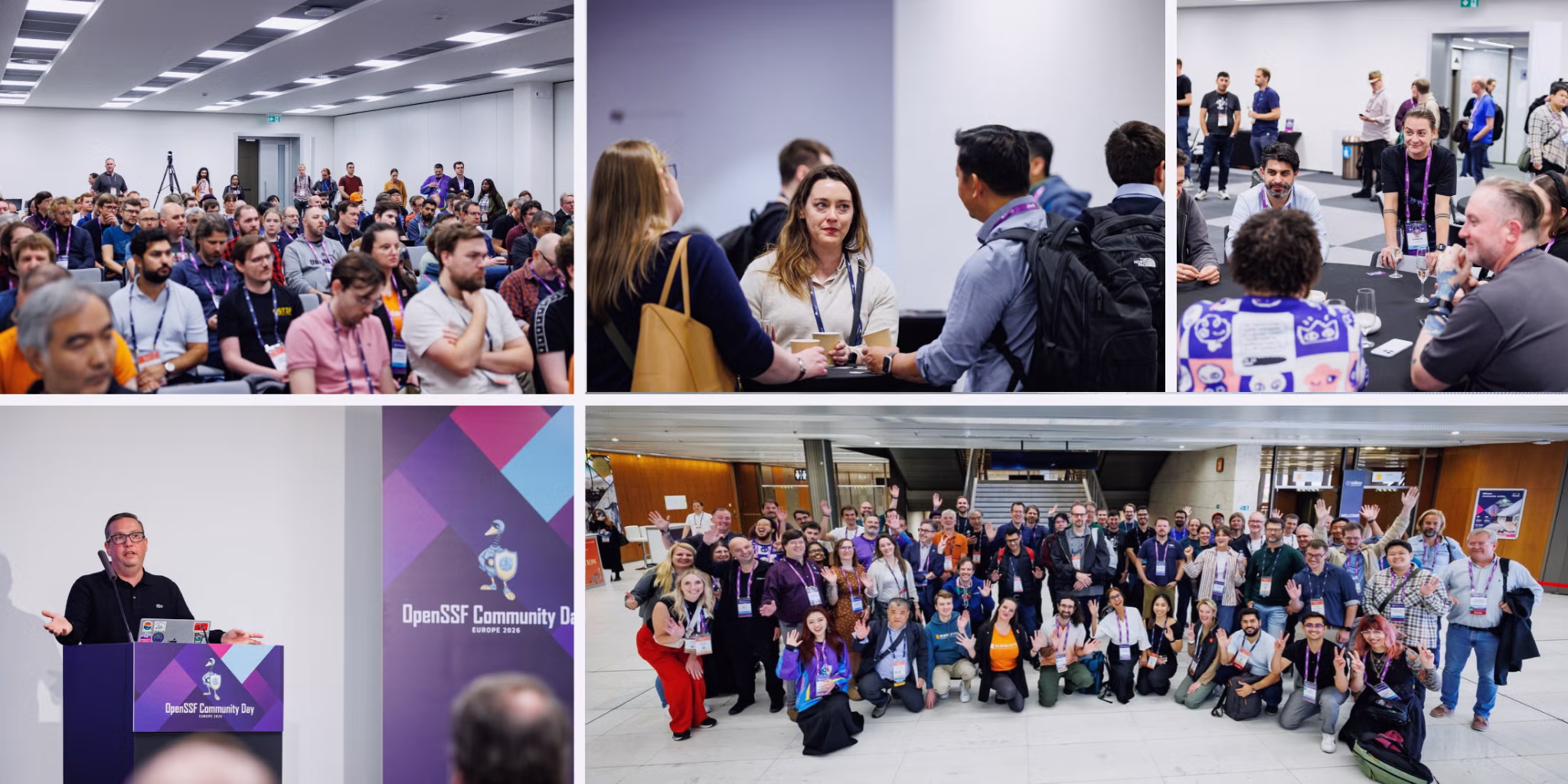
- From community conversations to practical security: OpenSSF Community Day Europe brought more than 200 attendees together in Prague to explore AI security, Cyber Resilience Act implementation, and software supply chain research. Catch the highlights and session recordings.
- Building verifiable trust with OpenSSF tools: Sylva shares how Sigstore, SLSA, OpenSSF Scorecard, and Best Practices badges are strengthening its software supply chain and supporting its journey toward Cyber Resilience Act readiness. Read Sylva’s story.
- Six badges, shared effort, stronger security: Kubescape completed all six Security Slam badges, bringing maintainers and contributors together to improve security documentation, automate checks, and harden workflows across its repositories. Read the case study.
- A security fix is only the beginning: Jeff Borek and Mike Linksvayer examine what recent PHP vulnerabilities reveal about sustained investment, coordinated response, and the shared responsibility to get fixes into running systems. Read the blog.
- What’s in the SOSS? Baking security into the toolchain: Apple engineers Ev Cheng and Sam Khouri discuss how Swift’s build tooling can help generate more accurate software bills of materials (SBOMs), giving developers better visibility into their software’s components. Listen to the podcast.
Open Robust Compartmentalization Alliance (ORCA)
- ORCA Celebrates its 1 Year Anniversary by welcoming its first two Sandbox-level Projects, Lind Sandbox and HAKC+MSV.
- Read our latest blog post for more on the projects, the latest compartmentalization research and ORCA Tech Talk videos!
Overture Maps Foundation
- Closing the Gap Between Local Data and Global Standards: Fresno County and the City of Vancouver contributed authoritative geographic data to Overture Maps and received persistent GERS IDs in return. The case study shows how connecting local data to a shared global reference can support municipal logistics, public safety, and urban operations. Read about how two government agencies helped close the gap between local maps and global standards.
- One Model to Generate Them All: In this workshop, Overture community members Seth Fitzsimmons and Jennings Anderson showed how to define datasets as Python Pydantic models so you can automatically generate and synchronize your schemas, documentation, and validation rules from a single source.
- SatSummit St. Louis 2026: Overture Maps is participating in SatSummit St. Louis 2026 as a Community Sponsor, with Executive Director Will Mortensen speaking on how rival organizations collaborate to build and sustain open, global map data.
- GeoSmart India 2026: Executive Director Will Mortensen will share insights on open data and scalable mapping infrastructure at the Senior Executive Training Program on Geospatial Knowledge Infrastructure.

-
Overture Maps Member Summit 2027: Overture’s annual gathering will take place May 18-20 in San Juan, Puerto Rico. The summit brings community members together to share insights, deepen relationships, and shape the ongoing trajectory of Overture's open mapping ecosystem. Not yet a member? Join the Overture Maps community to attend!
P4
- P4 Contributor Award: Congratulations to Steffen Smolka, this year’s P4 Contributor Award Winner! We announced it live at the P4 Workshop on October 12. Read more
- 2026 P4 Workshop: Missed the P4 Workshop? Read the event wrap up and watch the recordings
- EuroP4’26 | Program and Keynotes announced: Join our one-day workshop at CoNEXT in Utrecht, the Netherlands, on December 7. View the program featuring two great keynote speakers:
- In-network ML: Inference at the Speed of Data | Noa Zilberman (Oxford University)
- From Programmable Networks to Programmable Testbeds for High-Fidelity Experimentation | Christian Esteve Rothenberg (University of Campinas)
PyTorch Foundation
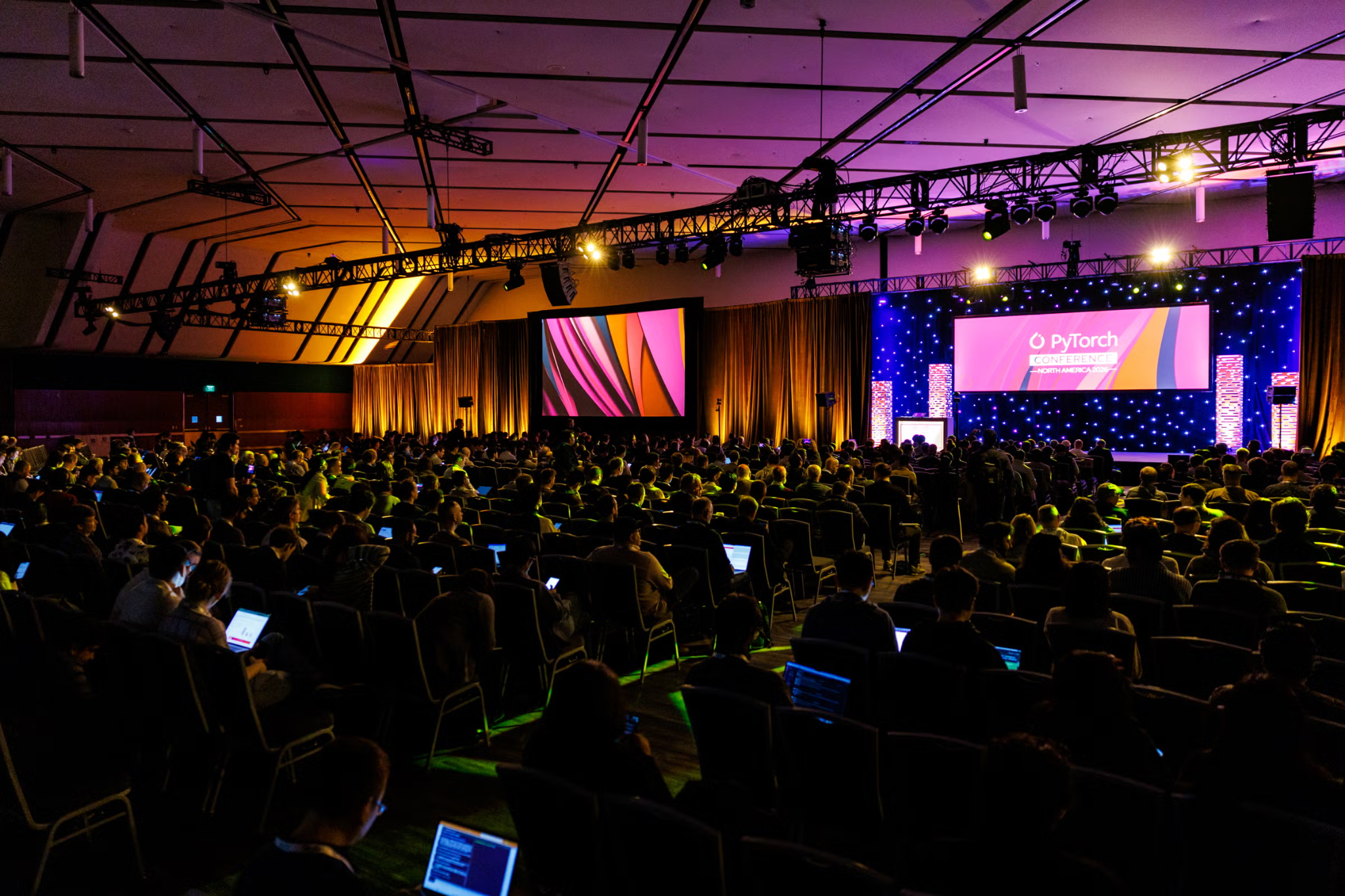
- PyTorch Conference North America 2026: Accelerating Open Intelligence Together: More than 3,500 attendees in San Jose came together to accelerate open intelligence and explore the impact of PyTorch Foundation projects including PyTorch, vLLM, DeepSpeed, Ray, Helion, and Safetensors. View the session recordings, now available on YouTube.
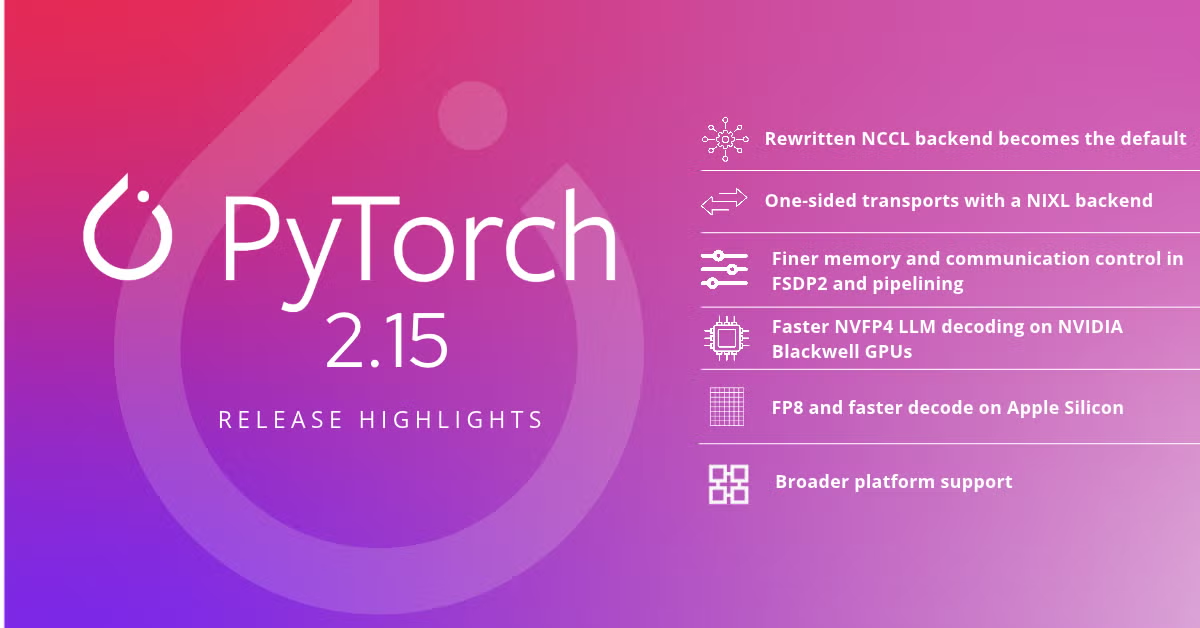
- PyTorch 2.15 Release Blog: The rewritten NCCL backend is now the default. The release adds FP8 on Apple Silicon, faster NVFP4 on Blackwell and FlyDSL on AMD, with 3,117 commits from 583 contributors. Check out the latest release Q&A
- PyTorch Foundation Welcomes Nine New Members As Momentum Builds Around Open Source AI Center of Gravity: Nebius, Nscale and Shopify join as Platinum members, Lablup and LightSeek Foundation as Silver, plus four Associate members.
- Nebius Joins the PyTorch Foundation as a Platinum Member: The Amsterdam-based AI cloud will boost PyTorch and vLLM performance on new hardware. Ryan Hanrui Wang joins the PyTorch Foundation’s Governing Board.
- Nscale Joins the PyTorch Foundation as a Platinum Member: After its planned Anyscale acquisition, Nscale commits to investing in Ray. Nick Jones joins the PyTorch Foundation's Governing Board.
- Meet the 2026 PyTorch Foundation Ambassadors: 24 community leaders across five regions will grow adoption through education, mentorship, content and events.
Blogs:
- Introducing TorchTPU: Google and Meta’s native PyTorch backend for TPUs runs existing workloads with a simple .to("tpu")
- Introducing TorchNeuron: Native PyTorch backend for AWS Trainium: Runs standard PyTorch on Trainium with eager mode, torch.compile and NKI kernels. It is in public beta under Apache 2.0.
- TorchTitan Update: New SOTA Models, Performance at Scale, TitanRL: Adds Qwen3.5, Kimi K3, DeepSeek-V4 and TitanRL. DeepSeek V3 671B hits 5,324 tokens/s per GPU on 256 GB300s.
- Training a 1T-Parameter MoE on EU public infrastructure with PyTorch and TorchTitan: The EUROPA consortium scaled pretraining on the JUPITER supercomputer, lifting throughput from 90 to about 1,300 tokens/s per GPU.
- Bringing ExecuTorch to Arm Cortex-M CPUs: Runs PyTorch models on microcontrollers with a runtime under 20 KiB. MLPerf Tiny models ran in 21.5 ms or less.
- Session-Aware Agentic Inference with NVIDIA Dynamo: A unified session ID enables session-aware routing and a shared KV cache across vLLM and SGLang.
- Building Spyre as a Native PyTorch Device: IBM maps PyTorch’s device, allocator and compiler abstractions to Spyre, lowering launch overhead.
- Extending Inductor for the IBM Spyre Accelerator: IBM moved its Spyre compiler to an out-of-tree Inductor backend, cutting compiler code size nearly 7x.
- From KTIR to SpyreCode: An MLIR Dataflow Backend for IBM Spyre: IBM lowers kernels through the KTIR MLIR dialect into SpyreCode. The new scheduler brought up its first op about 4x faster.
- Integrating SGLang into Spyre in Under a Week with AI: AI coding agents helped integrate SGLang with IBM Spyre in under a week, reaching about 3.6× the reference PyTorch throughput.
- Muse Spark Is Now an Open-Weights Model: Meta’s natively multimodal model is now on Hugging Face. It has 816B total and 42B active parameters and a 1M-token context.
- Optimizing Muse Spark Open on TPU v7 with SGLang-TorchTPU: Covers community optimizations for serving large MoE models on Google Cloud TPU v7.
- Accelerating PyTorch on AMD GPUs with FlyDSL: FlyDSL is now an optional backend for AMD MI350-series GPUs. vLLM requests ran up to 3.01x faster with MXFP4.
- Fast by Default: Compile-Time Heuristic for Helion Kernels: Helion now picks fast kernel configs at compile time, giving near-autotuned performance without hours of tuning.
- Optimizing Streaming Speech Recognition on Arm Edge Devices with ExecuTorch: Runs Nemotron 3.5 streaming ASR on a Pixel 11 with ExecuTorch. SME2 sped up FP16 processing 2.12x.
- ExecuTorch WebGPU: PyTorch Models on the GPU, in the Browser: A new backend runs GPU-accelerated PyTorch inference directly in the browser, privately and with low latency.
- One Search, Two Layers: Compiler Controls Inside PyTorch Helion using NVIDIA CompileIQ: Helion’s autotuner now searches NVIDIA CompileIQ compiler controls, giving 2–7% gains, including 6.9% on GB200.
- Bringing Elastically Deterministic Data Loading to TorchTitan with Zephon: Keeps global batches identical across GPU counts, cutting score drift from up to 0.82 points to 0.05.
- Announcing the Special Interest Group (SIG) for Ray on Accelerators: A new SIG unites hardware vendors and Ray contributors on a vendor-neutral roadmap for accelerator support.
- Modernizing Table Batched Embeddings with FBTriton: Meta’s Python-based embedding kernels outperform legacy CUDA on recommendation workloads.
- KVCache Meetup Korea 2026: Event Recap: PyTorchKR and XCENA hosted talks from XCENA, SK hynix, FuriosaAI and LMCache on CXL memory, HBM bottlenecks and KV caching.
Upcoming Events:
- PyTorch Day Korea 2026, Seoul, November 21: The PyTorch Korea User Group hosts hands-on talks across Build, Serve and Run tracks. Register here
- NeurIPS 2026, Sydney, December 6-12: Find us in the exhibit hall and join us for a reception co-hosted by CNCF and AAIF on December 8. Learn more
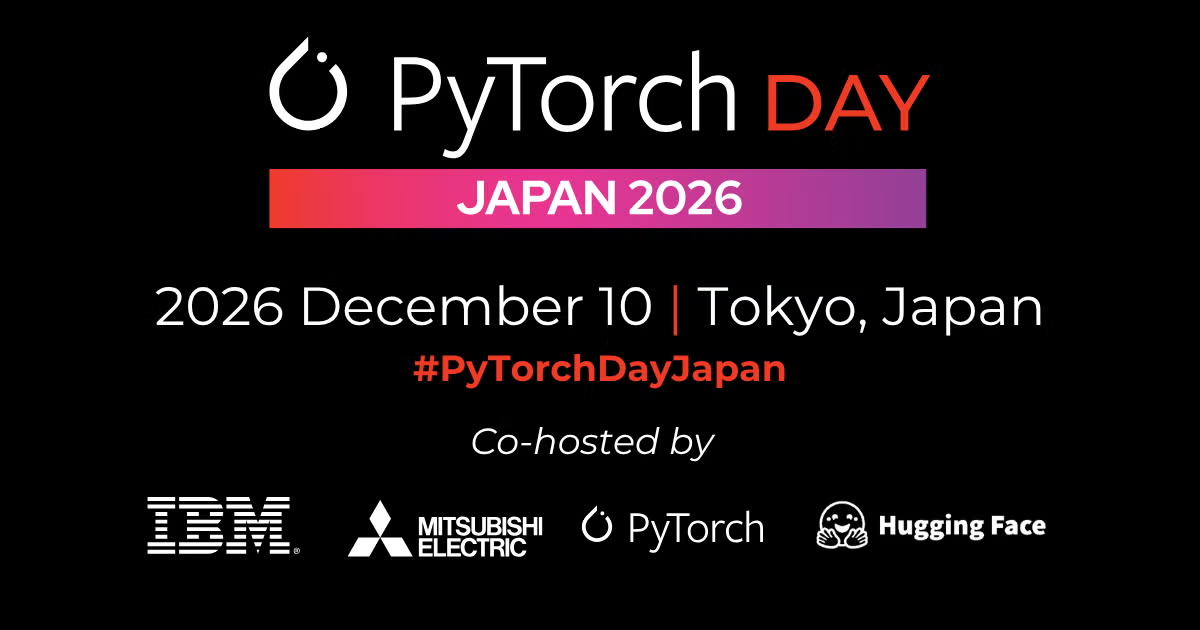
- PyTorch Day Japan 2026, Tokyo, December 10: Co-hosted with Hugging Face, IBM and Mitsubishi Electric, with technical deep dives. Register here
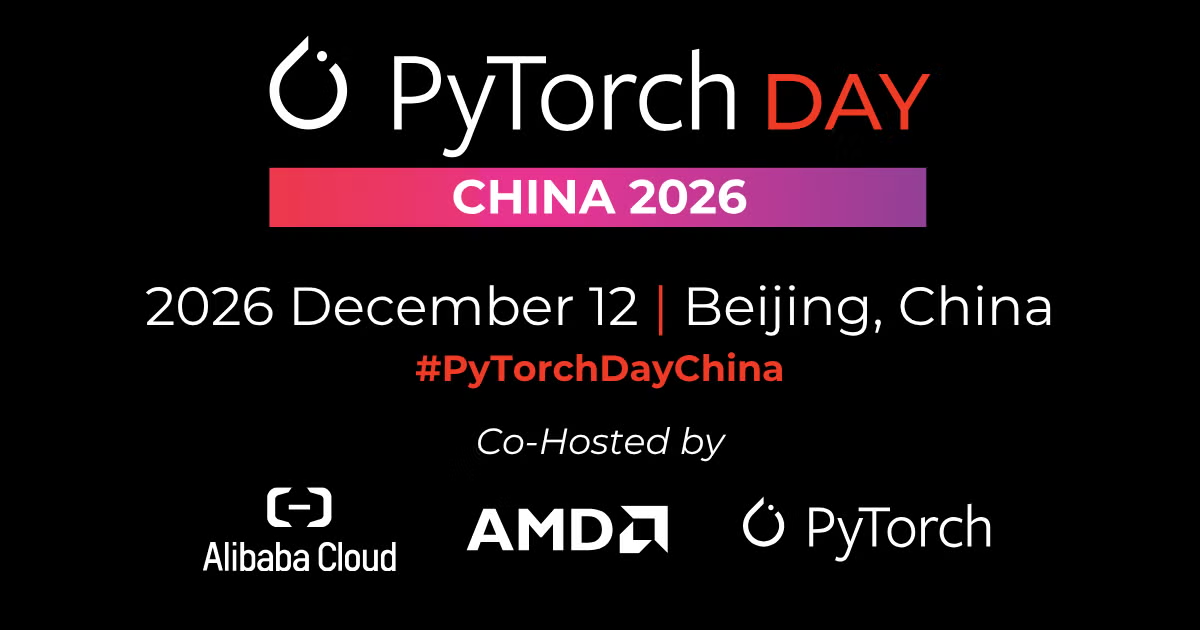
- PyTorch Day China 2026, Beijing, December 12: Talks on training, inference, PyTorch core, hardware acceleration and physical AI. Register here
RISC-V
- ‘V Questions’ interview, Doug Norton of Inspire Semiconductor and The HPC-AI Society, and Dr. Nick Brown of EPCC, share their perspectives on RISC-V’s growing role in high-performance computing, from AI advancements to server-class silicon. Read the interview: https://riscv.org/blog/v-questions-with-doug-norton-nick-brown/
- embedded world 2027, 16 to 18 March 2027, Nuremberg. We have co-exhibitor spots left in the RISC-V Pavilion (Hall 5, Stand 5-119). Co-exhibitors get a dedicated demo kiosk, presentation opportunities, video features, and promotion across RISC-V channels, with approximately 27,000 attendees expected. Contact lori@riscv.org to secure your spot by the end of November.
SONiC
- SONiC workshop and booth agenda is live for ONE Summit Japan: Join the global open networking community December 10–11 in Tokyo. Visit the SONiC booth and join the December 11 workshop for sessions on GPU fabrics, network observability, and configuration testing with Containerlab. The workshop is included with ONE Summit registration. Explore the SONiC agenda and register >>>
- SONiC Workshop recordings from OCP Global Summit are live: Catch up on sessions covering AI fabrics, autonomous network operations, route programming, telemetry, and security. Watch the playlist >>> · Subscribe to SONiC on YouTube >>>
- Meet the 2026 SONiC Hackathon winners: Thirty-two teams from 13 organizations took part, and nine projects were recognized at OCP Global Summit. Winning projects tackled challenges such as reducing switch power use in AI data centers, diagnosing test failures, and managing SONiC configurations with Git. See the winners on SONiC’s LinkedIn >>>
Supporters of Chromium-Based Browsers
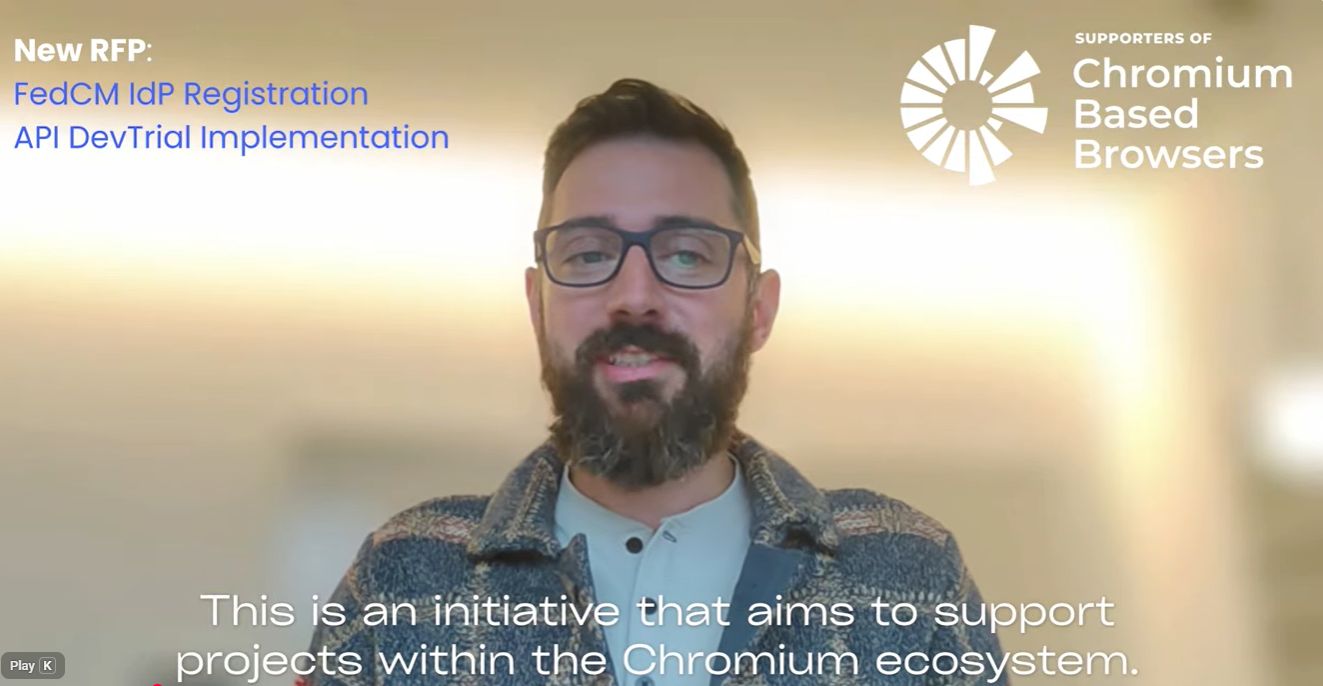
- New RFP: FedCM IdP Registration API DevTrial Implementation for Chromium - Supporters of Chromium-Based Browsers (SoCBB) launched a new RFP, looking for engineering firms and independent contractors to implement the FedCM Identity Provider Registration API as a DevTrial in upstream Chromium, enabling sites to support decentralized identity providers without hard-coded lists.
- Bug Bounty Wins: The Blurry Icon Bug Hiding in Your Linux Launcher - A developer resolved blurry PWA icons on Linux by updating Chromium to use absolute paths to high-resolution icons in .desktop files.
- In our Developer Spotlights series we highlight developers who have received bug bounty rewards as a result of fixing bugs. This month we featured:
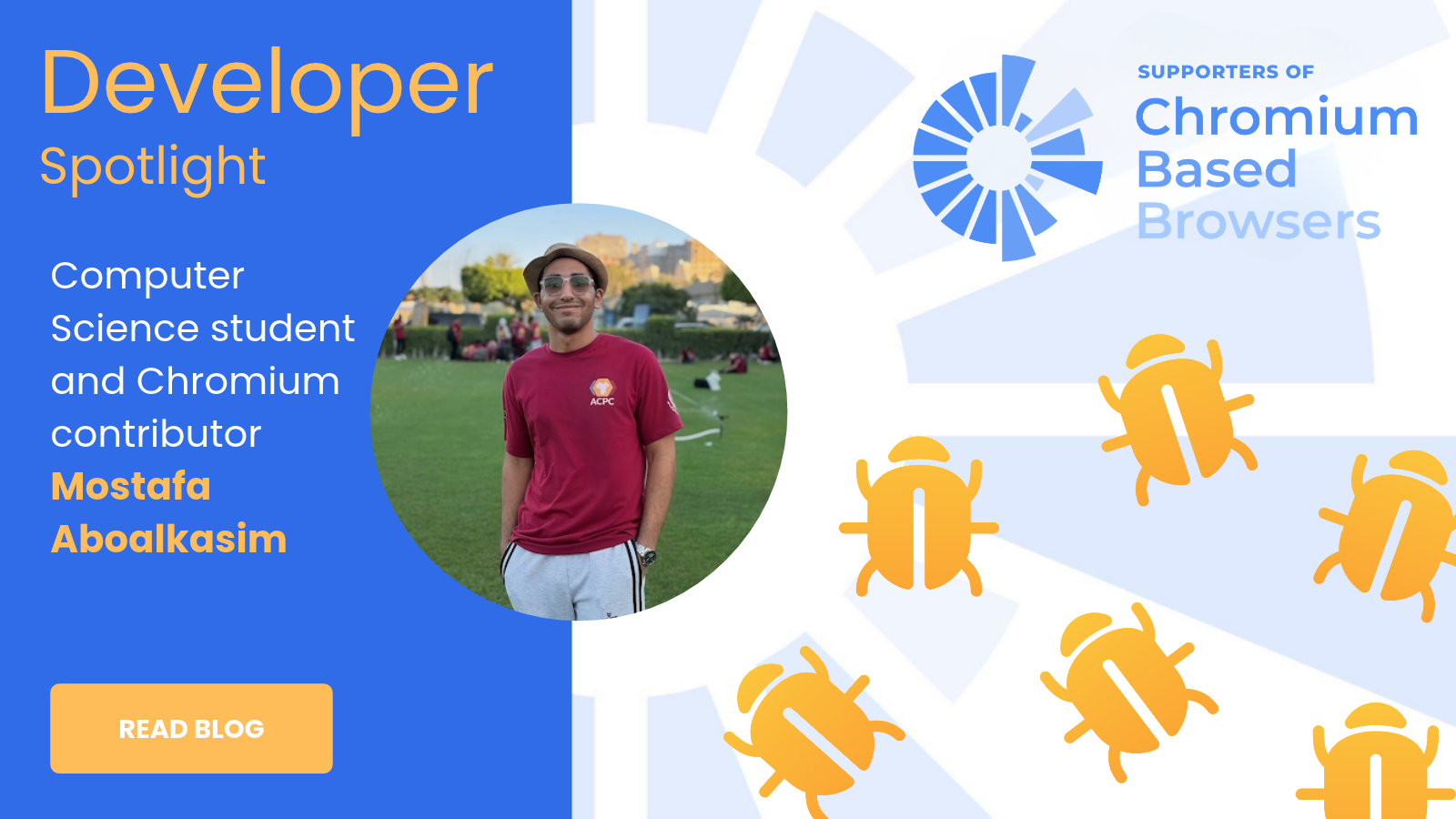
- Mostafa Aboalkasim is a senior computer science student at Assiut University, competitive programmer, and systems programming enthusiast who overcame low-spec hardware limitations to become an active contributor to Chromium and open source projects.
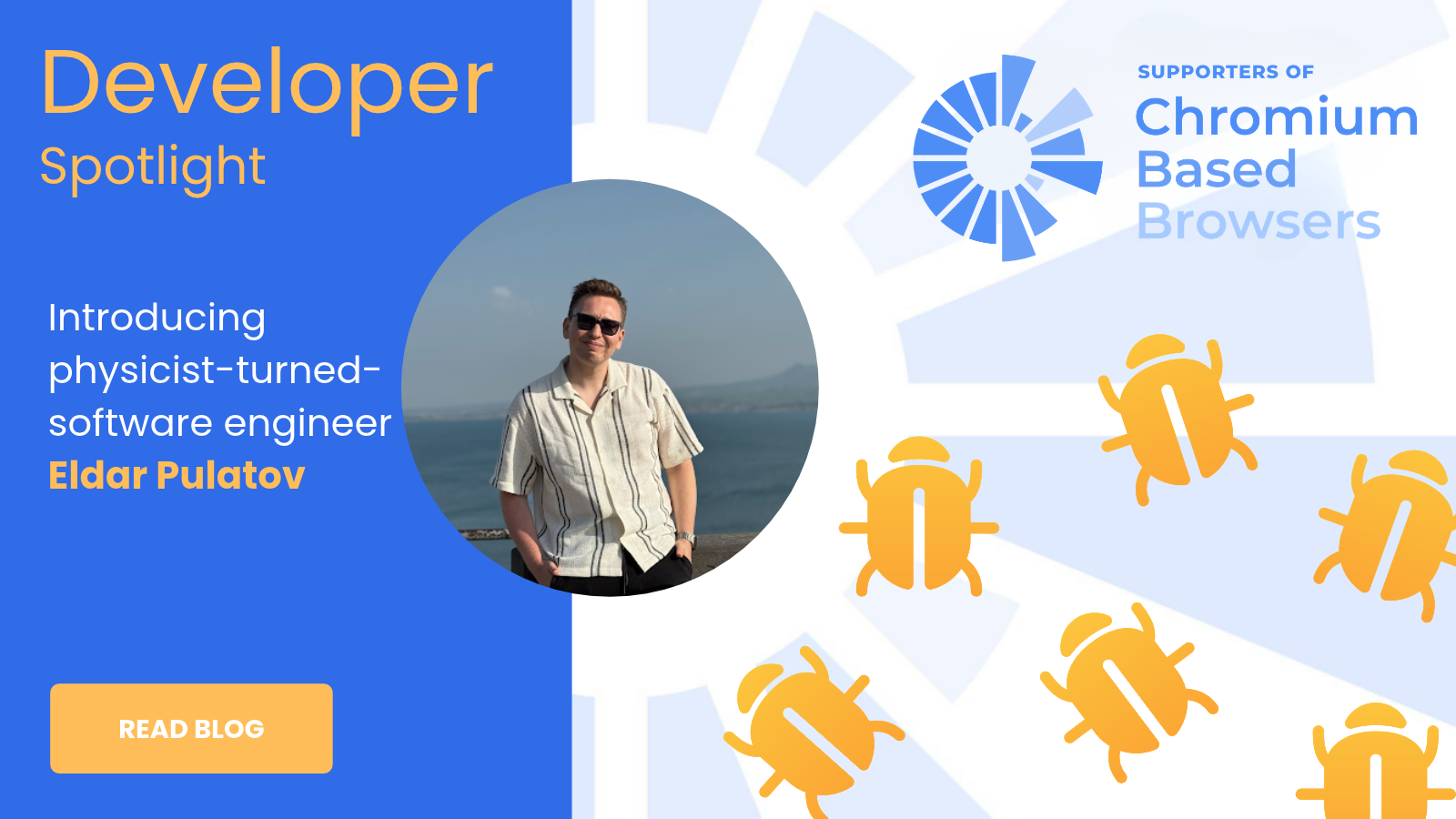
- Eldar Pulatov is a physicist-turned-software engineer who serves as a Principal Browser Engineer and team lead, focusing on upstream Chromium contributions, low-level systems, and browser engine internals.
Sylva Project
- Sylva Hackathon 2026: A Few More Days to Go!
The Sylva Hackathon 2026 is just around the corner! Taking place on November 23–24 in Bern, Switzerland, the two-day event will bring together 66 participants from 19 countries, working across eight teams to tackle real-world challenges in open source telco cloud infrastructure. Participants will collaborate on topics including Telco GitOps, Kubernetes automation, configuration validation, deployment troubleshooting, AI-powered operations, and more. Through hands-on development, technical discussions, and collaborative working sessions, teams will turn ideas into practical open source contributions and showcase their solutions. Stay tuned: more details to follow! - New White Paper: Trust You Can See – CNTi Test Suite and the Business Case for Cloud Native Network Functions
How can telecom operators and vendors verify whether network functions are truly cloud native? This new white paper, authored by Cédric Ollivier (Orange), Martin Matyáš (Tieto), and Philippe Ensarguet (Orange), introduces the CNTi Cloud Native badge, which makes CNTi Test Suite results continuously available and publicly visible. It explains how the badge helps open source projects demonstrate their cloud native capabilities, vendors identify issues earlier and simplify operator acceptance, and operators evaluate network functions using a common set of tests. The paper also explores how the badge complements formal certification and Sylva platform validation, providing an initial layer of evidence rather than replacing more comprehensive testing. Learn more. - In the News: European Telecom Operators Move Toward a Common Cloud Architecture with Sylva
In a recent article published by LeMagIT, journalist Yann Serra explores how European telecom operators are working together through the Sylva Project, an open source initiative hosted by Linux Foundation Europe, to establish a common cloud infrastructure for 5G services. The article features insights from Philippe Ensarguet, VP of Cloud & Software Engineering at Orange and Sylva's strategy lead, on how a shared, Kubernetes-based architecture can reduce dependence on proprietary infrastructure solutions, simplify network function validation, and strengthen Europe's digital sovereignty. It also highlights Sylva's growing ecosystem, its network of validation centers, and future plans to support AI workloads, radio access network (RAN) functions, and potential applications in other critical sectors, including energy and aerospace.Read more. - From Sigstore to CRA readiness: Sylva’s journey with OpenSSF
In our recent blog, Louise Grosset and François-Régis Menguy (Orange – Sylva WG03) share how Sylva is strengthening software supply chain security and working toward Cyber Resilience Act (CRA) readiness using tools and frameworks from the OpenSSF ecosystem.
The blog highlights Sylva’s use of Sigstore for artifact signing and verification, SLSA as a supply chain security framework, and OpenSSF Scorecard and the Best Practices Badge to assess and improve security practices. It also covers progress in vulnerability disclosure and CVE management, and how the OpenSSF CRA Readiness Guide helps Sylva document its security practices to support downstream integrators. The authors discuss ongoing challenges with GitLab, third-party dependencies, and complex artifacts, while sharing practical lessons for other open source projects. Read more.
UXL Foundation
The UXLFoundation will host the virtual oneAPI DevSummit on Tuesday, December 1, 2026 (7:00 AM – 1:00 PM PT). The theme of this year's DevSummit is: "Workload Mix for Agentic AI: Heterogeneous Compute," with a keynote presentation by Prakash Raghavendra, AMD Senior Fellow, CSG/T&E & RAD-India, titled: “AMD and UXL: With ZenDNN/oneDNN Integration.”
Register now at: https://linuxfoundation.regfox.com/2026-uxl-dev-summit
Valkey
- Valkey advances AI inference with distributed KV caching: A new technical deep dive explores how Valkey can serve as a shared KV cache for LLM inference workloads. Using Valkey with vLLM and LMCache, benchmarks demonstrated 25% more requests served on the same GPU fleet, with responses streaming approximately 2× faster.
- Valkey GLIDE Ruby client reaches general availability: The Valkey community announced the GA release of its GLIDE Ruby client, bringing connection management, cluster topology handling, and observability to Ruby applications through GLIDE's shared Rust core.
- Valkey maintainers explore durability, Cluster V2, and active-active replication: In a technical recap of the ValkeyConf 2026 closing keynote, maintainers Harkrishn Patro and Viktor Söderqvist outlined ongoing development across durability, data tiering, Cluster V2, and active-active replication, highlighting the community's work toward Valkey 10 and beyond.
- Valkey 9.0 improves latency under mixed workloads: A technical deep dive demonstrates how reply copy avoidance addresses the large-object noisy neighbor problem. In benchmark testing, Valkey 9.0 reduced p99.9 latency from 26.2 milliseconds to 3.10 milliseconds when large and small object requests shared the same workload.
- Valkey Operator community shares progress toward 1.0: Maintainers Joe Heyburn and Björn Svensson shared how the Valkey Operator has evolved over the past year, including cluster reconciliation, topology-aware scheduling, and declarative access controls. The community is working toward a 1.0 release to simplify operating Valkey clusters on Kubernetes.
- Valkey Helm Chart 1.0.0 is generally available: The project's first stable Helm chart release introduces Sentinel-based automatic failover alongside support for TLS, ACL authentication, persistent storage, and Prometheus metrics, making Valkey deployments on Kubernetes easier to manage.
- Valkey 9.2 reduces sorted-set memory overhead with B+ trees: A new technical deep dive examines the replacement of skiplists with optimized B+ trees for large sorted sets in the upcoming Valkey 9.2 release. Benchmarks demonstrated 36–43% less per-member memory overhead, improving memory efficiency while supporting faster ordered-set operations.
Zephyr Project
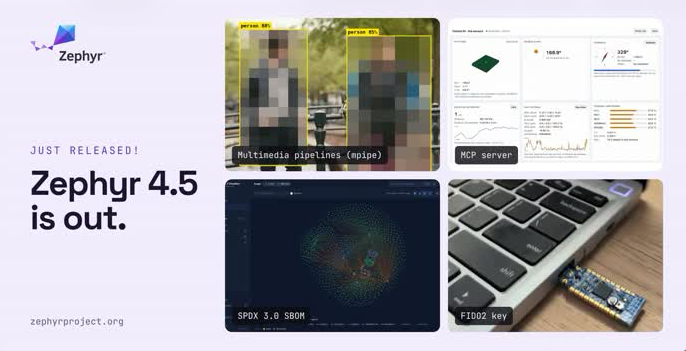
- Zephyr 4.5 brings broader hardware support and new capabilities: The latest release adds support for TriCore and Hexagon processor architectures, introduces experimental multimedia pipelines and SPDX 3.0 software bills of materials (SBOMs) to support Cyber Resilience Act readiness, and includes networking performance, debugging, and testing improvements and support for 178 new boards. Read the release overview
- Run PyTorch models on Zephyr-powered devices with ExecuTorch: ExecuTorch is now an official Zephyr module, making it easier to deploy AI models locally on embedded devices using Zephyr's existing build workflow. A new walkthrough builds and runs a quantized MobileNetV2 on an Alif development kit, using its Arm Ethos-U55 neural processing unit. Explore the integration
- Open hardware brings HDMI graphics to Zephyr projects: Antmicro’s STM32H7 HDMI board pairs a powerful microcontroller with multimedia interfaces, giving developers a platform for prototypes such as control panels, vending machines, and access terminals. See the board design
- USB HID Boot support expands Zephyr’s device options: A new community blog details work implementing HID Boot device support in Zephyr’s USB stack, helping devices such as keyboards and mice operate using a widely supported USB mode. Read the blog
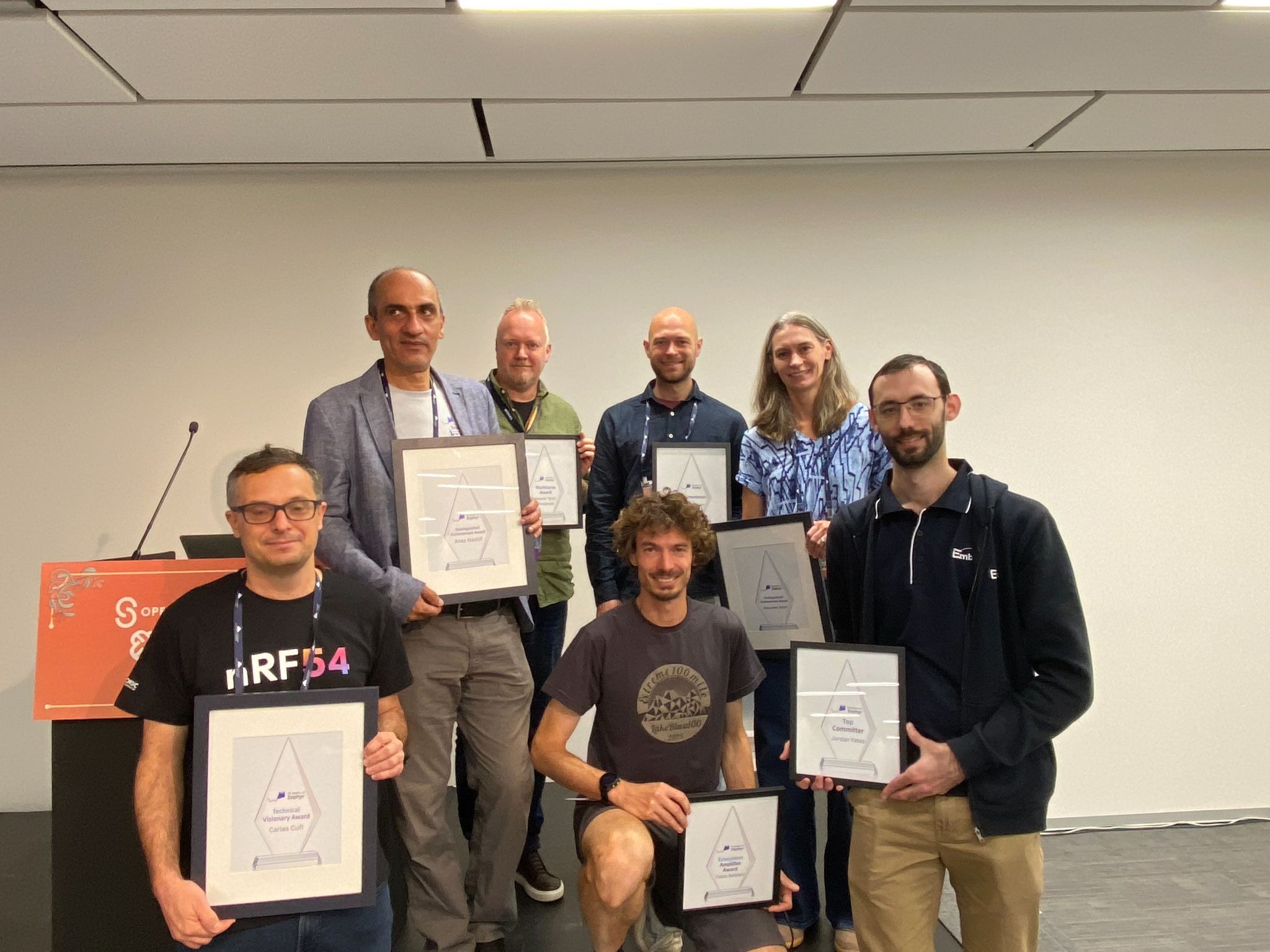
- Zephyr Developer Summit and Maintainers Forum brought the community together in Prague: The October gatherings featured technical talks and working sessions on Zephyr’s roadmap, security, safety, testing, and maintainer workflows. A recap blog and photos will be available shortly.
- Munich meetup explored Zephyr development and embedded security: Hosted by Microchip on October 12, the community gathering featured practical talks on Device Tree, power management, secure elements, and monitoring Zephyr devices in production. Read the meetup highlights.
- Bucharest meetup showcased real-world Zephyr projects: On October 16, developers gathered at Politehnica University of Bucharest to discuss getting started with Zephyr, building an open source smart ring, high-rate data acquisition, and multicore communication. Read the meetup highlights.
- San Francisco meetup connected local developers with the Zephyr community: The October 19 gathering, hosted by Embedder, brought developers, students, and open source enthusiasts together to learn about Zephyr and embedded applications. View the meetup details.
- Orlando meetup brought Zephyr developers together with NXP: Hosted by NXP Semiconductors with support from Future Electronics, the October 28 gathering offered local developers a chance to learn and connect around Zephyr RTOS. Read the meetup highlights.
- Dublin meetup welcomed the local embedded community: Analog Devices hosted the October 29 gathering for developers and others interested in open source, embedded systems, and Zephyr. Read the meetup highlights.
- Hagenberg meetup pairs a hands-on workshop with community talks: Join the Zephyr community on November 18 at the University of Applied Sciences Upper Austria for an afternoon workshop followed by presentations on Zephyr-powered products and development. View event details.
- Porto hosts its first Zephyr Project meetup: On November 26, developers, students, and open source enthusiasts can connect over technical presentations and shared Zephyr experiences. First-time speakers are welcome to submit a talk proposal. View event details.
- Hamburg meetup brings together Zephyr developers and the open source community: Hosted by House of AI Hamburg and Beecelle on December 16, the meetup will feature technical discussions on Zephyr RTOS, the Cyber Resilience Act, system integration, and Physical AI, along with networking opportunities. Talk proposals are welcome until December 1, and registration is required. View event details and submit a talk.
LF Events: Mark your calendar!
Yocto Project Virtual Summit 2026.12
Dec 1–3 / Virtual
Automotive Linux Summit
Dec 7–9 / Tokyo, Japan
Embedded Linux Conference Asia
Dec 7–9 / Tokyo, Japan
Open Source Summit Japan
Dec 7–9 / Tokyo, Japan
ONE Summit Japan
Dec 10–11 / Tokyo, Japan
Open Compliance Summit
Dec 10–11 / Tokyo, Japan
PyTorch Day Japan
Dec 10 / Tokyo, Japan
PyTorch Day China
Dec 12 / Beijing, China
To register for in-person attendance or virtual LF events, please view our full calendar of events here, and be sure to subscribe to our events newsletter. Check out our Flickr stream for photos of past events!
Follow us!
Follow the Linux Foundation on social media to get all the latest info, updates on upcoming events, and breaking news and announcements from the global open source ecosystem. Follow us here: Mastodon, Bluesky, Facebook, LinkedIn, and X