
96 MIN READ
The Linux Foundation | 21 October 2026
Welcome to the October 2026 edition of the Linux Foundation Newsletter
Cybersecurity Awareness Month is ending, and LF Education is discounting training for a limited time. You can save 40% on eligible cybersecurity training and certifications, and you can save 35% on other training and certifications. A THRIVE-ONE Annual subscription is 30% off.
This month's biggest announcements include a new Platinum Member and two new foundations. AWS became a Platinum Member of the Linux Foundation, after more than a decade of taking part in LF projects. The Linux Foundation launched the BUILD Foundation, which gives organizations that depend on Bazel a formal way to fund the project and help set its direction. The Linux Foundation also launched OpenGrid, which sets shared software architecture and interoperability standards so that power grid planning tools can work together. In addition, FINOS announced that OSERA is now operating, with support from Deutsche Bank, Goldman Sachs, Morgan Stanley, NatWest, and RBC. The first OSERA release includes secure updates for more than 50 widely used Spring and Java libraries.
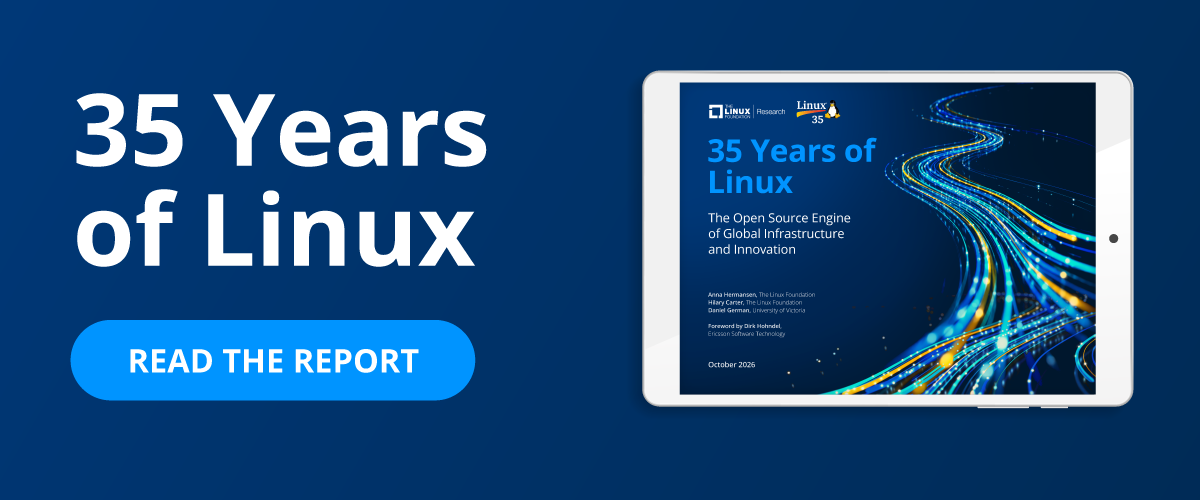
LF Research published nine reports this month. 35 Years of Linux follows the kernel from a hobby project to the software that now runs on 4 billion Android devices, more than 200 million servers, and all 500 of the world's top supercomputers. The 9th annual State of OSPOs study looks at how open source program offices are handling AI governance. The 2026 Open Data Infrastructure Report finds that openly governed data platforms are gaining ground as more organizations run AI workloads.
You'll also find a recap of the Linux Foundation Member European Forum in Prague and details on the LF Education Learning Lounge at KubeCon + CloudNativeCon North America. The project news covers agentic AI, finance, energy, networking, security, and embedded systems.
>> Read on for even more news, research, and opportunities from across the Linux Foundation.
Contents
- Education Opportunities
- LF Event Highlight
- LF Research: Survey + report
- LF Europe: Community Updates
- Linux Foundation Projects: Featured news
- LF Events: Mark your calendar!
- Follow us!
Education Opportunities

Cyber Threats Don't Wait. Neither Should You.
Cybersecurity Awareness Month is wrapping up, and so are your chances to save big on your next skill.
For a limited time, save 40% on eligible cybersecurity training and certifications, 35% on other training and certifications, and 30% on THRIVE-ONE Annual subscription.
Whether you're strengthening your security expertise or building skills across Linux, cloud, and DevOps, there's still time to invest in what's next.
The clock is ticking. Don't let these savings slip away!

LF Event Highlight
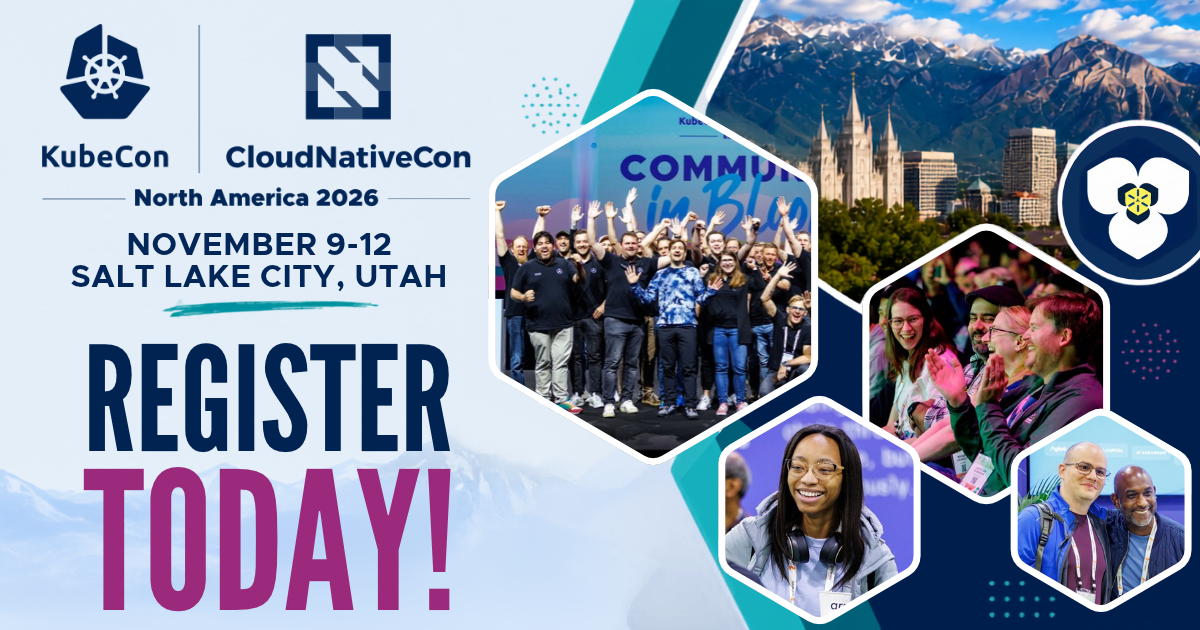
KubeCon + CloudNativeCon North America is just weeks away! Join the global cloud native community November 9–12 in Salt Lake City, Utah, to explore the open infrastructure powering production AI - everything else you run.
Connect with maintainers, engineers, and end users tackling real-world challenges across Kubernetes, AI workloads, GPU scheduling, model serving, agentic AI, platform engineering, security, and more.
Explore the schedule and don't miss your chance to connect with #TeamCloudNative!
LF Research: 9 new reports!
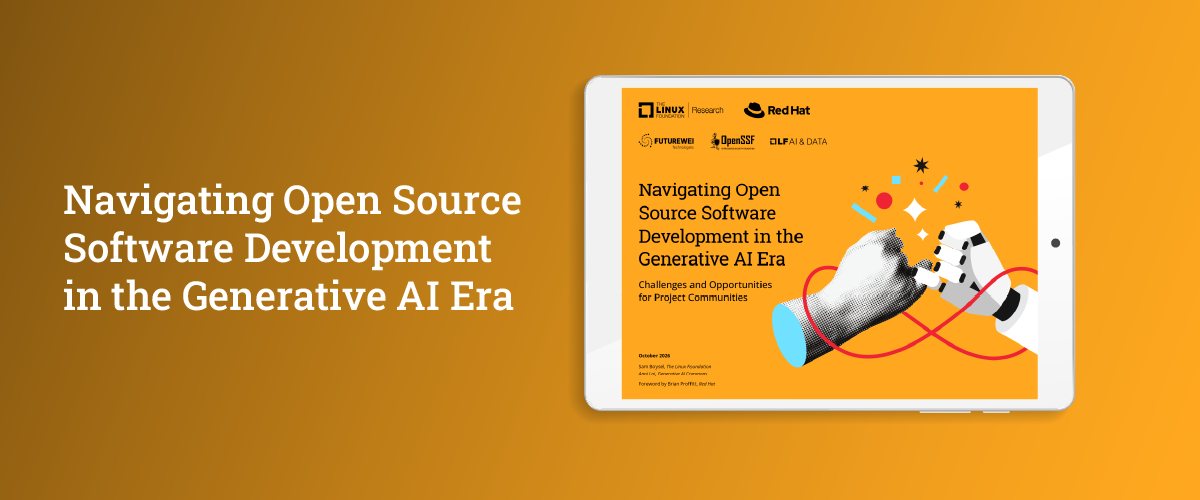 It is difficult to overstate the impact of generative AI on software engineering. In this report, LF Research, Red Hat, Futurewei, OpenSSF, and LF AI & Data investigate how AI tools are impacting open source development workflows, and how maintainers and developers are experiencing this shift.
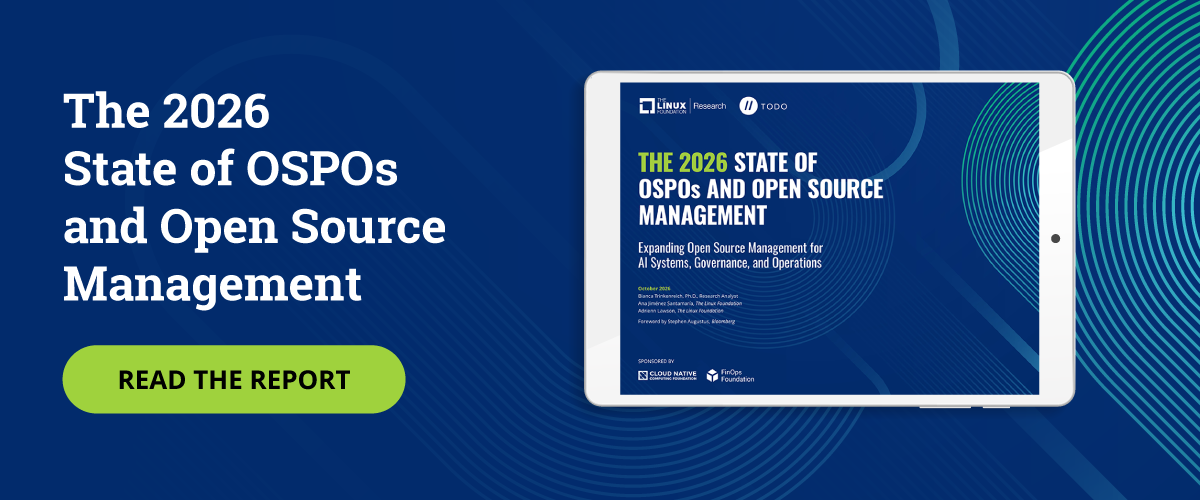 The 9th annual State of OSPOs and Open Source Management Study by LF Research and TODO Group delivers key insights on the OSPO’s expanding role as organizations reckon with AI governance and agentic workflows. Read the full report to discover actionable strategies for establishing OSPOs, scaling AI governance, and securing long-term open source sustainability. Thanks to our sponsors CNCF and FinOps Foundation for their support of this research!
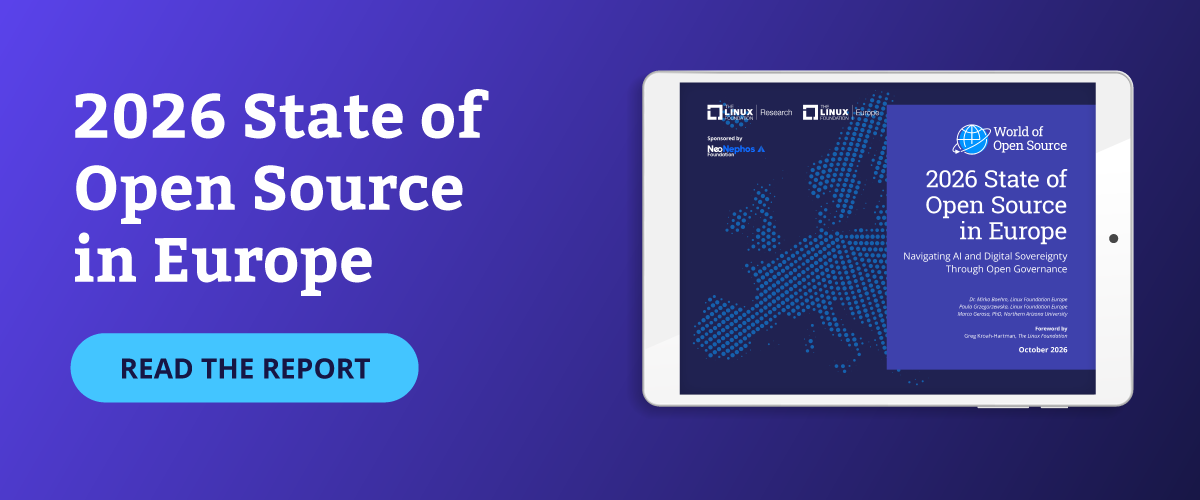 How are AI and digital sovereignty reshaping open source governance in Europe? Marking a research milestone, LF Research and LF Europe have published the 5th annual State of Open Source in Europe, delivering crucial data on navigating these operational mandates. Read the report to discover how open governance drives ROI, mitigates regulatory risk, and secures long-term digital resilience. Thanks to our sponsor NeoNephos for their support of this research project!
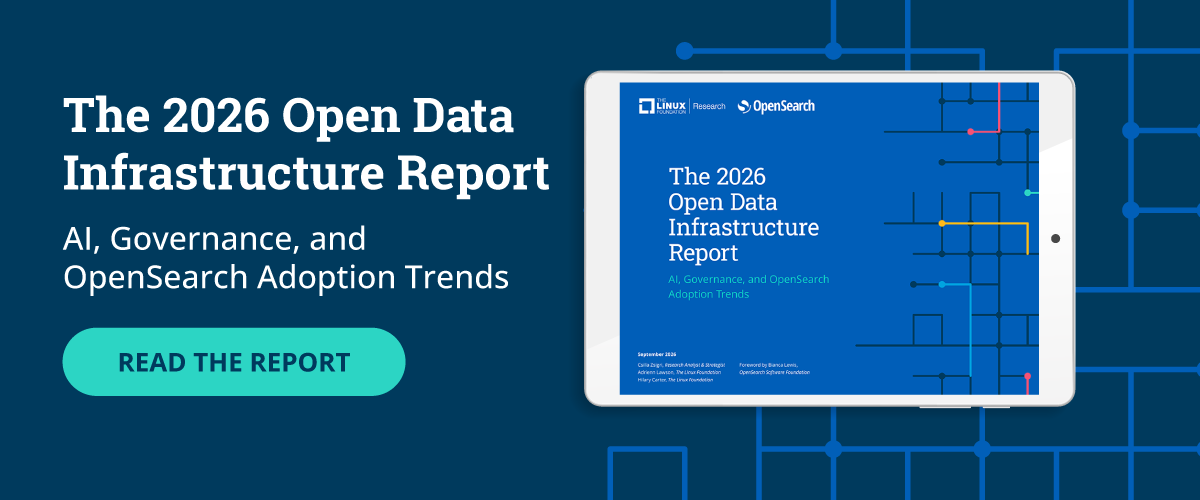 Is your organization’s data platform built for the AI era? The new 2026 Open Data Infrastructure Report from LF Research and the OpenSearch Software Foundation delivers data on how infrastructure is evolving. The key takeaway is that multi-purpose, openly governed data platforms are gaining rapid ground. Read the report for operational strategies on scaling data platforms securely while avoiding lock-in!
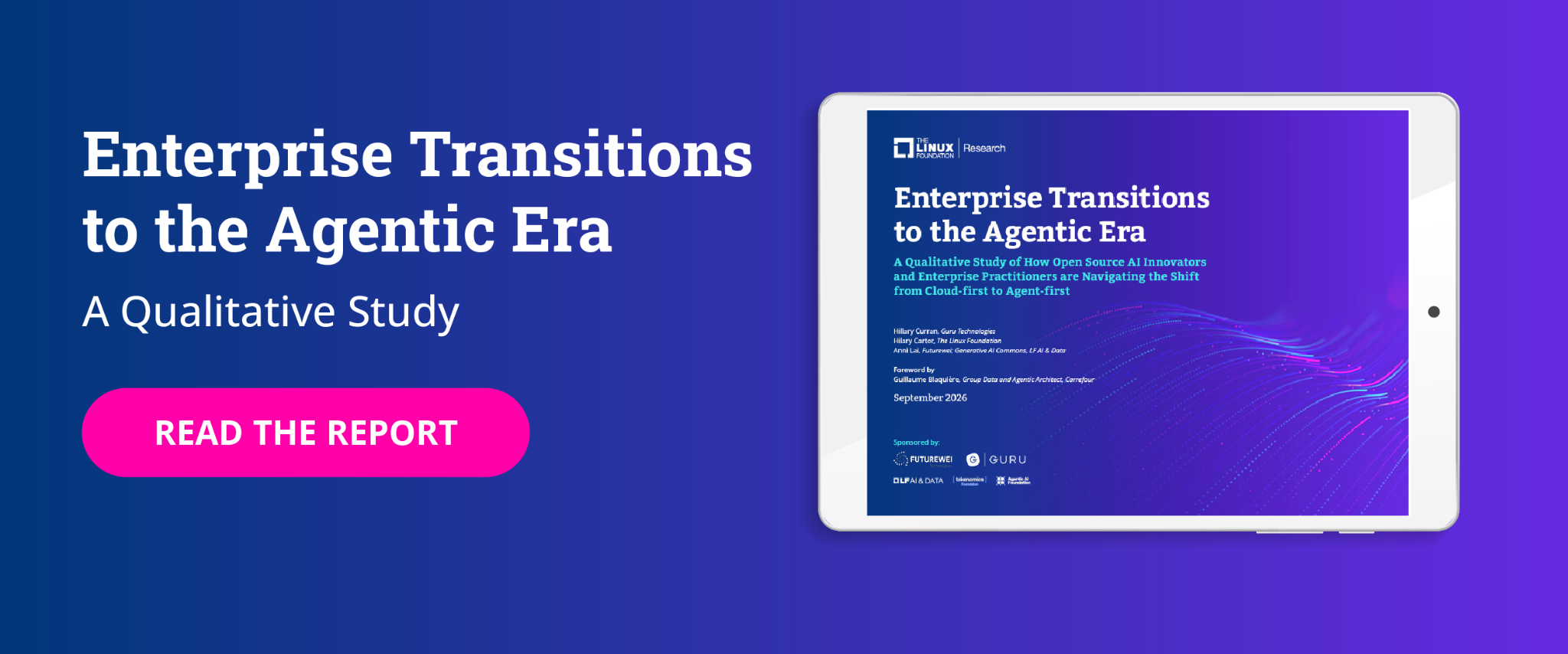 What is the reality of enterprise agent adoption, as we approach the last few months of 2026? The new Enterprise Transitions to the Agentic Era report delivers qualitative insights on how open source innovators and practitioners are navigating the shift from cloud-first to agent-first. Download the full report to explore the roadmap for managing tokenomics, setting up governance control layers, and securing long-term digital sovereignty!
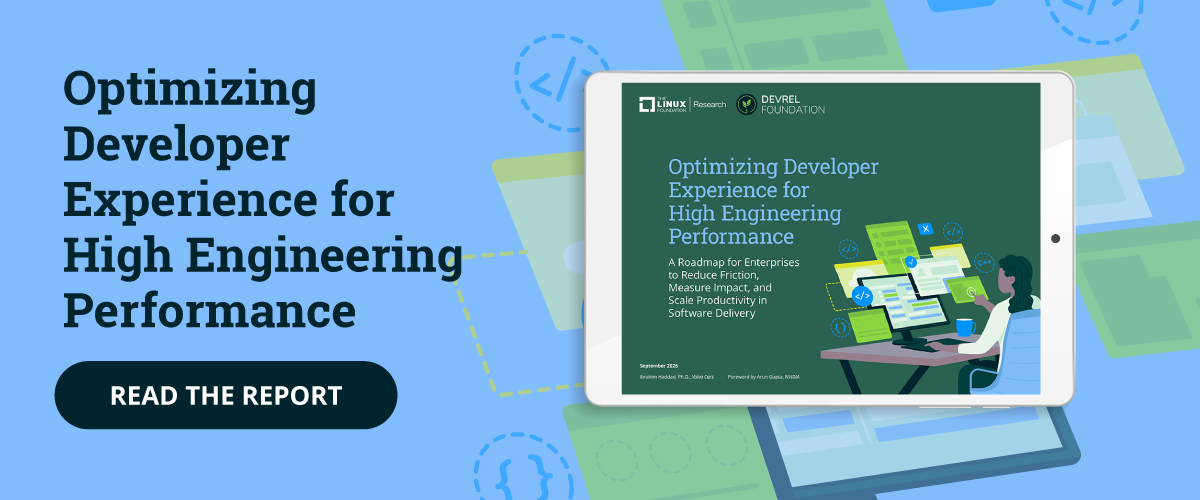 How are issues in your development workflow impacting engineering performance? As developer friction, technical debt, and administrative overhead continue to hinder output, Dr. Ibrahim Haddad wrote a new roadmap to help enterprises optimize their developers’ experience and performance. Read the report to discover practical frameworks and metrics to build high-performing engineering teams!
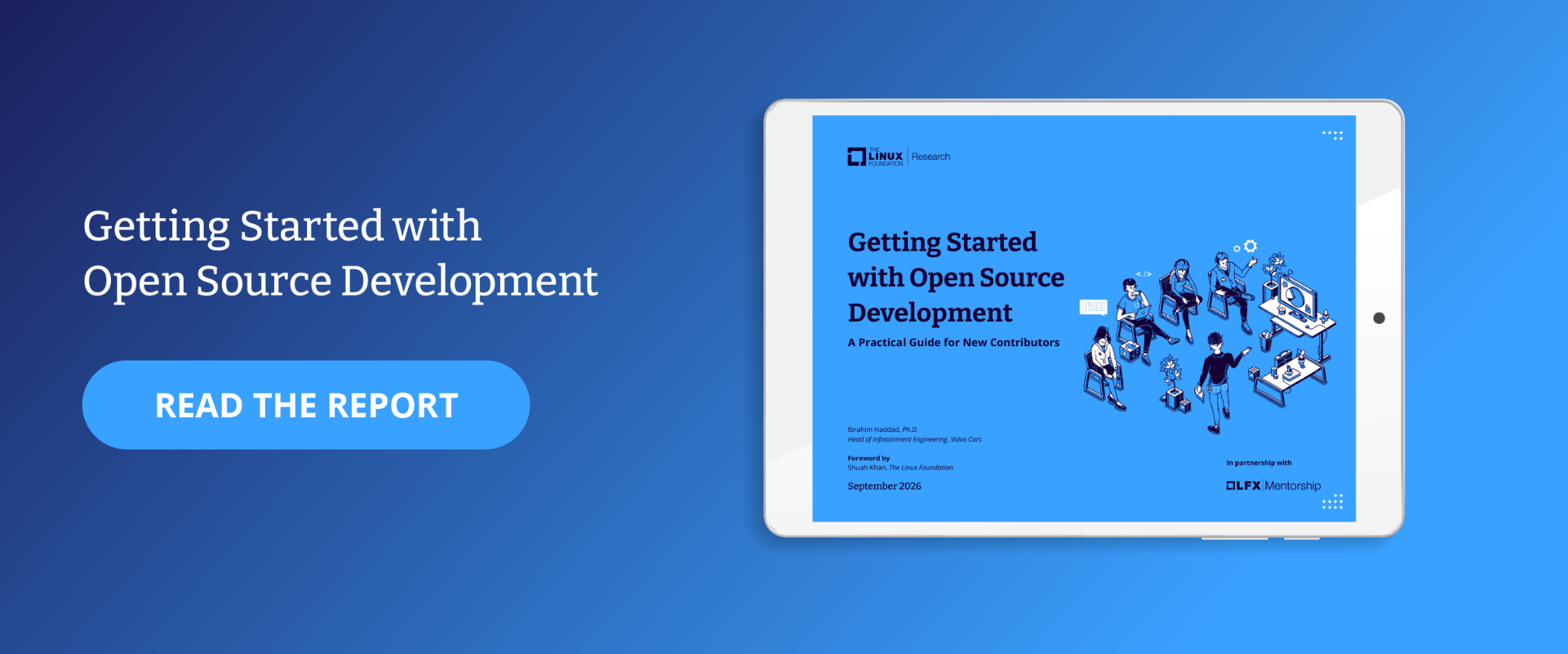 Ready to move from using open source to building it? Our new Getting Started with Open Source Development guide provides a practical, fundamentals-first path for new contributors. This guide lays out essential ground rules for open source participation. Download the full report to master licenses, contributor workflows, and best practices for landing your first pull request!
LF Europe: Community Updates
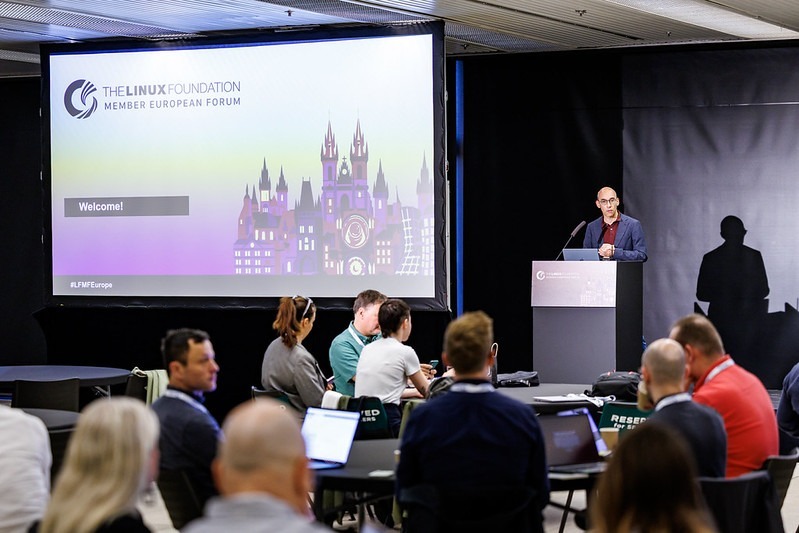
Linux Foundation Member European Forum
The Linux Foundation Member European Forum 2026 brought the LF Europe community together in Prague on October 6. The day opened with welcome remarks from Thierry Carrez, General Manager of OIF and LF Europe, and the presentation of the Europe Spotlight Report. Keynotes from Otevřená města and the Netherlands Tax Administration offered candid, practical accounts of stewarding public-sector open source and building an OSPO from the ground up.
Breakout sessions covered the issues shaping European open source today, including how companies can contribute upstream responsibly under the EU Cyber Resilience Act, the growing burden of AI-generated contributions on maintainers, and Zephyr’s first decade. Digital sovereignty ran through the afternoon, with a panel on balancing sovereignty with a global open source commons, a session on how the Sylva project supports European cloud and edge infrastructure, and a look at cross-project collaboration through Sovereign Cloud Stack. The program also included an “Ask LF Leadership Anything” session and closed with an attendee reception at Alma Prague, giving members time to continue the conversations over food and drinks.
Linux Foundation Projects: Featured news
Formations
- The Linux Foundation announced that AWS is now a Platinum Member, building on more than a decade of participation across the Linux Foundation ecosystem and strengthening its role in supporting open source. Read the announcement >>
- The Linux Foundation launched the BUILD Foundation to provide the leadership and sustained investment needed to tackle the Bazel ecosystem's largest challenges, giving organizations that use Bazel a way to formally join and help direct that investment. Read the announcement >>
- The Linux Foundation launched OpenGrid, a new open source initiative to modernize power grid planning and help accelerate energy infrastructure deployment worldwide. The OpenGrid ecosystem establishes the shared software architecture and interoperability standards that allow diverse tools to work together and scale globally. Read the announcement >>
- The Linux Foundation appointed payments veteran Michael Hursta as Executive Director of the x402 Foundation. He will lead 50+ member organizations advancing x402, an open standard for internet-native payments across AI agents, applications and APIs. Read the announcement >>
Academy Software Foundation (ASWF)
- ASWF Virtual Town Halls: Catch Up on Project Updates - The September Virtual Town Halls brought together maintainers and contributors from across the ASWF ecosystem, including OpenEXR, OpenColorIO, OpenRV, xSTUDIO, ACES, and more. Revisit the conversations to learn about project progress, technical developments, and what's ahead. Explore the Virtual Town Halls
- Open Source Days 2026: Explore the Highlights - More than 500 in-person attendees gathered in Los Angeles for Open Source Days 2026, featuring presentations on MoonRay, open source production workflows, and cross-industry collaboration. Catch up on the event highlights and discussions shaping the future of open source in film and animation. Read the Recap
Agentic AI Foundation (AAIF)
- Gates Foundation Joins AAIF: The Gates Foundation became AAIF's first philanthropic member, helping bring the perspectives of underserved communities into the development of open agentic AI standards.
- Open source maintainers discuss what agents need next: At AAIF's European maintainer roundtable, contributors from Anthropic, Google, OpenAI, and Solo.io discussed agent identity, shared standards, and how to measure the cost of completing a task. Read the recap >>
- AAIF leadership and new Sandbox phase in the press: The Stack interviewed Executive Director Mazin Gilbert on keeping open source pace with agent adoption, noting AAIF has added about one member company per day since launch. The Stack also covered the new Sandbox phase, which gives early-stage projects 12 months to grow under AAIF, without funding or marketing support. Read the coverage: The Stack interview >> | The Stack Sandbox phase >>
- Docker publishes an open specification for agent permissions: Version 3 of Docker's Sandbox Kit Spec packages an agent's access requirements inside its container image. Teams can review and version those requirements alongside the code, and check whether an update requests more access. Read the blog >>
- Prosus releases an open source benchmark for AI agents: Prosus Vending Bench tests how agents manage a simulated vending business, including purchasing, pricing, inventory, and refunds. Released under Apache 2.0, it lets developers compare agents and test changes in a repeatable environment. Read the blog >>
- Tracing Goose with familiar open source tools: A new AAIF tutorial connects Goose with OpenTelemetry, Jaeger, and ClickHouse to show where an agent spends its time. Developers can inspect model and tool calls, investigate slow responses, and save traces for later analysis. Read the tutorial >>
- Securing AI agents with open standards: A new AAIF guide explains how teams can limit agent permissions, require human approval for sensitive actions, and record why an agent acted. It uses established open standards to show how these controls can work across vendors and services. Read the guide >>
- Join the Voice Agents Forum on November 5: AAIF is bringing voice AI builders to San Francisco for a day focused on production challenges, including latency, reliability, observability, evaluation, and human handoffs. The event includes technical talks, workshops, and community networking.
- MCP Dev Summit Heads to Nairobi, November 19–20: AAIF's global event series continues in Kenya, bringing developers and practitioners together to explore MCP, agent orchestration, security, interoperability, and real-world AI deployments. View the schedule and register.
Alliance for OpenUSD (AOUSD)
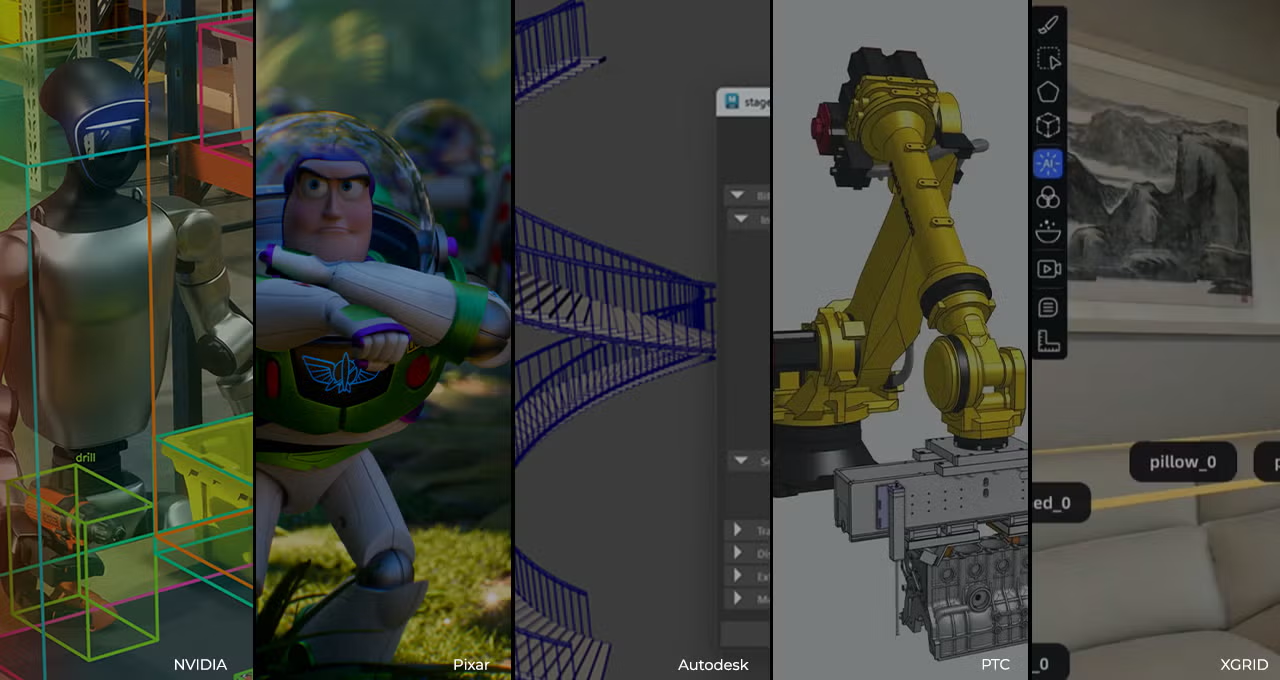
- AOUSD Out and About: Q3 2026 Community Highlights: A roundup of the quarter’s momentum, including new General Members ByteDance, Huawei, Physicl, and Unity. Physicl is joining the Physics Working Group to help develop a normative physics schema.
- 2026 AOUSD Member Summit Is October 28!
- Join us in San Francisco at the Autodesk Gallery on October 28th for the Alliance for OpenUSD (AOUSD) Member Summit where industry leaders and experts will advance the OpenUSD ecosystem through strategic discussions, updates, and sessions focused on expanding open 3D standards made possible by Universal Scene Description (OpenUSD).
- Not an AOUSD member? Join the Alliance to attend.
Alpha-Omega
- Open source communities connect in Prague: Alpha-Omega’s roundtable at Open Source Summit Europe brought communities together to share ideas on supporting security engineers, identifying critical projects, and maintaining abandoned dependencies, aka “Bernies.” Read the blog.
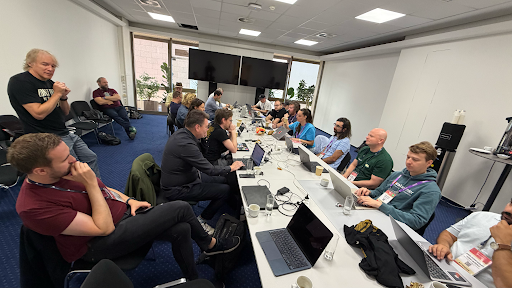
- Less AI slop, more useful security reports: Jacob Finkelman, one of Alpha-Omega’s AI Security Engineers in Residence, shares lessons from his work at the Rust Foundation. His advice: document what your project does and when it should or shouldn’t be used to help cut down on low-quality AI-generated reports. Read the blog.
- Strengthening security for Hex: Alpha-Omega funded Hex’s first comprehensive external security audit, helping secure the package ecosystem used by Erlang, Elixir, and Gleam developers. Read the case study.
- vLLM security audit complete: An Alpha-Omega-funded audit, coordinated by OSTIF and carried out by X41-DSec, identified five security findings and provided guidance to help maintainers strengthen this widely used AI project. Learn more.
- Safer publishing for Open VSX: With Alpha-Omega’s support, Open VSX introduced trusted publishing, replacing long-lived publishing tokens with short-lived credentials tied to a project’s release workflow. Read the blog.
App Defense Alliance
- The App Defense Alliance is developing a VPN security extension to MASA and is looking for VPN developers and security testing labs to help shape the requirements and testing guidance. The extension will build on MASA’s existing requirements and address security considerations specific to VPN apps. Participants will join the Alliance at the free contributor level to help shape the new extension. Connect with the Alliance→
- Omdia research commissioned by the App Defense Alliance found that 58% of consumers believe developers hold responsibility for app security. Developers deserve industry support and resources to meet this expectation. Developers can participate in the Alliance and help shape future standards by joining at the free Contributor level. Explore Contributor membership →
Automotive Grade Linux (AGL)
- AGL All Member Meeting Europe Concludes as Community Looks Ahead to Tokyo
The Automotive Grade Linux All Member Meeting Europe wrapped up after two days of technical sessions, live architecture demonstrations, and ecosystem collaboration in Berlin. Automakers, developers, and maintainers gathered to share progress on the SoDeV software-defined vehicle platform, virtualization models, and cross-industry APIs. Following the success of the European gathering, the community is invited to save the date for the next AGL All Member Meeting, taking place May 11–13, 2027, in Tokyo, Japan.
CAMARA
- CAMARA welcomes hayo to expand network API adoption: Digital infrastructure provider hayo joined the Linux Foundation and CAMARA (as a General member) on October 6 to accelerate standardized network APIs across Africa and the Middle East. The collaboration focuses on digital identity, fraud prevention, authentication, and enabling operators to bring network capabilities to market. Read the announcement >>
- CAMARA connects with the open source community in Europe: CAMARA participated in Open Source Summit Europe in Prague, October 7–9, following its presence at API Days London, September 30–October 1. The events brought opportunities to engage developers and industry partners around open, interoperable network APIs.
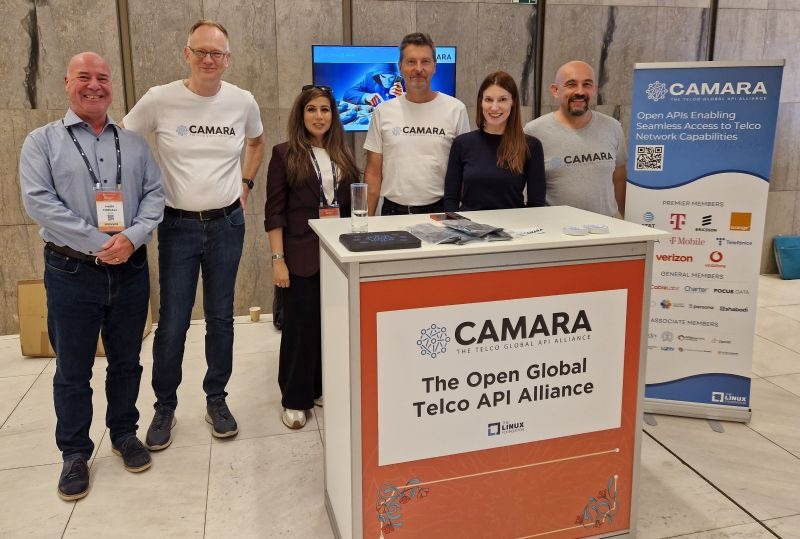
- CAMARA in the news: TelecomTV interviewed Vodafone's Johanna Wood, a CAMARA board member, about scaling network APIs across markets, including CAMARA-based verified calling. TelcoTitans explored the next opportunity for network APIs as AI agents increasingly require trusted network intelligence. Meanwhile, ITWeb Africa covered hayo's entry into CAMARA and its implications for network API adoption across the region.
- CAMARA APIs Enable Branded Calling Expansion Across Europe: First Orion and Vodafone expanded their INFORM Branded Calling service to Ireland, following launches in Germany and the UK. Reusing an existing CAMARA-based API integration enabled expansion without additional development, demonstrating the scalability of standardized network APIs. Read more »
CHIPS Alliance
- CHIPS Alliance was a Silver Sponsor of ORConf 2026, held September 11–13 in Ghent, Belgium. Antmicro speakers covered expanding Verilator’s verification capabilities, radiation hardening and fault injection in VeeR and Verilator, and tools and cores hosted by CHIPS Alliance and the OpenROAD Initiative. Watch the sessions.
- CHIPS Alliance projects Caliptra and VeeR were featured in sessions at the 2026 OCP Global Summit, held October 12–15 in San Jose, California. Topics included silicon roots of trust, device identity, secure key distribution, design verification, streaming boot, manageability, and attestation. Explore the session lineup, and stay tuned for session recordings.
Cloud Native Computing Foundation (CNCF)
- CNCF Welcomes OVHcloud, One of Europe’s Largest Independent Cloud Providers, as a Platinum Member | Upgrade builds on OVHcloud’s decade-plus commitment to open infrastructure, interoperability and cloud portability.
- Meshery becomes a CNCF Incubating project | The CNCF Technical Oversight Committee (TOC) voted to accept Meshery as a CNCF incubating project.
Confidential Computing Consortium (CCC)
- AGNTCon + MCPCon North America Security Track:
- Agent trust is a central theme at AGNTCon + MCPCon NA (October 22–23, San Jose). Sessions cover attestation for agent orchestration (Diagrid), rethinking agent sandbox architecture (Edera), zero-trust identity for autonomous execution (DataRobot and BlueFolders), and a hands-on Secure Agentic Framework workshop from Dell, Microsoft, TestifySec, and the Linux Foundation. Register now.
- $91,000 in Academic Research Grants: From 35 proposals across 32 organizations, CCC awarded $45,500 each to two university projects. Durham University is studying side-channel leakage in confidential GPU LLM serving. Indiana University is building Deko, a hardware-software co-design for verifiable data provenance and privacy policy enforcement in confidential VMs. Read more.
- Stay in the loop: Subscribe to the CCC newsletter and get monthly updates and messages from CCC’s Executive Director, TAC, Outreach Committee, and more!
Continuous Delivery Foundation (CDF)
- Open Source Project Updates
-
- View the latest features, releases, and more from CDEvents, Jenkins, Jenkins X, Ortelius, Screwdriver, and Spinnaker. Read more
- New Special Interest Groups (SIG)
- AI SIG: aims to close the gap between AI innovation and production-grade delivery by developing open, vendor-neutral guidance for integrating AI systems into CI/CD pipelines. The group meets every 2 weeks. Join here
- Platform Engineering SIG: exists to advance the practice of platform engineering within continuous delivery ecosystems by developing vendor-neutral guidance, reference architectures, and community resources that help organizations build Internal Developer Platforms (IDPs) grounded in open source CI/CD tooling. The group meets every 2 weeks. Join here
DPDK
- Robin Jarry (Red Hat) explains how two years of work made Grout, the DPDK-based graph router he maintains, production-ready: His Stockholm Summit talk covers routing control from FRR through the zebra dplane plugin, configuration over a UNIX socket API and the grcli shell, and packaging for Fedora and Debian. Several roadmap items from the talk have shipped since May, including VXLAN L3VPN and neighbor suppression.
eBPF Foundation
- Google Optimizes Workload Performance Using Custom eBPF Schedulers
Google deployed application-tailored CPU scheduling policies using eBPF frameworks like sched_ext to overcome the constraints of general-purpose kernel schedulers. This architecture delivered a 5% QPS improvement for core RPC serving stacks and double-digit throughput gains for memory-intensive workloads. By shifting execution to eBPF, Google successfully decoupled scheduling policies from core kernel mechanisms, enabling rapid optimization without modifying base kernels or rebooting hosts.
Read the case study →
Enabling Linux in Safety Applications (ELISA) Project
- ELISA Expands Open Source Ecosystem for Safety-Critical Software
The ELISA Fund welcomes Cregit and stress-ng, bringing complementary capabilities in code analysis, testing and system reliability to its growing ecosystem. Cregit helps developers explore the history and evolution of Linux kernel code, while stress-ng provides hundreds of stress tests to evaluate Linux system behavior, reliability and performance. Read the full announcement to learn how these additions create more opportunities to collaborate on safer, more reliable systems. - ELISA at Open Source Summit Europe 2026
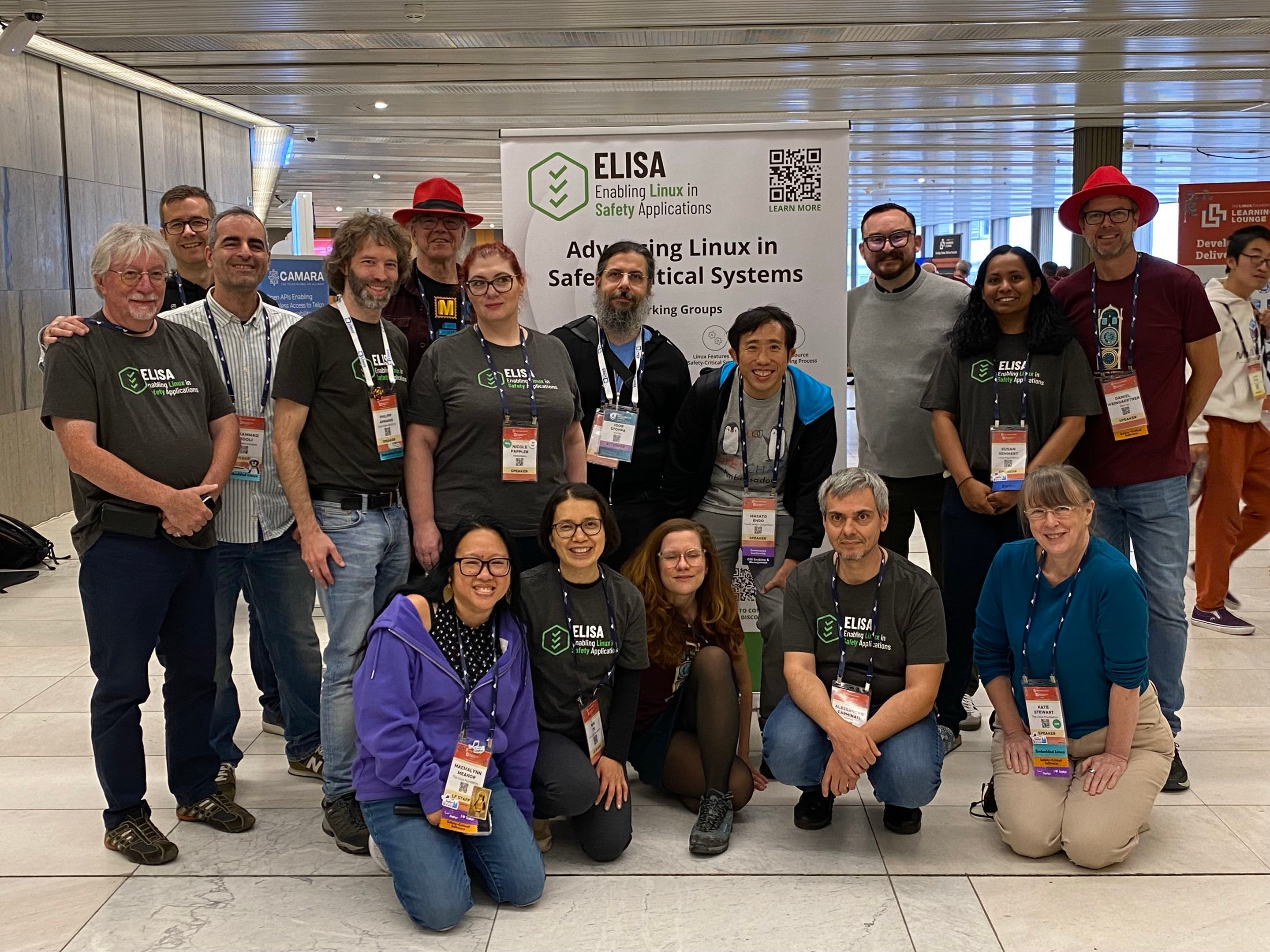 The ELISA Project participated as a Silver sponsor of Open Source Summit Europe 2026 in Prague, bringing together community experts, working group leads and Ambassadors at its booth. The Safety-Critical Software track covered topics including functional safety certification, hazard assessment and Linux safety qualification. ELISA also participated in the Safe Systems with Linux Microconference at Linux Plumbers Conference, focused on requirements, traceability and testing.
- AI for Safety-Critical Development: Requirements, Static Analysis, and Human Oversight
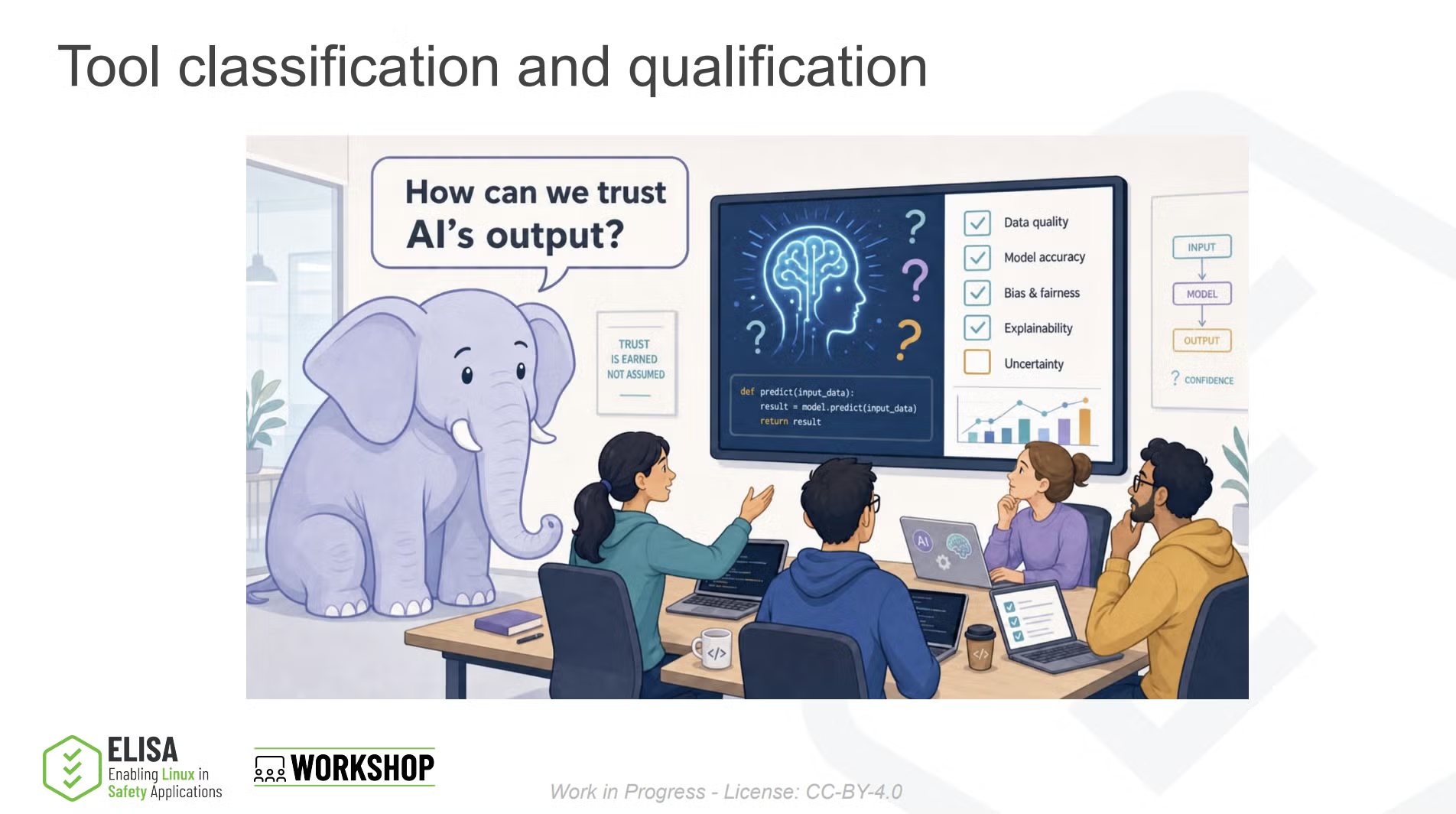
This ELISA Workshop recap shares insights on deriving and reviewing requirements from source code, generating tests against requirements, and an experimental AI approach to classifying Linux kernel static analysis violations as deviated, unknown or potential issues. It also examines NVIDIA’s reviewer-first approach to checking requirements for quality and consistency, with risk analysis, review gates and human approval. The key challenges include tool qualification, explainability, and false positives and negatives.
FINOS
- OSERA Is Operational: Global Banks Back Open Remediation Standards and Security Patches
Announced at the Open Source Summit Europe in Prague, the Open Source Enterprise Resiliency Alliance (OSERA) is now live and delivering. Backed by leading financial institutions including Deutsche Bank, Goldman Sachs, Morgan Stanley, NatWest, and RBC, the initiative aims to reduce duplicated patching efforts through a shared, bank-governed remediation pipeline. Its first release includes an open framework for remediation attestations and secure package updates across more than 50 widely used Spring and Java libraries.
Read the press release - New FINOS Project: SDLC Common Controls Catalog
FINOS has announced the SDLC Common Controls Catalog (SDLC³), an open, community-driven reference library for software development lifecycle controls across financial services. The project aims to reduce duplicated effort and inconsistent interpretations of controls by providing shared definitions, practical implementation patterns, and a flexible, technology-agnostic catalog that institutions can adapt to their own requirements.
Read the announcement blog and find out how to get involved
Explore the live catalog - New CDM Training Course for Java Developers
Linux Foundation Education and TradeHeader have launched a new, hands-on, one-day course that brings the FINOS Common Domain Model (CDM) specification to life in Java. Developers will work with CDM and FpML to build post-trade lifecycle applications, from ingesting financial data to executing complex state transitions. The course is designed for Java developers, integration engineers, and technical business analysts working with post-trade processes, regulatory reporting, and CDM implementations.
Read the launch blog
Register for training - OSFF New York: Technical Workshops on November 3
Ahead of the Open Source in Finance Forum (OSFF) New York, FINOS will host hands-on technical workshops on November 3, bringing together architects and maintainers from JPMorgan, Morgan Stanley, RBC, DataHub, and Kosli. Participants will work through practical sessions spanning CDM developer tooling, software development lifecycle controls, FDC3 AI governance, Common Cloud Controls, and CALM. Spaces are limited to 25-35 participants per room. Priority access is granted to FINOS Member organizations and regulated financial institutions.
Explore the workshop schedule and save your seat - What Blocks Agentic AI in Banking? FINOS and Linux Foundation Leaders Weigh In
Probabl interviewed FINOS Executive Director Gabriele Columbro and Linux Foundation SVP of Research Hilary Carter about the conditions needed to bring agentic AI into financial services. The discussion explores how open source governance, machine-readable compliance, and shared standards can help financial institutions move beyond internal AI experiments toward trusted production workflows.
Read the blog
High Performance Software Foundation (HPSF)
- Call for Proposals Now Open: Speak at the HPSF Conference 2027: Submissions are now open for speaking proposals for HPSFCon 2027, scheduled for April 12–16, 2027, in Montreal, Quebec.
- Kokkos Graduates to Become a Core Project of the HPSF: The HPSF Technical Advisory Council (TAC) voted unanimously to advance Kokkos from the Established Stage to the Core Stage, which is the highest maturity level for technical projects within the foundation.
- High Performance Software Foundation Welcomes Ramble as a New Project: Ramble, an open source experimentation framework written in Python for capturing provenance information and improving experiment reproducibility, has been added to HPSF.
- High Performance Software Foundation Welcomes ClusterShell as a New Project: ClusterShell, an event-driven open source Python library designed to execute local or remote commands in parallel across server farms and large Linux clusters, has officially joined HPSF.
- Chapel 2.10 Released: Version 2.10 of Chapel has been released, introducing key performance improvements to make scalable parallel programming more productive, accessible, and portable.
- Environment Modules 5.7: 2.7x Faster Loads, Stable Hooks, and Now Steered in the Open: The Environment Modules team released version 5.7, featuring 2.7x faster load times and stable hooks.
- HPSF Highlights: Read the latest Q3 update from HPSF on LinkedIn, featuring new project announcements, community insights, and details on upcoming events like SC26.
Jupyter
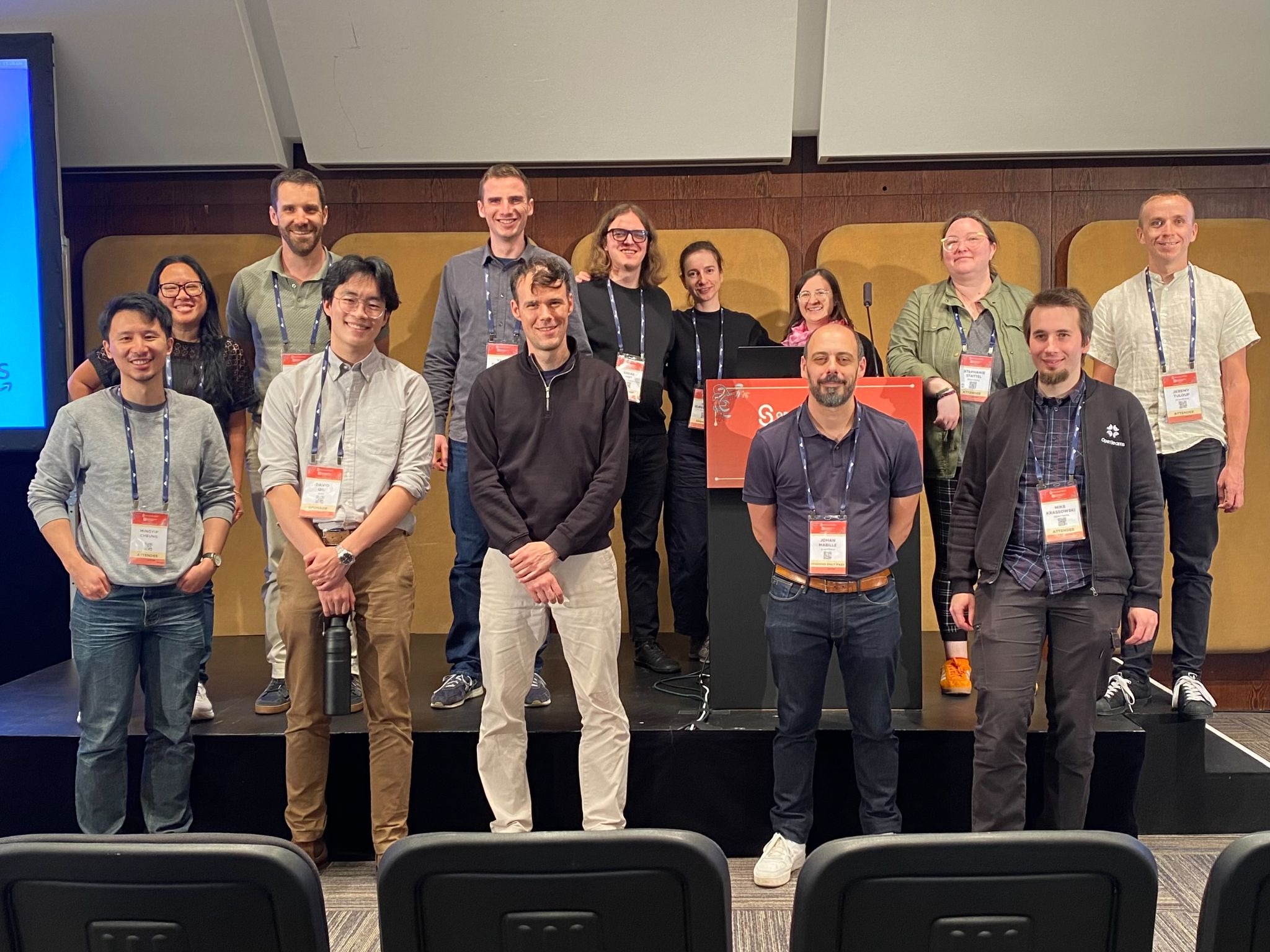
- Jupyter Mini Summit Connects the Community in Prague - Held October 6 alongside Open Source Summit Europe, the Jupyter Mini Summit brought community members together to share technical developments, exchange ideas, and discuss the future of the Jupyter ecosystem.
- Fortran Comes to JupyterLite: No Installation Required - A new integration brings the LFortran kernel to JupyterLite, allowing users to write and execute Fortran code directly in their browsers without installing software. Explore the Jupyter Blog
- Jupyter Heads to Compute! Paris 2026 - Project Jupyter will be featured at Compute! Paris, November 25–26, including an opening keynote by Jupyter co-creator Fernando Pérez and a dedicated Planet Jupyter track. Read More
- Introducing Notebooks-on-Demand for JupyterLab - A new open source extension makes it easier for developers to launch interactive notebooks directly from Python code, inspect variables, debug functions, and incorporate changes into their workflows. Read the Blog
- JupyterHub 6.0 Released - The latest major JupyterHub release delivers updates to server management and platform capabilities, supporting shared computing environments for researchers, educators, and developers. Read the Announcement
- Project Jupyter Launches a Refreshed Blog - The Jupyter Blog has a new look, with improved navigation, searchable archives, and easier access to community news, project updates, and technical content. Explore the New Blog
LF AI & Data
- ONNX v1.23.0 advances transformer and low-precision AI support: The release adds SwiGLU, local-window attention, and new 6-bit floating-point types, alongside improvements to model validation, conversion, and shape inference.
Explore the release >>>
- New Kedro user story: Harvard’s Zitnik Lab: Learn how the team built OptimusKG, an open biomedical knowledge graph, using Kedro to create reproducible, auditable data pipelines that bring diverse research sources together.
Read the user story >>>
- New research explores enterprise adoption of AI agents: Developed with LF AI & Data and other partners, Enterprise Transitions to the Agentic Era examines how trust, governance, cost, and human accountability shape enterprise adoption.
Read the report >>>
- Egeria helps keep AI context trustworthy: The latest community blog explores how Egeria’s Nanny Connectors automate metadata maintenance, trace data lineage, and improve consistency to give AI applications reliable context. Read the blog >>>
- Upcoming Docling webinar: Join the CNCF AI Technical Community Group on October 23 for “Meet Docling: The Swiss Army Knife for Scalable Document AI,” exploring how Docling transforms complex, unstructured content into AI-ready data. Learn more >>>
- LF AI & Data Mini Summit recordings coming soon: Explore responsible AI sessions, project lightning talks, and the university panel from the Mini Summit at PyTorch Conference. Recordings will be available on our YouTube channel in a couple of weeks. Subscribe to catch them as they’re published!
Subscribe to LF AI & Data on YouTube >>>
- IREE Welcomes New Technical Steering Committee Chair: Maximilian Bartel, CTO of Roofline, has been named Chair of the Technical Steering Committee (TSC) for IREE, an LF AI & Data project. The appointment reflects Roofline’s growing commitment to advancing open source AI deployment infrastructure and fostering broader community collaboration across hardware and software ecosystems. Read more>>>
LF Broadband
- LF Broadband has released VOLTHA version 2.16, sharpening that early-warning surface with event-driven failure indication during device initialization and OLT operations, ONT-labeled per-device telemetry, and broader command-line visibility for teams running open source access networks in production.
LF Decentralized Trust
- Verifiable Trust for Open Source Projects: In Prague, alongside Open Source Summit Europe and Linux Plumbers Conference, OpenVTC maintainers Glenn Gore (Affinidi), Brendan Miller and Alberto Leon (Harvard Applied Technology Lab) stood up a verifiable trust community for an example open source project, responding to a challenge Jim Zemlin set on malware injection and floods of AI-generated pull requests. The demo issued relationship, membership and delegation credentials, wrote project governance as Rego policies, and ran maintainer-side agents that accept signed PRs only from verified contributors or their verifiably delegated AI agents. OpenVTC is an LF Decentralized Trust lab implementing standards from the ToIP/DIF Decentralized Trust Graph Working Group, co-chaired by Drummond Reed.
- Institutional Adoption Report: A Ledger Insights report commissioned by LF Decentralized Trust, the LF’s home for ledger, identity and privacy projects, documents 80 deployments of its technologies. Among financial platforms in production or on a clear path to it that disclose their stack, almost 30% run on LFDT projects. Deep dives cover Project Agora, Citi Token Services, Clearstream, Fnality, Pontes and the Swift Ledger, plus Paladin as a privacy layer for shared ledgers.
- New Members and a Cross-Ledger Lab: Swift, Wells Fargo and Zeeve joined LF Decentralized Trust ahead of Sibos, among 15 new members that also include CertiK, Cosmos, the Interchain Foundation, the Sui Foundation and Vana. The announcement added CLPR, a bridgeless cross-ledger messaging protocol contributed by Hedera that uses state proofs so networks can verify each other’s state without intermediaries.
LF Edge
- LF Edge and Edge AI Foundation partner to accelerate real-world Edge AI: The new collaboration aligns LF Edge’s open source projects with Edge AI Foundation’s working groups on Physical AI, Security, and Interoperability & Standards to advance secure, scalable reference architectures. Read the announcement >>>
- New user story: Real-time industrial Edge AI with Open Horizon and FIDO Device Onboard: Discover how de Jonge’s EdgeBrain combines local AI processing with Open Horizon for fleet deployment and updates, and FIDO Device Onboard for device onboarding. Its pilot configuration monitors 50 sensors on a shared time base with acquisition jitter below 15 microseconds, keeping production data onsite. Read the user story >>>
- New user story: Smart home energy management with EdgeLake: Learn how UC Santa Cruz students deployed EdgeLake and local AI in a residential microgrid to combine solar, battery, and appliance data into practical energy guidance. The system helps homeowners prioritize loads during outages and continues operating without internet access, keeping household data onsite. Read the user story >>>
- EdgeLake and UC Santa Cruz turn student innovation into practical Edge AI solutions: Discover how their collaboration is advancing federated learning, smart energy management, utility outage detection, and decentralized video capabilities—from classroom projects to research and real-world deployments. Read the blog >>>
- InfiniEdge AI Release 4.0 is now available: The latest release advances distributed AI agent infrastructure, peer-to-peer communication for Physical AI, and systematic AIOps evaluation at the edge. Explore the release >>>
- Explore the Edge AI track at ONE Summit Japan 2026: Join the global edge and networking community December 10–11 in Tokyo for sessions on Edge AI infrastructure, distributed agentic systems, digital twins, and Physical AI. View the agenda and register >>>
LF Energy
- LF Energy Summit Europe 2026: Sessions Now Available | Session recordings are now available, along with presentations and photos. Save the date for LF Energy Summit Europe 2027, September 29–30 in Amsterdam.
- The Open Source Value Proposition for the Energy Sector | The Open Source Value Proposition for the Energy Sector, a report from Linux Foundation Research and LF Energy, introduces a benefit-cost framework for quantifying the value of open source software for grid operators.
- Smart HEMS Benchmark Joins LF Energy | The Smart HEMS Benchmark has been accepted as an LF Energy Sandbox Project, bringing an open, reproducible evaluation standard for residential distributed energy resources into LF Energy.
- EV Charging Reliability: Uptime Is Not the Same as a Successful Charge | Charging networks report uptime between 98.7% and 99.9%. Only about 71% of charging attempts succeed. Those two numbers measure different things, and the mechanism in between is software.
- OperatorFabric 4.13.0 Released with New Features, Bug Fixes, and Dependency Upgrades | OperatorFabric 4.13.0.RELEASE adds the ability to see all versions of bundles and download a bundle through the admin screen, a card purging mechanism, and access to current user data through the frontend API opfab.users. The release also enforces the type field in custom screen definitions, includes two dashboard bug fixes, and upgrades dependencies.
- URPX Goes Public: An Open Standard for Machine-Readable Utility Rate Plans | URPX is public at version v0.5.1, developed under LF Energy Standards and Specifications (LFESS) governance. URPX is an OWL ontology with SHACL validation shapes and JSON-LD as its exchange format.
- VAREN Webinar: Open Source LiDAR Analytics for Distribution Networks | On October 27, an LF Energy webinar will introduce VAREN, a soon-to-be-announced new LF Energy project and open source library from Hydro-Québec's research center that turns mobile LiDAR point clouds of overhead distribution networks into information utilities can act on directly.
- RTC-Tools User Day | On November 9, LF Energy will host the RTC-Tools User Day, organized by Deltares. The event brings together users to share experiences and demonstrate how they are applying RTC-Tools to optimize reservoirs, canals, hydropower systems, and other water and energy infrastructure.
- Upcoming webinars: AI for Real-Life and Full-Scale Power Grid Operations using EnerGNN - A Hands-On Approach - November 18; Building a Neural Solver for the Grid with OpenGridFM - December 15.
LF Networking
- ONE Summit Japan 2026 agenda is live: Join the global open networking and edge community December 10–11 in Tokyo, alongside Open Source Summit Japan. The initial program explores agentic AI, autonomous networks, Edge AI, open source RAN, 6G, and infrastructure for AI workloads. View the announcement here and explore the agenda and register >>>
- CNTi Test Suite 2.0.0 makes cloud native testing more actionable: The latest release provides clearer test results and remediation guidance, a new GitHub Action for CI/CD integration, and nightly validation against free5GC as a reference cloud native network function. Read what’s new >>>
- New white paper: Telco AI Grid—Serving, Governing, & Monetizing AI: Explore how telecom operators can use distributed infrastructure to deliver AI services, support sovereign AI, and create new business opportunities. The paper presents a practical architecture covering edge inference, Model-as-a-Service, and token-based charging. Download the paper >>>
- Upcoming webinar: Developing with StratoWeave—From YANG Models to Network Orchestration: Join LF Networking on November 4, 2026, to explore developing with StratoWeave, an open source project for model-driven, declarative network orchestration. Register here >>>
- Duranta and OCUDU explore open source RAN interoperability: LF Networking’s October 7 webinar examined integration between Duranta’s OpenAirInterface user equipment and OCUDU’s open source RAN, with local deployment demonstrations, an over-the-air connection, and updates on Integrated Sensing and Communication development. Watch the recording >>>
Margo
- Margo Reaches 50 Members
The Margo Initiative has reached a major milestone, officially welcoming Endress+Hauser as its 50th member company. This milestone underscores the growing momentum behind open, interoperable industrial edge standards across diverse multi-vendor ecosystems. Endress+Hauser joins a rapidly expanding group of automation leaders and industrial solution providers committed to removing barriers to innovation and streamlining edge application management.
Explore the project → - Margo Overview Video This video explains how the Margo Initiative fosters open-source collaboration and multi-vendor edge interoperability across industrial automation ecosystems.
- Margo PR3 Plugfest Registration Open Intel is hosting the Margo PR3 Plugfest in Chandler, Arizona, from October 27–30, 2026. Open to both members and non-members with an active implementation, this four-day event features hands-on, round-robin testing to validate multi-vendor interoperability across edge architectures. Attendees gain direct access to the technical working group, full on-site catering, and documented interoperability evidence as the ecosystem progresses toward General Availability.
Learn more →
OCUDU Ecosystem Foundation
- OCUDU Ecosystem Developer Summit - The OCUDU Ecosystem Developer Summit North America, held October 20–22, 2026, in Alexandria, Virginia, will bring together wireless network professionals and researchers for hands-on sessions, live demos, roadmap collaboration, and networking focused on open, AI-native RAN infrastructure.
- Interested in technical sessions? Read this blog
- Interested in technical demos? Read this blog
- Interested in keynotes and panel discussions? Read this blog
- GNU Radio joins the Foundation - GNU Radio has joined the OCUDU Ecosystem Foundation as an official project, combining software-defined radio capabilities with open-source RAN software to advance 5G Advanced and 6G research and development.
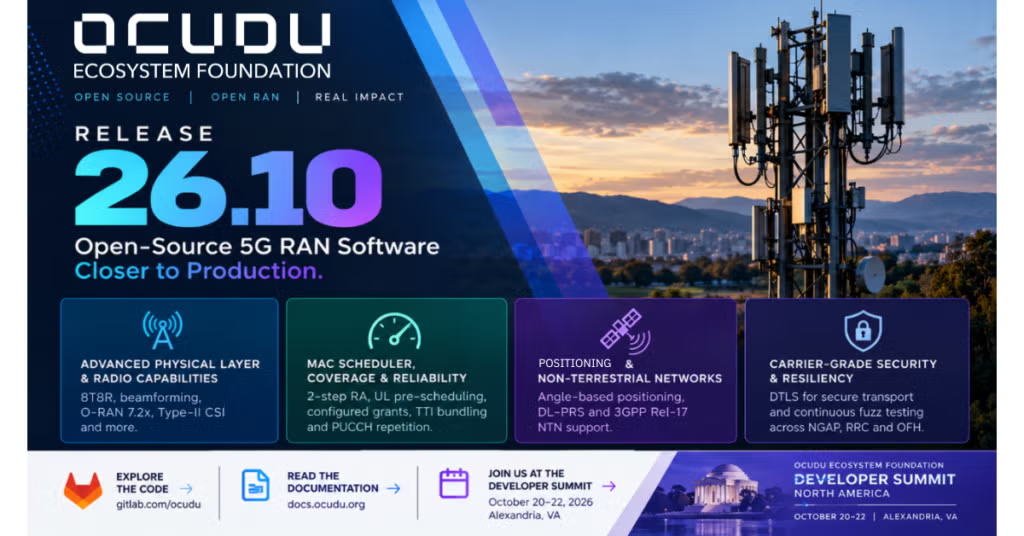
- OCUDU Ecosystem Foundation Announces OCUDU 26.10, Bringing Satellite Connectivity and New 5G Capabilities to Open Source RAN - The OCUDU Ecosystem Foundation has released OCUDU 26.10, enhancing its open source CU/DU RAN platform with satellite connectivity, improved radio performance, native 5G positioning, and strengthened security ahead of its Developer Summit in October 2026.
- New opportunities to build with OCUDU - The OCUDU Ecosystem Fund is offering Phase II funding from September 23 to October 21, 2026, for projects demonstrating open source private 5G platforms for venues, stadiums, and smart manufacturing.
- How OCUDU Enabled Trajectory-Aware Handover Optimization for Tele-Operated Driving - Our latest case study covers the NSF-funded DRIVE-SAFE project, which successfully demonstrated trajectory-aware 5G handover optimization for tele-operated driving on the POWDER Wireless testbed using OCUDU, eliminating unnecessary handovers for ultra-low-latency 5G-Advanced and 6G networking.
OpenIDS
- OPENIDS is evolving its mission and vision to focus on a shared, open language for insurance data. The goal is to make data exchange across insurers, regulators, and industry partners more consistent and useful—supporting better insights, smoother collaboration, and continued innovation. The shift reflects a broader direction for OPENIDS: bringing the industry together to build standards that can grow with its needs. Read the full blog.
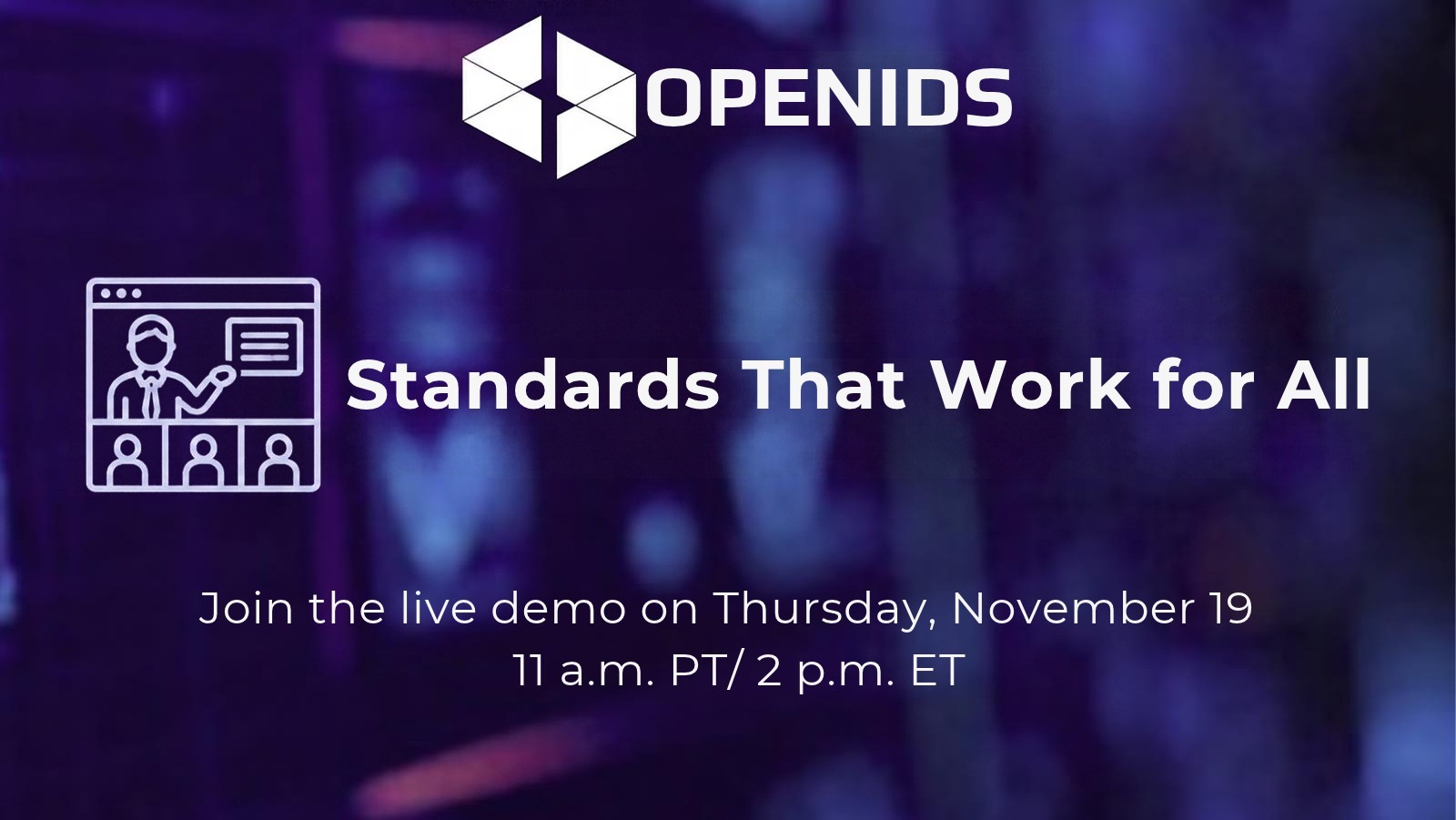
- Join the OPENIDS webinar, Standards That Work for All, on Thursday, November 19, at 11 a.m. Pacific Time / 2 p.m. Eastern Time. The session will feature a live demonstration of the new standard and show how a shared approach to insurance data can support more consistent exchange across the industry. You’ll see how the standard works, explore ways it could apply to your organization’s needs, and hear from the presenters about what comes next. Bring your questions and join the conversation. Register here.
OpenInfra Foundation
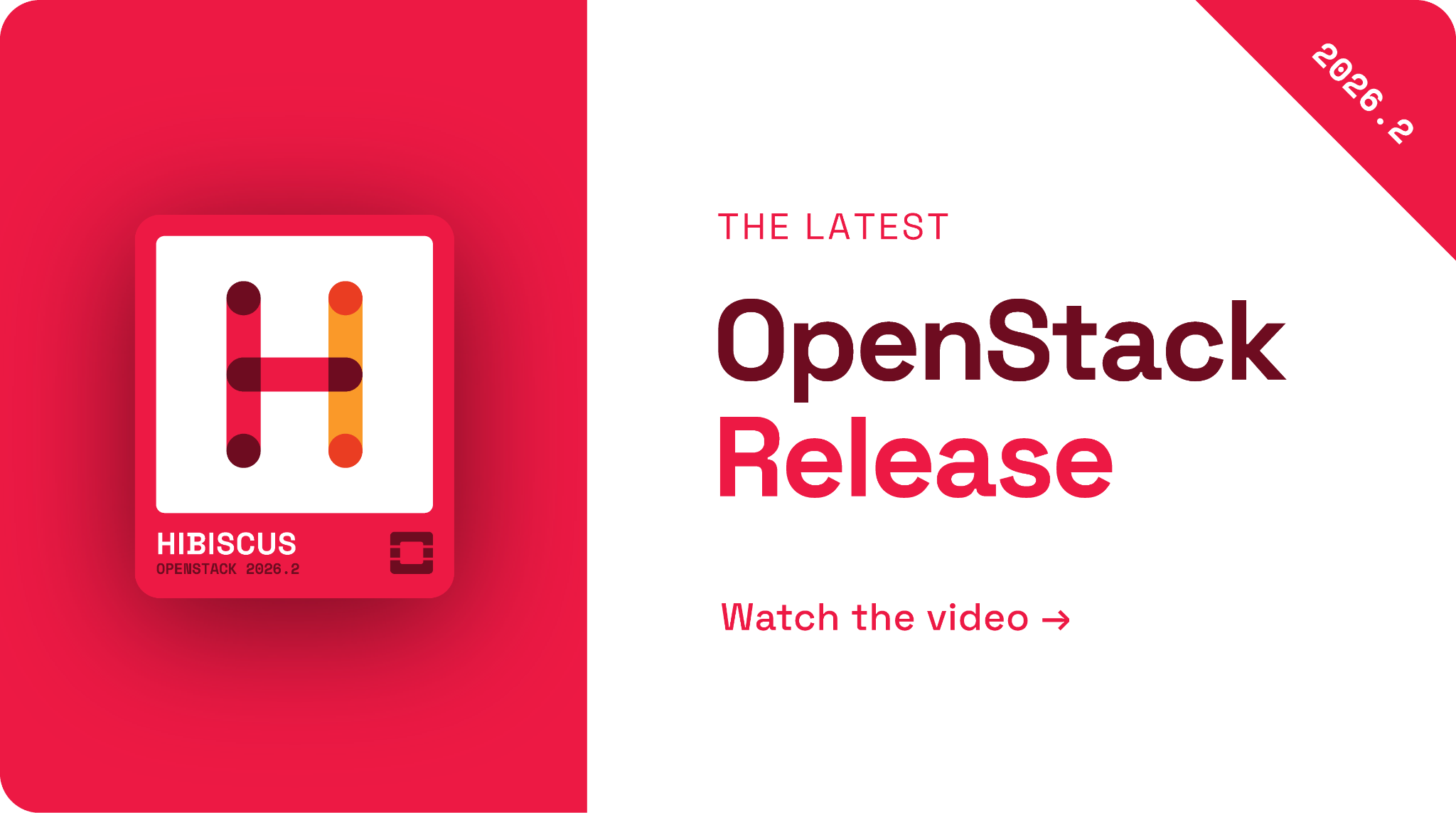
- OpenStack 2026.2 “Hibiscus” is here. The 34th release of OpenStack was developed by nearly 600 contributors, delivering more than 12,000 changes to the software over the past six months. Explore the release and its key highlights as well as the OpenInfra Live where you can hear straight from community leaders. Additional OpenInfra releases delivered in October include Kata Containers 4.2.0 and Zuul 14.3.0.
- CNCF, OpenInfra and the PyTorch Foundation recently shared a stage in China for the first time, at KubeCon + CloudNativeCon + OpenInfra Summit + PyTorch Conference China 2026 in Shanghai. The week produced a shared map of the open source AI stack. The PyTorch Foundation stewards the layer that trains and serves models. CNCF stewards the layer that operates and scales the workloads. Beneath both, OpenInfra provides and controls compute, networking, storage and isolation on the hardware itself.
- The OpenInfra Digital Sovereignty Working Group has kicked off a new series of discussions focused on sovereign AI. The group is bringing together participants from the Digital Sovereignty and OpenInfra AI communities to explore how open infrastructure can support greater control, choice and interoperability as governments and organizations develop sovereign AI strategies. Join the sovereign AI discussion!
Open Mainframe Project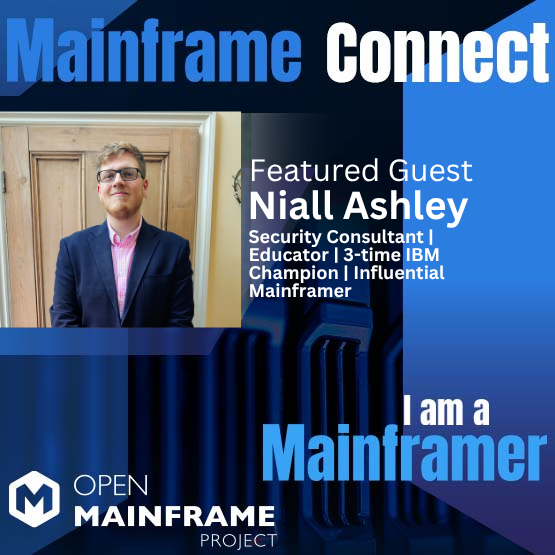
- NEW EPISODE: I Am a Mainframer: Niall A. on Mainframe Security, Learning by Doing, and the Future of z/OS
In this episode, Niall from Vertali shares his journey into the mainframe industry and his work in mainframe security, RACF administration, ESM migrations, security engineering, and system programming. He explains how hands-on experience, curiosity, and learning from mistakes have shaped his career. The conversation also explores RACF, ACF2, Top Secret, security assessments, AI in mainframe work, and the need for more visual mainframe education.
Watch the full episode: https://lnkd.in/gq3Y_qnx
- Open Mainframe Project Heads to IBM TechXchange 2026 - The Open Mainframe Project community is gearing up for IBM TechXchange, October 26–29 in Atlanta, Georgia! With a dedicated Pre-Conference Day on October 26, attendees can explore technical sessions covering Zowe, OpenTelemetry, z/OS modernization, DevOps, and the next generation of mainframe talent. Explore the Sessions
- Exploring the Value of Open Source on the Mainframe - In a new two-part blog series, Bronwyn Davies of PopUp Mainframe addresses common misconceptions about open source in mainframe environments and explores the benefits of an open ecosystem, from expanding development options to encouraging collaboration and innovation. Read Part 2
- 2026 Summer Mentorship: Building the Next Generation of Mainframe Contributors - The Open Mainframe Project's Summer Mentorship participants are sharing their experiences tackling real-world technical challenges. From porting Bazel to IBM z/OS to contributing to Zowe and exploring mainframe modernization, these stories highlight how mentorship helps grow open source skills and strengthen the mainframe community. Explore the Mentorship Stories
- Galasa Reaches a Major Milestone with v1.0.0 - The Galasa project celebrated its first stable release, marking an important milestone for open source test automation on the mainframe. Learn how Galasa helps teams build, execute, and manage automated tests across enterprise environments. Read the Announcement
Open Programmable Infrastructure
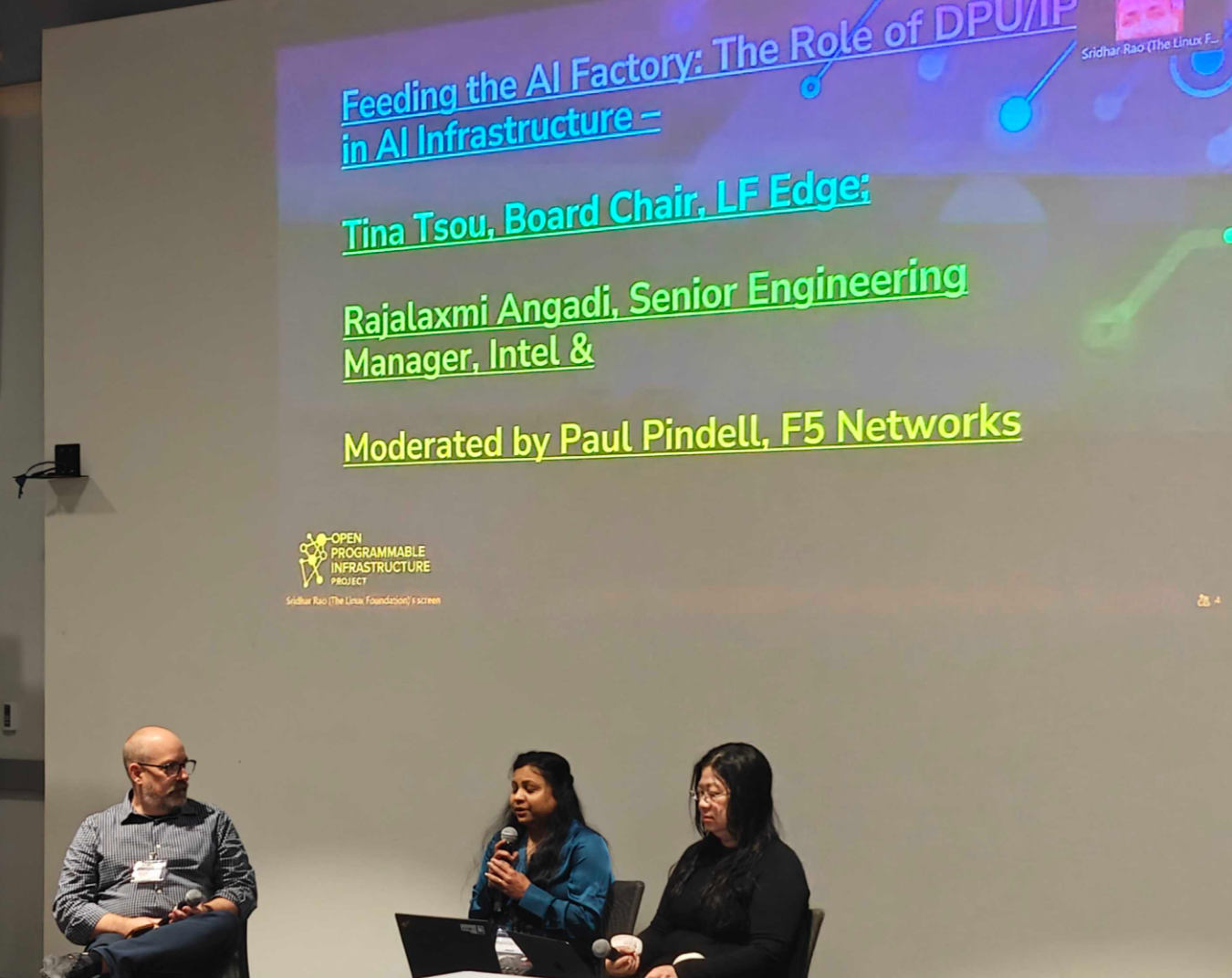
- OPI Summit Brings DPU/IPU Community Together: The OPI community hosted its second OPI Summit on DPU/IPUs in San Jose, alongside the OCP Global Summit, on October 15. With 50+ registrations, the event featured nine sessions exploring DPU/IPU innovation, practical implementations, and emerging use cases, complemented by lively hallway discussions and community networking. Stay tuned for session recordings and summaries!
OpenSearch
- OpenSearch Software Foundation welcomes new members as adoption surges: The Foundation announced Adelean, Intel, and Sidecar as new General Members, alongside Seacom and Sidecar as certified Long Term Support providers. OpenSearch has now surpassed 2.4 billion downloads, up 140% year-over-year, with contributor participation growing 31%. Read the announcement >>
- New research: OpenSearch is becoming core AI infrastructure: The OpenSearch Software Foundation and Linux Foundation Research released the 2026 Open Data Infrastructure Report, finding that 83% of surveyed organizations run or plan to run AI workloads, 71% prioritize vendor-neutral infrastructure, and 62% of current OpenSearch users already use it for AI workloads. Explore the findings >>
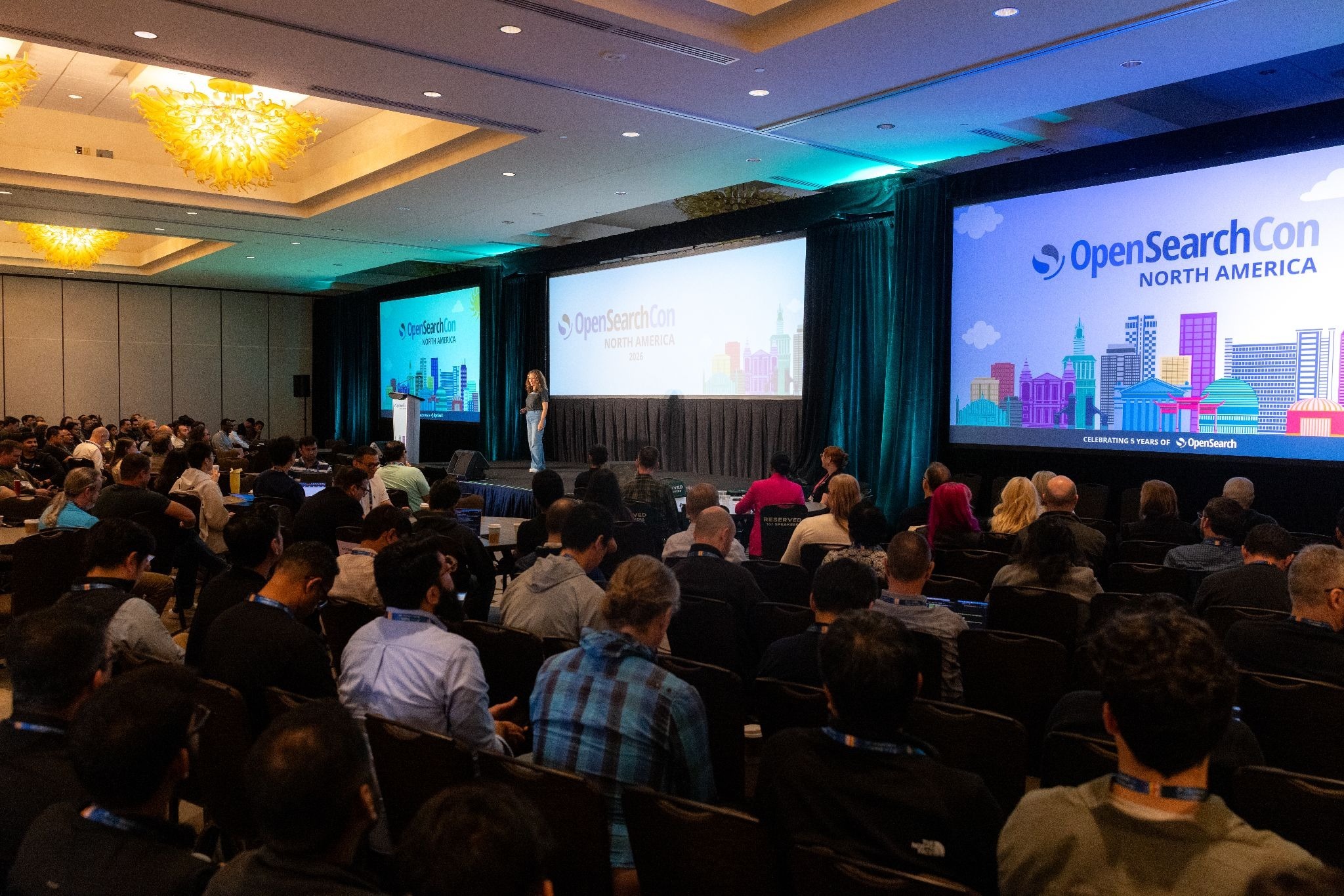
OpenSearchCon North America explores the future of agentic AI: The OpenSearch community gathered in San Jose, September 22–24, for three days of technical sessions, workshops, and conversations on search, observability, and AI. Keynotes from AWS, Intel, CERN, IBM, Uber, and SAP highlighted how OpenSearch is evolving into an infrastructure layer for AI agents, combining retrieval, observability, and trust. Read the event recap >>
- OpenSearch 3.9 advances vector search and observability: The latest release introduces a native neural sparse search engine, expanded vector compression options, unified alert and anomaly management, and new application monitoring capabilities. These improvements help developers build more efficient AI-powered search applications while improving visibility and cluster resilience. Explore OpenSearch 3.9 >>
- OpenSearch Kubernetes Operator 3.0 reaches general availability: The latest operator brings safer rolling upgrades, automated TLS certificate management, improved cluster scaling, and an in-place migration path from version 2.x. The release improves production reliability for teams managing OpenSearch on Kubernetes. Read the technical update >>
- OpenSearch in the news: It's FOSS examined OpenSearch's growing role in enterprise AI infrastructure, highlighting findings from the 2026 Open Data Infrastructure Report and perspectives from Executive Director Bianca Lewis. Analyst firm HyperFRAME Research covered OpenSearchCon NA and OpenSearch’s growing role as the retrieval and context layer between enterprise information and AI models.
OpenJS Foundation
- WebdriverIO v10 Released with New AI-Powered Testing Capabilities - Released October 5, WebdriverIO v10 introduces new capabilities designed for AI coding agents, including browser and mobile testing, interactive debugging, and automated test generation. The release marks a major milestone in making cross-platform testing more accessible and efficient. Read the Announcement
- OpenJS Foundation Launches Security Stewardship Program - The OpenJS Foundation introduced a new Security Stewardship Program (SSP), supported by inaugural partners Socket and Aikido. The initiative provides funding for vulnerability research, bug bounties, CVE coordination, and maintainer support, strengthening security across Node.js and the broader JavaScript ecosystem. Read the Announcement
- Node.js Prepares for a New Release Strategy - The Node.js project is transitioning to a simplified annual release cycle designed to improve long-term support and reduce the maintenance burden on contributors. The new approach begins with the Node.js 27 alpha phase in October 2026, with a stable release planned for April 2027. Learn More
- OpenJS Foundation Security Team Prioritizes Maintainer Sustainability - Following a planned pause from September 17 through October 6, the OpenJS Foundation CNA team highlighted the importance of preventing maintainer burnout amid increasing volumes of AI-generated vulnerability reports. The initiative reinforces the Foundation's commitment to sustainable security practices and supporting the people maintaining critical open source infrastructure. Read the Blog
- Node.js Announces October Security Releases - The Node.js project announced security updates scheduled for October 21 across the 22.x, 24.x, and 26.x release lines. The updates will address vulnerabilities, reinforcing the importance of keeping Node.js installations on supported versions. View the Security Announcement
OpenSSF
- Four New Members Join OpenSSF: A-Team Systems, Emphere, DACHS IT GmbH, and JetBrains joined as General Members, announced at OpenSSF Community Day Europe in Prague. Read the press release.
- Security Slam 2026, Fall Edition: OpenSSF is partnering with CNCF TAG Security on this 30-day virtual challenge, running October 5 through November 6 around KubeCon + CloudNativeCon North America. Participants use OpenSSF projects, among others, to hit security hygiene milestones suited to their project’s maturity. Learn more.
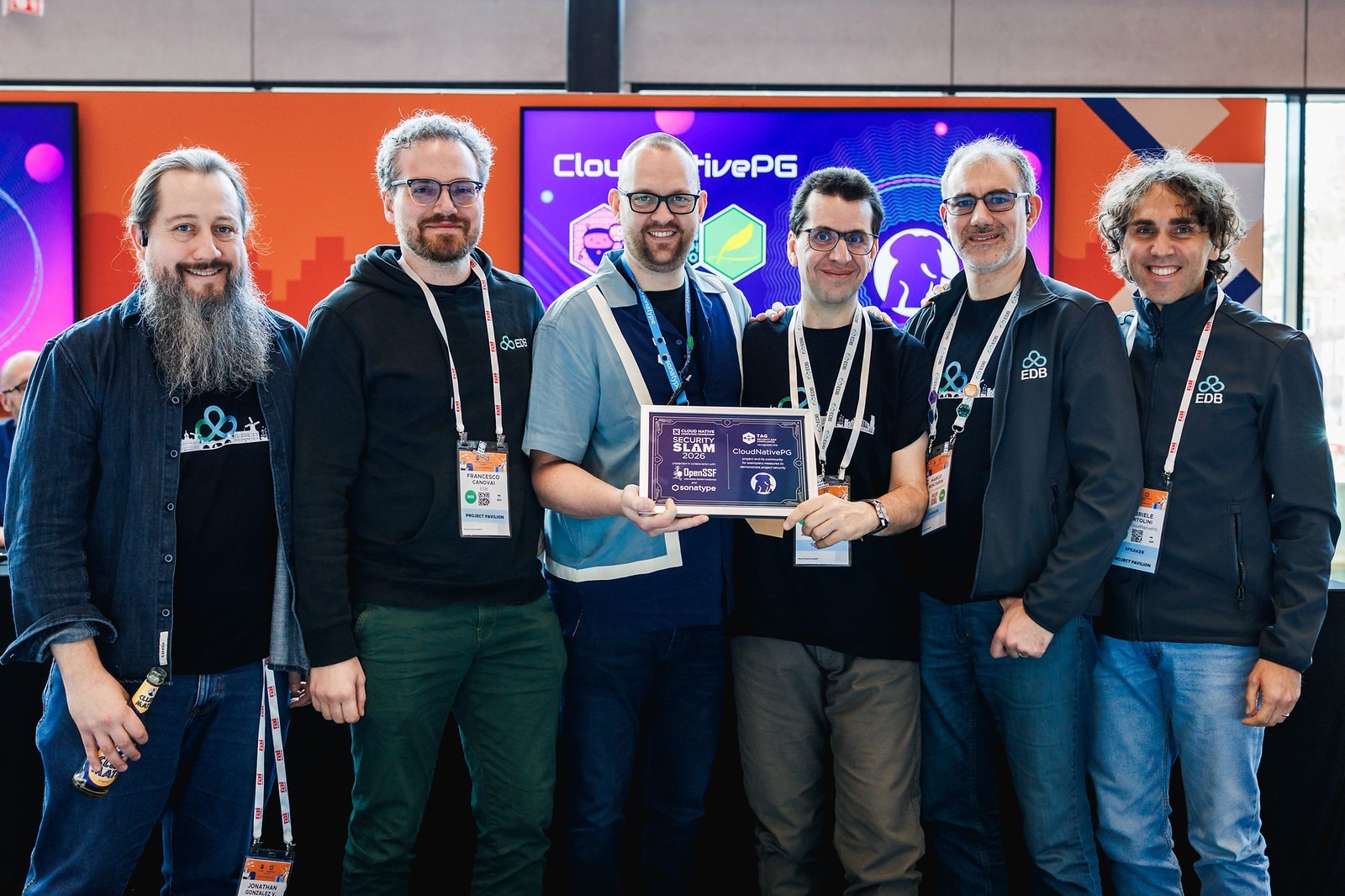
- Project Updates: OpenBao v2.7.0 is in beta, adding external KMS-backed keys, post-quantum support, and PostgreSQL read scalability, and v2.6.2 includes security fixes. OpenSSF also approved a sandbox application for a new SBOM & VEX Working Group. Community-hosted Allstar ended in August, so users should move to self-hosted Allstar. Read more.
- CRA Stewardship Timeline Clarified: The European Commission’s updated FAQ confirms the September 11, 2026 reporting deadline applies only to manufacturers. Obligations for open source software stewards begin December 11, 2027. Read more.
- Meet OpenSSF in Salt Lake City: Open Source SecurityCon North America is November 9, alongside KubeCon + CloudNativeCon North America (November 9–12). OpenSSF and Zarf also host Zarfest on November 11. Learn more and register.
From the Blog:
- Introducing Privateer: AI-Assisted Security & Compliance Evaluation Framework Joins the OpenSSF Sandbox: A plugin-based framework that checks repos and systems against controls like the OSPS Baseline. An optional LLM step reviews human-written evidence, and anything uncertain is flagged for human review.
- Case Study: How Does IBM Turn Open Source Participation Into Enterprise and Career Value?: IBM’s Jamie Thomas on how participation in open source and OpenSSF drives business strategy, supply chain security, and career growth.
- Inside the OpenSSF Summer Mentorship Showcase: Meet the emerging developers who contributed to supply chain security tools through OpenSSF’s summer mentorship program.
- We’re In: Enterprise Commitment to Sustainable Package Registries: OpenSSF’s Governing Board and major tech enterprises commit to supporting sustainable funding for public package registries, while keeping access free for individual developers.
- Grow CRA Readiness: Find Your Path Through the European Union Cyber Resilience Act: A community garden user journey that points maintainers, stewards, and manufacturers to the CRA resources for their role.
- Empowering Open Source Security with Scalable Infrastructure: A guest post from Premier Member AWS on how funding and scalable compute can support maintainers’ CI, fuzzing, testing, and artifact distribution.
Recent Podcasts:
- #75 – S3E27 From Upstream to Downstream: Managing Open Source Risk in a Changing Regulatory Era with Vincent Danen: CRob and Red Hat’s VP of Product Security discuss managing open source risk as regulations change.
- #74 – S3E26 Building the Agentic Future with Angie Jones: The Agentic AI Foundation’s VP of Developer Experience on open source standards, MCP, and secure agentic engineering.
- #73 – S3E25 Securing the Source: Navigating AI Velocity, CRA Compliance, and Dependency Debt with Abby Kearns: ActiveState’s CEO on why reactive post-build scanning falls short, plus CRA compliance and dependency debt.
Overture Maps Foundation
- The unglamorous work of making open map data fit together: Overture CTO Amy Rose explains on The MapScaping Podcast how Overture differs from OpenStreetMap. Overture works downstream, standardizing inputs from many sources into data that is ready for production. She also covers why record-level metadata matters for machine and AI consumers, and how GERS IDs let different sources agree on a feature’s identity while keeping their own geometry.
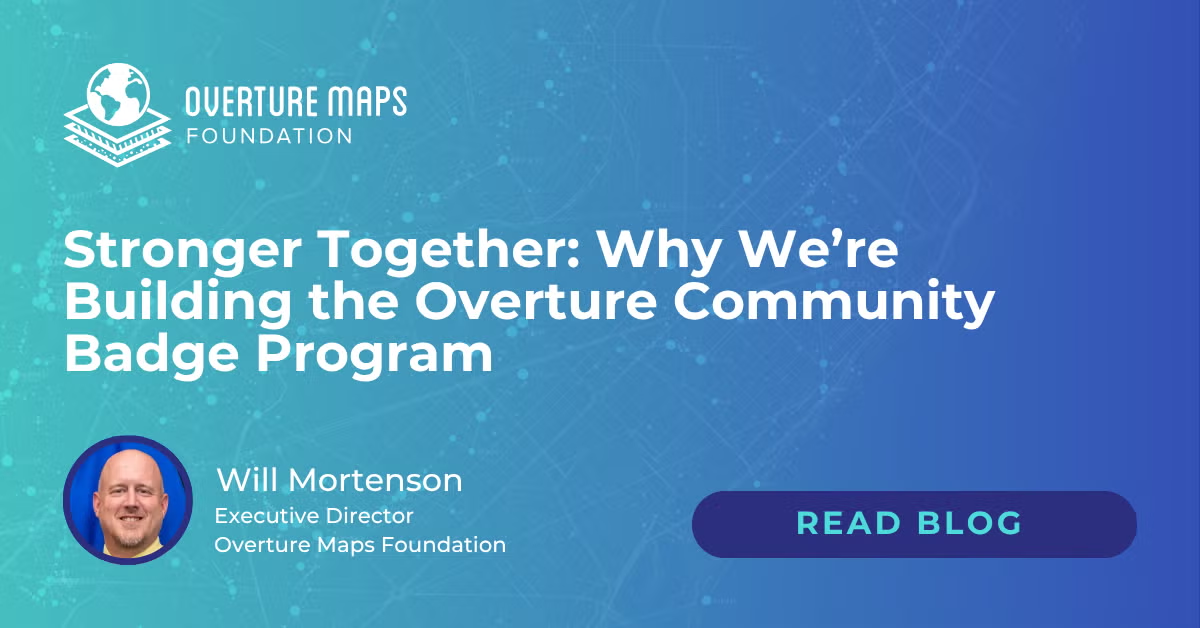
- Stronger Together: Why We’re Building the Overture Community Badge Program: Executive Director Will Mortenson announces verifiable digital badges that recognize individual contributors, member companies, and developer advocates. Overture members and staff can nominate people, and recipients will be celebrated at the Member Summit in May.
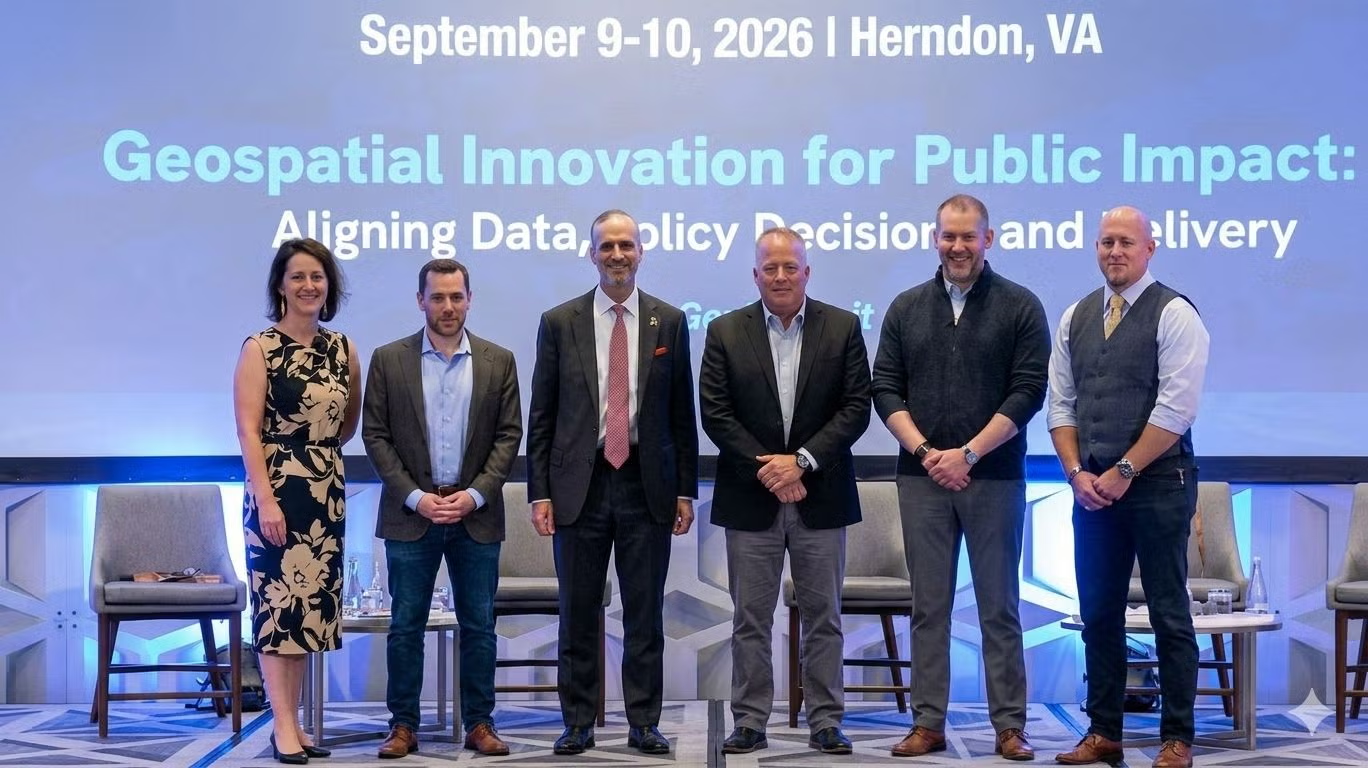
- Rethinking the Foundation: Why Geospatial Innovation Demands a New Playbook: After a GeoGov Summit panel, Mortenson argues for redefining “authoritative” data around accuracy, freshness, and interoperability rather than who collected it. He also calls for new procurement and licensing models, and for treating open foundational map data like GPS: build it once, share it broadly, and build on top of it.
- September Data Release with Schema v2.0.0: This major schema release removes the places categories property in favor of taxonomy and basic_category. BrightQuery places also grew from about 2.3M to 10.3M, with coverage expanded beyond the US. Read the release notes.
- The Overture Schema Is Now a Python Library: Schema v2.0.0 is published to PyPI as Pydantic models you can install, import, validate against, and extend. JSON Schema, PySpark validation, and reference docs are all generated from those models, and the old YAML files will be removed in December 2026. Read more.
P4
- 2026 P4 Workshop: The annual event, hosted on Oct 12 in Silicon Valley, was a success and featured many great sessions. The recordings are now available here.
- New P4 Technical Steering Team (TST) Members: Jonathan DiLorenzo (Google) and Muhammad Shahbaz (University of Michigan) were newly elected to join P4’s TST. Election details
- EuroP4’26, Dec 7 in Utrecht, Netherlands: Registration is now open! Join other P4 researchers and practitioners to discuss cutting-edge, P4-enabled research and P4-based technology. Event details
PyTorch Foundation
- PyTorch Conference 2026 (North America), San Jose, CA, October 20-21, 2026
PyTorch Conference North America 2026 just wrapped up this week in San Jose, CA, bringing together AI leaders, researchers, and developers to explore open source AI advancements across the full technology stack.
- New Pathway to PyTorch Certified Associate (PTCA) Certification The new PTCA Certification Pathway combines four self-paced learning modules, 15-17 hours of learning and labs, with the PTCA exam in one product through Linux Foundation Education.
- Session recordings from PyTorch Conference China 2026 now available on PyTorch Foundation’s YouTube channel.
- How Shopify built a continual learning loop with PyTorch and vLLM - A case study on how Shopify turns production failures into training signal every day, using PyTorch for training and vLLM for serving.
- PyTorch Hardware Enablement: Updates from the Accelerator Integration Working Group, including key technical achievements such as Cross-Repository CI Relay (CRCR), test suite refactoring, profiling stubs, and reference backends for distributed execution (OCCL) and compilation.
- Modernizing Table Batched Embeddings with FBTriton - Meta's FBTriton kernel design modernizes Table Batched Embedding (TBE) forward and backward passes using ordinary Python.
- Hardware-Agnostic Models in vLLM - vLLM is adding hardware-agnostic layers so frontier-focused changes do not break torch.compile support for out-of-tree accelerators, older GPUs, and exotic models.
- Building Spyre as a Native PyTorch Device - IBM's Spyre becomes a native PyTorch device by connecting PyTorch's device, allocator, stream, event, and compiler abstractions to the Spyre runtime and firmware.
- Extending Inductor for the IBM Spyre Accelerator - IBM updated its PyTorch software stack for the Spyre enterprise inference accelerator by transitioning to an out-of-tree PyTorch Inductor backend.
- Session-Aware Agentic Inference with NVIDIA Dynamo - NVIDIA Dynamo uses a unified session-level identifier to transform request-level serving infrastructure into a program-aware system.
- Building a High-Performance and Portable vLLM Linear Backend with Helion - Engineers from Red Hat and Meta integrated Helion into vLLM's linear backend, using one autotuned GEMM implementation to cover Standard, Split-K, and Swap-AB variants.
- Optimizing Jagged Flash Attention with TLX: The Road Toward SOTA FA4 on Blackwell - A Meta team details a TLX-based attention kernel for Meta's Generative Ads Model on NVIDIA Blackwell.
- From Upstream Changes to Downstream Confidence: Inside Torch Spyre's Integration with PyTorch CRCR - IBM and Red Hat engineers explain how Torch Spyre reached L2 integration with PyTorch's Cross-Repository CI Relay, using an agentic test-selection pipeline and a declarative YAML test-reuse framework.
- TinyTorch: Don't Just Import PyTorch. Build It - TinyTorch is a free, open-source curriculum of twenty modules where learners build a working ML framework from scratch, tensors through transformers, in pure Python using PyTorch's API.
Upcoming Events:
- PyTorch Day Korea 2026, Seoul, Korea, November 21, 2026
The first large-scale offline conference hosted by the PyTorch Korea User Group. Learn more
- NVIDIA GTC Washington, D.C., Washington D.C, United States, November 30-December 3, 2026
- NVIDIA GTC brings together government leaders, policymakers, scientists, and industry partners to discuss how AI is accelerating economic growth, reindustrialization, and scientific discovery. Learn more
- NeurIPS 2026, Sydney, Australia, December 6-12, 2026
The PyTorch Foundation is sponsoring NeurIPS 2026, the annual Conference on Neural Information Processing Systems. Learn more - PyTorch Day Japan 2026, Tokyo, Japan, December 10, 2026
Hosted by the PyTorch Foundation, Hugging Face, IBM, and Mitsubishi Electric, with a full day of technical talks and discussions on open source AI and PyTorch Foundation projects. Learn more
RISC-V
-
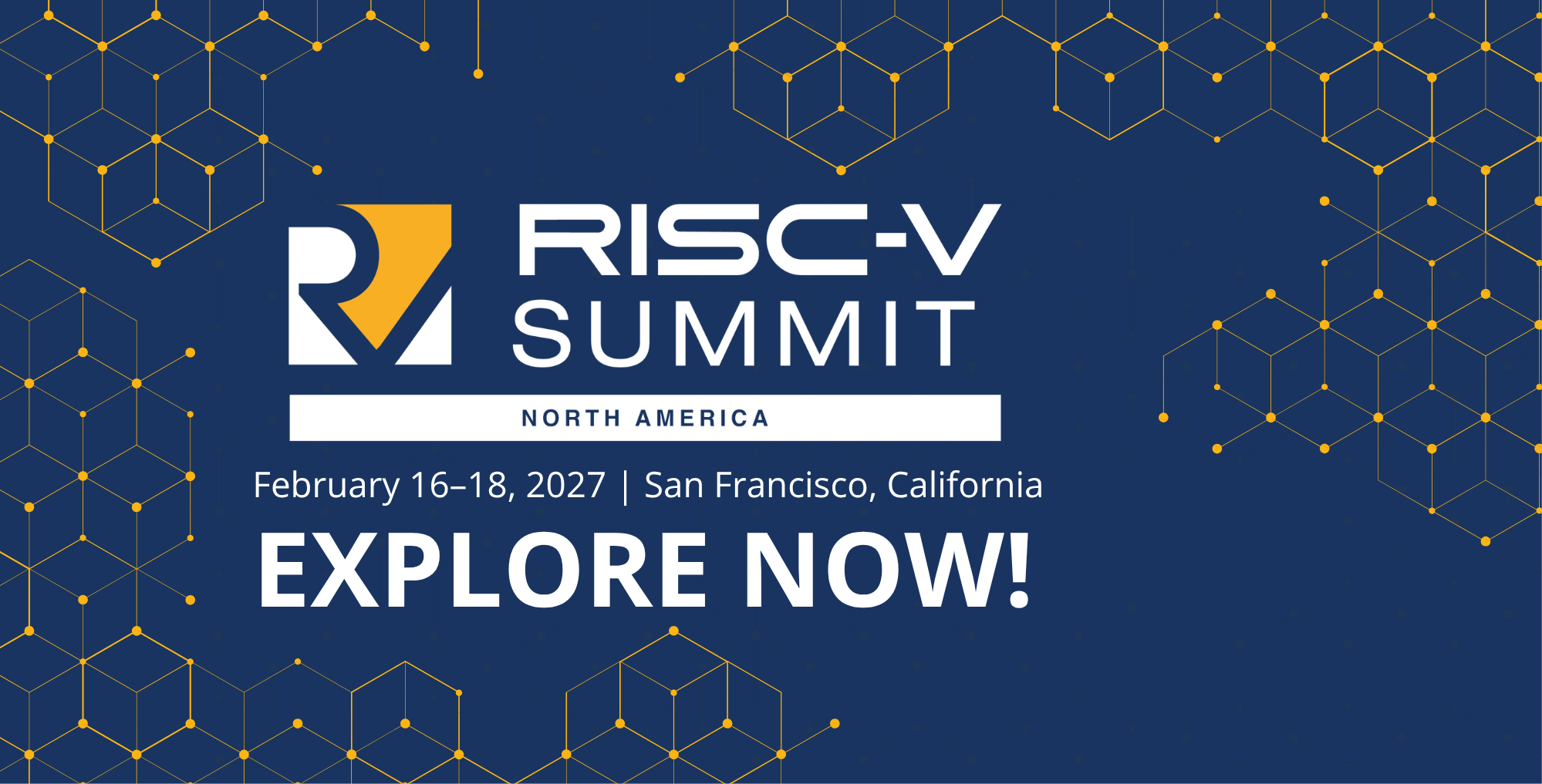
Registration is open for RISC-V Summit North America 2027: Join us February 16-18, 2027 at the Hyatt Regency Embarcadero in San Francisco for three days of technical innovation, ecosystem collaboration, and discussions shaping the future of open computing. Early bird prices increase on Oct 31! Register Now.
- The call for papers deadline closes on Oct 30. Have a new design, research project, implementation, or lesson learned from deploying RISC-V? Bring it to the Summit. We're looking for technical presentations and industry perspectives across a wide range of topics. Submit today!
- Sponsorship slots are still available. Explore now.
- World RISC-V Days returns, 22 to 28 February 2027. Eleven countries hosted an event in 2026, and we would like more on the list next year. Hosting is deliberately light work: you provide the venue, and we provide guidance, promotion, and global visibility. Lori Servin is taking names at lori@riscv.org.
SONiC
- SONiC welcomes Lenovo, NADDOD, and Zhanwang (NEXAI) as General Members: The new members bring expertise in enterprise infrastructure, high-speed interconnects, and networking silicon, strengthening the open networking ecosystem for AI, cloud, and data center environments. Read the announcement >>>
- New user story: IP Nexia builds a foundation for multi-site growth with SONiC: Discover how IP Nexia modernized its live service-provider network with virtually no service disruption, reduced projected costs by more than 50%, and established an automated foundation for future expansion. Read the case study >>>
- Meet the next generation of SONiC contributors: Our SONiC Mentorship Spotlight blog series highlights mentees’ technical projects, hands-on learning, and contributions to open networking. Explore their stories and discover how mentorship helps grow the SONiC community. Check out the SONiC blog >>>
- SONiC Foundation named a finalist for the 2026 Glotel Awards: Recognized in the Digital Infrastructure Innovation category, SONiC celebrates its community’s work advancing open source networking across cloud, data center, and AI infrastructure. Thank you to our contributors, members, and users! View all finalists >>>
- Save the date: SONiC at ONE Summit Japan: Connect with SONiC maintainers, contributors, and users in Tokyo December 10–11. Visit the SONiC booth throughout the event and join the December 11 workshop for technical sessions, deployment insights, and community collaboration. Learn more and register >>>
- SONiC at OCP Global Summit—recordings coming soon: All SONiC session recordings from OCP Global Summit will be available on the SONiC YouTube channel in a couple of weeks. Subscribe now to catch the latest technical talks, community insights, and updates as they’re published. Subscribe to SONiC on YouTube >>>
Supporters of Chromium-Based Browsers
- 12 bugs squashed: $53K paid to developers - In August 2026, the Supporters of Chromium-Based Browsers Foundation awarded $53,000 to developers for resolving 12 user-experience, rendering, and performance bugs in the Chromium codebase.
- Bug Bounty Wins:
- The Sticky Header Bug That Wouldn’t Stay Put - Developer Eldar Pulatov fixed a long-standing Chromium layout bug that caused nested sticky inline headers to position incorrectly, earning a reward through the Bug Bounty Program.
- The Zoom Bug That Took a Village to Squash - Through a collaborative effort led by developer Helmut Januschka, Chromium developers systematically resolved a long-standing bug where non-inherited CSS properties failed to scale correctly when inherited across elements with different CSS zoom values.
Sylva Project
- Sylva Mini Summit Brings Community Together in Prague: The Sylva community gathered in Prague on October 6 for the Sylva Mini Summit, bringing together developers, operators, and ecosystem partners to share technical progress, real-world use cases, and insights on open, interoperable cloud infrastructure. Sessions explored digital sovereignty, deployment experiences, and the project's evolving roadmap. Watch the session recordings.
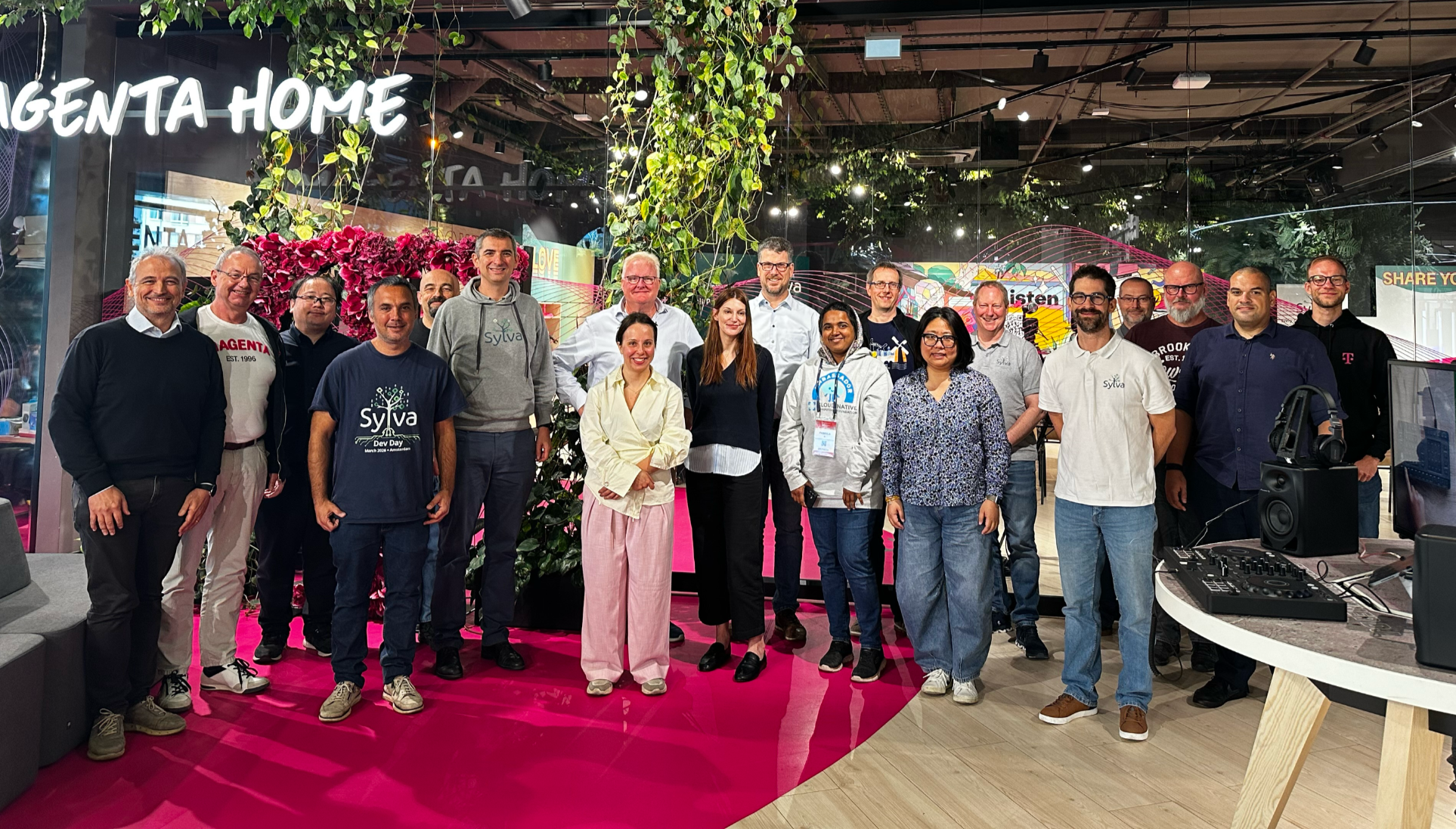
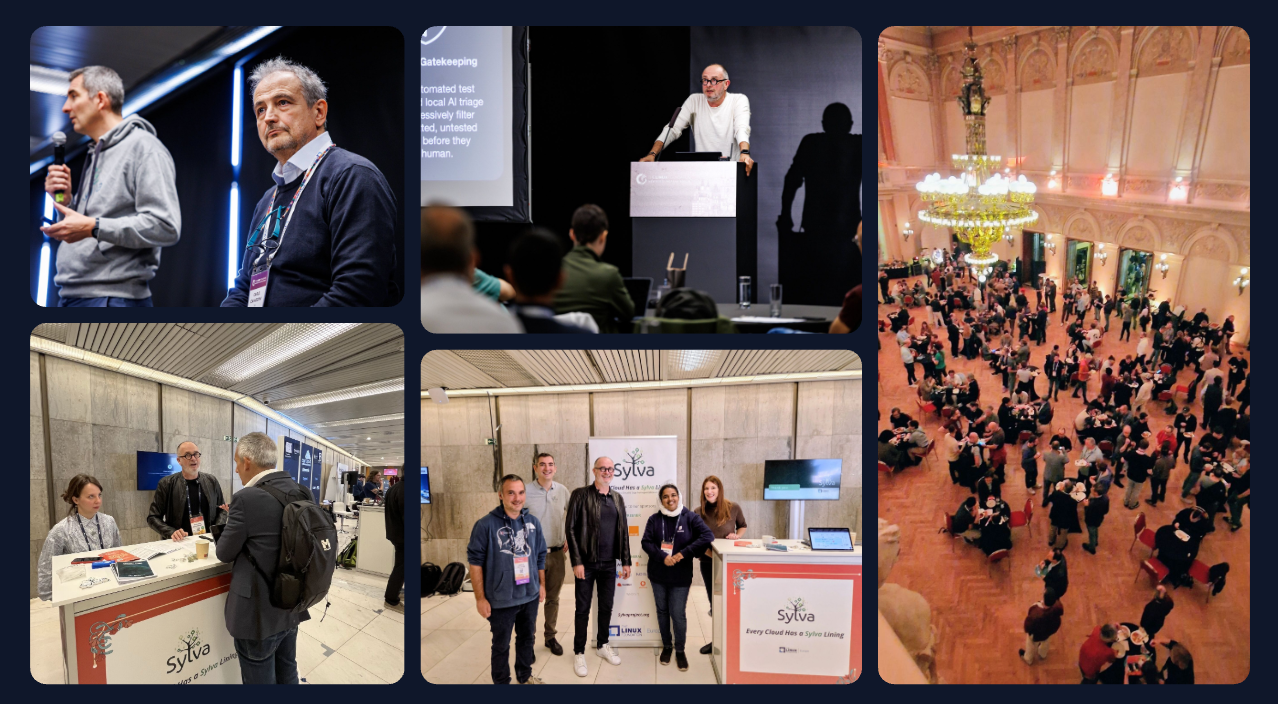
- Sylva Connects with the Open Source Community at OSS Europe: Sylva participated in Open Source Summit Europe, October 7–9 in Prague, connecting with developers and industry leaders to showcase its work advancing open source cloud infrastructure for telecom and edge environments. The Sylva booth provided opportunities for technical discussions, community engagement, and collaboration across the open source ecosystem. Sylva leaders also presented at the Linux Foundation Member European Forum on October 6:
- Advancing Digital Sovereignty: Guillaume Nevicato (Orange) and Carlo Cavazzoni (TIM) presented "How Sylva Project Is Boosting Digital Sovereignty," highlighting Sylva's role in reducing vendor lock-in, enabling interoperability, and supporting sovereign cloud initiatives at Orange and TIM.
- Addressing AI's Impact on Open Source: Philippe Ensarguet (Orange) delivered a keynote, "AI Slop vs. Open Source: Why the Next Contribution Crisis Is Already Here," exploring how AI-generated contributions are challenging maintainers and why trust, quality, and community governance are increasingly critical to open source sustainability.
- Registration is Open for Sylva Hackathon in Switzerland: The next Sylva Hackathon takes place November 23–24 in Bern, Switzerland! Developers and contributors are invited to collaborate on hands-on technical challenges, advance project capabilities, and help shape Sylva's future. Community members of all experience levels are encouraged to participate and contribute.
- Sylva Hackathon (continued): The two-day event will focus on Telco GitOps, automation, deployment workflows, testing, and documentation.
Register to attend.
- Sylva Hackathon (continued): The two-day event will focus on Telco GitOps, automation, deployment workflows, testing, and documentation.
- New Blog Explores AI's Impact on Open Source Governance: In a recent article, Philippe Ensarguet of Orange examines how the rise of low-quality AI-generated contributions is placing new burdens on open source maintainers and challenging traditional models of trust and collaboration. The piece explores why stronger review practices, community engagement, and new measures of contribution quality are essential to sustaining open source. Read the blog »
- Nearby Computing Joins Sylva, Advancing Edge-to-Cloud Orchestration: Sylva welcomes Nearby Computing to its ecosystem, expanding collaboration around large-scale orchestration, automation, and digital sovereignty. In a new interview, Sylva co-chair Philippe Ensarguet speaks with Nearby Computing co-founder and CTO David Carrera about managing thousands of distributed cloud and edge sites, Kubernetes federation, and the growing demands of AI workloads. Read the interview »
UXL Foundation
- The UXL Foundation welcomes Sesh Seshagiri, Senior Director, AI SW Product Management, as the new Co-Chair of the UXL Foundation Steering Committee. Sesh succeeds Manuj Sabharwal and will serve alongside Co-Chair Andy Wafaa from Arm. Manuj has moved to Intel, where he will continue to be involved with the UXL Foundation.
- The UXL Foundation welcomed new members ArrayFire, Silverbullet Research, and Probabl.
- A Save the Date was issued for the virtual oneAPI DevSummit on Tuesday, December 1, 2026 (7:00 AM – 1:00 PM PT)! The Call for Papers is now open. The theme of this year's DevSummit is: "Workload Mix for Agentic AI: Heterogeneous Compute."
- Recent meetings:
- The quarterly AI and Scientific Computing SIG meeting focused on scikit-learn-intelex and development towards a Scikit-learn Plugin Ecosystem (Speaker: Ian Faust, Intel) and Reliable SIMD: Performance Portability Across CPU Architectures using Highway (Speaker: Jan Wassenberg, Google DeepMind, Zurich). Check out the recording on the UXL Foundation YouTube channel.
- The UXL Foundation Mentor Session was held on Wednesday, September 30, 2026. Intel, one of our Founding Steering Committee members, presented on how they leverage oneAPI projects and specifications across their software stack. Check out the recording on the UXL Foundation YouTube channel.
Valkey
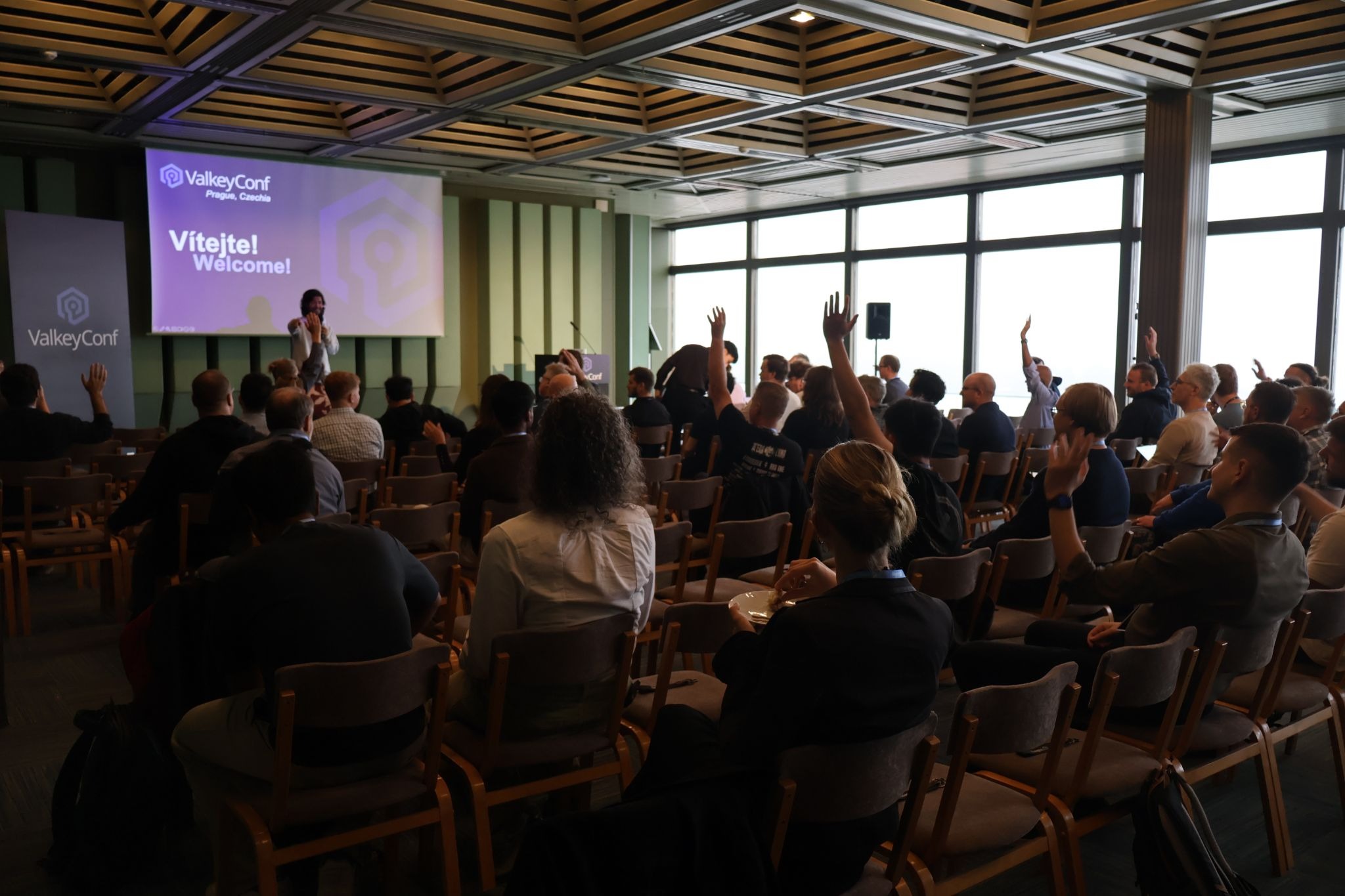
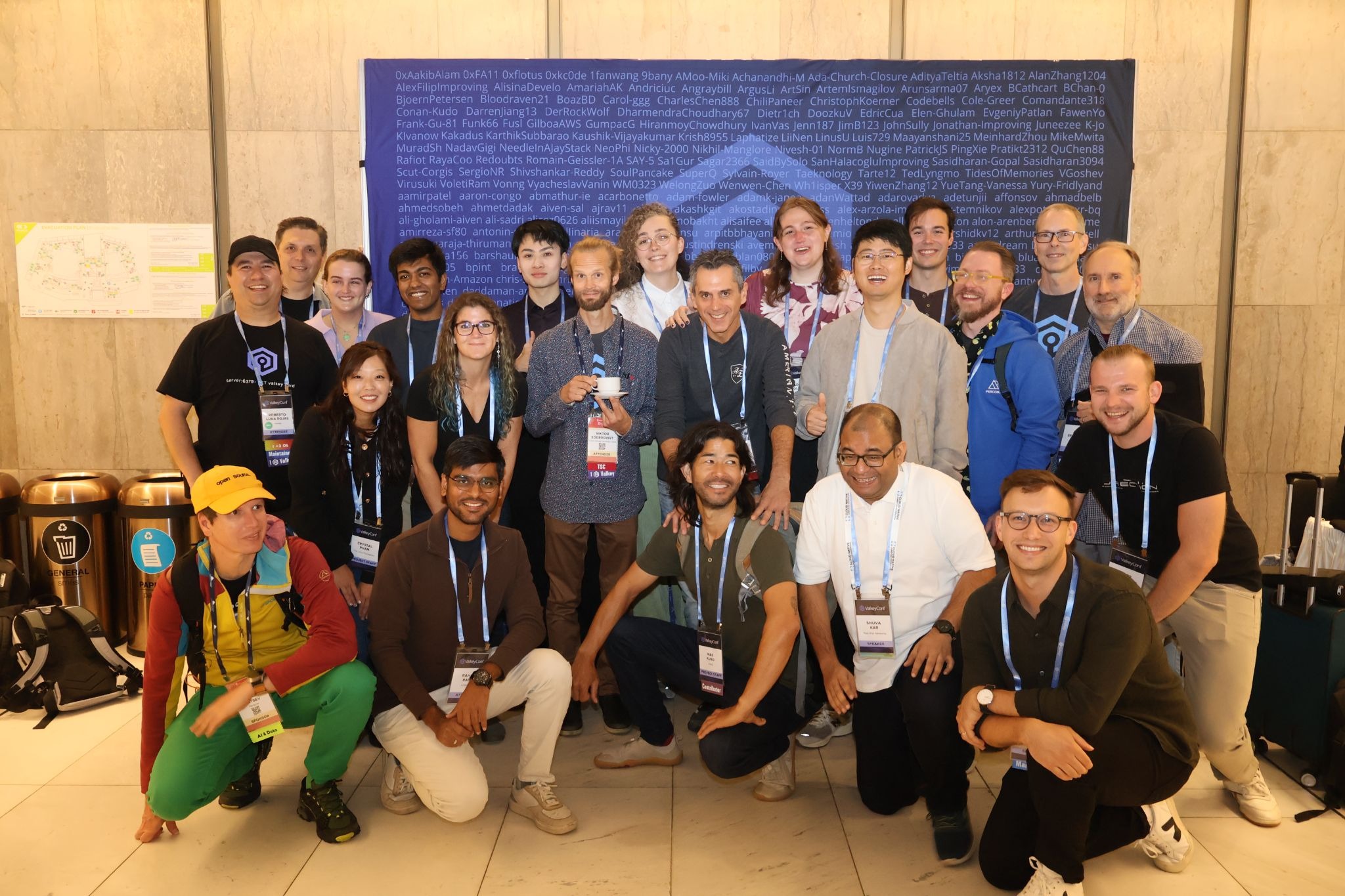
- ValkeyConf 2026 brings the community together in Prague: On October 5, Valkey hosted its inaugural flagship conference, bringing together developers, maintainers, and contributors to explore Valkey 9.2, memory optimization, replication compression, and AI infrastructure. The community continued the conversations at the Valkey Contributor Summit on October 6, discussing technical priorities and the future of the project.
- Valkey 9.2 release candidate introduces major performance and efficiency improvements: The September 16 release candidate introduces a B+ tree-based implementation for large sorted sets, forkless snapshots, and new compression capabilities. These improvements aim to reduce memory overhead, improve performance, and support more efficient operations at scale.
- Percona announces Valkey-proxy to simplify enterprise migrations: Percona announced Valkey-proxy, a new open source initiative accepted into the Valkey ecosystem, designed to help organizations migrate from Redis and scale across Valkey clusters without rewriting existing application code. The initiative aims to reduce vendor lock-in and make Valkey adoption more accessible to enterprises.
- Keeping up with AI: Valkey security in 2026: Valkey maintainers share how AI-assisted adversarial testing, automated security backports, and improved vulnerability management are helping strengthen project security. These efforts have identified 34 bugs across Valkey and its modules while accelerating the delivery of security fixes.
- Announcing Planet Valkey: Valkey launched Planet Valkey, a centralized hub for project announcements, technical articles, ecosystem updates, and community content. The platform brings together perspectives from maintainers, cloud providers, vendors, and independent contributors, making it easier to follow developments across the ecosystem.
- Valkey in the news: The New Stack explored how Percona's Valkey-proxy could remove a major barrier to enterprise adoption, while InfoQ interviewed Valkey maintainers Madelyn Olson and Jonathan Söderqvist at Open Source Summit Europe about the project's evolution, governance, and future beyond caching.
Zephyr Project
- Celebrating Zephyr’s 10th Anniversary Community Award Winners
As Zephyr celebrates ten years as an open source project, we are recognizing the people who have helped shape its code, technical direction, documentation and community. The 2026 Community Award winners were honored across six categories at the Zephyr Developer Summit in Prague.
Congratulations to Anas Nashif, Maureen Helm, David Leach, Carles Cufí, Jordan Yates, Henrik Brix Andersen, Emil Gydesen and Fabio Baltieri! Read the blog to learn about their contributions and the impact they have made on Zephyr. - ExecuTorch Integrated with Zephyr RTOS
ExecuTorch, PyTorch’s open source export and runtime stack for on-device AI, is now an official Zephyr external module. Developers can add it to their manifest, configure it in prj.conf, and build it with west.
The blog walks through running a quantized MobileNetV2 model on the Alif Ensemble E8 DevKit using the Arm Ethos-U55 NPU, with inference taking 27.7 ms. It also explores why input preprocessing takes longer than inference and shares resources to help you get started. Read the blog to learn more. - The First Ever Zephyr Maintainers Forum
The first ever Zephyr Maintainers Forum brought maintainers, contributors and technical leaders together on October 6 at the Prague Congress Centre, co-located with Open Source Summit Europe. Through interactive discussions with the Zephyr Technical Steering Committee (TSC), the forum provided dedicated time to explore technical priorities, processes and the project’s future direction.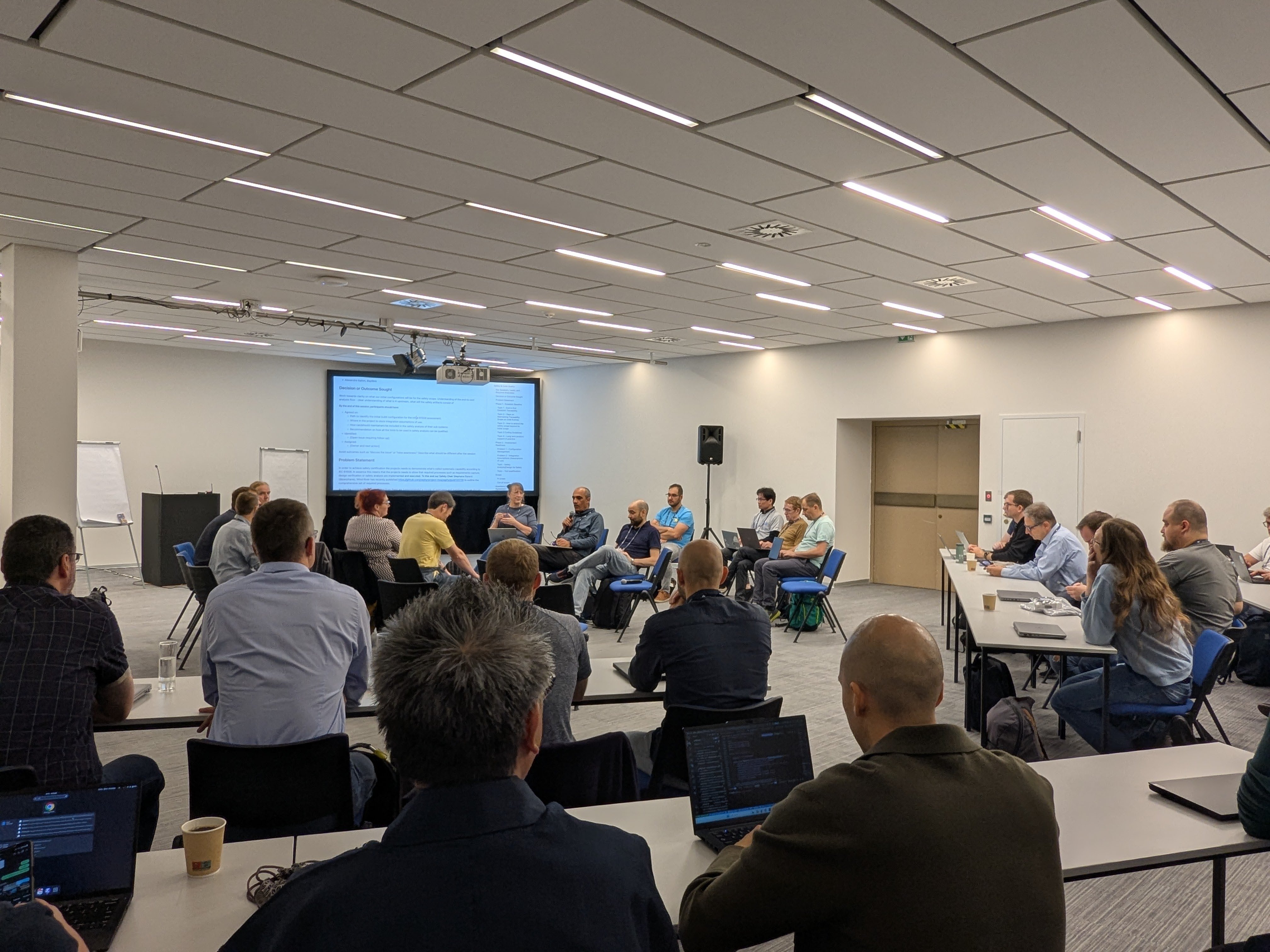 The agenda covered testing and CI, security, AI, safety certification, architecture and scaling across platforms, alongside release planning, maintainer workflows and coordination across subsystems. Thank you to everyone who participated and helped shape these discussions!
- Zephyr Project Community at Open Source Summit, Prague
The Zephyr community came together at Open Source Summit Europe and Embedded Linux Conference Europe, October 7-9, at the Prague Congress Centre. The week included the Zephyr Maintainers Forum on October 6 and the Zephyr Developer Summit, bringing maintainers, developers and contributors together to discuss technical priorities, share development practices and explore Zephyr’s use in embedded products.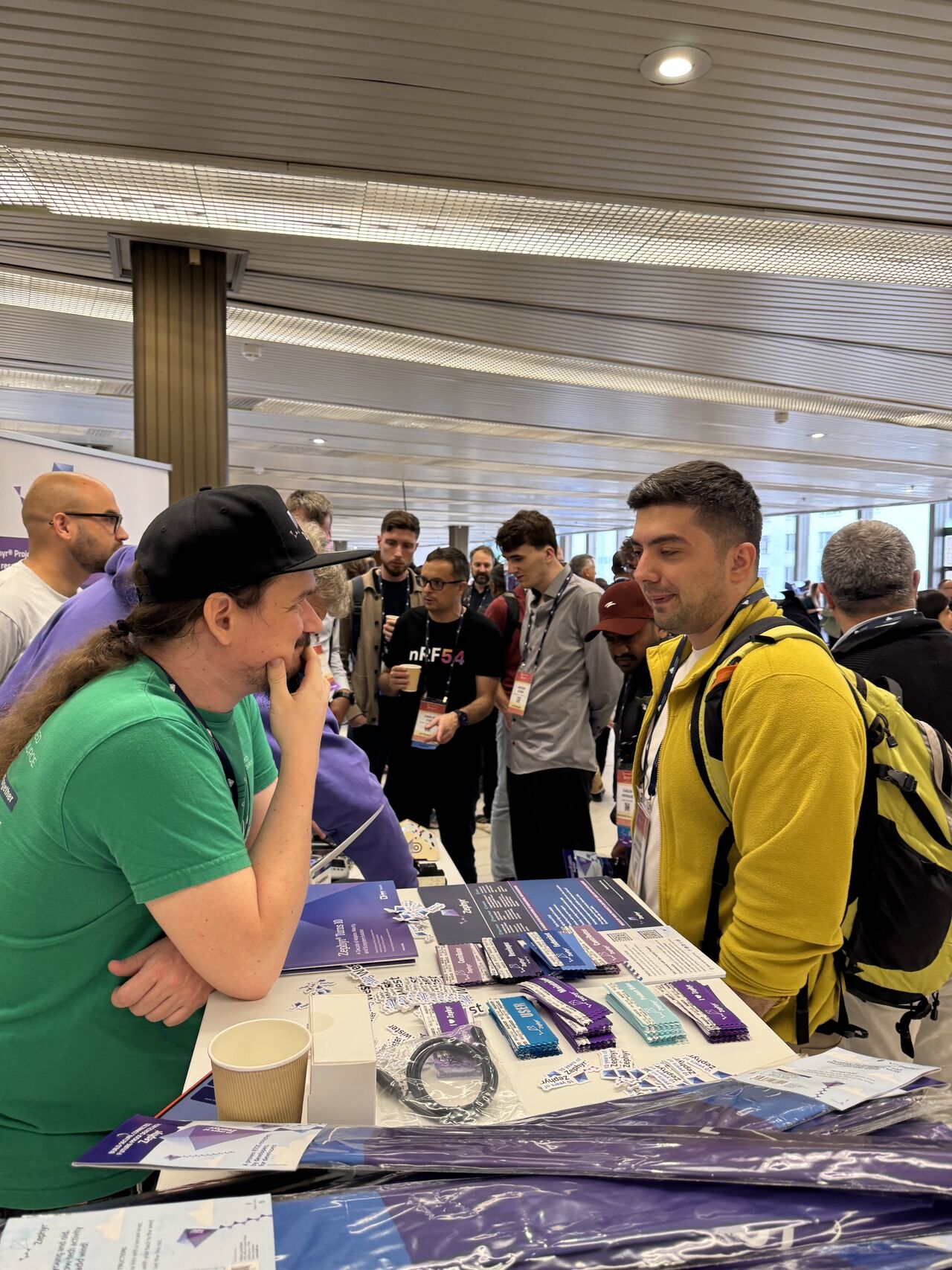
As a Silver Sponsor, the Zephyr Project welcomed visitors to its booth to see live demos, explore Zephyr-powered products and connect with community experts. The Zephyr Community Awards also celebrated contributors who have helped shape the project over its ten-year history. Thank you to everyone who joined us in Prague! - Meet the Zephyr Project community at these upcoming events:
- Zephyr Project Meetup (Oct 28, 2026) – Orlando, Florida, USA
- Zephyr Project Meetup (October 29, 2026) – Dublin, Ireland
- Zephyr Project Meetup (Nov 5, 2026) -Milpitas, California, USA
- Zephyr Project Meetup (November 6, 2026) : Kumamoto, Japan 2026
- Zephyr Project Meetup (November 13, 2026) – Munich, Germany
- Zephyr Project Meetup (Nov 18, 2026) – Hagenberg, Austria
LF Events: Mark your calendar!
Open Source in Finance Forum New York
Nov 4–5 / New York, United States
React Conf Ghana 2026
Nov 4–5 / Accra, Ghana
Voice Agents Forum
Nov 5 / San Francisco, United States
Maintainer Summit
Nov 8 / Salt Lake City, United States
Agentics Day: MCP + Agents North America
Nov 9 / Salt Lake City, United States
ArgoCon North America
Nov 9 / Salt Lake City, United States
BackstageCon North America
Nov 9 / Salt Lake City, United States
CiliumCon North America
Nov 9 / Salt Lake City, United States
Cloud Native AI & Inference Day North America
Nov 9 / Salt Lake City, United States
FluxCon North America
Nov 9 / Salt Lake City, United States
KubeCon + CloudNativeCon North America
Nov 9–12 / Salt Lake City, United States
Kubernetes on Edge Day North America
Nov 9 / Salt Lake City, United States
Observability Day North America
Nov 9 / Salt Lake City, United States
Open Source SecurityCon North America
Nov 9 / Salt Lake City, United States
OpenTofu Day North America
Nov 9 / Salt Lake City, United States
Platform Engineering Day North America
Nov 9 / Salt Lake City, United States
gRPConf India
Nov 18 / Bengaluru, India
MCP Dev Summit Nairobi
Nov 19–20 / Nairobi, Kenya
To register for in-person attendance or virtual LF events, please view our full calendar of events here, and be sure to subscribe to our events newsletter. Check out our Flickr stream for photos of past events!
Follow us!
Follow the Linux Foundation on social media to get all the latest info, updates on upcoming events, and breaking news and announcements from the global open source ecosystem. Follow us here: Mastodon, Bluesky, Facebook, LinkedIn, and X