
3 MIN READ
Hilary Carter | 17 March 2026
Ten years ago, the Zephyr Project was launched with a bold vision: to build a neutral, secure, and vendor-independent real-time operating system (RTOS) that could thrive in the most resource-constrained environments. Today, I am thrilled to share our latest research report, Zephyr Turns 10: A Decade of Adoption, Maturity, and Ecosystem Evolution, which empirically captures the incredible maturity of this community from its earliest formation stage to foundational digital infrastructure.
As a co-author of this report, along with Bianca Trinkenreich and Adrienn Lawson, I am incredibly proud of how far we’ve come. To tell this story, LF Research utilized a robust methodology, combining quantitative survey data from 413 global professionals with a series of expert interviews from a cross section of organizations operating in the embedded space. This dual approach allowed us to see not just how Zephyr is being used, but why it has become a strategic necessity for organizations worldwide.
Here are three key insights from the report that illustrate Zephyr’s maturity and set the stage the road ahead:
1. Global adoption and strategic criticality
Zephyr has successfully crossed the threshold from experimental project to production infrastructure. Our data shows that 70% of surveyed organizations in the U.S. and Canada, and 62% in Europe, already use Zephyr in commercial products.
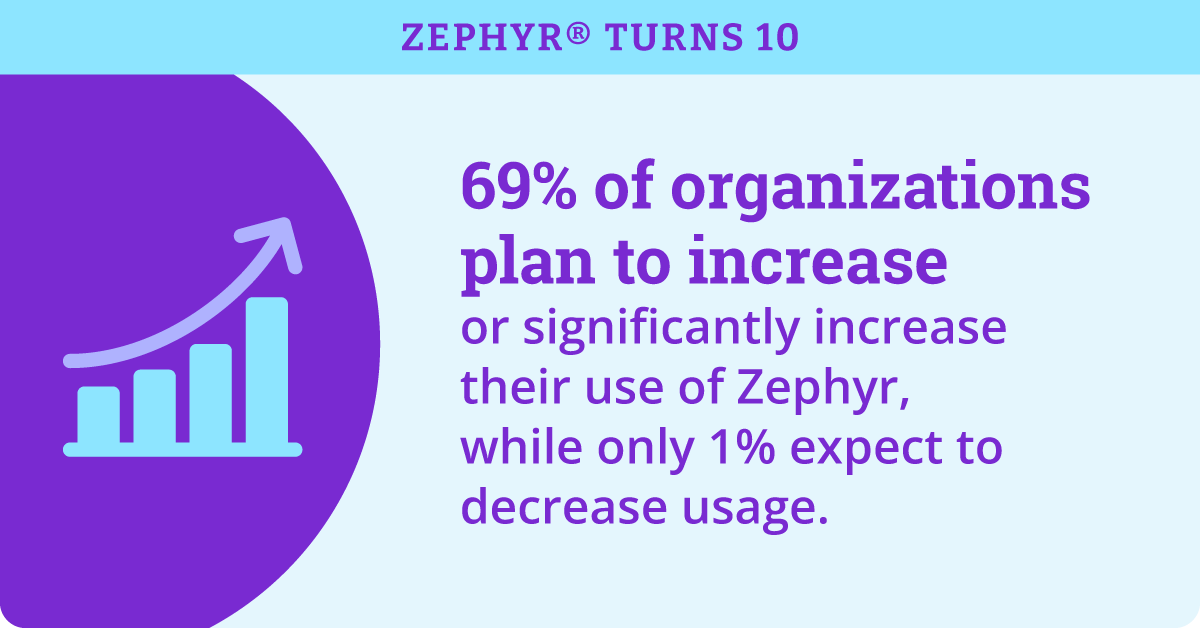
The momentum is undeniable: 69% of organizations plan to increase or significantly increase their use of Zephyr over the next few years, while only a nominal 1% expect a decrease. This isn't just about usage; it's about trust. Organizations are now making long-term production commitments, with 52% supporting products running Zephyr for five to ten years or longer.
2. The power of hardware portability
One of Zephyr's greatest value propositions is its ability to eliminate vendor lock-in and preserve software investments across different hardware platforms.
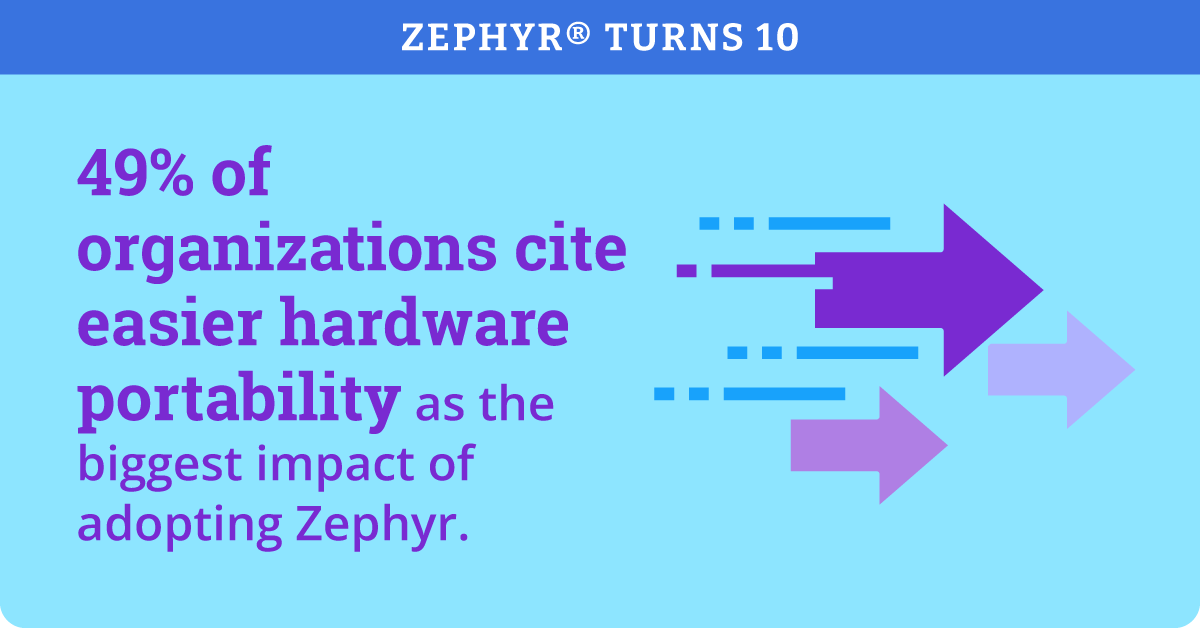
Nearly half of our respondents (49%) cited easier hardware portability as the biggest impact of adopting Zephyr. This flexibility is a game-changer for developers who need to move applications from discovery boards to custom hardware in days rather than weeks. By providing a shared ecosystem of drivers and middleware, Zephyr allows teams to focus on solving customer problems rather than rebuilding infrastructure from scratch.
3. Facing the challenges of maturity
While we celebrate a decade of success, maturity brings new responsibilities. The report highlights that the challenges for the next decade are shifting from "how do we get people to use this?" to "how do we sustain this critical infrastructure for the long term?".
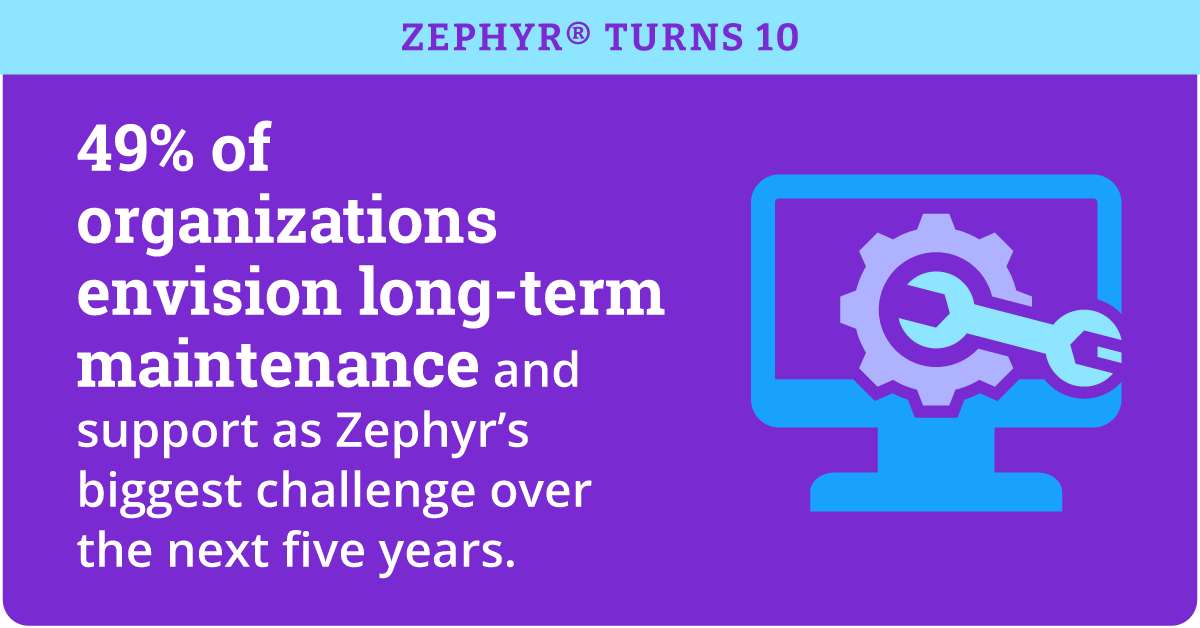
Organizations are looking ahead with a focus on sustainability. Maintenance and long-term support were identified by 49% of respondents as the most significant challenge over the next five years, followed closely by the need for safety certifications (40%) and improving the learning curve for new adopters (38%). These aren't technical blockers, but rather "growing pains" of a project that has become indispensable to global industries.
Looking ahead to the next decade
The findings of this report position Zephyr as a stable, trusted, and highly capable platform. As Kate Stewart, Zephyr Project Director, beautifully notes in her foreword, the project’s success in the next decade will be defined by how well we preserve the principles of openness, collaboration, and trust that brought us here.
This report is more than just a collection of data. It’s a roadmap shaped by shared experiences and expert insight. It shows us where we need to continue to invest, in maintainer capacity, in community, and in lowering barriers for the next generation of contributors.
I want to thank the hundreds of practitioners who shared their time and expertise, as well as Intel and the Zephyr Project Board, who made this research possible. Together, we have built something truly remarkable. Here’s to the next ten years of Zephyr!