
99 MIN READ
The Linux Foundation | 15 July 2026
Welcome to the July 2026 edition of the Linux Foundation Newsletter
July is one of the best months for LF Training deals. For 2026, the "Finish the Year Strong" promotion brings savings of up to 40% on vendor-neutral training, certifications, and bundles across Linux, cloud native, cybersecurity, AI, and more. The offer ends July 21. Don't miss it.
Beyond education, this month's newsletter highlights open source communities converging in person and in production. KubeCon + CloudNativeCon Japan lands in Yokohama July 28-30, the Academy Software Foundation brings Open Source Days back to SIGGRAPH, and following the launch of Akrites, FINOS and seven major financial institutions announced their intent to form OSERA, mutualizing security remediation for the packages regulated industries depend on. You'll find three active LF Research surveys and two new reports, fresh perspectives from Linux Foundation Europe, featured project news spanning agentic AI, telecom APIs, mainframe, geospatial, and safety-critical software, and a busy global events calendar. Feedback is welcome.
>> Read on for even more news, research, and opportunities from across the Linux Foundation.
Contents
- Education Opportunities
- LF Event Highlight
- LF Research: Survey + report
- LF Europe: Community Updates
- Linux Foundation Projects: Featured news
- LF Events: Mark your calendar!
- Follow us!
Education Opportunities

Finish the Year Strong
The first half of the year is behind you. Now it's time to build momentum for what's next. Whether your goal is to earn a certification, advance your skills, or take the next step in your career, save up to 40% off on hands-on training and certifications designed to help you succeed.
📚 40% OFF Bundles with code JULY26BUN
🎓 35% OFF Individual Courses & Certifications with code JULY26CC
⏰ Offer ends July 21
LF Event Highlight
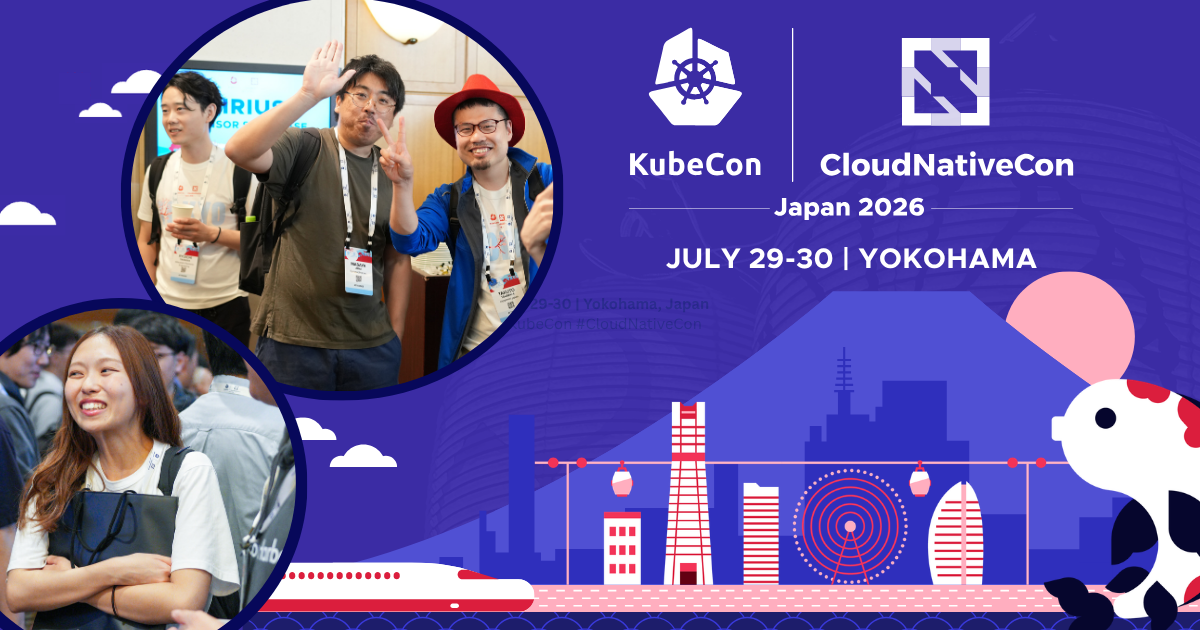 KubeCon + CloudNativeCon Japan is around the corner - July 28-30 in Yokohama, and excitement is building!
Who will be there? Engineers from the hyperscalers, the teams running Kubernetes in production across Japan's largest industries, and the maintainers behind the tools in your stack. The attendee list is growing fast! This is your opportunity to connect with peers, learn from the best in cloud native computing, and expand your professional network.
View the full schedule and Register Today! Discounted rates are available for students/faculty and individual attendees. Explore registration types.
LF Research: 3 surveys and 2 report publications in July
Last chance to participate in the World of Open Source survey!
 Your insights are vital to our mission of understanding the global dynamics of open source and quantifying its real-world business value. Please support our research before the survey closes on July 20, 2026!
Why Participate? Contribute to Research 📊, Influence Trends 📋, and Earn a Reward 🏆!
AI Security Survey
ActiveState, LF AI & Data, and OpenSSF are gathering critical data to understand how security practices are shifting. We need your perspective to identify the most critical risks and opportunities! Your feedback will inform tooling priorities and community resources that help the OSS ecosystem navigate AI security challenges more effectively.
Do you work in financial services?
 FINOS and LF Research, in partnership with GitHub, Scott Logic, and BrightQuery, are fielding the 2026 State of Open Source in Financial Services survey. We want to know: How is your organization using open source and navigating AI tools while ensuring regulatory and cybersecurity compliance?
Two new research publications: Understanding the value of open data and OSPOs
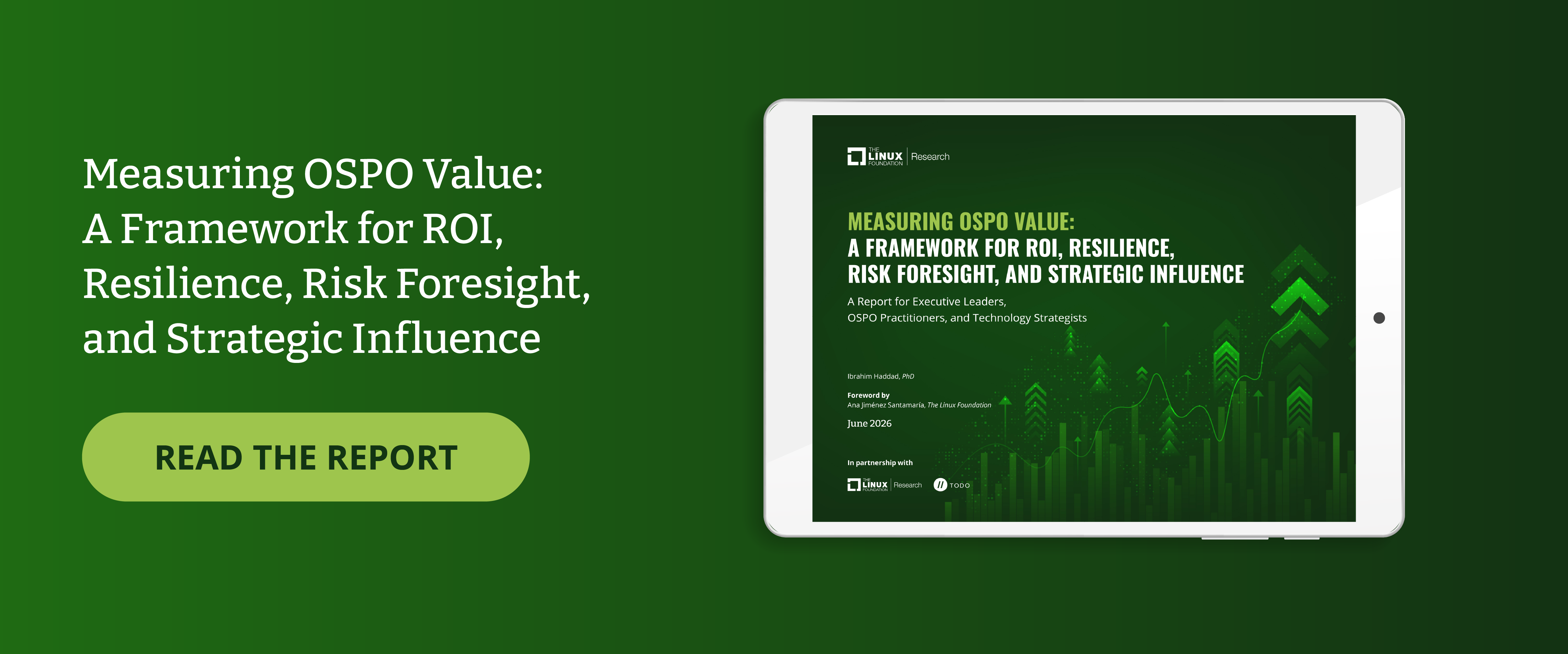
Communicating the impact of an Open Source Program Office (OSPO) has historically been a challenge. We are excited to share a new report that provides the tools to more easily measure and report on the value of the OSPO.
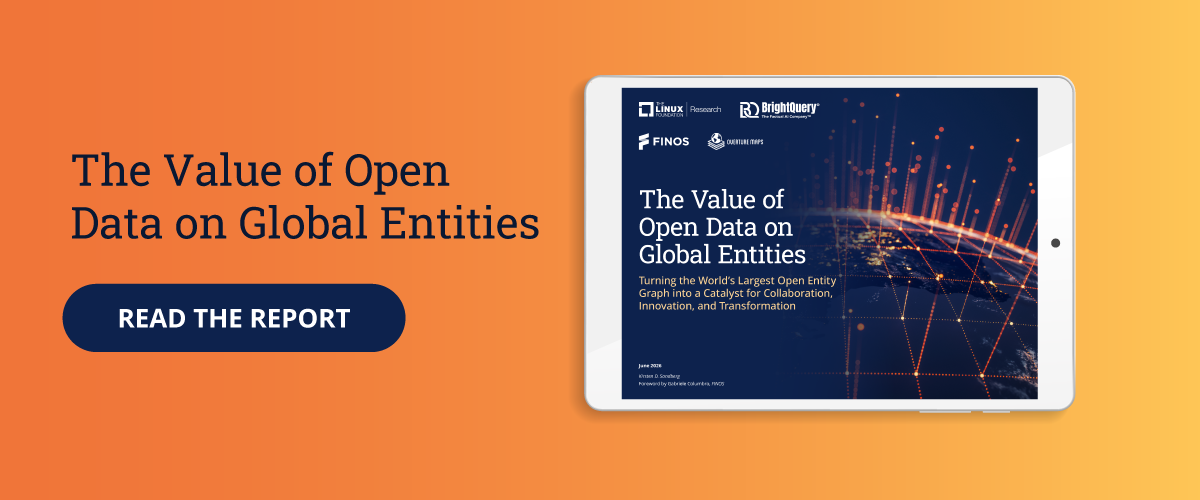
LF Research, in partnership with BrightQuery, FINOS, and Overture Maps, published a study to address the urgent need to break down silos and pool data across organizations, industries, and supply chains. The report highlights how open entity graphs are becoming the bedrock for agentic AI by providing verified, canonical data that grounds LLMs and reduces hallucinations.
LF Europe: Community Updates
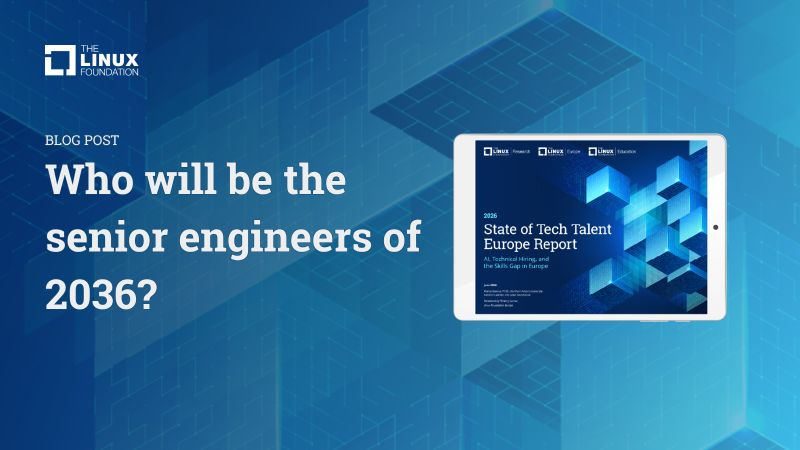
LF Europe Senior Director for Community Development Mirko Boehm penned an important piece this month, exploring “Who will be the senior engineers of 2036?”. Based on the Linux Foundation's 2026 State of Tech Talent Europe Report, the piece explores “what does it actually take to develop technical talent?”
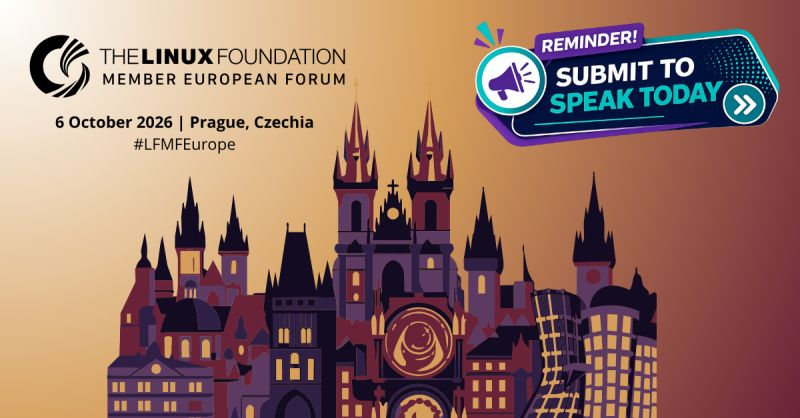 The Linux Foundation Member European Forum is an annual regional gathering for Linux Foundation European members, along with invited speakers, sponsors and media.
This event cultivates collaboration, open innovation, and partnerships among those in the private and public sectors working to drive digital transformation through open collaboration. It is a must-attend for business and technical leaders looking to advance a Europe-wide open source strategy and shape how European organisations participate in the global technology commons.
Speaking proposals are being accepted through July 21. Apply to speak.
Linux Foundation Projects: Featured news
.png?width=736&height=414&name=Blog%20(33).png)
Formations
- x402 Launches to Standardize Internet-Native Payments for AI Agents | The Linux Foundation officially announced the operational launch of the x402 Foundation. The x402 protocol, contributed by Coinbase, is designed to standardize secure, internet-native payment systems specifically tailored for AI agents and automated applications, bridging the gap between autonomous AI capabilities and digital commerce. Learn more about the x402 Foundation >>
- Intent to Launch Open Health Stack Software Foundation to Advance Digital Health | The Linux Foundation announced its intent to launch the Open Health Stack Software Foundation. This new collaborative effort aims to accelerate digital health innovation worldwide by establishing a standardized, open-source software stack designed to improve healthcare delivery, data interoperability, and patient outcomes. Google will contribute to the project, including all code, assets, and a $3 million grant from Google.org Read the announcement >>
- Akrites Launches to Defend Open Source Against AI-Enabled Threats | In a major step forward for cybersecurity, the Linux Foundation and key industry players partnered to announce Akrites. This collaborative initiative is dedicated to defending critical open source software repositories and infrastructure against increasingly sophisticated, AI-enabled cyber threats. Read the full announcement and open letter >>
- Intent to Launch Agent Name Service for Trusted AI Identity | To address the critical need for trust in autonomous ecosystems, the Linux Foundation announced its intent to launch Agent Name Service. This initiative will establish a secure, decentralized, and trusted identity infrastructure specifically for AI agents, ensuring verifiable authenticity across digital interactions. Read the full announcement >>
Academy Software Foundation (ASWF)
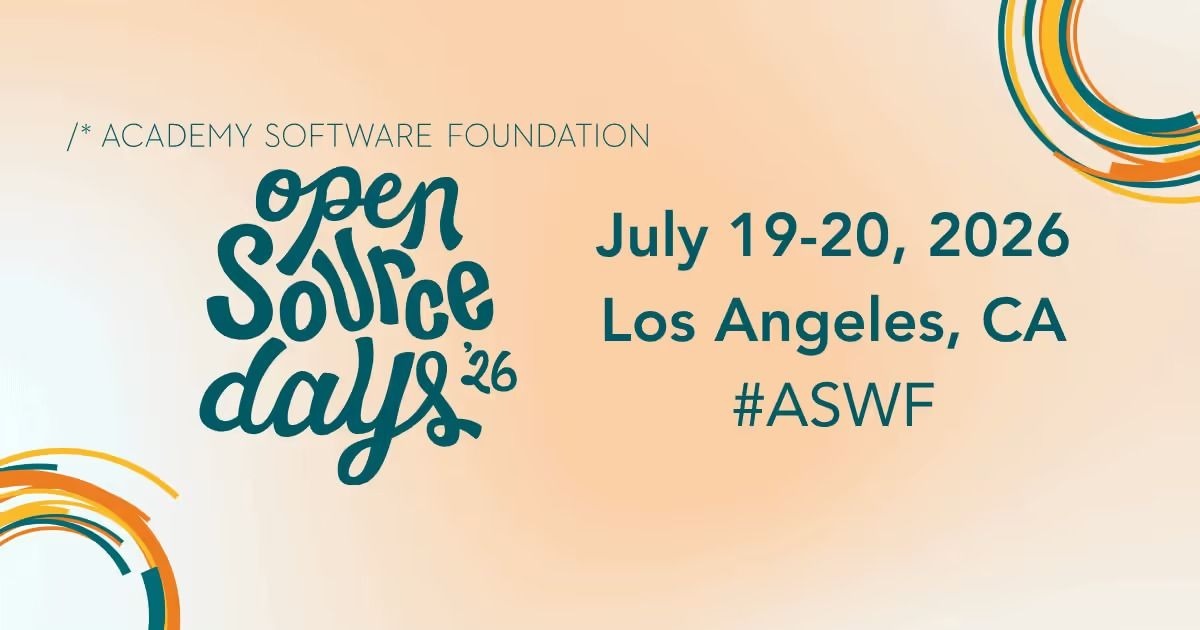
- Open Source Days is almost here. The main program kicks off July 19 in Los Angeles (co-located with SIGGRAPH), with Birds of a Feather sessions following July 20. This year's keynote comes from Bill Ballew, Chief Technology Officer at DreamWorks, who brings more than 20 years of experience building mission-critical tools for VFX and animation production. The registration is live, grab yours before the July 19 doors open.register here and check out the schedule.
- ASWF Machine Learning Tech Talk – Embedding Space Search: Asset Discovery Beyond Keywords. Juan Buhler, Principal Machine Learning Engineer at Sony Pictures Imageworks and Sony Pictures Animation, explores how embedding-based search is transforming asset discovery in production pipelines. Juan walks through the core concepts behind feature vectors and deep embeddings, and shares real production integrations at Imageworks. Watch the full talk.
- ASWF Launches Wayland for Artists Working Group. In partnership with the VES Technology Committee, ASWF has formed a new group to explore the industry-wide shift from X11 to Wayland on Linux, covering everything from GPU acceleration and color management to remote access and HDR support. As Nick Cannon, VES Technology Committee Chair and SVP Production & Technology at Walt Disney Animation Studios, put it, the group aims to "explore and understand the impact that this shift will have on the professional workstations used by many studios and artists in our industry." Read more here, and Join the conversation in #wg-wayland on ASWF Slack.
Agentic AI Foundation (AAIF)
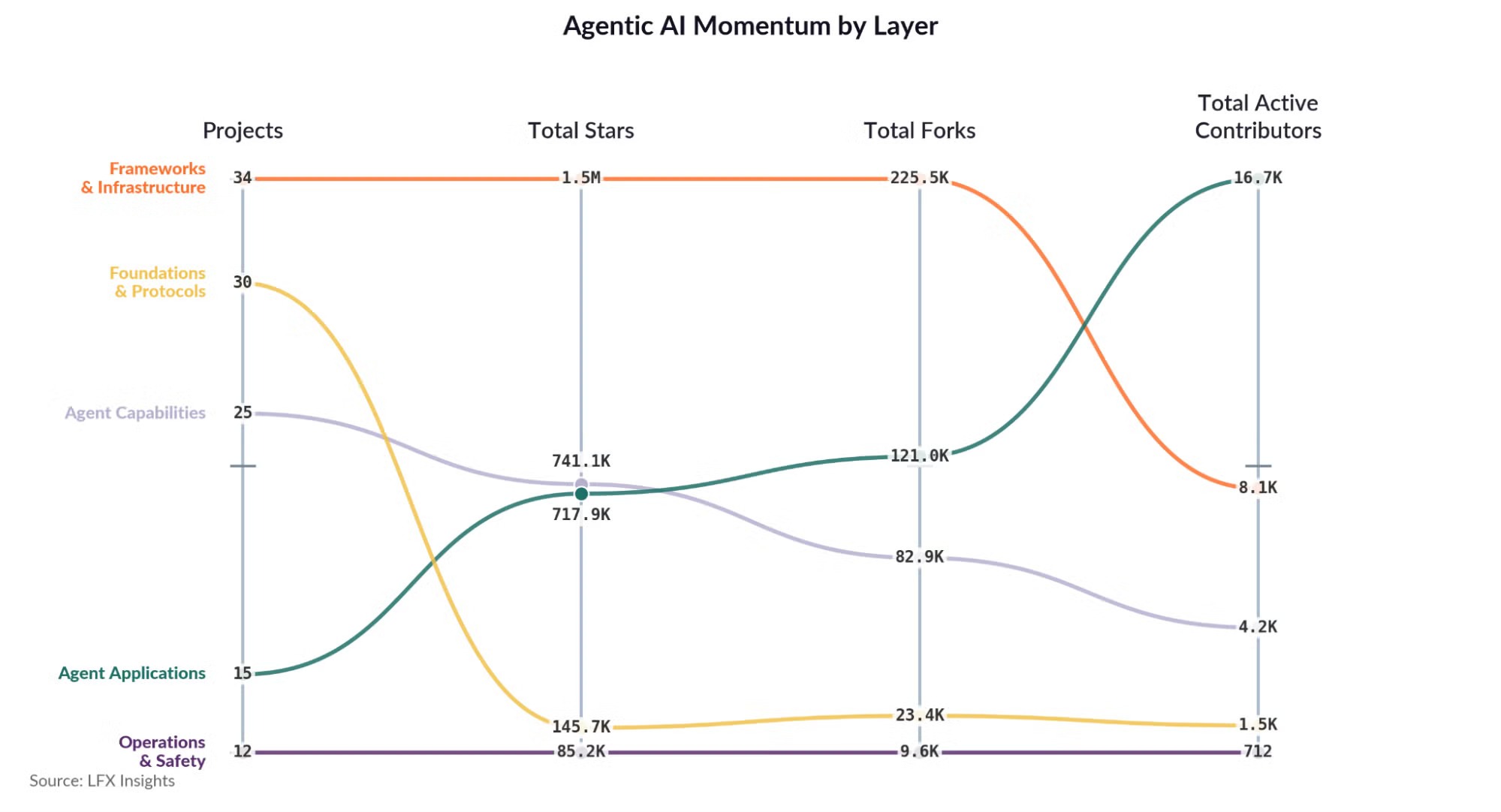
- The Agentic AI Momentum Report 2026 tracks 116 open source projects across the agentic AI stack. Frameworks & Infrastructure lead adoption, but unpatched CVEs have grown roughly 2.6x since December 2025. AAIF-hosted projects like MCP, AGENTS.md, and goose show notably healthier governance than many widely used projects elsewhere in the ecosystem.
- The Agentic AI Foundation welcomed its first Ambassador cohort with 138 members across 41 countries, far surpassing the original target of 10. Ambassadors will represent AAIF-hosted projects including MCP, AGENTS.md, goose, and agentgateway, each committing to one public contribution per month through speaking, writing, teaching, or direct project work. Ambassador profiles can be found here, and applications for the next intake remain open on a rolling basis ahead of the January 2027 cohort.
- The Model Context Protocol (MCP) project has officially marked its Enterprise-Managed Authorization feature as stable. This allows organizations to centrally provision MCP server access through an identity provider (starting with Okta) so enterprise users can get approved servers instantly on first login without per-server OAuth setup. Big industry players involved include Anthropic, VS Code, Figma, Canva, Atlassian, and Supabase. MCP Blog
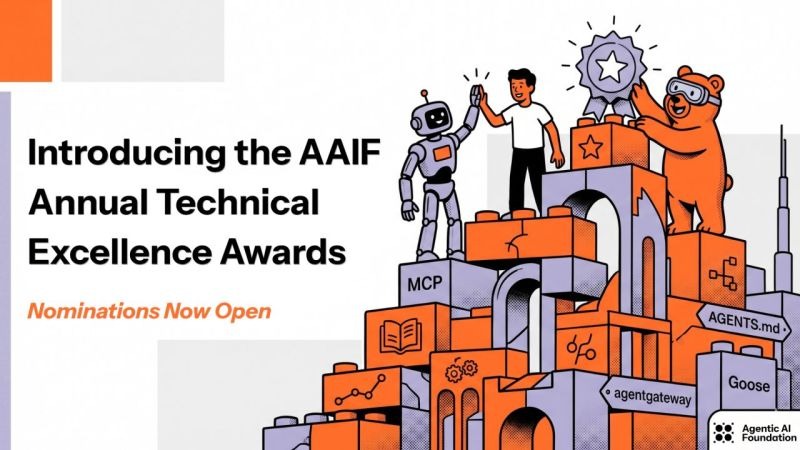
- The AAIF Technical Awards Program launched, recognizing community contribution across three categories: the Outstanding Technical Contribution Award, the Community Builder Award, and the Open Innovation Award. Submissions close July 17th.
- AAIF's Angie Jones outlined the Skills Over MCP working group, which explores how MCP servers can ship agent instructions alongside tools using MCP Resources and skill:// URIs. AAIF Blog
- Introducing the MCPA: the First Official Certification for the Model Context Protocol. The MCPA is a vendor-neutral, foundational credential. Earning it demonstrates that you understand MCP concepts, architecture, and implementation considerations and that you can apply the protocol responsibly. The exam runs 120 minutes and is valid for two years. Read more.
Alliance for OpenUSD (AOUSD)
-
AOUSD is headed to SIGGRAPH 2026 in Los Angeles, July 19–23, engaging with the global graphics, simulation, AI, XR, and digital content communities. Don’t miss these AOUSD sessions here.
Alpha-Omega
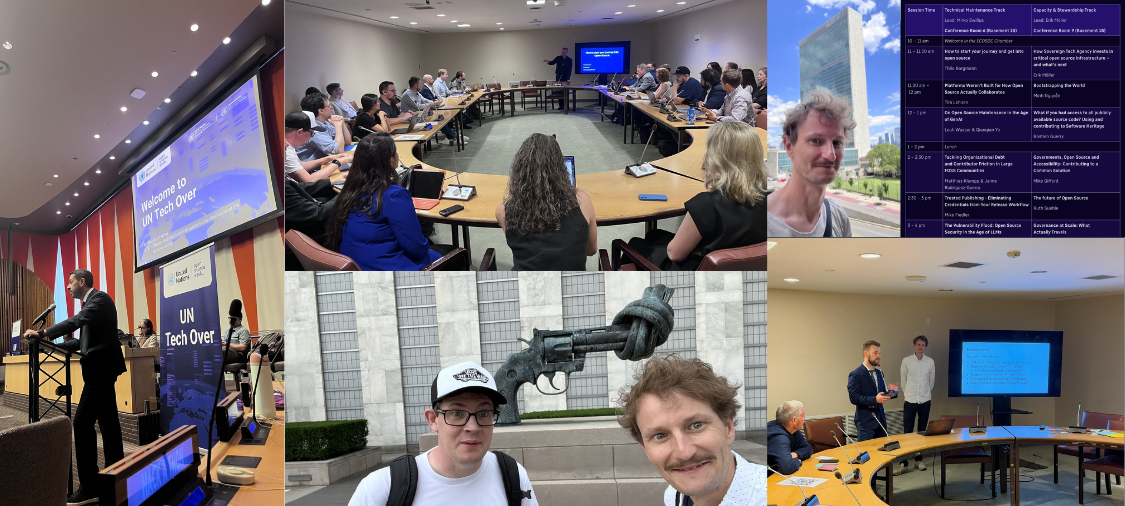
- Human Connections in a Sea of Automation: Reflections on UN Open Source Week 2026 – Mirko Swillus shares key takeaways from the United Nations gathering, emphasizing the essential role of global human collaboration and relationship-building in advancing open source technology alongside automated tools.
- Security Engineers in Residence (SEIR) & Ecosystem Initiatives – Learn how Alpha-Omega is expanding dedicated technical support across open source communities. This single initiative spans efforts in Building a Global SEIR Team, embedding An AI Security Engineer in Residence for Rust, Strengthening Security for the Ruby Ecosystem, appointing the new Node.js AI Security Engineer in Residence, and launching the FreeBSD AI-Assisted Vulnerability Discovery Project.
- Scrutineer: Scanning Open Source Without Flooding Maintainers – An introduction to Scrutineer, a new AI-driven open source tool developed for Alpha-Omega that scans repositories for security flaws while minimizing noise and alert fatigue for maintainers.
Automotive Grade Linux (AGL)
- Speaking Proposals Open for AGL All Member Meeting Berlin
The Automotive Grade Linux community is inviting technical session submissions for its upcoming event in Germany. Developers, maintainers, and industry stakeholders can share insights on software-defined vehicles and open-source compliance. This gathering provides a platform to showcase real-world implementations, with the submission window closing on July 12.
Submit a proposal → - Automotive Linux Summit Tokyo Opens Call for Proposals
Speaking applications are now being accepted for the upcoming industry gathering in Japan. Maintainers, developers, and platform engineers can present their latest technical developments and architectural insights directly to automotive ecosystem stakeholders. Participants are encouraged to contribute to the evolving software-defined vehicle landscape before abstract submissions close on August 24.
Submit a proposal → - AGL Launches Open-Source SoDeV Reference Platform in "Ultimate Unagi" Release
The initial version of the open-source SoDeV reference platform has launched in the AGL Unified Code Base (UCB) “Ultimate Unagi” release. Developed by the AGL SDV Expert Group, SoDeV pre-integrates Linux containers, VirtIO, Xen, and Zephyr RTOS. It lets developers test virtualized systems on Renesas Sparrow Hawk boards or in the cloud, decoupling software from hardware.
Read the press release → - Welcoming Five New Members to the Growing AGL Ecosystem
AGL is excited to welcome EMQ, Lineo Solutions, MediaTek, VA Linux Systems Japan, and Very Good Ventures to our community. These five new members bring specialized expertise spanning automotive-grade silicon, cloud data loops, embedded Linux kernel engineering, and Flutter-based in-vehicle UIs, reinforcing industry alignment around collaborative open-source SDV platforms.
Read more → - Watch On-Demand: Highlights from a Successful AGL AMM Japan
All session recordings from our successful Tokyo All Member Meeting are now available on-demand. Explore key technical talks, including the keynote by Hisao Munakata of Renesas Electronics on navigating the SDV crisis. We have also published an in-depth companion blog post highlighting the lessons learned from Linux kernel history.
Read the companion blog →| Watch the video playlist →
CAMARA
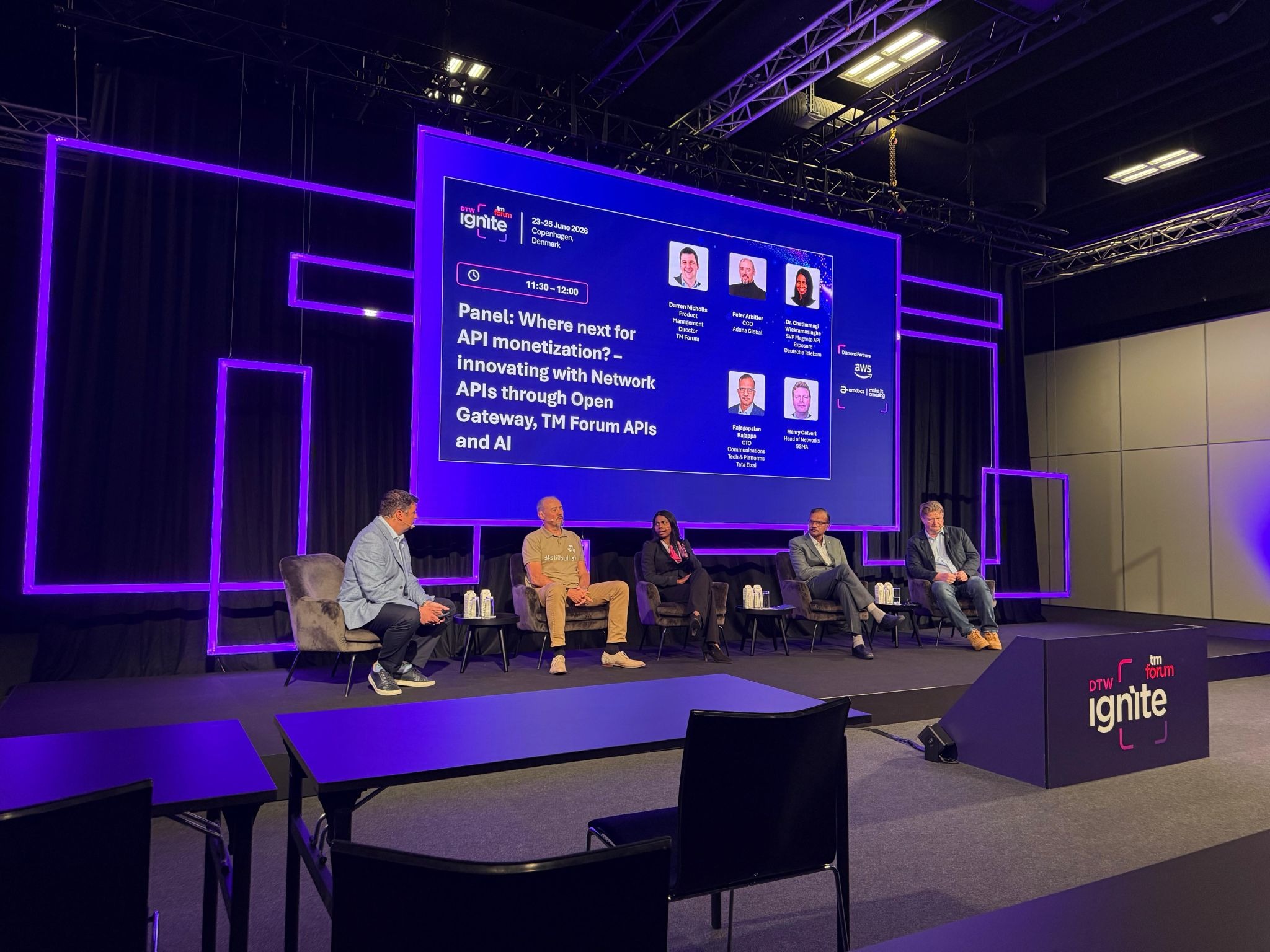
- DTW Ignite Copenhagen (06/23-06/25): The event brought together the telecom community to explore the future of programmable networks, AI, and digital services.
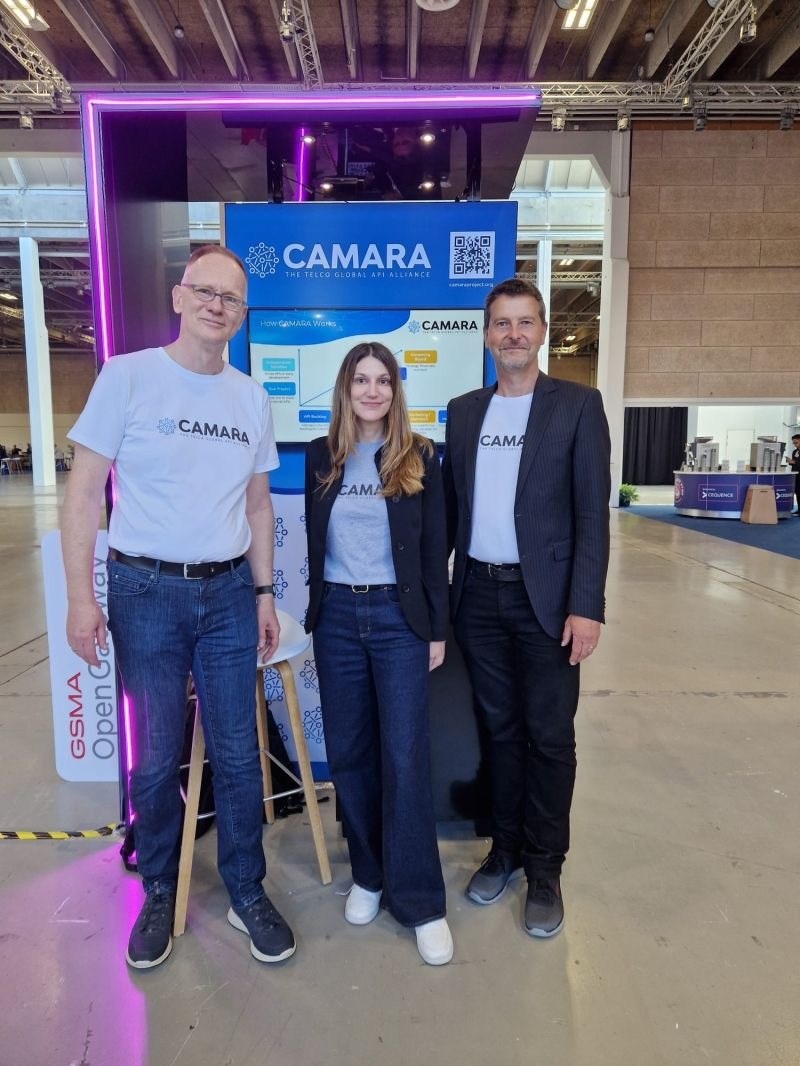
- CAMARA joined GSMA Open Gateway with a shared booth, connecting with developers, partners, operators, and industry leaders to discuss how open Network APIs are creating new opportunities across the ecosystem.
- The conversation continued on stage during the panel “Where Next for API Monetization? Innovating with Network APIs through Open Gateway, TM Forum APIs and AI,” featuring Henry Calvert, Head of Networks at GSMA, alongside industry leaders discussing how standardized APIs, AI, and collaboration can unlock new value from network capabilities.
- The CAMARA and GSMA Open Gateway networking reception extended these conversations, bringing the community together to exchange ideas around the future of network capability exposure.
- A new GSMA Open Gateway case study highlights how Globe Telecom and GCash are using the CAMARA-standardized Number Verification API to explore silent network authentication for digital banking, helping simplify identity verification while improving customer journeys.
- 2026 Spring Meta Release: The CAMARA community has issued its bi-annual Spring26 meta-release, marking continued progress in standardizing and automating API delivery across the ecosystem. This release reflects steady progress toward more automated, scalable, and developer-friendly API lifecycle management across the CAMARA ecosystem. The community can expect this year’s second release in Q3/Q4.
CHIPS Alliance
- CHIPS Alliance member Antmicro published an article on implementing optional Dual-core Lockstep functionality in the VeeR EL2 RISC-V core, covering the architecture, verification approach, and potential applications in safety-critical systems and Caliptra Root of Trust implementations. Read it here >>
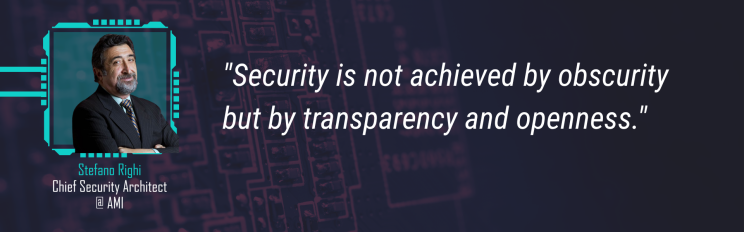
- The latest CHIPS Alliance Developer Spotlight features Stefano Righi, Chief Security Architect at AMI, discussing hardware-software co-design, his contributions to Caliptra, and why security should be included by default in every design. Read the spotlight >>
- Recent event recaps cover the Guineveer demonstration and sessions on Caliptra, OpenPRoT, and trusted infrastructure at OCP EMEA 2026, along with updates on SV Tools, Verilator, VeeR, Guineveer, and IHP’s open source PDK and MPW program from Latch-Up 2026. Read the OCP EMEA recap >> Read the Latch-Up recap >>
- At RISC-V Summit Europe 2026, Google contributors Tor Jeremiassen and Yenkai Wang presented the MPACT Tools portfolio for hardware-software co-design and pre-silicon software development. View the MPACT Tools presentation >>
- CHIPS Alliance will participate in the Open Source EDA, Data and Collaboration Birds-of-a-Feather session at DAC 2026 on July 28 in Long Beach. Learn more about DAC 2026 >>
- CHIPS Alliance will support ORConf 2026 as a Silver Sponsor, September 11–13 in Ghent, Belgium. Learn more about ORConf 2026 >>
Cloud Native Computing Foundation (CNCF)
- The Infrastructure Signal Behind the SpaceX IPO | In his article on LinkedIn, Jonathan Bryce argues that the SpaceX IPO highlights a broader, critical shift in the tech industry: AI is driving an enormous, foundational buildout of physical infrastructure, particularly in power and data centers. He emphasizes that because resources like power, chips, and land are hard constraints, the next phase of AI success will be defined by software and operational layers that can optimize hardware utilization and inferencing at scale. Ultimately, Bryce suggests that the "cloud native" stack will be essential for operating AI reliably and economically as it moves from the lab into production.
- Flipkart Wins CNCF End User Case Study Contest for Kubernetes and Chaos Engineering Scale | Flipkart won the contest for its central reliability engineering (CRE) team’s work in building a centralized, scalable chaos engineering platform leveraging its core Kubernetes infrastructure and the Kubernetes-native orchestration of CNCF incubating project, LitmusChaos. Faced with the complexity of operating hundreds of tightly coupled microservices across Kubernetes and VM workloads, Flipkart leveraged the extensibility of Kubernetes-native orchestration. They evaluated multiple industry options before selecting LitmusChaos for its intuitive user interface, robust extensibility, and automated resilience probes.
- CNCF and Linux Foundation Education Partner with Udemy to Provide a Unified Cloud Native Training & Certification Opportunity | CNCF and Linux Foundation Education have partnered with Udemy, a global AI-powered skills acceleration platform, to integrate cloud native training and certification pathways onto the Udemy platform, creating a seamless, unified location for developers to acquire and prove production-grade skills.
- CNCF and SlashData Report Confirms India as One of the Largest Cloud Native Communities with 2.25 Million Developers | The report estimates that India is home to approximately 2.25 million cloud native developers as of Q1 2026, or approximately 11% of 20 million global cloud native developers, making it one of the world’s largest and fastest-growing cloud native communities. Cloud native adoption in India continues to outpace global trends in several key areas such as hybrid cloud deployment, Kubernetes adoption and AI development.
- Expanding CARE: Passing CKS can now extend your CKA certification | CARE was designed with a simple idea in mind: certification should recognize ongoing learning, not create unnecessary renewal friction. Since launch, we have continued listening to feedback from the community, especially from candidates and Kubestronauts managing multiple certification timelines. Today, we are introducing the next step in that work.
- Cloud native is now AI-native: Engineering production-ready AI | At KubeCon + CloudNativeCon Europe in Amsterdam from March 23-26, CNCF brought together a roundtable with experts in the cloud native ecosystem, including Ellis Tarn of AWS, Allan Naim of Google Cloud, Jorge Palma of Microsoft, and Nina Polshakova of solo.io. The discussion centered on how cloud native principles enable AI in production environments. The panelists shared key takeaways on the shift to AI-native computing, emphasizing that moving AI workloads into enterprise production requires three core components: a foundational, vendor-neutral infrastructure focused on platform maturity, integrated security for autonomous agents, and active community contribution.
- Introducing Verifiable Execution in Dapr 1.18 | Dapr 1.18 introduces a new set of capabilities designed to address these challenges: Workflow History Signing, Workflow History Propagation, and Workflow Attestation. Together, these capabilities establish a foundation for Verifiable Execution in Dapr.
- Inspektor Gadget: Results from the first security audit | Inspektor Gadget, the open source eBPF-based toolkit for Kubernetes observability and Linux host inspection, has completed its first independent security audit. The audit was coordinated by the Open Source Technology Improvement Fund (OSTIF), funded by the CNCF and carried out by Shielder. The findings, the fixes, and the hardening recommendations are now public, and every reported vulnerability has a patch available.
- etcd-operator joins Cozystack with a new v1alpha2 API | The etcd-operator project, which develops an operator for deploying and maintaining etcd clusters on Kubernetes, has been donated to the Cozystack project. Alongside the donation, a from-scratch implementation of the operator has been published under a new API version — etcd-operator.cozystack.io/v1alpha2, superseding the previous etcd.aenix.io/v1alpha1. Instead of managing members through a StatefulSet, the new implementation directly drives etcd’s native Membership API (the MemberAdd, MemberPromote and MemberRemove operations), giving the operator full control over cluster membership. The new implementation was written by Timofei Larkin, one of the maintainers of the previous codebase, which is preserved in the v1alpha1 branch. The project is written in Go and distributed under the Apache 2.0 license.
Confidential Computing Consortium (CCC)
- Confidential Computing Summit 2026: Following a highly successful event in San Francisco featuring keynotes from Anthropic and Apple emphasizing that Confidential Computing is now a non-negotiable foundation for AI and digital sovereignty, the CCC published a summit recap detailing six major industry signals, with all session recordings now available on-demand on the Linux Foundation YouTube channel.
- The New CCC Website & Board Ready Guide Launch: Debuting on June 23rd, the newly redesigned Confidential Computing Consortium website features optimized search integration, a comprehensive "Board Ready Guide to Confidential Computing" to translate technical security into regulatory and financial advantages, and new real-world use cases spanning finance, healthcare, AdTech, and sovereign government workloads.
- New Industry Guidance: Resilient Trust Mechanisms & Agentic AI Security: The CCC published new technical guides, including Outreach Chair Laura Martinez’s practical blog on securing autonomous AI workloads using CPU-to-GPU TEEs and a deep-dive article clarifying why hardware-enforced memory encryption and cryptographic attestation remain highly resilient against modern vulnerability disclosures.
- On-Demand Briefing: "Agentic AI in the Wild" Discussion: The CCC’s pre-summit live webinar featuring technical pioneers from Edgeless Systems, Intel, and NVIDIA explaining how to deploy confidential containers on Kubernetes and secure the reasoning layer of autonomous AI agents is now available to watch on-demand on YouTube.
From the TAC (Learn more from the CCC June Newsletter):
- The TAC officially approved "Blueprint C: Collaborative Clean Room" (authored by TikTok and Google) to ease multi-party data collaboration, voted the Keystone project to emeritus status, marked Open Enclave SDK's stable fourth-year progression, and celebrated the SPDM project’s milestone integration of post-quantum cryptography (ML-DSA and ML-KEM) alongside its official recognition in FIPS 140-3 implementation guidance.
- Nathaniel McCallum (AMD) delivered a standout technical presentation demonstrating the Portable Machine Image (PMI) format—a minimal safe-Rust bootloader called Tattoo that boots in 300 milliseconds—which solves a critical cloud trust issue by putting guest firmware entirely within the tenant’s verifiable software supply chain rather than the cloud provider's control.
- Academic Research Grant Program Draws Global Interest: The CCC Academic Research Program committee received 35 highly competitive research proposals from academic institutions worldwide and will announce the two selected funding recipients shortly.
- GRC SIG Issues Call for Regulated Industry Contributors: The Governance, Risk, and Compliance Special Interest Group (GRC SIG) is actively seeking new contributors, particularly from highly regulated sectors, to help build out its upcoming, hands-on control patterns focusing on confidential AI training and inferencing workloads.
Continuous Delivery Foundation (CDF)
- 🔴 cdCon 2026 Wrap-up & Recordings: We had a great conference, co-located at Open Source Summit in Minneapolis, Minnesota. Watch the talks here
- 🪈 Calculating The Return on AI Investment: AI screeches before it sings, but if you learn to play it right, it might be worth it. Read more
eBPF Foundation
-
The eBPF Foundation Launches New Investor Due Diligence Guide
A newly published technical and economic framework helps industry stakeholders evaluate infrastructure software companies. The guide examines how kernel-level programmability serves as a critical strategic control point amid growing architectural complexities like GPU scaling and runtime security. Technical decision makers and investors can leverage this resource to analyze market consolidation and enterprise workflows.
Download the report → - New Research Explores Server Power Management Using eBPF
An academic update from the University of California, Riverside details how advanced kernel technology can optimize data center energy consumption. As modern workloads demand rapid, coordinated power management decisions, traditional Linux frameworks struggle to keep pace. This report explains how sandboxed tracing provides non-invasive, low-overhead observability to help platform engineers improve power efficiency.
Read the blog →
Enabling Linux in Safety Applications (ELISA) Project
-
ELISA Seminar – WHAT-WHY-HOW: A practical model for understanding software requirements - Register Soon!
Join this seminar on July 23 to learn about WHAT-WHY-HOW, a practical model for separating user needs, formal requirements, design, and implementation. Stanislav Pankevich of Reflex Aerospace GmbH will explain how these elements relate across the development lifecycle and why mixing them can reduce clarity and traceability. Through practical examples and heuristics, the session will show how to distinguish requirements from design and apply the model across documentation, code, testing, and reviews.
Learn more. - How AvioNix Supports Reproducibility and Traceability for Linux in Avionics
Wanja Zaeske of the German Aerospace Center and Erin Vanderveen of Tweag by Modus Create discussed how AvioNix applies Nix to improve reproducibility, traceability, and collaboration for Linux-based avionics software during a recent ELISA Project Seminar. The session covered declarative builds, consistent development environments, dependency tracking, SBOM generation, cross-compilation, Linux kernel configuration, and practical debugging. The demo also showed how AvioNix can build and run an integrated system with the Linux kernel, user space, ELISA Aerospace Working Group applications, and a NASA cFS-based monitor in QEMU. Learn more. - Software Supply Chain Management With the Yocto Project – Joshua Watt, Garmin
What is inside the binaries your team is shipping, and can they be traced back to the source code and build process that produced them? Joshua Watt of Garmin discussed at OSS North America 2026. , discussed how the Yocto Project supports software supply chain visibility through SBOMs and SPDX documents, BitBake task hashes, static library tracking, reproducible builds, and build tool traceability. The session showed why supply chain management for safety-critical software is about more than listing components. It also requires understanding software origins, dependencies, build inputs, and final outputs. Learn more. - Modernizing Software Verification – Craig Christianson, United States Air Force
How can software teams strengthen assurance when failures could put lives at risk? During the Safety-Critical Software Track at OSS North America 2026, Craig Christianson discussed the role of requirements traceability, formal verification, and automated reasoning in modernizing software verification. The session also examined the seL4 microkernel and included a Raspberry Pi demonstration using the Microkit build system to show how isolation, protection domains, notifications, and hardware interrupts can support higher-assurance systems. Learn more. -
Meet the ELISA community at these events:
- Open Source Summit 2026 – Seoul, Korea
- Safe Systems with Linux Micro Conference: Linux Plumbers Conference 2026
- Embedded Linux Conference & Open Source Summit Europe 2026
FINOS
-
OSERA: Intent to Form the Open Source Enterprise Resiliency Alliance Following The Linux Foundation’s launch of Akrites, FINOS, alongside Deutsche Bank, Goldman Sachs, Moderne, Morgan Stanley, RBC, Sonatype, and TD, has announced the intent to form OSERA. This neutral, openly governed home will mutualize open source backpatching on shared high-priority packages, promote vendor-neutral, industry-wide remediation standards for regulated frameworks, and accelerate evidence-based compliant consumption at scale.
Read the announcement
Watch the Keynote
Get involved with the OSERA - FINOS AI Fund Announcement
In June 2026, FINOS launched the FINOS AI Fund as the strategic leadership arm for all AI initiatives at FINOS, driving funding, prioritization, and execution of use cases and investments. Through a dedicated Governing Board made of FSI AI Leaders, we are harnessing the power of the FINOS Community to innovate and define the standards for the agentic AI future of this regulated, high-stakes industry.
Watch the Keynote
Learn more -
Case Study: How Deutsche Bank Standardized Enterprise Orchestration with Fluxnova Large organizations can face substantial technical and financial risks when foundational, widely deployed open-source software undergoes license changes, product deprecation, or other disruptive actions. One such scenario occurred when Camunda 7 Community Edition reached end-of-life. Rather than addressing this challenge in isolation, several financial institutions came together through FINOS to build a community-governed alternative for enterprise process orchestration - Fluxnova.
Read the Case Study
High Performance Software Foundation (HPSF)
- HPSF welcomed 2 new projects this month!
- Flux Framework powers resource management and scheduling from containers to some of the world's largest supercomputers, including the #1 Top500 system, El Capitan. Its modular architecture helps organizations manage complex workloads across HPC, cloud, and Kubernetes environments while maintaining the flexibility to customize and scale.
- Wi4MPI helps developers run MPI applications across different implementations without recompiling, making it easier to move workloads across clusters, systems, and environments.
- Chapel 2.9 is officially live: With key updates to dynamic libraries, mason package manager, better dev tools and backend support.
- ISC High Performance 2026 made one thing clear. In the post Moore era, open source software is the bridge connecting HPC, AI, and heterogeneous hardware. Read Tech Times for a great recap.
Jupyter
- JupyterLite 0.8 is released! JupyterLite is a Jupyter distribution that runs entirely in the web browser without any server components. Deployment and hosting are easy as JupyterLite sites are just static websites.
The new 0.8 release includes a number of new features, bug fixes, and enhancements. This release also brings significant improvements to the user experience and new customization options for JupyterLite deployments. Read the blog. - The Jupyter Executive Council and Jupyter Foundation are pleased to announce a new Call for Proposals (CFP) for funding the Jupyter community to improve Jupyter. Visit the Jupyter Foundation Community Proposals webpage to learn more about the process and how to submit proposals. Submit a proposal by Wednesday, September 9, 2026.
- JupyterLab 4.6 and Notebook 7.6 are out! JupyterLab 4.6 features new interface customization options, improved file browser and debugger, an easy way to jump between recently edited cells, and numerous other notebook experience improvements. Keyboard shortcuts, navigation and accessibility are another focus area in this release. Jupyter Notebook 7.6 has also been released, including the fixes and enhancements of JupyterLab along with a new Scratchpad console and other Notebook-specific improvements. Read more.
- Congratulations, Distinguished Contributors! The Jupyter Foundation is proud to announce the recipients of the Jupyter Distinguished Contributor (JDC) award for the 2025 cohort of contributors. They are recognized for their substantial contributions to Jupyter in both quality and quantity over at least two years. Contributions may include code, code review, infrastructure work, mailing list and chat participation, community help/building, education and outreach, fundraising, branding, marketing, inclusion and diversity, UX design and research, etc. Read more.
- We’re excited to announce the first stable release of jupyter-builder on PyPI and @jupyter/builder on npm. A standalone, configurable build system for JupyterLab and its extensions. If you build or maintain a JupyterLab extension, this release is for you. Read more.
LF AI & Data
- LF AI & Data Welcomes New TAC Chair: LF AI & Data announced Peter W. J. Staar as the new Technical Advisory Council (TAC) Chair. In his LinkedIn post, Staar shares his vision for advancing the open "context layer" for AI, highlighting the importance of open technologies that connect AI models with data and knowledge systems to enable trustworthy, interoperable agentic AI.
- New Docling Case Study: A new case study showcases how IBM's CIO team integrated Docling into AskIBM, enabling its AI assistant to index PDF, Word, PowerPoint, and image attachments that were previously inaccessible. The deployment unlocked 250,000 new searchable passages, now serving approximately 4,000 document-sourced results to IBM employees every day, demonstrating how open source document AI can power enterprise-scale RAG applications. Read the case study >>>
- AI Safety Best Practices White Paper Released: LF AI & Data’s Security and Compliance Working Group published AI Safety Best Practices for Regulated Environments, a comprehensive guide to help organizations build trustworthy AI across the model and agentic AI lifecycles. The white paper provides practical guidance for managing AI safety risks, navigating evolving regulations, and implementing machine-readable compliance for AI systems in regulated industries. Read the white paper >>>
- ONNX v1.22.0 Released: The ONNX community has released ONNX v1.22.0, introducing native attention operators for generative AI, WebAssembly support for in-browser model validation, and enhanced supply-chain security with SLSA Level 2 provenance and embedded SBOMs. The release also includes improved tooling and build reliability for developers. Read the release details >>>
- Take the AI Security Survey: LF AI & Data, OpenSSF, and ActiveState have launched the AI Security Survey to better understand how generative AI is reshaping open source software security. Survey findings will help guide future best practices, tooling, and community resources. Complete the survey to receive a discount code for eligible Linux Foundation training and certification programs. Take the survey >>>
LF Decentralized Trust
-
DTCC begins live production trades of tokenized U.S. securities, with Besu underpinning its digital infrastructure. DTCC, a founding premier member of LF Decentralized Trust, started limited production trades of tokenized Russell 1000 equities, major ETFs, and U.S. Treasuries this week, ahead of a full Tokenization Service launch in October 2026. More than 50 firms are participating, including BlackRock, Goldman Sachs, J.P. Morgan, and Circle. DTCC's AppChain, which powers its real-time tokenized collateral management platform, runs on Besu, an LFDT project. The milestone follows a December 2025 SEC no-action letter authorizing a three-year pilot covering assets held in DTC custody, which currently exceeds $114 trillion.
-
Web3j maintainer Nischal Sharma ships Web3j 6.0 with full support for Fusaka, Ethereum's biggest scaling upgrade since Dencun. The release, backed by an Ethereum Foundation grant, builds and signs the new EIP-7594 blob transactions, closes the remaining Pectra gaps including EIP-7702 authorization signing, and adds agent and skills files so AI coding assistants can work with Web3j documentation directly.
-
Panurus, the token framework behind wholesale CBDC experiments at the Banque de France and Bank of Canada, joins LFDT as an incubating project. Formerly the Hyperledger Fabric Token SDK lab, Panurus has powered over a dozen wholesale CBDC experiments involving institutions including JP Morgan and HSBC. Maintainers Angelo De Caro and Kaoutar El Khiyaoui of IBM Research outline a roadmap toward a v1.0 release and EVM-compatible backend support.
-
DSR Corporation and CPqD detail how Hyperledger Indy on Besu supports Brazil's digital identity infrastructure. Maintainer Alexander Shcherbakov and CPqD's Mateus Sousa walk through the Brazilian Blockchain Network, a government-led initiative, and how implementing identity operations as smart contracts on Besu removes the need for a dedicated Indy ledger while keeping W3C alignment.
LF Broadband
-
LF Broadband presented at the BBF BASe Summit in Milan on June 4-5, 2026, bringing the arguments from the recently published white paper “Open, Observable, Intelligent: Building the Foundation for AI in Fixed Broadband Access” to an audience of operators, vendors, and standards community members.
LF Edge
- Open Horizon Reaches LF Edge Impact Stage 3: In a new blog, Open Horizon TSC Chair Joe Pearson highlights the project's achievement of LF Edge's highest maturity level. The milestone recognizes Open Horizon's growth into a production-ready platform with a strong, multi-organization community and proven real-world adoption, while reinforcing its focus on large-scale deployment and lifecycle management for Edge AI workloads. Read the blog >>>
- ONE Summit Japan 2026 Call for Proposals is Open: The Call for Proposals is now open for Open Networking & Edge Summit (ONE Summit), co-located with Open Source Summit Japan on December 10–11 in Tokyo. LF Edge welcomes submissions on Edge AI, data processing at the edge, industrial and manufacturing use cases, edge platforms, and real-world deployments. Proposal submissions close on August 24. Submit a proposal >>>
LF Energy
- SEAPATH v2.0 Advances Virtualized Digital Substations | SEAPATH v2.0 updates the project’s software stack for virtualized digital substations, adding support for Debian 13 and The Yocto Project Wrynose, Ceph ADM for Ceph deployment and management, initial support for high-availability containerized workloads in cluster mode using Podman, and new CI/CD capabilities for weekly and official releases.
- SEAPATH Roadmap Workshop | The first SEAPATH Roadmap Workshop brought 45 participants from 19 organizations to RTE’s Campus Transfo in Lyon. Participants assessed the project’s current state and identified priorities around long-term support, project lifecycle, future capabilities, and maintenance.
- LF Energy Summit Europe 2026 Agenda Now Available | LF Energy Summit Europe returns to Berlin September 15–16. The agenda includes sessions on Iberian blackout analysis using Dynaωo, OpenSTEF 4.0, TenneT’s grid security analysis work with PowSyBl, Open Source Program Offices, and a Hitachi prototype connecting OpenSTEF, SEAPATH, PowSyBl, OpenGridFM, and OperatorFabric.
- CityLearn Now Live as an LF Energy Project | CityLearn is an open source simulation environment hosted at LF Energy for developing and benchmarking demand-side building energy control strategies across virtual building districts with batteries, heat pumps, electric vehicles, thermal storage, and PV.
- PowSyBl Community Meets in Paris | The first dedicated PowSyBl Bootcamp brought 31 participants from 17 companies together in Paris. Participants shared PowSyBl use cases, discussed shared technical needs, and explored future enhancements.
- LF Energy Introduction Seminar in Tokyo | LF Energy Executive Director Alex Thornton will speak at an in-person seminar hosted by Linux Foundation Japan on July 21. Hitachi’s Nao Nishijima and Darshan Chawda will present live demonstrations of LF Energy projects.
LF Networking
- LF Networking Welcomes StratoWeave: LF Networking has expanded its portfolio with the addition of StratoWeave, a new Candidate project contributed by Deutsche Telekom. StratoWeave is an open source platform for model-driven, declarative network automation that helps communications service providers simplify operations, reduce vendor lock-in, and accelerate AI-native, closed-loop network management. Read the announcement >>>
- OpenAN Project Launches Under LF Networking: LF Networking also announced OpenAN as another new Candidate project, contributed by China Mobile and Huawei, to advance autonomous, AI-driven telecom networks. Built on the Agent-to-Agent Protocol for Telecom (A2A-T) framework, OpenAN provides an open source foundation for interoperable, multi-agent collaboration to help communications service providers accelerate autonomous network operations.
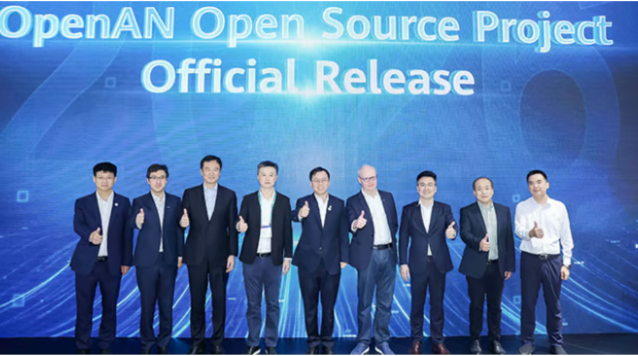
Official Launch @ MWC Shanghai
- The OpenAN community held its Founding Members' meeting in Copenhagen alongside DTW Ignite, bringing together 20+ in-person attendees and 23 virtual participants for 9 presentations on the project’s objectives, governance, and technical direction.
Watch the recording here.
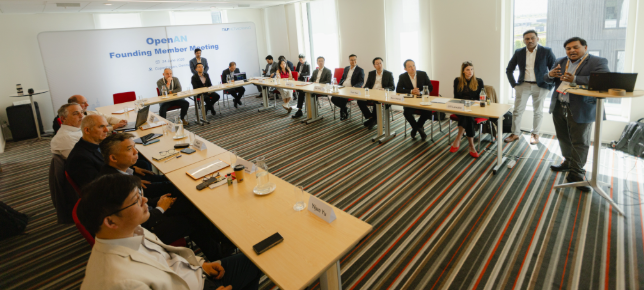
OpenAN Founding Members Meeting in Copenhagen
- ONE Summit Japan 2026 Call for Proposals is Open: The Call for Proposals is now open for Open Networking & Edge Summit (ONE Summit), co-located with Open Source Summit Japan, taking place December 10–11 in Tokyo. Speakers are invited to submit sessions on AI-native networking, edge AI, autonomous networks, cloud native infrastructure, and the future of open networking. Proposal submissions close on August 24. Submit a proposal >>>
- AI Thought Leadership Blog: In the latest installment of his AI thought leadership series, LFN CTO Ranny Haiby explains why the telecom industry is moving beyond traditional closed-loop automation toward Agentic AI. He highlights how open source projects across the LFN ecosystem are working together to enable safe, interoperable, and production-ready autonomous networks. Read the blog >>>
Margo
-
Margo Broadens Interoperability Options for Industrial Automation A recent architectural demonstration highlights how an open ecosystem design decouples device management from application management on the factory floor. By establishing a modern framework for industrial application stores, the initiative enables seamless multi-vendor hardware integration. End users and developers can leverage these interoperable modules to deploy edge applications rapidly without relying on rigid infrastructure.
OCUDU Ecosystem Foundation
- OCUDU Developer Webinar Series: Designed for users, integrators and contributors working with open disaggregated RAN systems, the OCUDU Ecosystem Foundation has kicked off a webinar series with the aim of onboarding developers. Follow OCUDU on LinkedIn for updates on upcoming webinars and catch the recordings of the first three webinars on the OCUDU YouTube channel.
- Episode 1: Project Introduction, Roadmap, and Community - The first session covered the OCUDU roadmap, core building blocks, available resources, contribution paths, and what developers can expect from the project.
- Episode 2: Working in the OCUDU Codebase - The second webinar covered how to report useful issues, propose changes, prepare merge requests, respond to review feedback, understand CI/CD results, and meet the project’s coding, documentation, and testing expectations.
- Episode 3: Working in the OCUDU Codebase: Architecture to Implementation - The third webinar walked attendees through how OCUDU is organized in code, where the main components live, how different areas interact, and which coding patterns, conventions, and standards contributors should follow.
- Wind River and OCUDU Ecosystem Foundation Case Study: This case study highlights a validated AI-RAN and Open RAN demonstration focused on resilient edge operations and workload continuity. Built on Wind River Cloud Platform and OCUDU’s open, carrier-grade CU/DU baseline, the collaboration shows how open source can support deterministic low-latency RAN processing, automated fault detection, live workload migration without service interruption, and a vendor-agnostic path to AI-RAN at scale. Read the case study to learn more 👉 Resilient Edge Operations: AI-Ran and Live Workload Continuity
- POWDER and Rimedo Labs to Test RF Jamming Detection on OCUDU Over the Air: How can the industry validate Open RAN security capabilities under real-world conditions? Associate member POWDER Wireless and Rimedo Labs are collaborating to integrate and test Rimedo Labs’ Jamming Detection xApp with OCUDU RAN software in POWDER’s city-scale, over-the-air wireless testbed. Read the complete announcement here: POWDER and Rimedo Labs to Test RF Jamming Detection on OCUDU Over the Air
Open Mainframe Project
- Podcast: “I am a Mainframer: Brahadambal Srinivasan on Linux on Z, OpenSource & Building a Career in Mainframe”. In this episode, Brahadambal Srinivasan, Technical Architect at IBM, shares her journey from Linux and open source to leading teams working on Linux on Z. Brahadambal talks with host Steven Dickens, CEO of HyperFRAME Research, about how her team helps maintain and port open source packages, why Linux on Z is still Linux, and what it takes to support applications on the s390x architecture. She also explains how IBM works with the Open Mainframe Project and the open source community to keep changes upstream and improve access through repositories and GitHub Actions runners. Watch the full episode.
- Step Into the Spotlight: Be Recognized for Your IBM Z Advocacy. Whether you’re speaking at industry events, contributing code to open source projects, mentoring the next generation, leading working groups, or amplifying the power of enterprise computing, you are helping shape the future of the Open Mainframe Project ecosystem. Now it’s time for your advocacy to be recognized.Turn Your Contributions Into VisibilityThe IBM Z Advocacy Program, hosted on the IBM Z Advocacy Hub. Read more.
- The Open Mainframe Project participated at the 2026 VM Workshop. Len Santalucia, Director of Global Strategy at 21cs, and Chair of the Open Mainframe Project Governing Board, presented “Mainframe Evolution: Securing, Monitoring, and Scaling with Next-Gen Open Source.” Read more
- The Open Mainframe Project is heading to SHARE Pittsburgh! Join us August 16–20 at the Westin Pittsburgh for five days of mainframe community, knowledge sharing, and hands-on learning. Open Mainframe Project speakers are on the agenda across the full week: covering Zowe MCP, AI-assisted development, CI/CD automation, open source tooling, and more. Check the full session lineup here.
- The Open Mainframe Project is heading to GS UK for the third year in a row, and the CFP is now open! Submit a proposal for our dedicated track at the GS UK In-Person Conference, November 2–5 at Whittlebury Hall, Northamptonshire. We want talks on Zowe, COBOL, Galasa, zopen Community, Feilong, Mainframe Open Education, modernization, AI, workforce development, and more. Submission deadline: July 31, 2026. Submit your proposal here.
Open Programmable Infrastructure
- OPI is hosting its second summit on DPU/IPUs, this time on October 15, 2026 at The Tech Interactive in San Jose, CA. The OPI Summit will be co-located with the OCP Summit and is open to everyone involved in the design, development, integration, marketing, use, or support of DPU/IPUs, or related hardware, software, or services. Stay tuned for details on the CFP!
OpenSearch
- Data Prepper 2.16 introduces new capabilities for modern observability pipelines, including pull-based Prometheus scraping, direct ingestion into OpenSearch Time-Series Database, experimental pull-based ingestion, and expanded OpenTelemetry support. Read here >>
- The OpenSearch Agent Skills Hackathon is coming soon: Create pre-built agentic IDE skills that make OpenSearch faster, smarter, and more useful for real-world technical work. The best skills will be open sourced through the official OpenSearch Agent Skills GitHub repo and may be spotlighted at OpenSearchCon NA. Want to participate? Get updates and register when the hackathon opens >>
- Case Study — Max Security’s Agentic RAG implementation with OpenSearch hybrid search: A hybrid search and RAG implementation that cut analyst briefing time by 79% and saved 7 hours per week. MAX Security and BigData Boutique (member company) developed SCOUT AI, an agentic RAG system powered by OpenSearch hybrid search, to help analysts access and analyze a decade of intelligence data more efficiently. By combining keyword and vector search, the system retrieves relevant information from trusted internal sources and delivers grounded, AI-assisted responses through a unified workflow. Read the full case study >>
- OpenSearchCon India Recap: 1.7 billion downloads. Thousands of builders. One clear direction: open infrastructure for the AI era. The community explored how AI-powered search, observability, and open data platforms are shaping production AI systems. Read the blog here >>
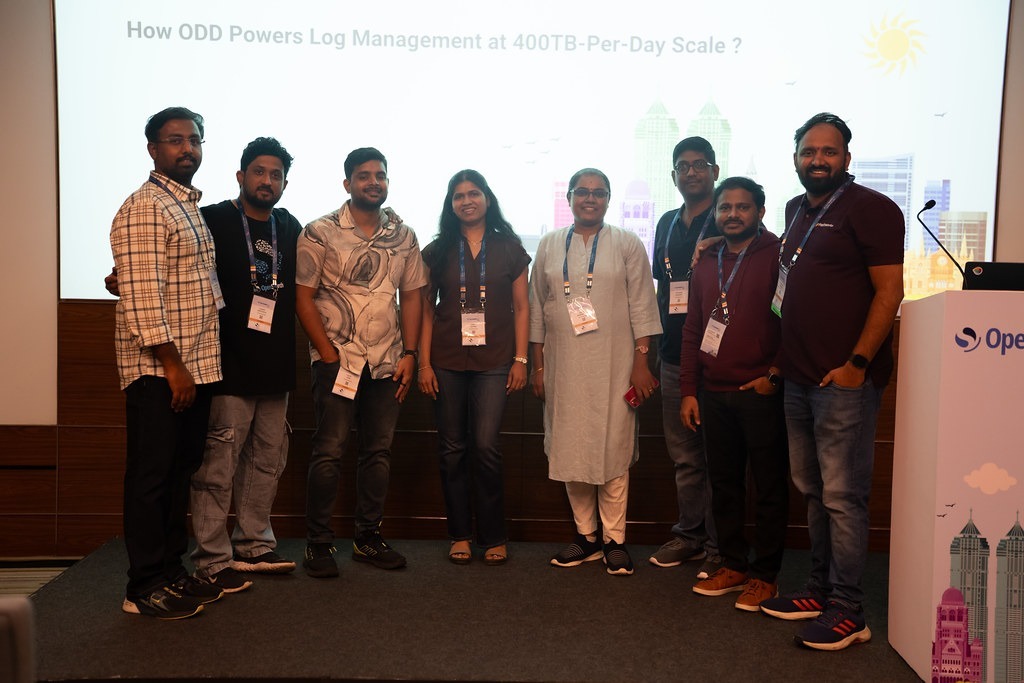
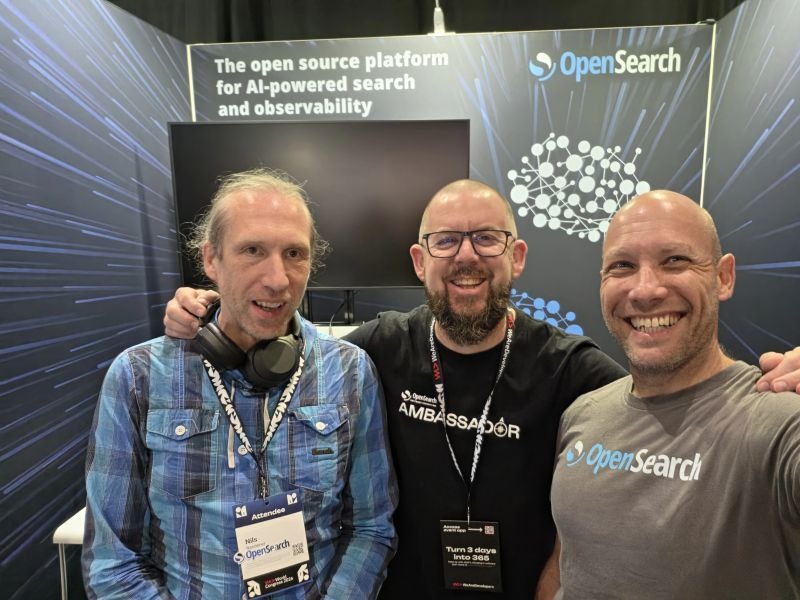
- WeAreDevelopers World Congress Europe: The OpenSearch community joined developers and technology leaders at WeAreDevelopers World Congress Europe. Attendees visited the OpenSearch booth to discuss open source, search, observability, and AI with OpenSearch Ambassadors Kris Freedain, Nils Bandener, and Dotan Horovits.
- Upcoming events:
- Open Source Summit Korea (Seoul | Aug 11-12) — Register here
- OpenSearchCon NA (San Jose, USA | Sept 22-24) — Register here
- Open Source Summit EU (Prague, Czechia | Oct 7-9) — Register here
- News Media:
-
- Analytics India Magazine Network | OpenSearch To Hit 2 Billion Downloads - Now It's Cutting Enterprise AI Token Costs
-
- Express Computer | India's AI infrastructure opportunity won't be won by models, it will be won with context
-
- Dataquest | OpenSearch wants to make observability more contextual for enterprise AI
OpenJS
- The OpenJS security update this quarter brought: a Node.js 26 release, major security release addressing 18 vulnerabilities, removal of the security embargo requirement, a new LLM-assisted report classifier and web viewer for release management, OpenJS CNA one-year milestone, and Ulises Gascón joined Alpha-Omega as an AI Security Engineer in Residence.
- Speakers have been announced for Node.js Interactive at RenderATL! Registration is still open. Join us in Atlanta August 12-13!
- cosmos.gl v3 is live, bringing even more power to developers working with large-scale networks, embeddings, and connected datasets in the browser. Built with GPU acceleration, cosmos.gl helps teams visualize and interact with massive graphs that would otherwise push traditional tools to their limits.
- We're excited to welcome SQLRooms to the OpenJS Foundation as an Incubation Project! SQLRooms is an open source React toolkit for building browser-based analytics applications powered by DuckDB, making it easier to create fast, privacy focused, AI ready data experiences.
- Node-RED Con is back for 2026. And the Call for Papers is now open until July 31.
OpenSSF
- The CRA Readiness Reality: What Changed (and What Didn’t) Between 2025 and 2026?: The 2026 CRA Awareness and Readiness Report is live. In this blog, Angelah Liu breaks down what changed (and what didn't) by comparing two years of CRA research data. This year's empirical findings reveal the true cost of maintaining private forks and how upcoming deadlines and milestones impact your workflows.
- Bridging the Gap Between Code and Research: Why SCORED ’26 Matters for Open Source Security: The 2026 OpenSSF Community Day Europe will be bringing a brand new track focusing on security research and academia. Read this guest blog by Justin Cappos, an OpenSSF Ambassador and a Professor at New York University to talk about why this new track matters.
- AMPEL Accepted as New Sandbox Project: The Technical Advisory Council (TAC) formally accepted AMPEL as a new OpenSSF sandbox project. The project’s mission is to make software supply chain security assertions highly practical, composable, and automatable.
- Mini Shai-Hulud: Where SLSA’s Boundaries Fall: Following the May 11 compromise of 84 npm packages across the TanStack ecosystem, the SLSA team published a thorough post-mortem analysis. The write-up outlines exactly what the framework covers, what policy must close, and the operational controls teams can deploy today.
- OpenBao Releases v2.5.4: The latest security release includes patches for three CVEs, several bug fixes, and a performance improvement for PostgreSQL storage.
- Zarf v0.77 Release: Zarf rolled out keyless Sigstore signing support, the ability to pull images by index SHA, archive inclusion in image discovery, and a critical fix for the signing auth flow in CI environments.
- Gemara Releases v1.2.0: This update introduces an optional rank field in the risk catalog for easier prioritization alongside standard maintenance updates.
-
Podcasts
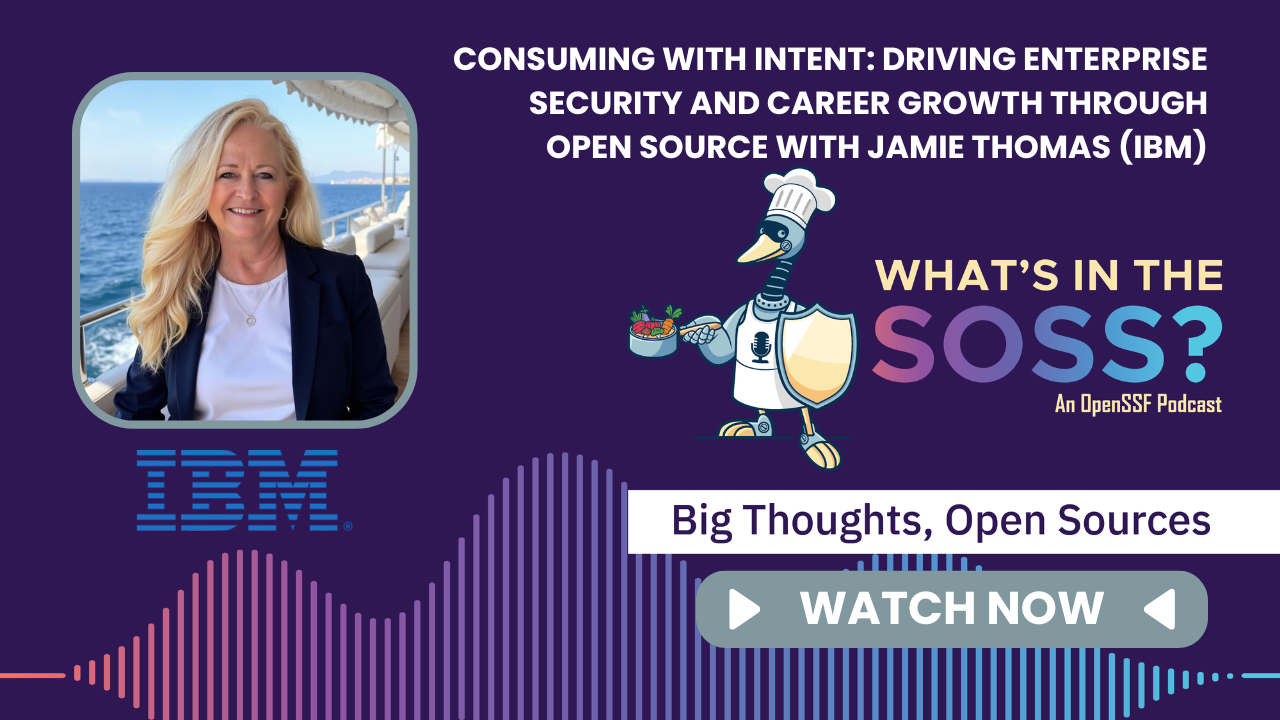
- What's in the SOSS? Podcast S3E15: Big Thoughts, Open Sources: CRob joins Jamie Thomas, IBM Enterprise Security Executive and OpenSSF Governing Board Member, to discuss enterprise engagement, IBM’s historic "billion-dollar bet" on Linux, and transitioning from accidental consumption to intentional stewardship.
-
- What’s in the SOSS? Podcast S3E16: The Heartbeat of the Kernel: Why Upstream is the Ultimate Security Strategy with Greg Kroah-Hartman: CRob sits down with Linux kernel maintainer and open source icon Greg Kroah-Hartman. Greg takes us on a journey from his early days writing firmware for printers, barcode scanners, and hospital drug-dispensing machines to managing the relentless, everyday engineering task of maintaining the Linux kernel over decades.
-
Upcoming Events
-
- Black Hat 2026 – August 1–4, Las Vegas, NV
- OpenSSF Community Day Europe 2026 – October 6, Prague, Czechia
- Open Source Summit Europe 2026 – October 7–9, Prague, Czechia
- All Things Open 2026 – October 19–20, Raleigh, NC
- AGNTCon + MCPCon North America – October 20–23, San Jose, CA
- Open Source SecurityCon North America 2026 – November 9, Salt Lake City, UT
- KubeCon + CloudNativeCon North America 2026 – November 9–12, Salt Lake City, UT
-
OpenSSF In the News
- Infosecurity Magazine: Two-Thirds of Open Source Community Unaware of Cyber Resilience Act
- ITOps Times’ “Get with IT” Podcast: The Sustainability Gap in Open Source Package Repositories (CRob)
- Tech Times: EU Cyber Resilience Act: 24-Hour Vulnerability Clock Starts September 11 for IoT Vendors
- TFiR: How to Prepare for EU Cyber Resilience Act Compliance Before Enforcement Hits | Christopher Robinson, OpenSSF | TFiR
- DevOps.com: OpenSSF’s CRob: ‘The Runway Is Rapidly Running Out’ on EU CRA Readiness
Overture Maps Foundation
-
June 2026 Data Release (v1.17.0) Now Live: The latest June Overture data release features key quality improvements, including a significant cleanup of the Places theme to filter out mismatched locations (drastically reducing erroneous features in the ocean), updated boundary tags for Czechia and Slovakia in the Divisions theme, and schema deprecations ahead of the September 2026 categories property transition. Get the open data and full release notes here.
-
Keeping Overture Places Fresh with Combined Signals: Albi Wiedersberg breaks (VP of Product, Overture Maps Foundation) down how Overture is solving the challenge of volatile location data, where 1 in 4 businesses change annually. Starting with the June release, Overture is leveraging aggregated, anonymized "heartbeat" signals (like foot traffic and interaction pulses) from Meta, TomTom, Tripadvisor, and Uber to securely refresh and maintain the operating status of 8.5 million POIs in the United States. Read the full blog post here.
-
Notes from the Field: SOTM US 2026 in Madison: Nora Anwar shares takeaways from State of the Map US, highlighting how the community is building with open data, from on-device offline AI navigation to bicycle stress analysis, while gathering vital ecosystem feedback on Overture's transportation layer and integrating GERS IDs into production workflows. Read the full blog post here.
-
Overture on the Road: Catch up on recent events like the UCGIS Symposium, where Overture Product Manager Dana Bauer joined a panel on AI and workforce trends. Plus, our team recently connected with enterprise GIS professionals to discuss data interoperability at Booth #233 during the 2026 Esri User Conference (July 13–17 in San Diego).
-
Overture in the News:
- P3 Institute: From Open Source Software to Open Source Strategy
- Retail Touch Points: AI Commerce Depends on Open, Foundational Location Data
- Aero Defense Outlook: Why Collaborative Mapping Initiatives Are Essential to the Future of Aerospace and Defense
- Brookings Institution - Delivering value: Building housing on Postal Service property
- GeoMundo - Reflexões sobre o Overture Member Summit 2026
- Vandal - Could you save your city from chaos? Global Rescue lets you try a fun emergency simulator
- VC Cafe - Why founders are embracing open source again
P4
- P4 Ambassador Program: We are excited to launch the P4 Ambassador Program. Are you a passionate P4 community member? Apply to join by July 20.
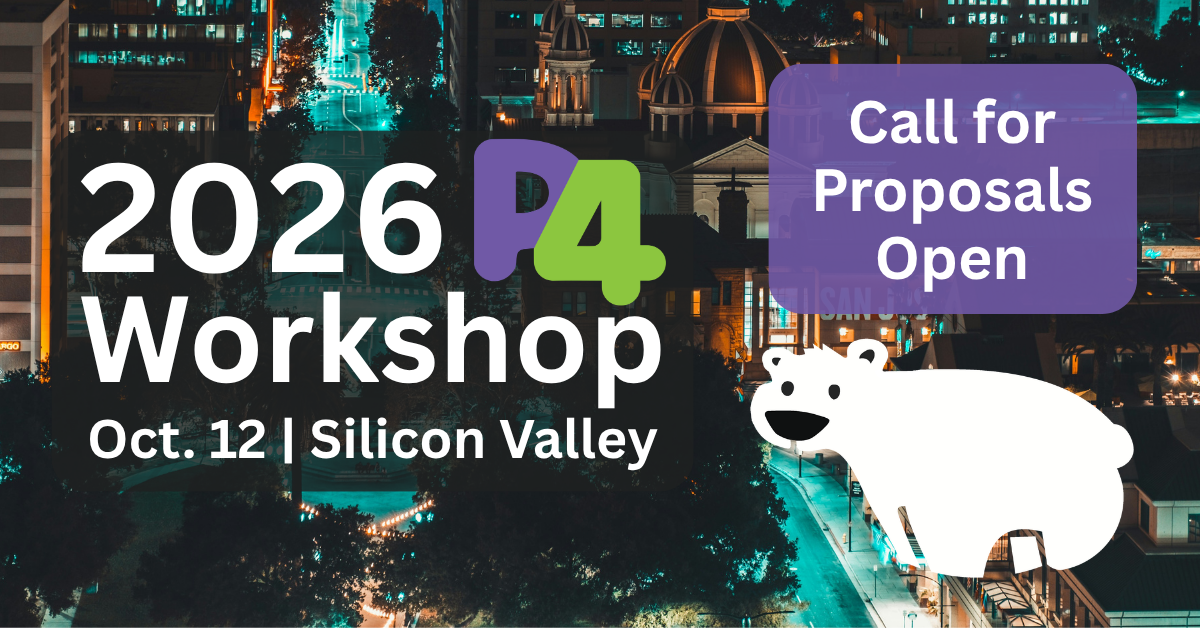
 2026 P4 Workshop | Call for Proposals: Join us on October 12, 2026, for the annual P4 Workshop. The call for proposals is open and will close on August 1. Submit your talk
PyTorch Foundation
- PyTorch 2.13 Release - PyTorch 2.13 adds FlexAttention support on Apple Silicon, the CuTeDSL “Native DSL” backend for Inductor, nn.LinearCrossEntropyLoss, torchcomms, FSDP2 communication overlap improvements, Python 3.15 wheels, and expanded ROCm, Arm, and Intel XPU support. Read the release blog.
- PyTorch 2.13 Release Live Q&A - Join Alban Desmaison, Andrey Talman, and Piotr Bialecki, with Chris Gottbrath moderating, for a live overview of PyTorch 2.13 and community Q&A on July 22 at 11 a.m. PT. Register here.
- PyTorch Certified Associate Program - Linux Foundation Education and PyTorch Foundation have launched the PyTorch Certified Associate (PTCA), a new certification designed for early-stage practitioners looking to build credibility in AI and machine learning. PTCA validates your ability to work with PyTorch, demonstrating that you understand how models are designed, trained, and used in real-world environments. Enroll today 👉 PyTorch Certified Associate (PTCA)
- PyTorch Foundation Contributor Awards - Nominations are now open for the 2026 PyTorch Foundation Contributor Awards! These awards recognize outstanding individuals whose contributions help strengthen PyTorch Foundation-hosted projects, including PyTorch, vLLM, DeepSpeed, Ray, Helion, and Safetensors, as well as the broader community. From technical innovation and documentation to mentorship, advocacy, and community leadership, contributors play a vital role in advancing our mission. 🔥 Submit your nomination by July 17 here 🔥
- Building the Future of On-Device AI at the ExecuTorch Hackathon - At the end of June, researchers, mobile developers, and AI practitioners came together for the ExecuTorch Hackathon, a two-day, on-site event focused on a practical and increasingly important question: what can we build when powerful AI runs locally on the device in your hand?
- Towards Free Normalization: Fusing Normalization into GEMM and Attention Kernels - In this blog post, we present various novel kernel fusion techniques for common normalization ops like LayerNorm and RMSNorm, which provide significant speedup by reducing the memory-IO overhead of these highly memory-bound kernels. We start with a brief overview of the modeling importance as well as performance challenges of normalization ops common in both LLMs and ads recommendation models, then present the novel strategies in tackling the performance bottlenecks, including Lazy Pre-Norm and Multi-CTA Norm Fusion.
- Bringing PyTorch Monarch to AMD GPUs: Single-Controller Distributed Training on ROCm - In this blog, we will explore the architecture of PyTorch Monarch, walk through the engineering effort required to port Monarch’s GPU runtime and distributed communication stack to ROCm, and demonstrate how the system dynamically recovers from node failures without halting the entire training job.
- Understanding PyTorch's Test Infrastructure - PyTorch tests are often generated dynamically across devices and dtypes, which is why test names in CI may look different from the class and method names in the source file. This post explains how device-generic tests, OpInfos, instantiate_device_type_tests(), and CI sharding fit together, and how contributors can run and debug PyTorch tests more effectively.
- Miles: A PyTorch-Native Stack for Large-Scale LLM RL Post-Training - In this post we look at Miles, RadixArk’s open source framework for large-scale LLM RL post-training. It composes SGLang for rollout, NVIDIA Megatron-LM for training, Ray orchestration, and PyTorch-native extensibility behind a small, pluggable trainer.
- Introducing Cross-Repository CI Relay: Scalable CI for PyTorch's Out-of-Tree Backends - PyTorch now has a Cross-Repository CI Relay (CRCR) that automatically triggers and tracks CI in downstream repositories whenever a PR is opened or a commit is pushed against pytorch/pytorch.
- TokenSpeed-Kernel: Portable APIs and High-Performance Kernels for Multi-Silicon LLM Inference - The TokenSpeed-kernel is a standalone, open-source subsystem designed to solve backend complexity in LLM inference. Learn how it helps developers work with high-performance kernels for multi-silicon LLM inference.
- Serving DeepSeek-V4 on GB300 with SGLang: 5x Higher Throughput at the Same Interactivity Since Day-0 - DeepSeek-V4 support was live in SGLang on Day-0, but the Day-0 stack was only the starting point. This blog post looks at the performance results since kernel, runtime and hardening improvements were introduced.
- From Minutes to Seconds: LLM-Guided Autotuning for Helion Kernels - Helion heavily relies on autotuning for performance. Currently Helion searches utilize the Likelihood-Free Bayesian Optimization (LFBO) to find the most performant configs. This blog introduces LLM-guided autotuner as a practical alternative to dramatically faster kernel tuning at production quality.
- Portable vLLM Model Inference Kernels in Helion - Helion kernels have been integrated into vLLM for FP8 inference using Qwen3 models and evaluated across NVIDIA H100 and B200 GPUs. This post shows how Helion provides a productive PyTorch-native workflow for developing fused GPU kernels while delivering performance improvements for many quantization, normalization, and fusion-heavy inference kernels.
- Join us at upcoming events:
- vLLM Conference 2026, San Francisco, August 24–26: The first-ever vLLM Conference, hosted by Inferact at Ray Summit, is coming to San Francisco. This event features sessions on where the vLLM roadmap is headed, getting the most out of accelerators, and serving inference in production. Register here.
- World Artificial Intelligence Conference (WAIC) 2026, Shanghai, July 17-20: The event features conferences and forums, exhibitions, competitions and awards, application experiences, innovation and incubation programs. Pop by the MetaX booth to speak to us at the PyTorch kiosk!
- Community Meetup for PyTorch: Nanshan, Shenzhen, August 15: Meet other PyTorch developers in Nanshan to discuss all things PyTorch. To sign up, send the message “Nanshan” to WeChat subscription account “PyTorch人工智能” to get the registration method.
- Agentic AI Summit, Berkeley, August 1-2: The Agentic AI 2026 Summit brings together leaders across the full stack, from foundation models and agent frameworks to evaluation, infrastructure, and real-world deployment. PyTorch Foundation will have a sponsor booth and CTO Matt White is leading a workshop on “The Open Agentic Stack: Building the Future of AI Systems with Open Source, Open Standards and Composability” on August 1st at 3.50pm.
- PyTorch Conference China 2026, Shanghai, September 8-9: The Schedule is now live! View the complete schedule here and register here.
- PyTorch Conference North America 2026, San Jose, October 20-21: The schedule will go live next week on July 21st. Make sure to check it out and register for your early bird ticket before July 31st!
SONiC
- In a new SONiC blog, Guohan Lu (Microsoft) and Mehak Mahajan (Broadcom) explore how the SONiC community is addressing the unique networking challenges of AI infrastructure. The post highlights four key capabilities—including BGP scaling, SRv6, packet trimming, and high-frequency streaming telemetry—that enable SONiC to support the world's largest AI deployments.
- SONiC at OCP APAC Summit 2026: The agenda is now live for SONiC's first official presence at OCP APAC Summit, taking place August 11–12 in Taipei. The event features a half-day workshop with 10 technical sessions and a community booth with live demos covering AI networking, observability, edge, SRv6, SONiC-VPP, performance testing, and more.
- SONiC Regional Workshop India 2026: Registration and the Call for Presentations are now open for the SONiC Regional Workshop India 2026, taking place September 7–8 at the Microsoft Campus in Hyderabad. The two-day community event will bring together SONiC developers, users, and contributors from across India and the APAC region. Proposal submissions close on July 26.
- SONiC at OCP Global Summit 2026: The Call for Presentations is now open for SONiC's activities at OCP Global Summit 2026, including the SONiC Workshop, community booth, and Extended Offsite SONiC Workshop. The community is seeking technical sessions, user stories, and live demos showcasing the latest SONiC innovations. Proposal submissions close on July 19.
Sylva Project
- Plakar Joins the Sylva Community: The Sylva Project welcomes Plakar, an open source data resilience platform, to help strengthen backup, recovery, and cyber resilience for cloud-native telco infrastructure. The collaboration advances Sylva's mission to build sovereign, production-ready telco cloud platforms by making resilient, operator-controlled data protection a core part of the stack. Learn more on the Sylva blog.
- Rethinking the Future of Sovereign Cloud: A new blog from upcoming Sylva member WhiteSky explores how the telecom industry's proven wholesale model can be applied to cloud infrastructure through Cloud Enablers and Virtual Cloud Operators (VCOs). The article highlights the importance of open, federated, sovereign cloud platforms and explains why WhiteSky is joining the Sylva community to help advance interoperable, cloud-native infrastructure for telecom. Read the full blog post.
- Watch: Real-World Telco Cloud Transformation: Discover how member organizations like Deutsche Telekom and 6Wind are using Sylva-aligned architectures to modernize their networks with open, cloud-native infrastructure. This conversation explores the benefits of standardization, interoperability, and community-driven innovation in building the next generation of telco cloud platforms. Watch the video.
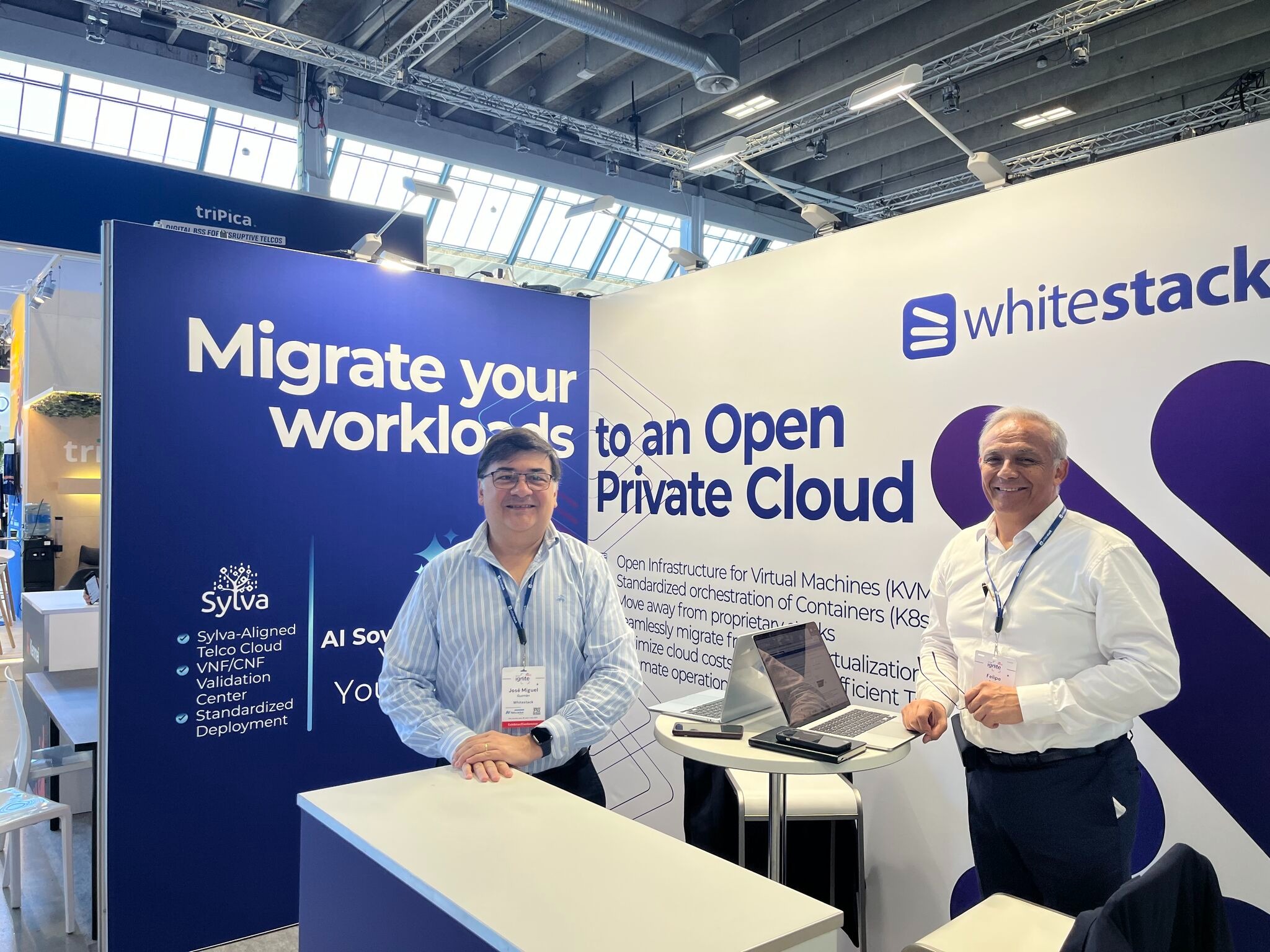
- Sylva Project at DTW Ignite: At DTW Ignite in Copenhagen, the Sylva Project promoted its integrations and connected with members of the community. José Miguel Guzmán Cassanello and Felipe Suazo from Whitestack, a Sylva Project member, met with Jill Lovato from The Linux Foundation during the event.
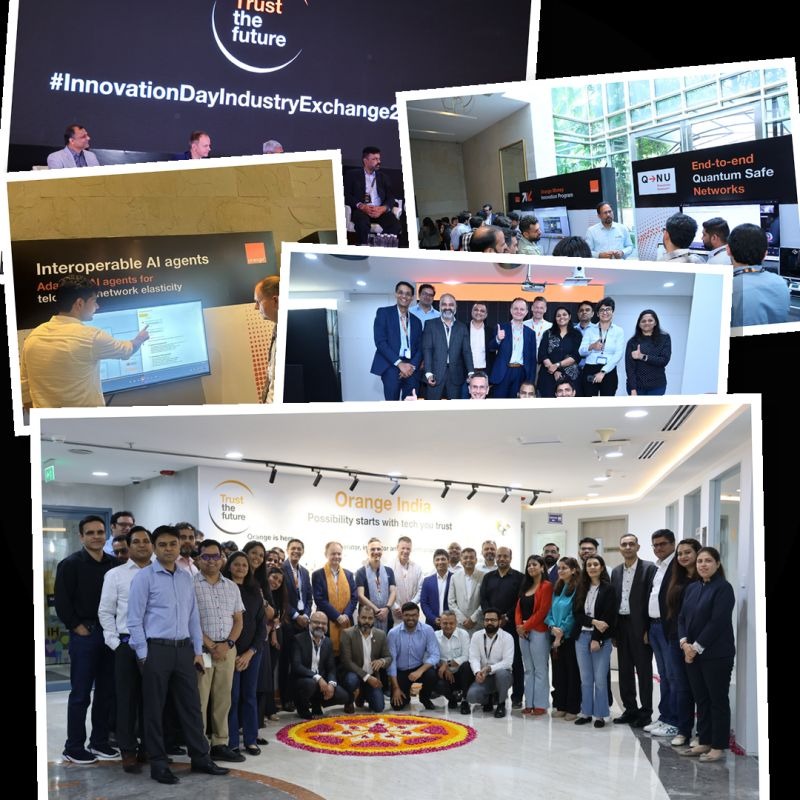
- Orange Networks Team in India promotes Sylva integrations at OSS India: Orange Networks teams in India connected at OSS India to discuss the next steps in telco cloud evolution, including their work on Orange Telco Cloud, Sylva and AI-driven network operations. As noted on a member's LinkedIn post, India brings together “telecom expertise, cloud-native technologies, AI and platform thinking” at the speed and scale the industry now needs.
Supporters for Chromium-Based Browsers
- Supporters of Chromium-Based Browsers re-invest $500,000 into Bug Bounty Program - Unlike traditional bounties that predominantly focus on security vulnerabilities, the Supporters of Chromium-Based Browsers (SoCBB) initiative is for the fixers — engineers repairing real, functional bugs that impact millions of everyday users.
- Developer Spotlight - Chromium committer and OWNER Helmut Januschka on why he loves fixing browser bugs.
- Investing in stability: rewarding the engineers keeping Chromium healthy - Learn more about why the SoCBB project was formed.
Valkey
- ValkeyConf 2026 in Prague (Oct 05, 2026): Share Your Valkey story and experience with the community in Prague. The Call for Proposals is now open for developers, SREs, DBAs, and DevOps professionals running Valkey in production. Submit a session, lightning talk, or technical deep dive covering architecture, contributions, ecosystem integrations, Valkey 10.0 features, performance, or use cases.
CFP closes August 2nd.
- Open Source Summit India (June 16-17): Roberto Luna-Rojas, Sr. Developer Advocate for Valkey OSS at AWS, shared how Valkey helps organizations reduce database costs and optimize infrastructure for AI-driven applications. The keynote explored benchmarks across MySQL, MariaDB, and PostgreSQL, showing how Valkey improved performance, reduced latency, and created cost savings that can be redirected toward AI innovation, including model inference, embeddings, and training.
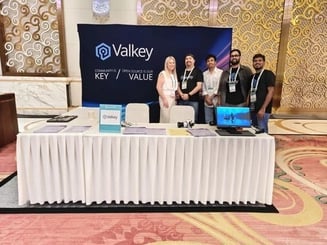
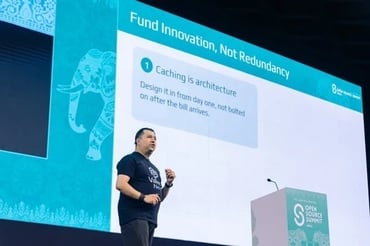
- Percona Live Bay Area (May 27-29): Valkey was a key part of the agenda, with sessions covering scalability, real-world deployments, search capabilities, and how the community is building the next generation of high-performance key-value infrastructure. Valkey playlist here >>
- Blogs:
-
- Standard industry software consistently grows heavier, consuming more RAM with every minor update. Valkey reverses this trend entirely: upcoming engineering milestones drop the software's structural footprint, meaning a simple binary upgrade immediately hands back physical memory to the underlying infrastructure. Read the blog from Percona’s General Manager of the Redis and Valkey Ecosystem, Kyle Davis >>
-
- Allen Helton, Ecosystem Engineer at Momento, explores the failure modes that emerge when operating cache infrastructure at massive scale. Drawing on lessons from Uber and Snap, he examines connection storms, retry amplification, load shedding, and the architectural safeguards that keep distributed systems resilient under pressure.The most important production lessons often come from understanding how systems fail, not how they perform when everything is working. Read the full blog >>
- Allen Helton, Ecosystem Engineer at Momento, explores the failure modes that emerge when operating cache infrastructure at massive scale. Drawing on lessons from Uber and Snap, he examines connection storms, retry amplification, load shedding, and the architectural safeguards that keep distributed systems resilient under pressure.The most important production lessons often come from understanding how systems fail, not how they perform when everything is working. Read the full blog >>
- In the News:
- Efficiently Connected, AI Is Stressing Open Source Infrastructure
- The New Stack, Backporting bug fixes is dead, Project Valkey now sends in the bots
Zephyr Project
- Are you ready to meet the Zephyr community in Prague🇨🇿?
Join the Zephyr Developer Summit at Open Source Summit Europe, connect with maintainers, developers, and ecosystem contributors, stop by the Zephyr booth, and share your latest insights, updates, and ideas. Be part of the conversations shaping the future of the Zephyr Project and open source. Learn more. - Join Insights: Pay as you config
Zephyr follows a “you only pay for what you use” approach: only the components and kernel features that are needed or configured are included in the final image.
In this blog, Loïc Domaigné of Doulos GmbH examines how Kconfig, Devicetree, and the build system work together. Using the blinky sample on the Raspberry Pi Pico 2, the article traces how configuration options and hardware descriptions determine which GPIO driver is selected and built. Learn more. - Antmicro supports Aethero’s next-generation NxN and NxA space computers with Zephyr-controlled onboard computers built around NVIDIA Jetson Orin and Jetson AGX Thor edge AI platforms
Antmicro and Aethero are expanding their collaboration on the next generation of high-performance space computers built around NVIDIA Jetson Orin and Jetson AGX Thor platforms. The upgraded NxN-ECM uses the NVIDIA Jetson Orin NX in Super mode, delivering up to 157 TOPS, while the newly revealed NxA-ECM is designed for even more demanding AI processing workloads. Both platforms use Zephyr RTOS on companion MCUs to manage Linux-based onboard computers and support high-performance data processing directly in space.
The collaboration also brings together modular hardware design, digital twins, automated testing, and post-deployment device management. Read the full blog to learn how Antmicro and Aethero are helping make scalable, AI-accelerated space computing a reality.
- Zephyr at 10 Years: Survey Feedback – Kate Stewart & Hilary Carter, The Linux Foundation
At Open Source Summit North America 2026, Kate Stewart and Hilary Carter reflected on Zephyr’s first 10 years and shared findings from a worldwide survey of RTOS users. The session highlighted Zephyr’s growth, maturity, security, portability, and production readiness, along with priorities for its next decade, including long-term maintenance, safety, documentation, training, and ecosystem growth. Read the recap. - Anomaly detection in embedded devices using the Zephyr Sensor Anomalies library
Antmicro introduces the Zephyr Sensor Anomalies library, which helps embedded devices find unusual patterns in sensor data. It can collect sensor readings and run AI models in the background, while Kenning helps measure how quickly and accurately the system detects problems.
Read the full blog to learn how the library supports anomaly detection and AI model testing on Zephyr devices. - Evaluating the Real-Time Behavior of Zephyr Systems / Zephyr Tech Talk #035
How can we evaluate the real-time behavior of Zephyr systems and build confidence that they behave predictably over long periods of time?
In Zephyr Tech Talk #035, Jan Altenberg from the Open Source Automation Development Lab (OSADL) eG joins Benjamin Cabé to discuss how Zephyr can be tested with zyclictest, drawing on 20 years of experience from the OSADL QA Farm and its long-running real-time testing infrastructure. The session will explore how to collect meaningful latency data over time, what long-term testing can reveal about software and hardware behavior, and how feedback from the Zephyr community can help shape this work. Learn more. -
Meet the Zephyr Project community at these events:
- Zephyr Project Meetup (August 5, 2026) – Hyderabad, India
- Zephyr Track - Open Source Summit: Korea 2026
- Zephyr Project Meetup (August 13, 2026) – Braunschweig, Germany
- Opportunity Open Source Conference 4.0 (August 28-30,2026) - Allahabad, India
- Zephyr Project Meetup (September 15, 2026) – Amsterdam, Netherlands
- Zephyr in Science and Education 2026 - Jena, Germany
LF Events: Mark your calendar!
- ArgoCon Japan
Jul 28 / Yokohama, Japan - KeyCloakCon Japan
Jul 28 / Yokohama, Japan - KubeCon + CloudNativeCon Japan
Jul 28–30 / Yokohama, Japan - Open Source Summit Korea
Aug 11–12 / Seoul, Korea - MCP Dev Summit Seoul
Aug 13–14 / Seoul, Korea - Kubeflow Community Showcase 2026: GenAI and MLOps in Action
Aug 19 / Virtual - seL4 Summit
Sept 1–3 / Vancouver, Canada - gRPConf North America
Sept 3 / Mountain View, United States - AGNTCon + MCPCon China
Sept 6–7 / Shanghai, China - KubeCon + CloudNativeCon + OpenInfra Summit + PyTorch Conference China
Sept 7–9 / Shanghai, China - OSPOlogy + OSPO Summit China
Sept / Shanghai, China - AGL at Automotive World
Sept 9–11 / Tokyo, Japan - AGNTCon + MCPCon Japan
Sept 10–11 / Tokyo, Japan
To register for in-person attendance or virtual LF events, please view our full calendar of events here, and be sure to subscribe to our events newsletter. Check out our Flickr stream for photos of past events!